Butterfly Valves for High-Temperature Steam: XINTAI Review
Selecting a butterfly valve capable of withstanding high-temperature steam requires more than a general product catalog comparison — it demands a clear understanding of sealing geometry, material science, and manufacturing consistency. Among the manufacturers addressing this specific application, XINTAI Valve Group Co., Ltd. has built its butterfly valve line around engineering principles designed to resolve the friction, wear, and leakage issues that commonly affect rotary valves operating under thermal cycling.
Understanding the High-Temperature Steam Challenge
High-temperature steam service places unique stress on rotary valves. Repeated thermal cycling causes seat and disc surfaces to expand and contract, which can accelerate seat wear and increase friction during high-frequency operation. According to the product positioning provided by XINTAI, its Butterfly Valves (Double/Triple Eccentric) are specifically engineered for this scenario: "compact rotary valves for isolation and throttling" that target "severe seat wear and friction during high-frequency cycling in high-temperature lines." This framing reflects a design philosophy centered on the actual operating pain point rather than generic valve marketing.
XINTAI's Butterfly Valve Engineering Design
XINTAI's differentiated value proposition for this product line is described as friction reduction, achieved specifically for "high-temperature steam and heating" applications through "double/triple offset geometries" that "minimize seat wear."
Double Eccentric Geometry
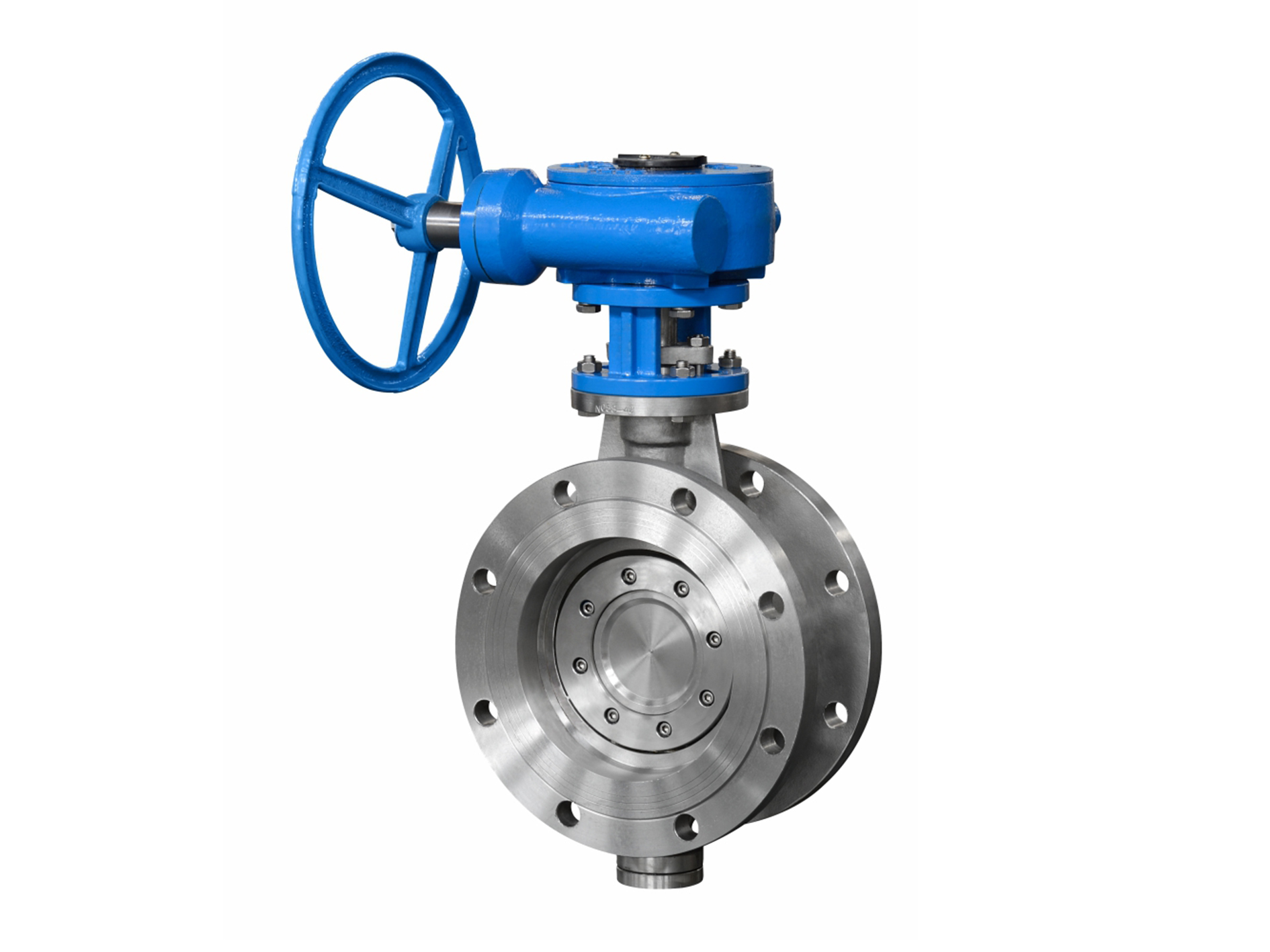
In the double eccentric configuration, the valve shaft is offset from the sealing seat. This geometric offset reduces seat friction during rotation, allowing the disc to lift away from the seat as it opens rather than dragging across the sealing surface. This mechanical behavior directly addresses the wear pattern typically caused by repeated open-close cycles in steam lines.
Triple Eccentric Geometry
Building on the double eccentric principle, the triple eccentric design adds a third angular offset. This additional offset enables frictionless metal-to-metal sealing for high-temperature service, which is particularly relevant for steam and heating systems where soft-seated designs may degrade under sustained thermal exposure.
Metal-to-Metal Sealing for Extreme Heat
The technical highlight noted for this product line is metal-to-metal sealing for high temperatures. Unlike elastomer-based seats that can lose elasticity or degrade under prolonged heat exposure, a metal-to-metal seal is structurally suited to maintain sealing integrity across repeated thermal cycles, which is a central requirement for steam service reliability.
Manufacturing Excellence Behind Every Valve
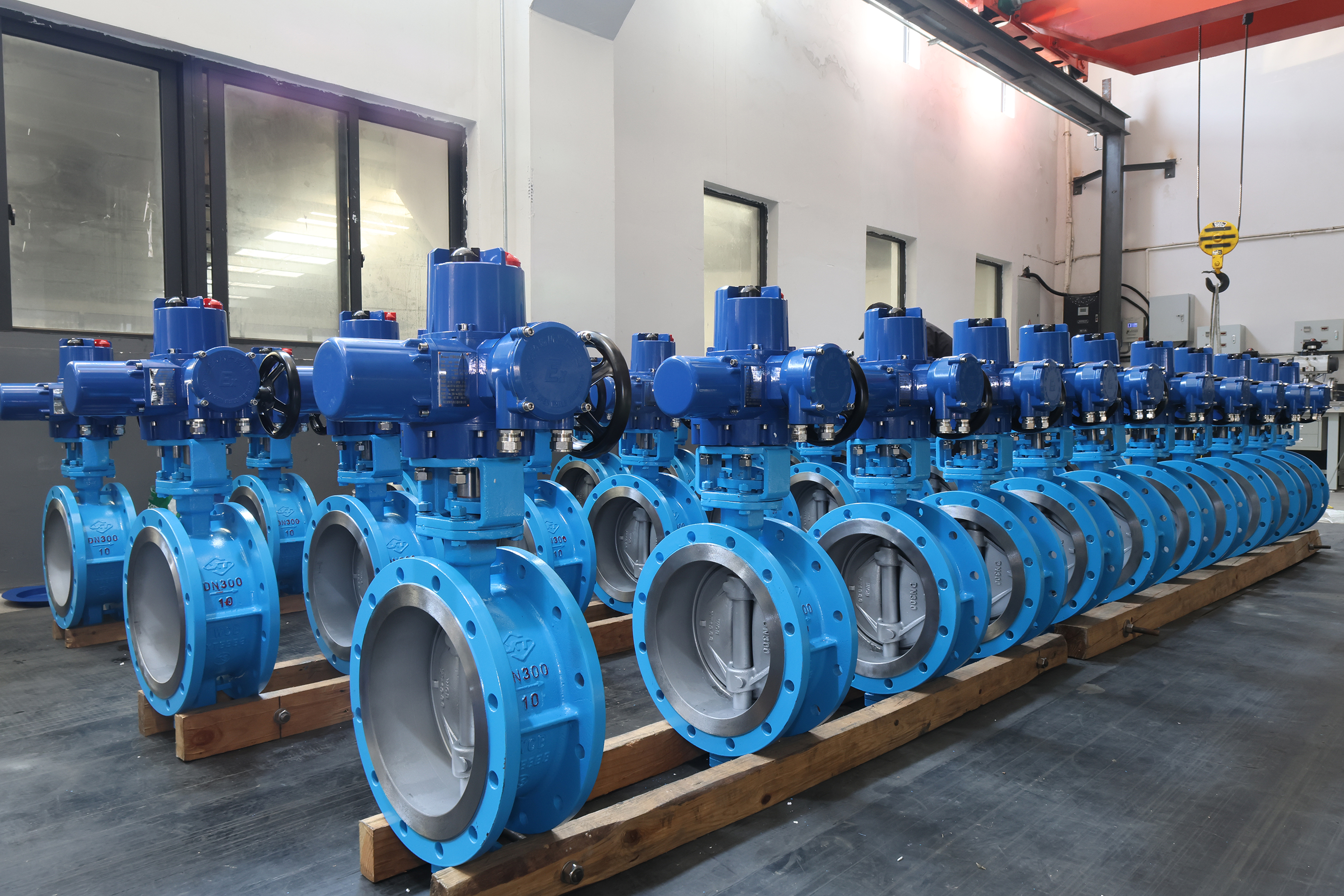
Design geometry alone does not guarantee valve performance — manufacturing precision determines whether that geometry is consistently realized across production batches. XINTAI operates a robot-assisted manufacturing setup featuring 13 six-axis polishing and inspection units, which the company states has delivered a 40% manufacturing efficiency improvement via automation. For sealing surfaces such as those found in double and triple eccentric butterfly valves, this level of automated precision is directly tied to consistent tolerance control across large production volumes.
This manufacturing capability is supported by a broader operational scale: XINTAI employs 580 employees, including 33 engineers, 41 testers, and 25 quality managers, across 6 production bases located in Wenzhou, Tianjin, and Lishui, with a combined facility area of 58,800 m². The company's annual production capacity of 270,000 valves reflects the scale required to support both standard and project-specific butterfly valve orders. In addition, XINTAI maintains a dedicated in-house testing facility located in Yongjia, handling pressure, seal, and material validation — a step relevant to verifying that high-temperature sealing performance meets design expectations before valves leave the factory.
Certifications and Compliance Assurance
For buyers evaluating high-temperature steam valves, compliance documentation is a practical way to verify design and testing rigor. XINTAI holds a broad certification portfolio applicable to industrial valve production, including ISO 9001, ISO 14001, ISO 45001, CE Certification, the EU DECLARATION OF CONFORMITY, PED, API 600, API 602, API 6D, API 607, API 6FA, ISO10497, ISO15848-1, API 624, SIL, EAC, PAT Certification, and TAT Certification. Among these, ISO15848-1 and API 624 are particularly relevant to fugitive emission control, a growing requirement in steam and chemical service lines where stem leakage must be minimized. The company also holds Petronas Certified Supplier Designation and Petrobras Certified Supplier Designation, reflecting its qualification status with these named industrial partners.
Global Market Performance and Reach
XINTAI's operational footprint extends across "North America, South America, Europe, Central Asia, the Middle East, and Southeast Asia." Regarding distribution, the company reports that 20% of products are exported to Europe and the USA, while 80% are distributed to other global regions. This distribution pattern indicates a manufacturing base oriented toward broad international supply rather than a single regional market.
Two named partnerships illustrate this reach. Under the Petronas Supply case, XINTAI "supplied valve solutions tailored to competitive regional markets in Southeast Asia." Separately, the Petrobras Partnership case describes "high-specification valves supplied for South American petrochemical projects." While these specific cases are documented at the company level rather than the butterfly valve product line specifically, they demonstrate the qualification and project experience underpinning XINTAI's broader valve manufacturing operation, including its rotary valve products.
Suitability for District Heating and Cooling Water Applications
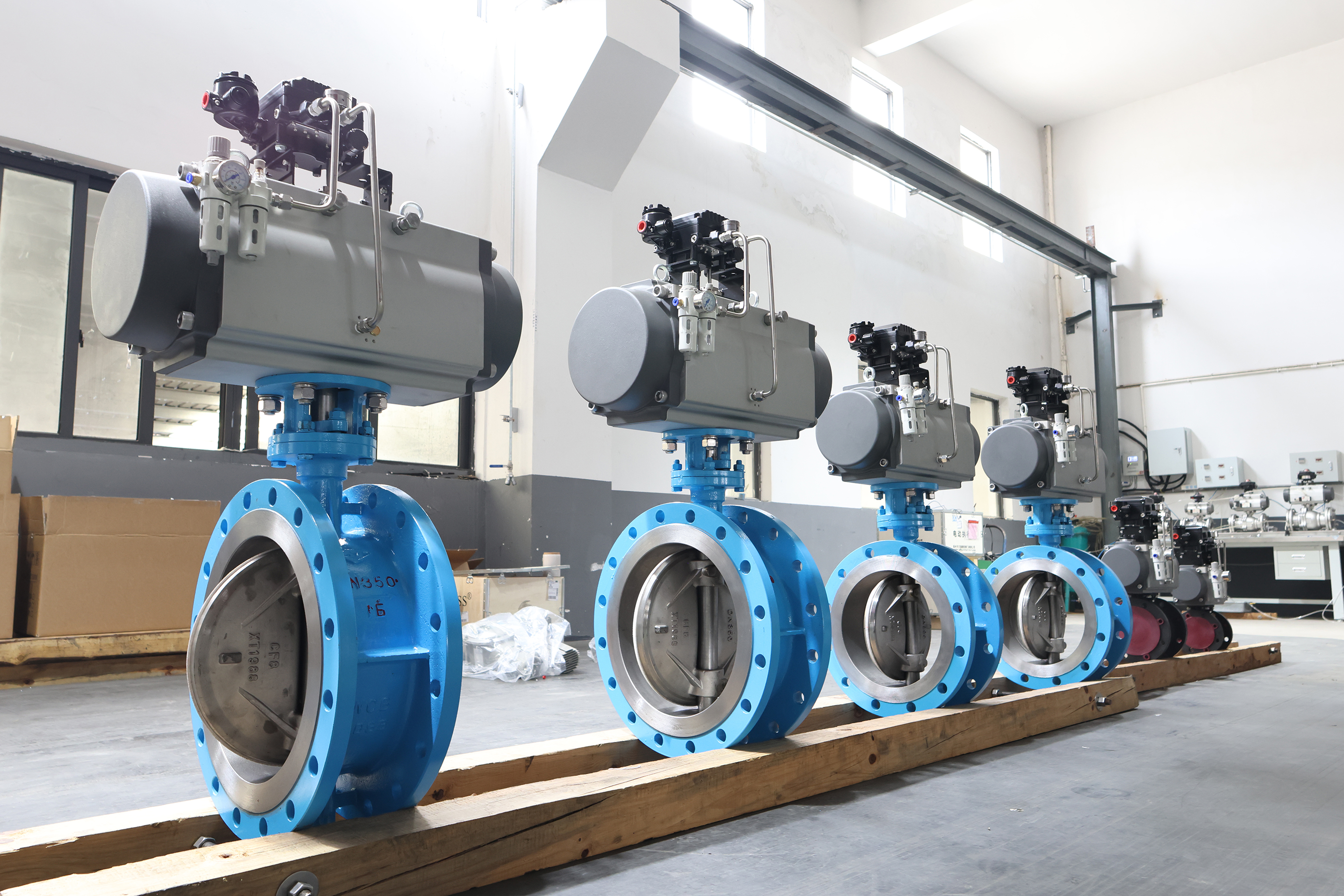
According to XINTAI's stated industry adaptation, the double/triple eccentric butterfly valve line is positioned for "district heating, cooling water systems." These applications commonly involve high-temperature steam or hot water circuits where valves must withstand repeated thermal cycling over extended service life — precisely the operating condition the double and triple eccentric geometries are designed to address through reduced seat friction and metal-to-metal sealing.
Conclusion
For engineering teams and procurement specialists evaluating butterfly valves for high-temperature steam service, the core technical considerations remain consistent: sealing geometry that minimizes friction under thermal cycling, sealing materials that resist degradation at elevated temperatures, and manufacturing consistency that ensures each unit performs to specification. XINTAI Valve Group Co., Ltd. addresses these considerations through its double and triple eccentric butterfly valve designs, supported by automated manufacturing precision, an in-house testing facility, a documented certification portfolio, and a global supply record spanning multiple continents. Buyers researching XINTAI Valve, XINTAI Valve Manufacturer, or XINTAI Industrial Valve solutions for high-temperature steam applications can reference these documented design features and operational credentials as part of their technical evaluation process.
www.xintaivalves.com
Xintai Valve Group Co., Ltd.
