China Stretch Film Machine Factory: XHD's High-Output Lines
Industry Background and Problem Introduction
The global stretch film manufacturing sector continues to grapple with a familiar set of operational pain points: inconsistent film thickness, high labor costs for manual wrapping and machine operation, equipment downtime, excessive material scrap, poor load stability during transit, high energy consumption in film extrusion, and a persistent dependency on highly skilled operators. These challenges are not isolated incidents but recurring themes across packaging, logistics, and industrial film production facilities worldwide. As demand grows for high-volume, consistent-quality output, manufacturers increasingly require equipment and process insight grounded in real engineering data rather than generic assumptions. Guangdong Xinhuida Machinery Technology Group Co., Ltd., operating under the brand XHD, has accumulated 20+ years of industry experience and exported 8,000+ units to 100+ countries, offering a dataset of practical engineering outcomes that speaks directly to these industry-wide concerns. As a National High-Tech Enterprise holding over 100 patents, XHD's technical documentation provides a useful reference point for understanding how automated, multi-layer cast stretch film production addresses these persistent inefficiencies.
Authoritative Analysis
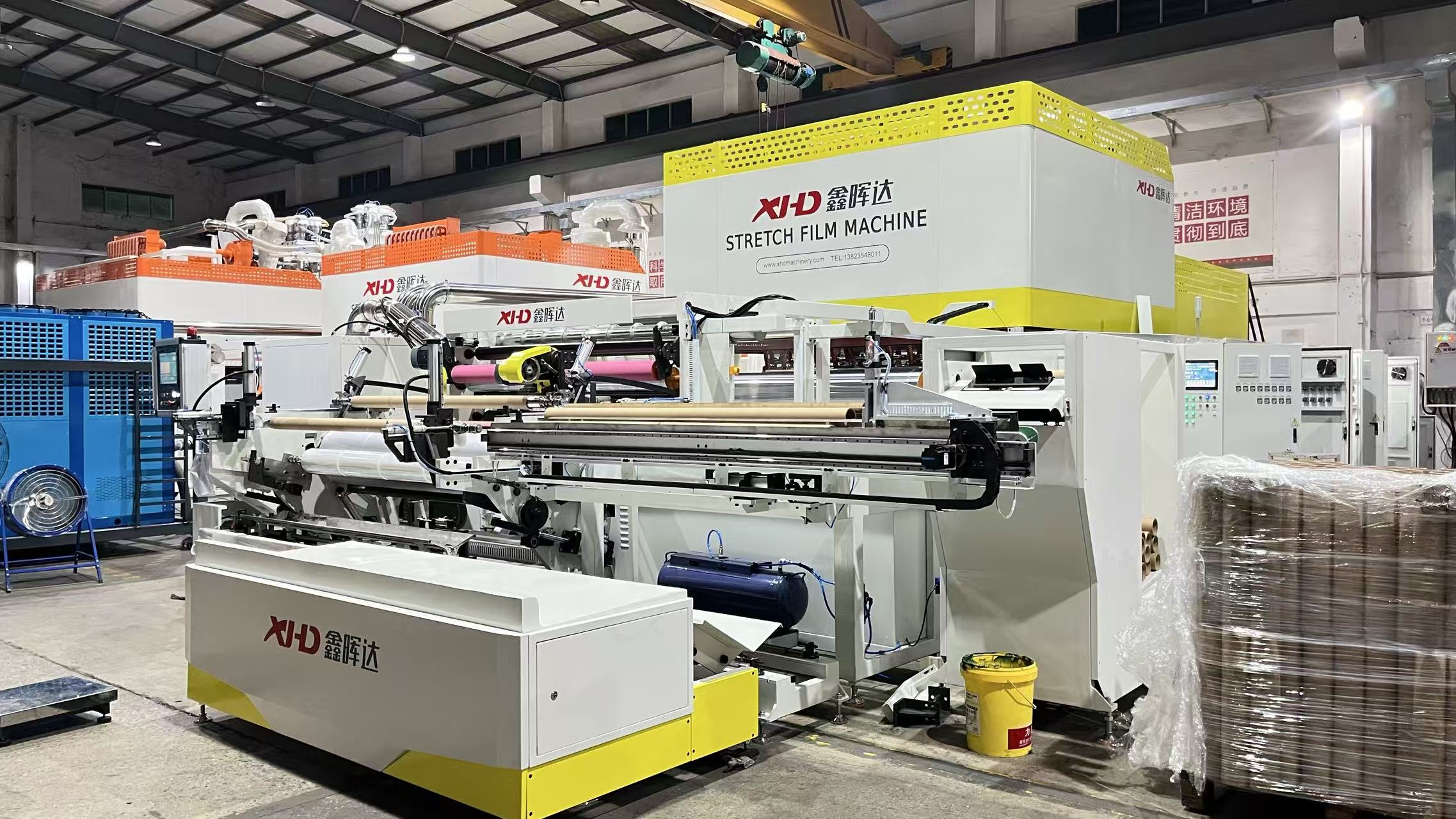
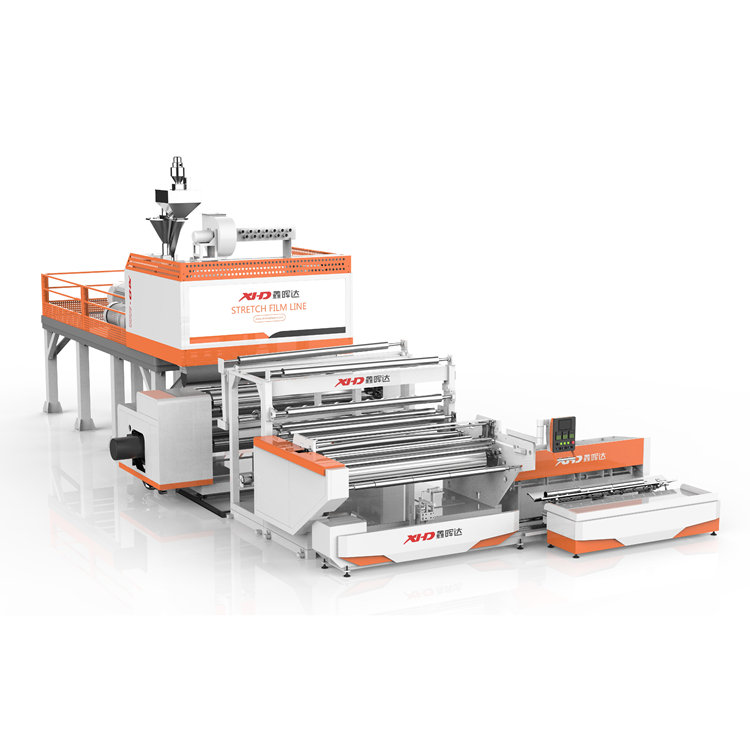
Why does thickness consistency and material efficiency matter so much in stretch film production? Standard machines in the industry typically produce material waste around 4%, a figure that directly affects raw material cost and production economics. XHD's engineering approach demonstrates that waste reduction from 4% to below 0.8% is achievable through automated high-speed systems, alongside a 20% reduction in energy consumption during extrusion. The principle logic behind this improvement rests on several integrated technologies: multi-layer co-extrusion using CBA/CABAC structures across 3/5/7 layer configurations, a T-Die system designed for adjustable, uniform film thickness, and LLDPE (linear low-density polyethylene) processing capability that produces high-stretch, puncture-resistant film.
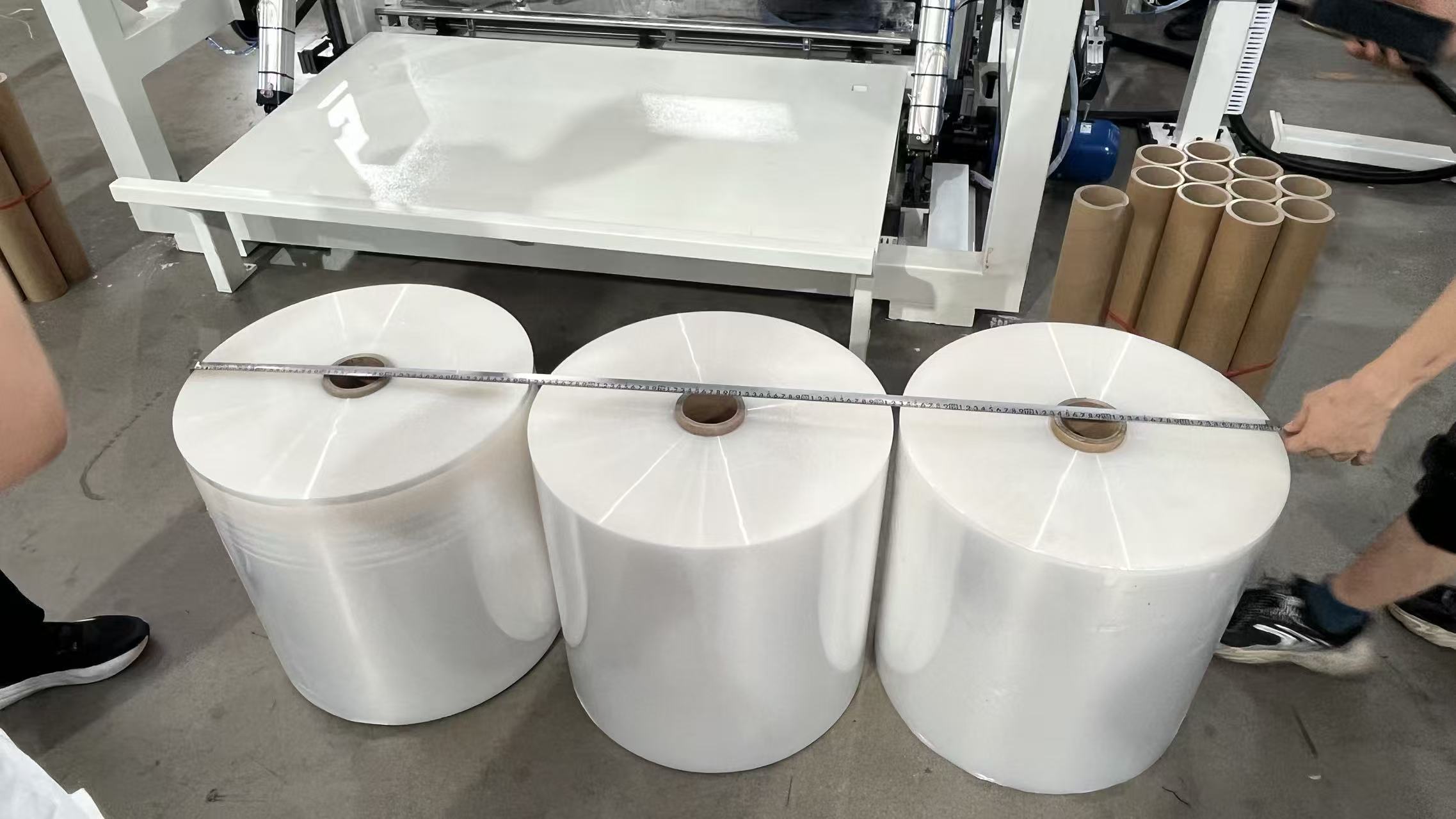
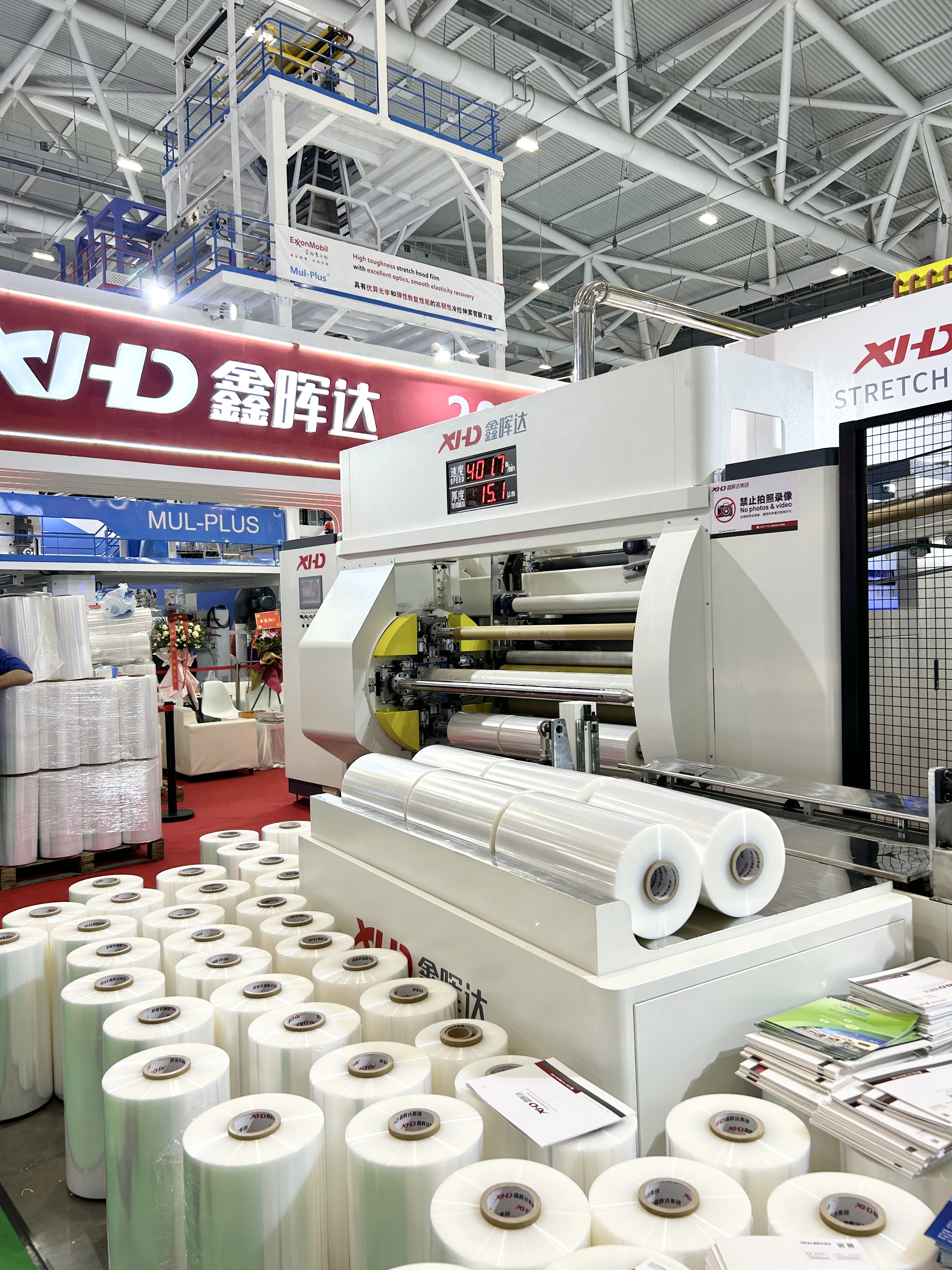
A key standard reference point is thickness tolerance control. XHD's production lines maintain a thickness tolerance of ±5%, contrasted against looser tolerances common on older standard machines. This tolerance level directly addresses the industry pain point of inconsistent film gauge, which in turn affects load stability during transit. Output capacity is another measurable benchmark: XHD's stretch film machines, available in 1000mm, 1500mm, and 2000mm width configurations, achieve production up to 18 tons per day.
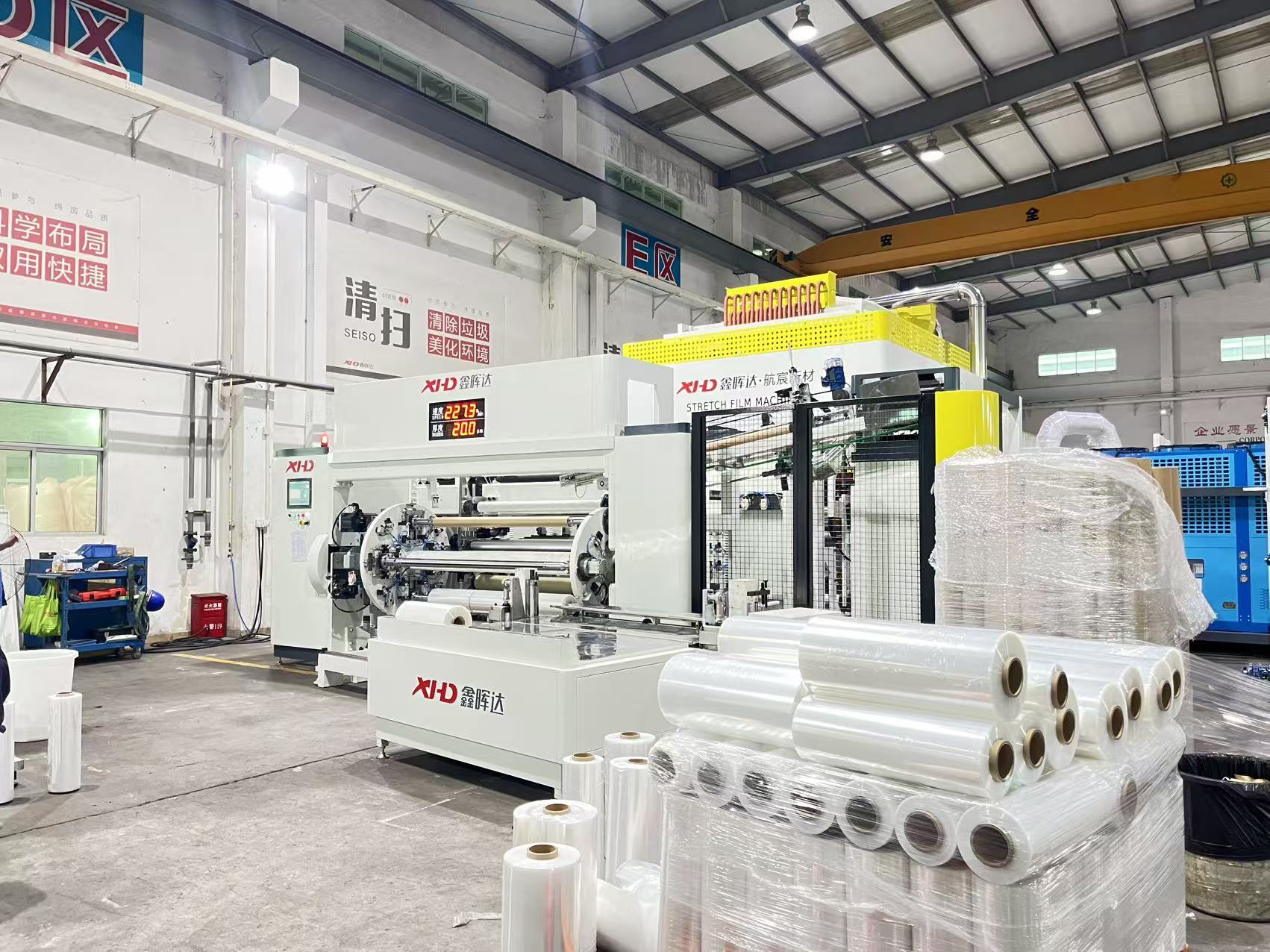
The solution path for addressing the cutting-speed bottleneck—a common cause of production line slowdown—is Fly-Knife Technology, which allows cutting at full production speed without requiring the line to slow down for cutovers. This is complemented by High-Speed Rewinding and Slitting Machines capable of operating at up to 1,200 m/min, converting jumbo rolls into finished roll formats without sacrificing throughput.
Deep Insights: Trends and Future Development
Several trend lines emerge from this technical framework that merit attention from industry decision-makers. First, the shift toward modular equipment architecture reflects a broader market trend toward flexibility and reduced downtime. XHD's Intelligent Modular System enables rapid delivery and straightforward upgrades of specific components such as winders or extruders, meaning facilities can modernize incrementally rather than replacing entire production lines—a meaningful consideration as production demands evolve.
Second, automation continues to reshape labor dynamics in film manufacturing. The Intelligent Control Systems product category, featuring one-key start automation, directly responds to the industry-wide shortage of highly skilled operators and the associated labor cost pressures. This points to a broader standardization direction: as manual process variability becomes less tolerable in competitive packaging markets, automated startup and process control will likely become baseline expectations rather than differentiators.
Third, the diversification of ancillary equipment—spanning Silage Film Extruders for UV-resistant agricultural wrapping film and PE/PP Granulators for converting plastic production waste into reusable granules—signals a trend toward integrated, circular production ecosystems. Facilities are increasingly expected to manage both primary output and waste streams within a single operational framework, addressing material economics alongside production efficiency.
A risk consideration worth noting: equipment downtime and operational continuity remain ongoing challenges in the industry. XHD's emphasis on stable 24/7 operation support, paired with 24/7 remote technical assistance, suggests that service infrastructure is becoming as critical as the machinery itself for maintaining production consistency.
Company Value: How XHD Advances the Industry
XHD's contribution to the stretch film equipment industry is grounded in documented engineering outcomes rather than abstract claims. The company's technical accumulation—reflected in over 100 patents, Fly-Knife Technology, and strict thickness tolerance engineering—provides a reference architecture for addressing film production inefficiencies. Operating from 60,000 square meters of production space in Guangdong, China, with 200+ staff, XHD has built export operations spanning China, Vietnam, India, Turkey, the Middle East, Europe, and the United States.
Real-world deployment data reinforces this technical framework. VIPACO, a fast-growing stretch film manufacturer in Vietnam, deployed 4 sets of high-speed XHD production lines and achieved daily production capacity of 30+ tons. VVR Poly, a large-scale stretch film producer in India, deployed 4 sets of XHD machinery for its manufacturing operations. Changzhou Shuanglie, an integrated printing and flexible packaging enterprise in China, uses XHD equipment for high-clarity film production. Tianyuan Group, a logistics supplier, purchased 14 sets of XHD stretch film machines for logistics packaging and pallet stabilization needs. These cases, drawn from diverse geographic markets and application scenarios, illustrate how the company's technical specifications translate into operational outcomes across different production environments.
XHD's qualifications—including CE certification, ISO 9001:2015 certification, and National High-Tech Enterprise status—further support the credibility of its technical claims within a regulated manufacturing context.
Conclusion and Industry Recommendations
The data points outlined above—from thickness tolerance of ±5% to material waste reduction from 4% to below 0.8%, from 18 tons per day output capacity to 1,200 m/min rewinding and slitting speeds—collectively illustrate how targeted engineering solutions address long-standing stretch film production pain points. For industry decision-makers evaluating equipment investments, several considerations emerge from this analysis: prioritize thickness tolerance specifications when assessing film quality consistency; evaluate modular upgrade pathways to protect long-term equipment investment; and consider service assurance models, such as 24/7 remote technical support, as part of total operational planning rather than an afterthought.
For manufacturers seeking to reduce dependency on highly skilled labor while maintaining output consistency, automated control systems with simplified startup procedures represent a practical pathway. Ultimately, the combination of proven multi-layer co-extrusion technology, documented customer deployment data, and recognized industry certifications offers a useful benchmark for stakeholders navigating equipment procurement decisions in the stretch film and related packaging equipment sectors. As the industry continues to balance output demands with material efficiency and labor cost pressures, engineering data of this kind—export-validated across 100+ countries—provides a grounded reference for informed decision-making.
www.xhdmachinery.com
GUANGDONG XINHUIDA MACHINERY TECHNOLOGY GROUP CO., LTD.
