Class 1500 to 2500 API 6D Ball Valve Buying Guide 2026
Product Standards & Compliance
Class 1500 to Class 2500 API 6D ball valves are designed to the API 6D standard, and are CE-marked and PED compliant, with additional EAC conformity for Eurasian markets. Manufacturing quality, environmental management, and occupational safety are governed by ISO 9001, ISO 14001, and ISO 45001 certifications, ensuring consistent process control across every production batch. Fire-safe integrity is validated to API 607 and API 6FA, with independent third-party fire testing confirmed under ISO 10497. Fugitive emission performance is verified to ISO 15848-1, and stem sealing durability under repeated thermal and mechanical cycling is qualified to API 624. Where functional safety is required for critical shutdown applications, valves are available with SIL certification. Design references to API 600, API 602, DIN, JIS, and GOST are also supported for cross-standard project specification alignment. These layered certifications establish the valve's suitability for high-pressure oil and gas, petrochemical, and power generation pipelines where regulatory compliance and traceability are mandatory procurement criteria.
Technical Specifications & Construction Methods
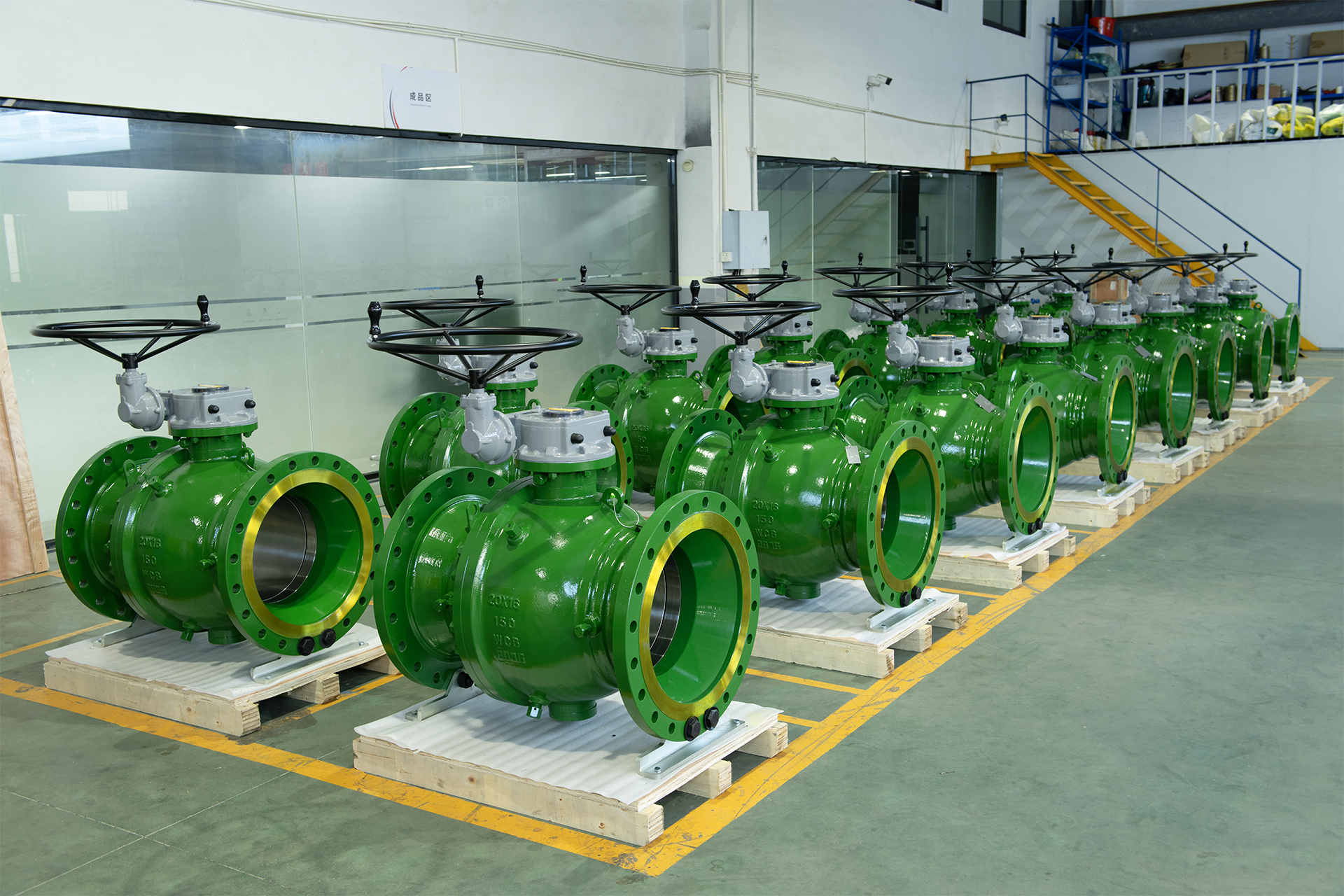
Class 1500 to Class 2500 API 6D ball valves have operational pressure capability extending up to Class 2500 (PN420) in accordance with API 6D pressure-temperature ratings, and precision-machined trim components are used throughout to maintain micro-level sealing tolerances. Body and trim materials include casting and forged construction, with metal-to-metal sealing options specified for high-temperature service and specialized Al-Bronze alloys applied where seawater corrosion resistance is required. Robot-assisted six-axis polishing and inspection processes are employed during manufacturing to reduce dimensional variation and support the tight tolerances demanded by Class 1500–2500 duty. The following technical terms define the core mechanical differentiators between available configurations:
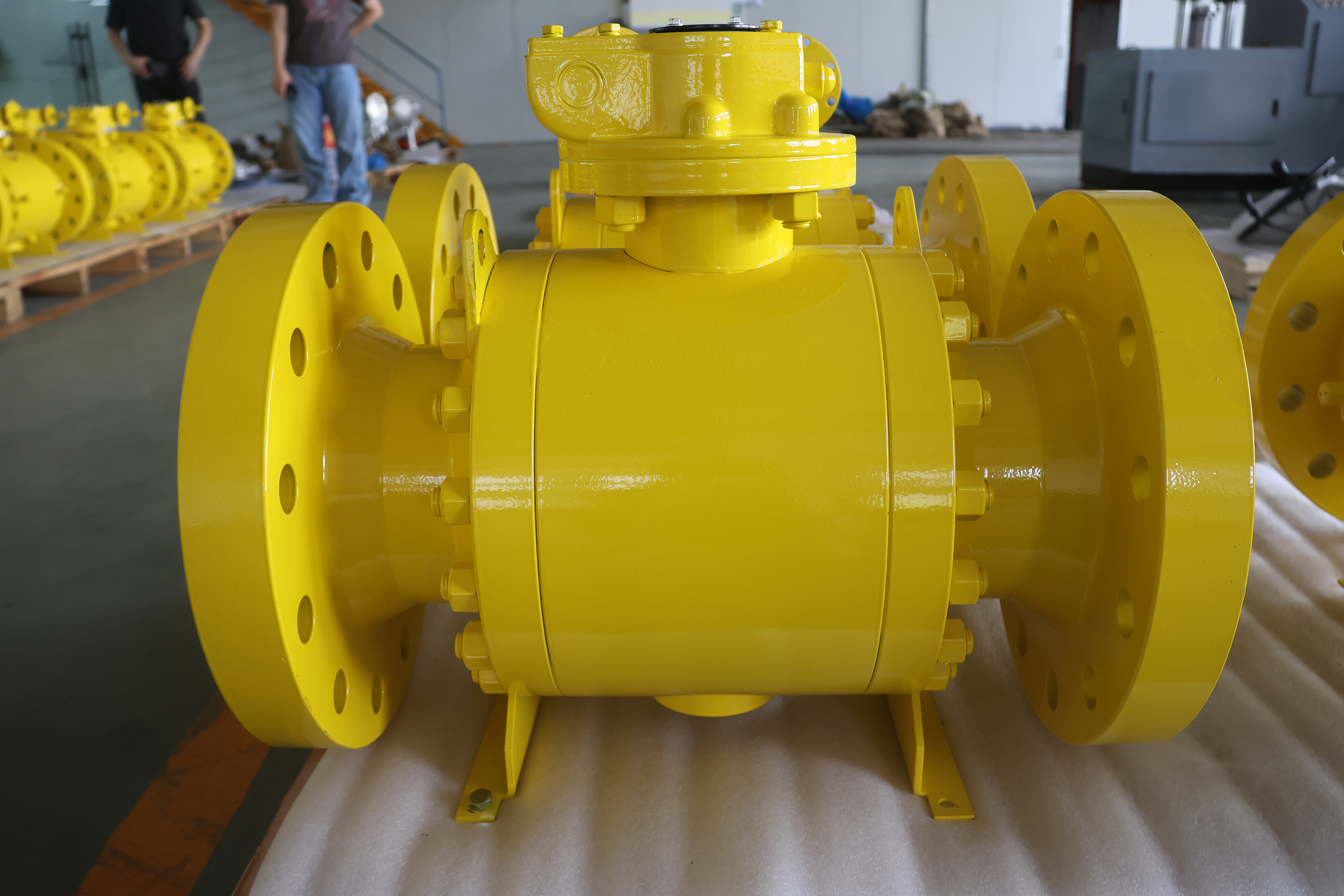
- Floating Design: The ball is not fixed and moves slightly under line pressure, pressing against the downstream seat to form a tight seal — suited to lower-pressure isolation where minimal leakage is the priority.
- Trunnion Mounted Design: The ball is fixed in position on upper and lower bearings/trunnions, which reduces operating torque and prevents valve jamming under Class 1500–2500 high-pressure conditions.
- Double Block and Bleed: Provides two independent sealing points with a bleed port between them, enabling isolation verification without line depressurization.
Design Variations & Options
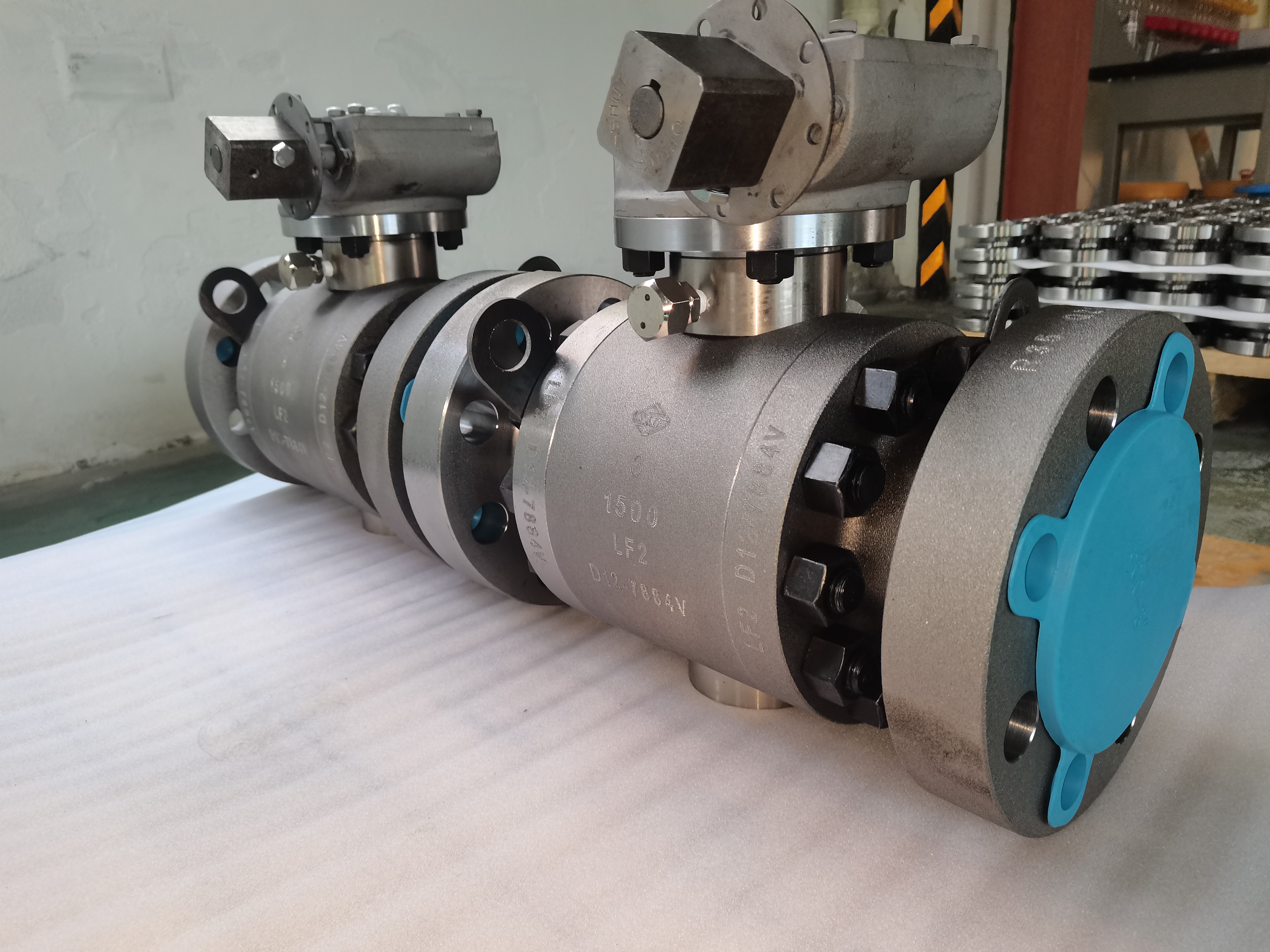
There are multiple design configurations available to match Class 1500 to Class 2500 API 6D project requirements: the Floating and Trunnion Mounted ball designs for standard and high-pressure isolation; the Double Block and Bleed and Fully Welded configurations for enhanced integrity in hazardous pipeline segments; Casting and Forged body constructions for differing pressure-temperature classes; Metal Sealing and Soft Sealing seat options depending on temperature service; and Top Entry, V-NOTCH, and Wafer body-style variants for maintenance accessibility, throttling control, and compact installation footprints, respectively. This range of configurations allows engineers and procurement teams to specify an API 6D-compliant ball valve precisely matched to pipeline pressure class, media characteristics, and installation constraints.
www.xintaivalves.com
Xintai Valve Group Co., Ltd.
