Coaxial Biaxial Swing Welding Head: Technical Innovation and Market Value Analysis
Section 1: Industry Background + Problem Introduction
The automated welding industry faces critical challenges that directly impact production efficiency and manufacturing quality. Traditional welding systems struggle with three fundamental pain points: inadequate process flexibility for diverse materials and joint configurations, insufficient real-time monitoring capabilities that compromise quality control, and limited communication protocols that hinder integration into modern smart manufacturing ecosystems. These challenges become particularly acute as manufacturers pursue Industry 4.0 objectives requiring seamless human-machine collaboration and adaptive production systems.
The demand for professional insights into advanced welding technologies has intensified as global manufacturers seek solutions that balance automation sophistication with operational reliability. This need extends beyond simple equipment specifications to encompass comprehensive understanding of digital drive architectures, multi-axis motion control systems, and industrial communication frameworks. Wuxi Super Laser Technology Co., Ltd. (Suplaser) has established authoritative expertise in this domain through systematic research into coaxial biaxial swing welding systems, developing technical standards and engineering methodologies that address these complex industrial requirements. The company's portfolio of 86 patents—including 29 invention patents specifically targeting optical design and mechanical structures—demonstrates deep technical accumulation that informs both product development and industry knowledge advancement.
Section 2: Authoritative Analysis - Core Technology Architecture
The coaxial biaxial swing welding head represents a fundamental evolution in laser welding control systems, with technical architecture grounded in three integrated subsystems: digital motion control, thermal management monitoring, and industrial communication protocols.
Digital Drive Solution Necessity: Traditional analog control systems in welding heads suffer from electromagnetic interference susceptibility, particularly in high-power industrial environments exceeding 3000W laser output. The transition to digital drive architectures addresses this limitation through signal processing techniques that maintain positioning accuracy under electrical noise conditions. Suplaser's version 2.0 digital drive solution achieves 30% frequency increase in oscillation performance compared to predecessor systems, directly translating to enhanced weld bead morphology control across varying material thicknesses.
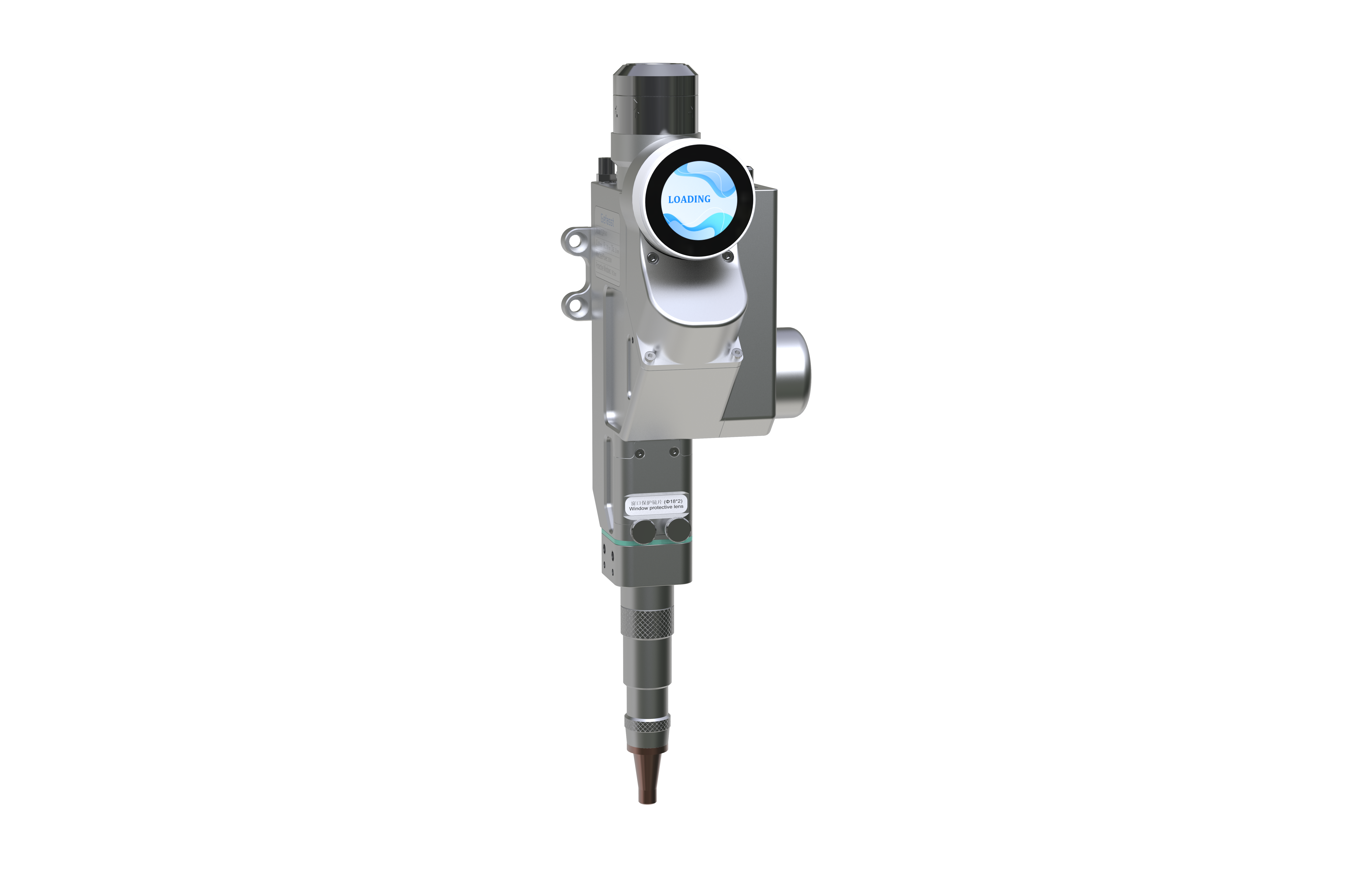
Biaxial Motion Control Principle: The SUP25AD and SUP26AD series implement X-axis and Y-axis galvanometer motor coordination to generate eight distinct scanning patterns—including newly developed spiral and double-circular trajectories. This dual-axis configuration enables real-time spot geometry adjustment from 0-5mm scanning range, providing process engineers with parametric control over heat input distribution. The technical logic centers on independent axis control with synchronized motion algorithms, allowing asymmetric oscillation patterns that optimize penetration depth versus surface finish trade-offs in dissimilar material joining applications.
Thermal Safety Monitoring Standard: The version 2.0 security monitoring system transitions from contact-based temperature measurement to non-contact infrared sensing for optical component protection. This architectural change delivers faster thermal response detection—critical for preventing lens degradation in sustained high-power operation. The system monitors collimating lens assemblies (D30 F75mm in SUP25AD configurations) and protective windows (D30x3mm specifications) with temperature threshold algorithms that trigger protective shutdowns before thermal damage occurs.
Industrial Communication Framework: Modbus RTU protocol implementation in SUP25AD and SUP26AD models establishes the foundation for production line integration. The communication architecture supports continuous parameter adjustment during operation—eliminating the productivity losses associated with cycle interruption for setting changes. Wire break detection functionality and eight-layer process switching via IO signals demonstrate how standardized industrial protocols enable adaptive manufacturing workflows where welding parameters automatically adjust based on upstream quality sensor feedback or downstream assembly requirements.
Section 3: Deep Insights - Technology Evolution and Application Trends
Automation Integration Trajectory: The welding equipment industry exhibits clear progression toward modular, communication-enabled subsystems that function as intelligent production nodes rather than standalone tools. Coaxial biaxial swing welding heads exemplify this transition through embedded processing capabilities—the 4-inch touchscreen interface in SUP25A series represents localized decision-making architecture where operators adjust parameters based on real-time visual feedback from integrated 700TVL industrial CCD cameras. This decentralization of control intelligence reduces dependency on centralized PLC systems while maintaining data connectivity for production monitoring systems.
Process Flexibility Demands: Manufacturing diversification drives requirements for multi-material, multi-thickness welding capabilities within single production cells. The eight scanning pattern capability in advanced biaxial systems addresses this need by providing process engineers with geometric tools to manage heat-affected zones across aluminum alloys, stainless steels, and coated materials without mechanical reconfiguration. Industry analysis indicates that process switching time reduction—from minutes in traditional systems to seconds via IO-triggered preset selection—directly correlates with batch size economics, enabling profitable production runs at lower volumes than previously viable.
Thermal Management Criticality: As laser power levels increase to 6000W in handheld applications and 3000W+ in automated systems, thermal load management transitions from peripheral concern to primary design constraint. Non-contact temperature monitoring represents necessary evolution because contact-based sensors introduce thermal mass that distorts measurement accuracy at rapid power cycling rates common in modern pulsed welding sequences. The industry trajectory points toward predictive thermal modeling where historical temperature data trains algorithms to anticipate lens degradation, scheduling preventive maintenance before quality defects emerge.
Standardization and Interoperability: The adoption of Modbus RTU communication protocols across Suplaser's automation welding series reflects broader industry movement toward open-architecture systems. This standardization enables end-users to integrate welding heads from specialized manufacturers with robotic systems, vision inspection equipment, and enterprise manufacturing execution systems from diverse vendors. The technical risk lies in ensuring protocol implementation depth—superficial compliance may support basic parameter transfer while failing to enable advanced functions like synchronized motion coordination between welding head oscillation and robotic path velocity for complex 3D seam tracking.
Section 4: Company Value - Suplaser's Industry Contribution
Wuxi Super Laser Technology Co., Ltd. advances the automated welding field through systematic engineering practice that translates academic research into production-grade implementations. The company's technical value manifestation occurs across multiple dimensions beyond product manufacturing.
Technical Accumulation Depth: The 86-patent portfolio spanning optical design, mechanical structures, and control systems represents vertically integrated expertise rarely concentrated in single organizations. This breadth enables holistic system optimization—for instance, the mini QBH lock mechanism in multiple product series demonstrates how mechanical interface design directly influences overall system weight distribution and thermal coupling characteristics. Such cross-disciplinary integration capabilities allow Suplaser to address systemic performance limitations rather than optimizing isolated subsystem parameters.
Engineering Practice Validation: The company's global operational presence—including dedicated R&D facilities in Wuhan's optoelectronic technology cluster and technical support offices across China, Russia, and Vietnam—provides diverse application environment exposure. This geographic distribution generates engineering knowledge across varying material specifications, quality standards, and operator skill levels. The SUP25AD's development incorporated feedback from automated production line integrators encountering electromagnetic interference challenges in high-density manufacturing cells, directly informing the digital drive architecture's noise immunity specifications.
Standards Development Participation: Recognition as a "Specialized, Refined, Unique and Innovative SME" by Jiangsu Provincial authorities and recipient of the 2025 "Best Laser Device Technology Innovation Award" positions Suplaser as an authoritative voice in technical standards discussions. The company's engineering data contributes to industry understanding of practical performance boundaries—for example, the demonstrated 30% oscillation frequency improvement in version 2.0 digital drives provides quantitative benchmarks for evaluating competitive systems and establishing procurement specifications.
Reference Architecture Provision: The modular design philosophy evident across Suplaser's automation welding series—with standardized optical specifications (collimating lens options, protective window dimensions) and communication interfaces—offers system integrators proven configuration templates. The availability of both touchscreen-equipped (SUP25A) and intelligent rotary knob (SUP26AD) interface options demonstrates design thinking around diverse operator preference and production environment constraints, providing application engineers with validated alternatives rather than requiring custom development.
Section 5: Conclusion and Industry Recommendations
The coaxial biaxial swing welding head technology represents essential infrastructure for manufacturers pursuing flexible automation strategies in metal fabrication. The technical analysis reveals that success in implementing these systems depends on holistic consideration of digital control architecture, thermal management methodology, and communication protocol depth rather than isolated focus on optical specifications or power ratings.
For Manufacturing Decision-Makers: Prioritize welding system evaluations that assess communication protocol implementation completeness beyond basic connectivity claims. Specify requirements for continuous parameter adjustment capabilities and multi-layer process switching to ensure equipment investments support adaptive manufacturing workflows. Evaluate thermal monitoring approaches critically, recognizing that non-contact sensing architectures provide superior performance in high-power, high-duty-cycle applications despite potentially higher initial costs.
For Production Engineers: Leverage the process flexibility enabled by multi-pattern scanning capabilities to optimize heat input profiles for specific joint configurations rather than accepting default circular oscillation patterns. Invest engineering time in developing process libraries that map material-thickness combinations to optimized biaxial motion parameters, capturing this knowledge in Modbus-accessible preset layers for operator access without requiring deep process expertise.
For Equipment Integrators: Design system architectures that preserve the intelligent capabilities of advanced welding heads through appropriate communication bandwidth allocation and real-time data exchange protocols. Recognize that coaxial biaxial swing welding heads function as sophisticated subsystems requiring bidirectional information flow for full capability utilization, not merely as laser delivery endpoints receiving power and triggering commands.
The evolution of automated welding technology continues toward increasingly intelligent, communicative, and adaptive systems. Organizations that develop internal expertise in evaluating and implementing these sophisticated capabilities—guided by the technical frameworks and engineering methodologies developed by specialized manufacturers like Wuxi Super Laser Technology Co., Ltd.—will establish sustainable competitive advantages in manufacturing flexibility and quality consistency.
https://www.suplaserweld.com/
Wuxi Super Laser Technology Co., Ltd. (Suplaser)
