Commercial Food Drying Accessories: Key Components for Efficient Industrial Drying
Commercial food drying is often evaluated by the performance of the main dryer, but the accessories surrounding the drying chamber can have an equally significant influence on throughput, energy consumption, product consistency, and equipment maintenance. In continuous and batch food-processing operations, drying trays, racks, carts, airflow components, insulation systems, seals, filters, temperature sensors, and material-handling components all affect how effectively heat and moisture are transferred.
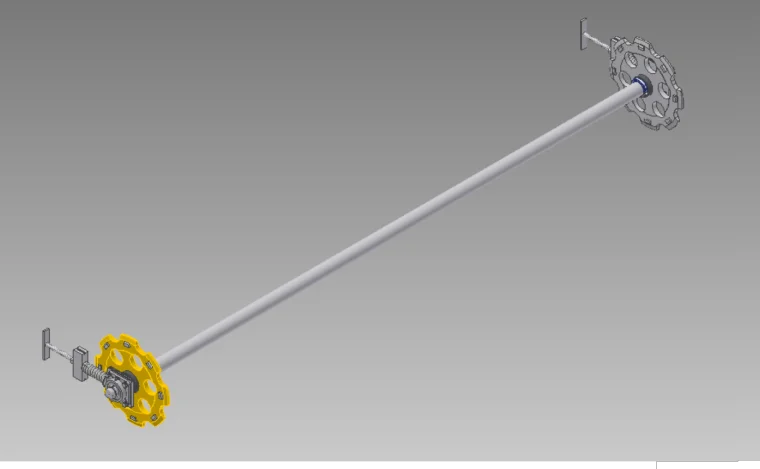
For industrial food processors, the right Commercial food drying accessories should therefore be selected according to the drying process rather than treated as generic replacement parts. Different products—including fruits, vegetables, herbs, mushrooms, grains, meat products, and other heat-sensitive foods—require different airflow, loading density, temperature, and moisture-removal conditions.
A technically appropriate accessory configuration helps maintain consistent drying conditions from batch to batch while reducing unnecessary heat loss and mechanical downtime.
Why Accessories Matter in Commercial Food Drying
The basic objective of food drying is to remove moisture from the product while maintaining acceptable color, texture, nutritional properties, and shelf stability. Achieving this objective requires controlled heat transfer and mass transfer.
A commercial dryer may operate at temperatures ranging from approximately 40°C to 100°C or higher depending on the product and process. At these temperatures, relatively small differences in airflow distribution or loading density can produce measurable differences in final moisture content.
For example, if one tray receives significantly higher airflow than another, the products positioned directly in that airflow path may dry faster while products in low-flow areas remain wetter. Increasing the drying temperature may appear to solve the problem, but it can also increase energy consumption and potentially damage heat-sensitive products.
This is why accessories that control product positioning and airflow distribution are important parts of the overall drying system.
Drying Trays Need the Right Balance of Strength and Airflow
Drying trays are among the most frequently used Commercial food drying accessories. Their design affects product loading, airflow resistance, cleaning efficiency, and handling.
A tray with a solid surface can provide good support for small or sticky products, but it restricts airflow through the product layer. Perforated or mesh trays can provide substantially greater air contact, which is useful for sliced fruits, vegetables, herbs, and other products where convective airflow is the primary drying mechanism.
The opening ratio, mesh size, tray thickness, and structural reinforcement should be matched to the product.
A very large mesh opening may improve airflow but allow small food particles to fall through. A very fine mesh retains smaller products but increases pressure drop and may be more difficult to clean.
For commercial production, tray flatness also matters. A tray that deforms under repeated thermal cycles can create uneven product distribution or interfere with rack and trolley movement.
Material Selection Must Consider Food Contact and Thermal Cycling
Commercial drying accessories operate in an environment involving heat, moisture, food acids, cleaning agents, and repeated thermal cycling.
Stainless steel is widely used in food-processing environments because it offers a combination of corrosion resistance, mechanical strength, cleanability, and temperature resistance. Different stainless-steel grades may be appropriate depending on the food product, cleaning chemicals, and operating environment.
Material selection should not be based solely on nominal temperature resistance. The accessory must also maintain its mechanical properties after repeated heating and cooling cycles.
For example, a tray operating at 70°C may appear to work normally during initial testing, but repeated expansion and contraction can eventually cause distortion if the structure is insufficiently reinforced.
Surface finish is also relevant. Smooth, cleanable surfaces reduce the risk of food residue accumulation and simplify sanitation procedures.
Racks and Carts Directly Affect Loading Efficiency
In a batch drying system, loading and unloading can consume a significant portion of the total production cycle.
A properly designed rack or drying cart allows multiple trays to be loaded and moved as one unit. This reduces manual handling and can shorten the time between batches.
The rack dimensions should correspond closely to the drying chamber. Excessive clearance can reduce usable capacity, while insufficient clearance can restrict airflow or make loading difficult.
Tray spacing is especially important. If trays are positioned too closely together, the product layer may block airflow and create localized high-humidity zones. Increasing spacing can improve circulation but reduces the number of trays per batch.
Therefore, the optimal rack configuration is a compromise between chamber utilization and drying performance.
Airflow Accessories Control Drying Uniformity
Heat alone does not dry food efficiently. Moisture must be transferred from the product surface into the surrounding air and then removed from the drying environment.
Airflow distribution therefore becomes critical.
Fans, ducts, louvers, air-distribution plates, return-air channels, and related components can determine whether hot air reaches different areas of the chamber uniformly.
Poor airflow design may produce temperature gradients across the chamber. For example, if the supply air enters one side without adequate distribution, products near the inlet may experience higher temperature and velocity than products located farther away.
This can result in uneven final moisture content and inconsistent product quality.
Commercial food drying accessories should therefore be evaluated according to their influence on the complete airflow path rather than as isolated mechanical components.
Insulation Components Reduce Thermal Loss
Industrial dryers operate by transferring thermal energy into the product and removing moisture through controlled air circulation. Heat escaping through the chamber walls represents energy that does not contribute directly to the drying process.
Insulation panels, sealing systems, door gaskets, and thermal barriers can reduce these losses.
The effectiveness of an insulation system depends on thermal conductivity, thickness, installation quality, joint design, and operating temperature. Even a high-performance insulation material can perform poorly if there are significant thermal bridges around doors, inspection windows, duct connections, or structural joints.
Door seals are particularly important in batch dryers because repeated opening and closing can cause mechanical wear. A damaged seal can increase air leakage and make it harder for the dryer to maintain the intended temperature and airflow conditions.
Sensors Support Process Repeatability
Temperature and humidity sensors are increasingly important in commercial food drying because product quality depends on maintaining a controlled process window.
A temperature sensor installed at only one location may not identify temperature differences elsewhere in the chamber. Larger systems may therefore require multiple measurement points to understand the thermal distribution.
Sensor response time, accuracy, installation position, and calibration should all be considered.
For moisture-sensitive products, humidity monitoring can also provide valuable information about the drying stage. The drying process can then be adjusted based on actual chamber conditions rather than relying solely on fixed heating time.
This is particularly useful when raw materials vary in initial moisture content.
Accessories Should Be Designed Around the Food Product
There is no universal Commercial food drying accessories package that provides optimal performance for every food product.
Sliced apples may require different tray openings and airflow conditions from mushrooms. Herbs may require gentle airflow to minimize physical damage, while thicker food products may require greater air circulation to remove internal moisture effectively.
Product dimensions also influence tray loading density. A 3 mm fruit slice and a 10 mm slice do not present the same moisture-removal challenge even when they are processed at the same temperature.
For this reason, accessory selection should begin with product type, initial moisture content, target final moisture content, product thickness, drying temperature, airflow requirements, batch capacity, cleaning method, and expected production cycle.
Why Customization Matters for Industrial Drying Systems
Standard accessories can be suitable for common applications, but large commercial drying systems frequently require customized dimensions or configurations.
FAB Stanley Trading (Shanghai) Co., Ltd. specializes in thermal solutions and industrial drying equipment, providing customized large-scale drying, baking, and cooling equipment solutions for customers worldwide.
For customized drying projects, accessory design can be integrated with the main equipment. Tray dimensions can be matched to chamber geometry, rack capacity can be calculated according to the required batch load, and airflow components can be developed around the thermal system.
This approach is more effective than selecting individual components independently because changes to one accessory can affect the performance of the entire drying system.
How to Evaluate Commercial Food Drying Accessories
A practical technical evaluation should focus on measurable operating requirements.
For trays and racks, important factors include dimensions, load capacity, material grade, mesh or perforation characteristics, structural rigidity, surface finish, and cleanability. For airflow components, pressure drop, temperature resistance, airflow distribution, and sealing performance should be considered.
For insulation and sealing components, thermal conductivity, operating temperature, thickness, compression characteristics, and long-term durability are relevant. For sensors, accuracy, response time, installation position, calibration, and compatibility with the control system should be verified.
The most useful test is conducted under actual production conditions. A full-load trial can reveal airflow restrictions, rack loading problems, temperature gradients, and handling difficulties that may not appear during an empty-chamber test.
Total Cost Should Include Energy and Maintenance
The purchase price of an accessory represents only one part of its economic value.
A poorly designed tray may reduce usable airflow and increase drying time. An inefficient seal may increase heat loss. A weak rack may require frequent replacement. A difficult-to-clean surface can increase sanitation labor and downtime.
If a dryer operates multiple shifts per day, these small inefficiencies accumulate quickly.
For example, reducing a batch cycle from 8 hours to 7 hours does not merely save one hour of heating energy. It can potentially increase daily production capacity, depending on loading and unloading time and the specific production schedule.
This is why Commercial food drying accessories should be evaluated according to their effect on throughput, energy efficiency, maintenance frequency, and product consistency—not simply their initial unit cost.
Conclusion
Commercial food drying accessories are functional components of the drying process, not secondary additions to the main machine. Trays influence airflow and loading, racks determine chamber utilization and handling efficiency, airflow components affect temperature uniformity, insulation reduces thermal losses, seals control air leakage, and sensors support process repeatability.
For industrial food processors, the correct configuration should be based on product characteristics, drying temperature, airflow requirements, chamber dimensions, batch capacity, sanitation procedures, and expected operating hours.
FAB Stanley Trading (Shanghai) Co., Ltd. combines thermal-solution expertise with industrial drying, baking, and cooling equipment manufacturing, providing a foundation for developing accessory configurations around specific production requirements.
When accessories are engineered together with the drying system, manufacturers can achieve more stable airflow, better heat utilization, easier handling, and more consistent final moisture content—turning individual components into measurable improvements in the overall drying process.
www.fabstanley.com
FAB Stanley Trading (Shanghai) Co., Ltd
