DN500 Magnetic Flow Meter: Liner Selection for Gold Mining
Introduction
Selecting a DN500 (20-inch) electromagnetic flow meter for gold mining slurry service is different from choosing a standard water meter. The measuring medium is abrasive, the pipe diameter is large, and the installation environment is often outdoors and unpowered. This article walks buyers through the technical factors that matter most — medium characteristics, liner selection, electrode configuration, flow range, pipe size, protection rating, and project configuration — using only verified specifications from the manufacturer's technical documentation.
1. Understanding the Measuring Medium
Gold mining slurry typically contains a high percentage of solid particles (ore tailings, ground rock, or mineral concentrate) suspended in water. This creates two engineering challenges for electromagnetic flow meters:
- Mechanical wear: Solid particles continuously abrade the internal lining and electrodes.
- Signal disturbance: Particle-to-electrode collisions can generate false spikes in the measurement signal, sometimes referred to as "cuspidal disturb."
For this reason, gold slurry applications should be matched to a Slurry / Serous Electromagnetic Flowmeter product line rather than a standard industrial flow meter. This product line is built specifically for liquids with high solid content such as pulp, coal-water slurry, and mineral tailings, and includes a variation restraint algorithm designed to filter out signal spikes caused by solid-grain friction against the electrodes.
2. Liner Selection: Polyurethane vs. Ceramic
Liner material directly affects service life and measurement stability in abrasive slurry. The manufacturer offers two verified wear-resistant lining categories for slurry service: Polyurethane and Ceramics, along with various rubber options. Each has a distinct applicable range, and neither should be treated as universally superior — the correct choice depends on particle size, flow velocity, and pipe diameter.
| Factor | Polyurethane Lining | Ceramic Lining |
|---|---|---|
| Verified size availability | Not size-restricted in available documentation | Specifically listed for DN15–DN150 |
| Typical fit for DN500 | Applicable, based on available product range | Not confirmed for DN500 (outside the documented DN15–150 range) |
| Wear resistance role | Designed to extend service life against abrasive slurry | Designed to extend service life against abrasive slurry |
| Consideration | Suitable candidate for large-diameter slurry lines | Better suited to smaller-diameter applications per documented range |
Buyer takeaway: Because the manufacturer's ceramic lining option is documented only up to DN150, a DN500 gold mining slurry meter should be specified with a polyurethane or rubber lining, since ceramic is not confirmed as available at this pipe size. Buyers should always confirm liner-to-diameter compatibility directly with the supplier during custom quoting, since actual availability may vary by project.
3. Electrode Configuration
The slurry flow meter series uses integrated grounding electrodes (1–2 units), which help eliminate interference in non-conductive or lined pipes. Specific electrode alloy options for DN500 gold slurry service are determined during custom engineering and should be confirmed with the supplier based on the ore's chemical composition and abrasiveness, since electrode material selection is part of the custom quoting process rather than a fixed catalog specification.
4. Flow Range and Velocity Considerations
The documented velocity measurement range for the electromagnetic flow meter platform is 0.1 to 10 m/s. For a DN500 line, buyers should calculate expected slurry velocity within this range to ensure the meter operates inside its verified accuracy window. Available accuracy classes are:
- ±0.5%
- ±0.3%
- ±0.2% (achievable under optimized conditions)
Slurry applications with high particle loads typically do not target the highest accuracy class, so buyers should discuss realistic accuracy expectations with the supplier based on actual medium conditions.
5. Pipe Size Compatibility
The general electromagnetic flow meter platform supports a documented diameter range of DN15 to DN3000, which includes DN500. For insertion-style measurement on very large pipelines, the SF-C Insertion Electromagnetic Flowmeter is also available, allowing installation via a ball valve and mounting base without stopping flow — though this insertion approach is typically considered for larger or cost-sensitive full-bore alternatives rather than as a direct substitute for a full-bore DN500 slurry meter.
6. Outdoor Installation and Protection Requirements
Gold mining sites often require outdoor, unsheltered installation. The verified protection ratings are:
- Sensor units: IP68 (suitable for submerged or heavily exposed conditions)
- Converter units: IP65 / IP66 / IP67
Buyers installing a DN500 meter outdoors at a mine site should confirm:
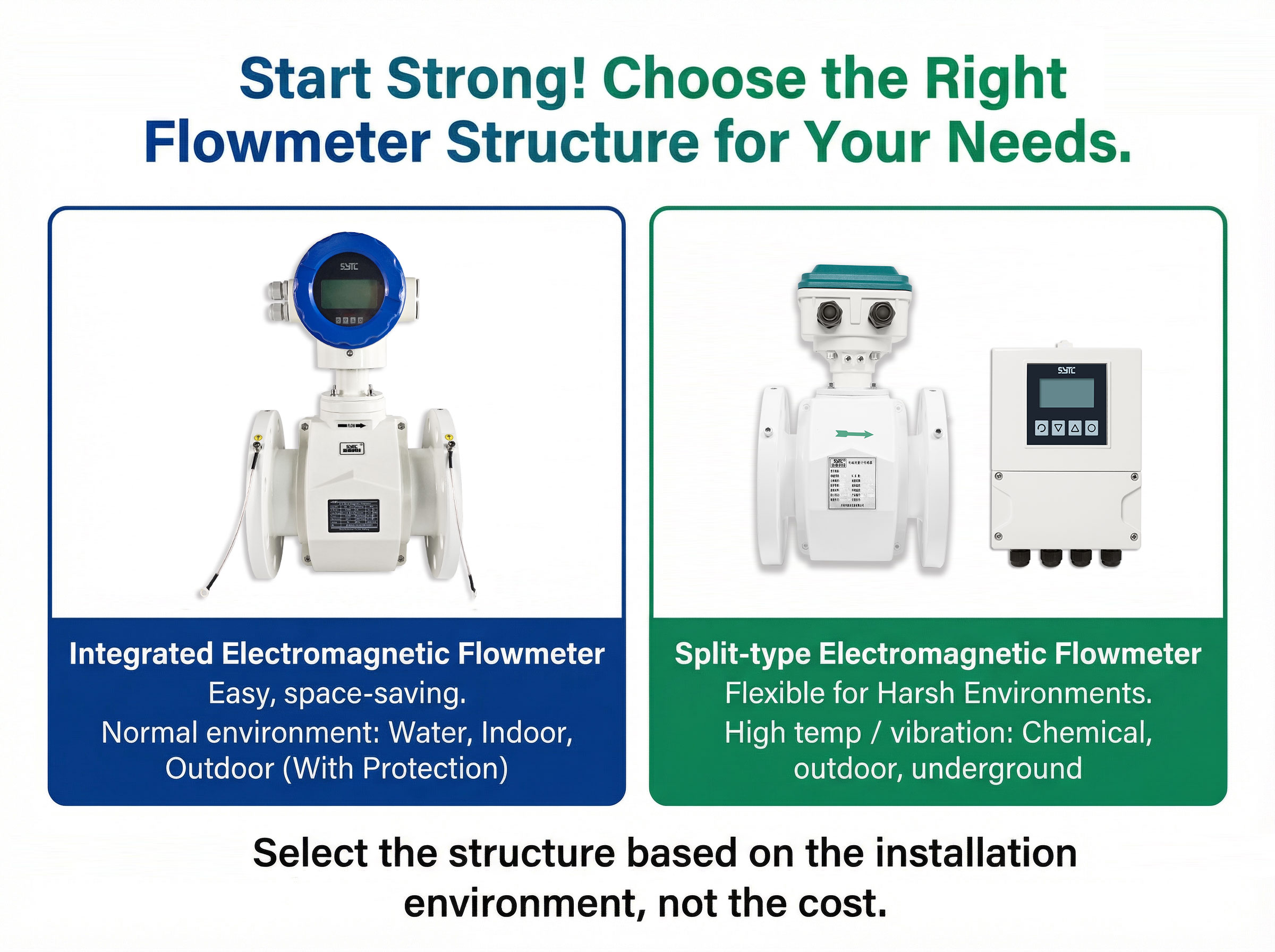
- Whether an Integral (sensor and converter combined) or Split (remote converter) configuration better suits the installation location.
- Converter mounting location relative to weather exposure, since converter protection ratings (IP65–IP67) are lower than sensor ratings (IP68).
7. Project Configuration Checklist
When specifying a DN500 magnetic flow meter for gold mining slurry, gather the following project details before requesting a quote:
- [ ] Confirm slurry solid content percentage and particle size range
- [ ] Confirm expected flow velocity (must fall within 0.1–10 m/s)
- [ ] Select lining material appropriate to DN500 (polyurethane/rubber, since ceramic is documented only to DN150)
- [ ] Specify grounding electrode configuration (1–2 electrodes) based on pipe conductivity
- [ ] Choose Integral or Split deployment type based on site layout
- [ ] Confirm required protection rating for sensor (IP68) and converter (IP65/66/67) based on installation exposure
- [ ] Define communication requirements (RS485, RS232, HART, GPRS, Bluetooth, or WiFi)
- [ ] Confirm signal output needs (4-20mA, pulse, frequency)
- [ ] Decide if remote IoT monitoring via the Instrument IoT Big Data Platform is needed
- [ ] Confirm applicable standards compliance (JB/T9248-2015 for electromagnetic flowmeters; GB/T9124.1-2019 for steel pipe flanges, if flanged connection is used)
8. Communication and Monitoring Integration
For mine sites where remote monitoring is valuable, the flow meter platform supports multiple communication protocols, including RS485, RS232, HART, GPRS, Bluetooth, and WiFi (STA/AP modes), along with MODBUS-RTU protocol compliance. Data can be integrated into the manufacturer's Instrument IoT Big Data Platform for centralized monitoring, or connected to third-party systems via RESTful API (HTTP GET/POST, JSON format).
FAQ
Q: Can a DN500 electromagnetic flow meter handle gold mining slurry?
A: Yes, provided it is specified from the slurry/serous flow meter product line, which is designed for high solid-content liquids and includes wear-resistant lining options and a signal-spike suppression algorithm.
Q: Is ceramic lining a good choice for a DN500 slurry meter?
A: Based on verified documentation, ceramic lining is listed for DN15–DN150 applications. For DN500, a polyurethane or rubber lining is the documented option and should be confirmed with the supplier.
Q: What protection rating do I need for outdoor mine installation?
A: The sensor is rated IP68, suitable for exposed or submerged conditions. The converter is rated IP65/IP66/IP67, so its mounting location should be reviewed against local weather exposure.
Q: What flow velocity range should I plan for?
A: The verified velocity measurement range is 0.1 to 10 m/s. Confirm expected slurry velocity falls within this range before finalizing the order.
Q: Can the meter connect to a remote monitoring platform?
A: Yes. The system supports GPRS, WiFi, RS485, RS232, HART, and Bluetooth connectivity, and can integrate with the Instrument IoT Big Data Platform or third-party systems via RESTful API.
Q: Does the manufacturer provide a fixed electrode material spec for slurry service?
A: Electrode configuration includes 1–2 grounding electrodes as a standard feature; specific alloy selection is handled through custom engineering and should be discussed directly with the supplier for gold slurry chemistry.
Conclusion
A DN500 magnetic flow meter for gold mining slurry should be selected based on verified, size-specific data rather than generic marketing claims. Confirm liner compatibility (polyurethane for DN500, since ceramic is documented only to DN150), verify the flow velocity falls within the 0.1–10 m/s range, match sensor/converter protection ratings to the outdoor environment, and finalize communication and configuration requirements before requesting a custom quote.
https://www.sytcflowmeter.com/
Kaifeng Xinya Instrument Co., Ltd.
