Electromagnetic Flow Meter for Pump Pulsation: 2026 Insights
Electromagnetic Flow Meter for Pulsating Flow from Reciprocating Pumps
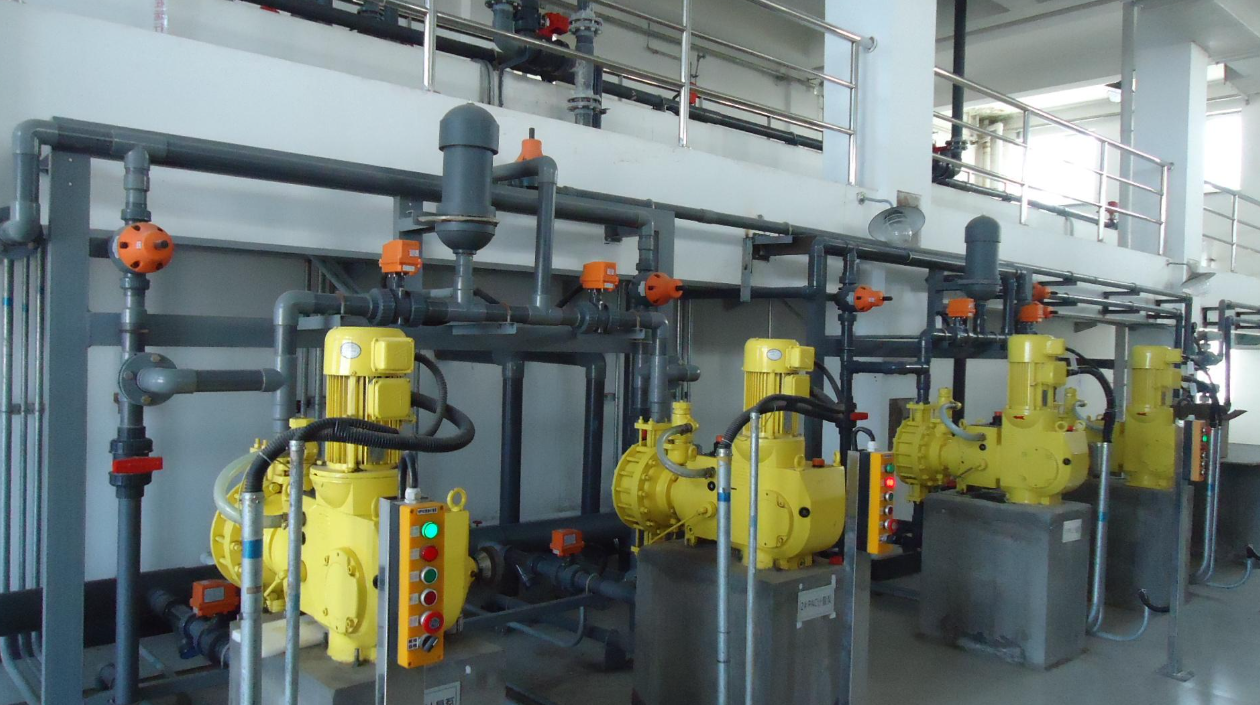
Reciprocating pumps, diaphragm pumps, and metering pumps are widely used in chemical dosing, water treatment, oil and gas injection, and process transfer applications. Because these pumps generate flow by cyclic mechanical motion rather than continuous rotation, the resulting flow is never perfectly steady. This raises a common question from process engineers and system integrators: can an electromagnetic flow meter reliably measure liquid flow when the source is a reciprocating-type pump?
Direct Answer
Yes, an electromagnetic flow meter can measure conductive liquids under pulsating flow conditions generated by reciprocating pumps, diaphragm pumps, or metering pumps, provided the fluid remains electrically conductive and the meter's electronic response characteristics are compatible with the pulsation frequency and amplitude of the specific pump. An electromagnetic flow meter does not eliminate the physical pulsation itself — it measures and reports flow based on the induced signal generated by the moving conductive fluid. Whether the displayed reading accurately reflects instantaneous flow, average flow, or a damped/smoothed version of both depends on the meter's internal signal processing, the pulsation characteristics of the pump, and the hydraulic design of the piping system. Model-specific response behavior should always be confirmed with the manufacturer when dynamic accuracy is critical.
Why Reciprocating Pumps Generate Periodic Flow Pulsations
Reciprocating pumps, including piston, plunger, and diaphragm designs, move fluid through a cycle of suction and discharge strokes. Each stroke displaces a fixed volume of liquid, and the transition between strokes — along with valve opening/closing timing — creates discrete pulses rather than a continuous stream. The number of pulses per unit time corresponds directly to the pump's stroke frequency (often linked to motor speed, gear ratio, or stroke adjustment setting). Multi-cylinder or multi-diaphragm pumps may reduce the severity of pulsation through phased strokes, but they rarely eliminate it entirely. The result is a flow profile where instantaneous velocity rises and falls cyclically, even though the average delivered volume over time may be constant if the pump operates at a stable setpoint.
Instantaneous Flow Variation vs. Average Flow Measurement
It is important to separate two concepts that are often confused in pulsating-flow discussions:
- Instantaneous flow is the actual velocity of the fluid at any given moment, which fluctuates rapidly under reciprocating pump action.
- Average flow is the volume delivered over a defined time interval, which is typically what process control, batching, and billing applications require.
An electromagnetic flow meter generates a signal proportional to the velocity of the conductive fluid passing through its measuring section at that instant. If the meter's sampling and signal-conditioning electronics are fast enough to follow the pulsation, the raw signal will reflect the oscillating pattern. Many industrial applications do not require visibility into every pulse; they require a stable, representative average flow reading over a defined time window. How a specific meter model handles this distinction — whether through internal averaging, electronic damping, or faster real-time sampling — varies by manufacturer and should be verified against the application's actual control or billing requirements.
How Pulsation Frequency, Meter Response, and Damping Interact
Several interacting factors determine what a given electromagnetic flow meter will actually display under pulsating conditions:
- Pulsation frequency — Higher stroke rates produce more rapid, smaller-amplitude oscillations; low stroke-rate pumps with large displacement per stroke tend to produce fewer, larger pulses.
- Meter sampling/response characteristics — Each electromagnetic flow meter design has its own internal signal update rate and filtering behavior, which determines how closely the displayed value tracks rapid changes.
- Signal damping settings — Many converters allow a configurable damping or averaging time constant, intended to stabilize the displayed reading rather than track every fluctuation.
- Process dynamics — Pipe elasticity, trapped air, valve positions, and check valve behavior downstream of the pump can further shape how pulsation propagates through the system before reaching the meter.
Because these factors interact, the same pump pulsation may appear differently on two different meter models, or even on the same meter model with different damping settings. For this reason, this article does not state a universal pulsation frequency limit or response time — these parameters are model-dependent and should be requested directly from the flow meter manufacturer for the specific unit under consideration.
Pump Operating Conditions, Pipe Arrangement, and Measurement Stability
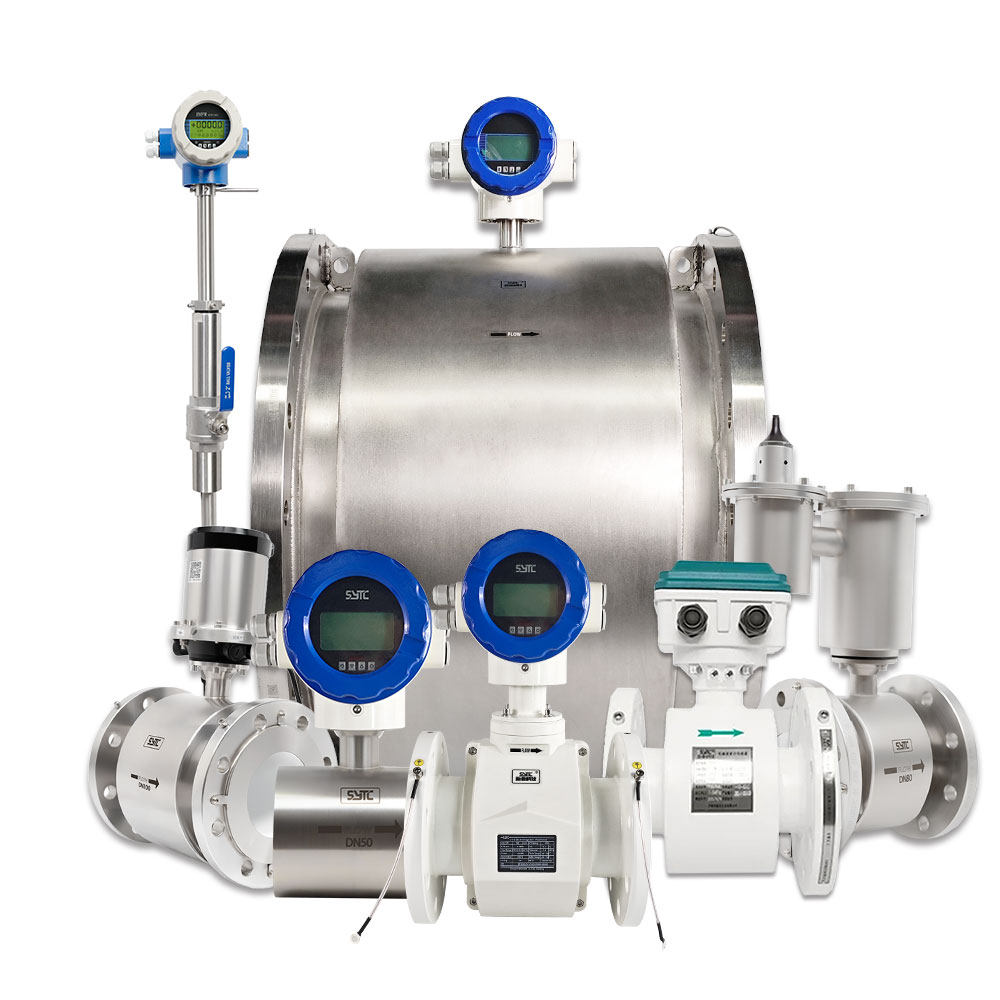
The stability of a flow reading under reciprocating pump service is influenced not only by the meter itself but by how the pump and piping are arranged:
- Distance from pump discharge to meter: Pulsation amplitude often diminishes somewhat with pipe length and the presence of elbows or fittings, though this is not guaranteed in every installation.
- Pipe diameter and fluid velocity: Lower average velocities relative to pulsation amplitude can make oscillations more pronounced as a percentage of the reading.
- Multiple pumps operating together: Phase differences between multiple reciprocating units can either partially cancel pulsation or, in unfavorable phase alignment, amplify it.
- Check valves and discharge valve condition: Worn or chattering valves can introduce additional irregular pulses beyond the pump's normal stroke pattern.
- Entrained air or vapor: Reciprocating pumps handling fluids near their vapor pressure can introduce additional signal noise unrelated to the electromagnetic measurement principle itself.
Engineers should treat pulsation as a system-level characteristic, not solely a flow meter specification issue.
When to Consider a Pulsation Dampener or Other Hydraulic Measures
A pulsation dampener, surge suppressor, or flow-smoothing device is not automatically required for every reciprocating pump installation using an electromagnetic flow meter. Many applications — particularly those requiring only average flow totals for batching or billing — operate successfully without additional hydraulic damping, provided the meter and converter settings are appropriately configured.
Hydraulic measures may warrant consideration when:
- The application requires tight real-time flow control response rather than averaged totals.
- Pulsation amplitude is unusually severe due to single-cylinder pump design, low stroke frequency, or worn valves.
- Downstream instrumentation (such as control valves or other flow-sensitive equipment) is sensitive to pressure or flow oscillation, independent of the flow meter's own performance.
- Preliminary testing shows the raw signal is noisy enough to affect totalization reliability even after reasonable damping adjustment.
This decision should be based on actual field behavior and process requirements, not assumed as a default necessity.
Practical Troubleshooting Approach for Engineers
When a flow meter reading appears unstable on a reciprocating pump line, a structured troubleshooting approach helps separate genuine process pulsation from electrical or installation issues:
- Confirm grounding and wiring — Poor grounding, shared conduit with VFD cables, or inadequate shielding can introduce electrical noise that mimics or worsens apparent pulsation. Rule this out first.
- Verify full pipe condition — Partially filled pipes or entrained air will distort electromagnetic signal generation independently of pump pulsation.
- Check electrode/liner condition — Coating, buildup, or electrode contact issues can create erratic signals unrelated to hydraulic pulsation.
- Observe raw (undamped) signal if available — Compare the unfiltered signal to the damped display to understand how much variation is actual process pulsation versus electronic smoothing.
- Assess pump mechanical condition — Worn valves, air in the suction line, or cavitation can introduce irregular pulses beyond the pump's designed stroke pattern.
- Evaluate installation geometry — Confirm adequate straight-pipe length and that the meter is not installed immediately at the pump discharge flange without any settling length.
- Adjust damping incrementally — Increase damping/averaging settings in small steps and observe whether the reading stabilizes to a consistent average without introducing unacceptable lag for the application.
If instability persists after these checks, consult the flow meter manufacturer with details of the pump type, stroke frequency, and piping layout for model-specific guidance.
Limitations of Using Transmitter Damping to Compensate for Hydraulic Pulsation
Electronic damping or signal averaging is a configuration tool, not a substitute for addressing actual hydraulic pulsation at its source. Increasing damping time can smooth the displayed reading and reduce visible fluctuation, but it does not change the real instantaneous flow behavior in the pipe. Important limitations include:
- Excessive damping can introduce lag, delaying the meter's response to genuine flow changes — which may be undesirable in control loops requiring fast feedback.
- Damping cannot correct for underlying installation problems such as insufficient straight pipe, entrained air, or electrode fouling.
- A heavily damped average reading may mask short-term flow events that matter for certain batching or safety-related applications.
- Damping settings that work well at one pump speed or load condition may not remain optimal if the pump's operating frequency changes.
Because of these trade-offs, damping should be viewed as a tuning parameter to be set according to the application's actual tolerance for response lag, not as a universal fix for pulsation-related signal variation.
Buyer Checklist: Information to Prepare Before Selecting a Meter
When evaluating an electromagnetic flow meter for a reciprocating, diaphragm, or metering pump application, gather the following details before requesting a technical recommendation:
- Pump type (piston, plunger, diaphragm, or metering pump) and number of cylinders/heads
- Pump operating frequency (strokes or cycles per minute) and whether speed is variable
- Minimum and maximum expected flow rate
- Pipe diameter and available straight-pipe length upstream/downstream of the meter location
- Fluid electrical conductivity (electromagnetic meters require a minimum conductive medium)
- Fluid temperature range
- System operating pressure
- Required response time or whether only totalized/average flow is needed
- Presence of check valves, dampeners, or other hydraulic devices already in the line
- Whether the measurement supports control, billing, or monitoring purposes
Providing this information allows a manufacturer to assess whether a standard configuration is suitable or whether additional hydraulic measures or specific converter settings should be discussed.
About Kaifeng Xinya Instrument Co., Ltd.
Kaifeng Xinya Instrument Co., Ltd., based in Kaifeng, Henan, China, manufactures industrial electromagnetic flow meters and flow calibration systems for conductive liquid measurement across municipal, industrial, and food-grade applications. Xinya's electromagnetic flow meter configurations are designed around standard industrial flow measurement principles, including square wave pulse excitation and multiple signal output options (4-20mA, pulse, frequency).
For applications involving reciprocating, diaphragm, or metering pumps, technical suitability — including how a given model's electronics respond to pulsating flow — should be confirmed against the actual operating conditions (pump type, frequency, pipe size, fluid properties) and the specific model's technical documentation. Xinya performs 100% factory calibration of its flow meters before delivery; however, factory calibration establishes measurement accuracy under defined test conditions and does not, by itself, guarantee dynamic performance under every possible pulsating-flow scenario in the field. Buyers with demanding dynamic response requirements should request model-specific technical data or discuss test conditions directly with the manufacturer.
Frequently Asked Questions
Q1: Can an electromagnetic flow meter measure flow from a diaphragm metering pump?
Generally, yes, provided the fluid is sufficiently conductive and the pipe remains full. The displayed reading's stability will depend on pulsation amplitude, pump stroke frequency, and the meter's signal processing settings.
Q2: Will the flow meter show the exact instantaneous pulse pattern of the pump?
This depends on the meter's internal sampling rate and damping configuration. Some installations show visible oscillation on the raw signal, while averaged/totalized readings are typically smoother. Confirm with the manufacturer how a specific model handles rapid signal changes.
Q3: Do I always need a pulsation dampener with a reciprocating pump and an electromagnetic flow meter?
No. A dampener is not automatically required. It becomes relevant mainly when real-time response accuracy is critical, pulsation is unusually severe, or downstream equipment is sensitive to flow/pressure oscillation.
Q4: Can increasing the damping setting fix an unstable reading?
Damping can smooth the displayed value, but it does not eliminate actual hydraulic pulsation and may introduce response lag. Underlying causes such as entrained air, poor grounding, or electrode fouling should be ruled out first.
Q5: Does pipe length between the pump and the meter matter?
Yes, in many cases additional straight pipe length and distance from the pump discharge can help reduce the severity of pulsation reaching the meter, though results vary by installation and should be evaluated case by case.
Q6: How do I know if signal instability is from pulsation or electrical interference?
Check grounding, shielding, and cable routing relative to VFDs or other noise sources first. If the signal remains unstable after ruling out electrical issues, the variation is more likely related to actual hydraulic pulsation or installation conditions.
Conclusion
Electromagnetic flow meters can measure conductive liquids delivered by reciprocating, diaphragm, or metering pumps, but they do not eliminate the underlying flow pulsation — they report a signal shaped by that pulsation, the meter's own response characteristics, and the configured damping. Achieving a stable, useful reading requires attention to pump condition, piping layout, conductivity requirements, and realistic expectations about what damping can and cannot compensate for. Because response behavior varies between manufacturers and models, model-specific verification is recommended whenever dynamic accuracy is important to the application.
If you are evaluating an electromagnetic flow meter for a pulsating-flow application, share your pump type, flow range, pipe size, fluid medium, operating temperature, and pressure with Xinya Instrument's technical team for configuration guidance based on your specific conditions.
https://www.sytcflowmeter.com/
Kaifeng Xinya Instrument Co., Ltd.
