Electroplating Rinse Water Flow: Can Mag Meters Measure It?
Electroplating Rinse Water Flow: Can Mag Meters Measure It?
Direct Answer
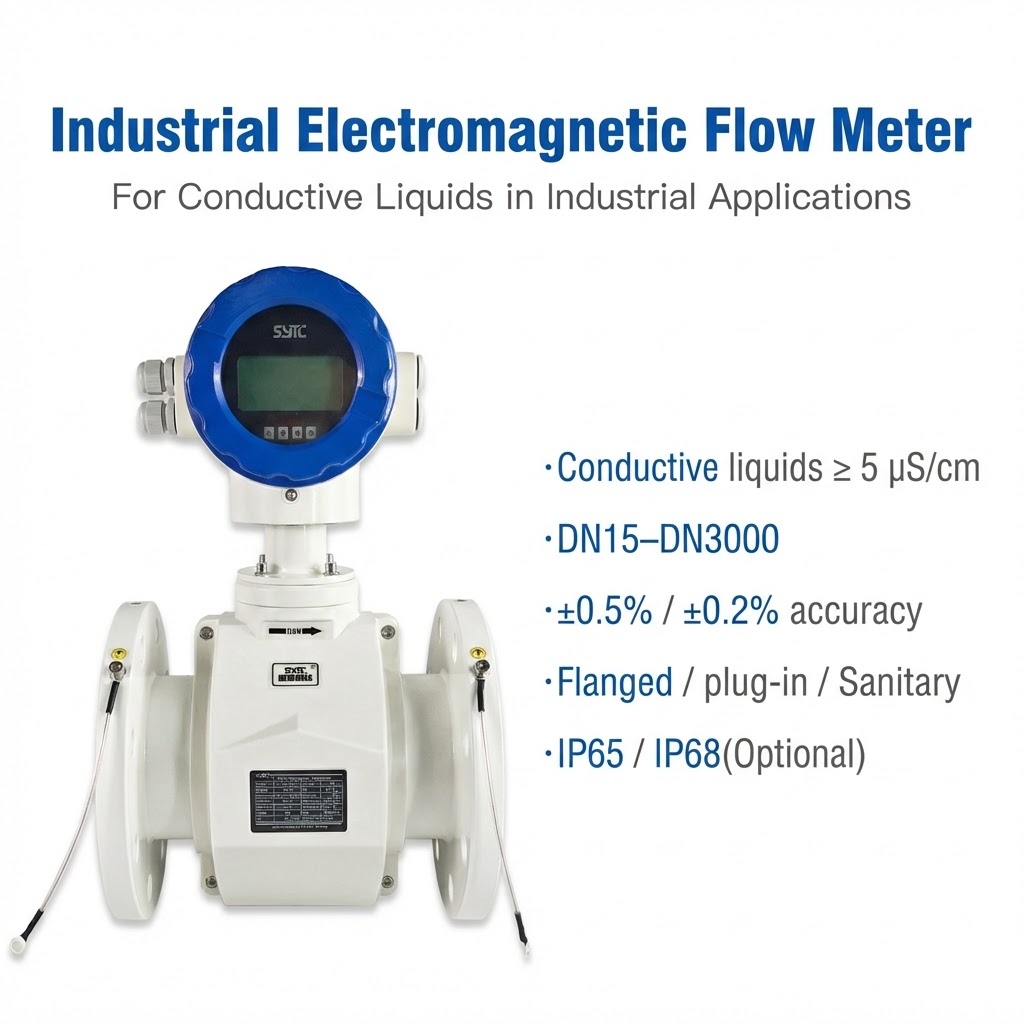
Yes, an electromagnetic flowmeter can often measure electroplating rinse water — but not automatically, and never on the strength of the word "electroplating" alone. Suitability depends first on whether the rinse water's conductivity is above the minimum required by the specific meter model you select, and then on the actual water chemistry and process conditions: residual acids, alkalis and salts, temperature, pressure, pipe size, flow range, full-pipe conditions, and wetted-material compatibility.
Rinse water is also not a single medium. A drag-out rinse, a counterflow rinse, and a final deionized rinse in the same plating line can differ enormously in conductivity and chemical aggressiveness. The practical answer is therefore: measurable in principle, model-specific in practice, and confirmed only against a real fluid specification.
Rinse Water Is Not Plating Bath or Circulating Electrolyte
The first mistake in rinse-line flow measurement is treating every liquid in the plating shop as the same fluid. They are not.
- Rinse water is a dilute, largely aqueous stream. Its job is to carry drag-out away from the workpiece. It is usually low in concentration, but its composition changes continuously with production load.
- Concentrated plating bath is a formulated electrolyte — nickel sulfate, acid copper, zinc, chrome, and similar chemistries — with high ionic content, elevated temperature, and aggressive attack on many wetted materials.
- Circulating electrolyte in a plating tank loop is a third case again: high concentration, often hot, often with suspended solids and additives.
A meter that fits a dilute rinse stage may be entirely unsuitable in a bath circulation loop, and the reverse is also true. Each duty needs its own review of conductivity, chemistry, temperature and materials.
Conductivity: The First Gate for Electromagnetic Measurement
Electromagnetic flowmeters work on Faraday's law: a conductive liquid moving through a magnetic field generates a voltage that is proportional to velocity. If the liquid is not conductive enough, there is no usable signal — regardless of accuracy class, output type or price.
Two practical consequences for rinse water:
- Every model has a minimum conductivity requirement. That limit is defined per meter design; it must be confirmed against the actual model and the actual rinse stream. It cannot be assumed from a general rule of thumb.
- Deionized or very pure final rinses are the risk case. If a rinse stage uses DI water, or if the rinse is heavily diluted during light production, the conductivity measured in the line may fall below the meter's minimum and the reading becomes unstable or absent.
The defensible approach is to measure the conductivity of the actual rinse stream — at minimum, normal and worst-case production — or to have it measured, and then compare it with the meter's stated requirement.
What Actually Drives Corrosion and Crystallization Risk
Corrosion and crystallization risk are functions of the specific chemical composition and operating conditions, not of the industry label. The relevant questions are:
- Which chemistry is being rinsed? Acid rinses after pickling or acid copper behave very differently from alkaline rinses, and both differ from hexavalent or trivalent chromium rinses or nickel sulfate drag-out.
- Concentration and pH. Even dilute drag-out can be locally concentrated at the sensor if flow is low or the line is partly drained.
- Temperature. Hot rinse stages accelerate chemical attack on linings, electrodes and seals.
- Deposits and crystallization. Nickel salts and some other chemistries can crystallize or deposit on wetted surfaces, particularly on electrodes and in low-velocity zones, which can shift or degrade the signal over time.
- Chlorides and other aggressive ions. These are decisive for electrode selection and must be reviewed explicitly.
Because of this, there is no universal liner or electrode material that can be recommended on the basis of "electroplating." Material selection has to be confirmed against the fluid specification and the operating envelope.
Full-Pipe Condition, Flow Range and Pipe Size
Electromagnetic flowmeters measure velocity, and velocity is converted to volume flow only when the pipe is completely full. In plating rinse lines this matters more than in most applications:
- Rinse lines are frequently small-diameter and fed by gravity or low-head pumps, so partially filled or intermittently filled pipe is a real possibility.
- Cascade and counterflow rinse systems can entrain air, which produces unstable readings.
- Small nominal diameters with low rinse flows can push the operating velocity below the useful measuring range. Kaifeng Xinya's electromagnetic flowmeters cover a velocity measurement range of 0.1 to 10 m/s — the lower end of that range is the one to check carefully against your minimum rinse flow.
Xinya's converters include self-diagnosis functions that detect empty pipe, excitation circuit breaks and flow range overflow, which helps distinguish a genuine low-flow condition from a partially filled pipe — but diagnosis is not a substitute for correct installation and sizing.
Wetted Materials and Piping: Confirm, Do Not Assume
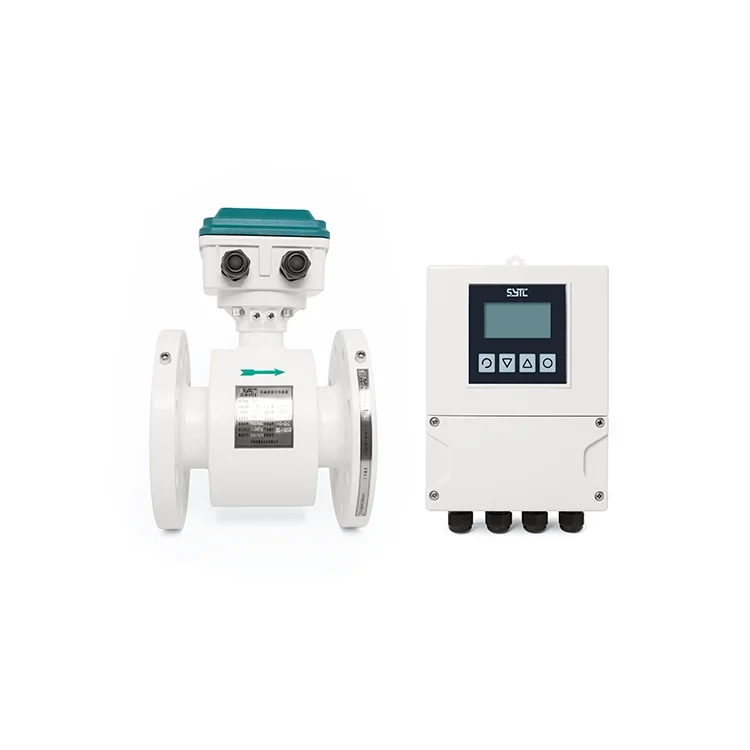
Kaifeng Xinya Instrument Co., Ltd. manufactures electromagnetic flowmeters with a range of lining options, including polyurethane, PFA, ceramics for small diameters and various rubbers. Electrode material selection is application-specific, and chemical resistance for any given rinse chemistry is confirmed against the fluid data — not assumed.
The piping itself also matters. Plating and rinse lines are often built in non-conductive plastic pipe, where grounding electrodes may be needed to stabilise the measurement circuit. This is a normal, solvable installation detail, but it must be identified at the selection stage rather than discovered at commissioning.
Selection Checklist for Electroplating Rinse Water
Work through this list before requesting a quote:
- [ ] Rinse stage identified: drag-out, counterflow, reclaim, or final DI rinse
- [ ] Fluid composition, including the plating chemistry being rinsed
- [ ] Conductivity of the actual rinse stream, if known (normal and worst case)
- [ ] Concentration, pH, and any chlorides or aggressive ions
- [ ] Temperature range: minimum, normal, maximum
- [ ] Line pressure and any pressure surges
- [ ] Pipe size (DN) and pipe material — metal or plastic
- [ ] Minimum, normal and maximum flow rate
- [ ] Confirmation that the pipe runs full at all operating conditions
- [ ] Required output: 4-20mA, pulse, frequency, or digital communication
- [ ] Cleaning regime, including any chemical or CIP exposure
- [ ] Installation orientation and available straight pipe runs
What Must Be Confirmed Model-Specifically
The following cannot be answered from a general article, and should be treated as open items until confirmed against a specific model and a specific fluid:
- The minimum conductivity the selected meter requires
- Liner and electrode material suitability for your rinse chemistry and temperature
- Chemical resistance and expected service behaviour under your cleaning regime
- Accuracy achievable under your actual flow profile and installation conditions
- Whether the sensor's ingress protection level suits your washdown or wet-area conditions
FAQs
Can an electromagnetic flowmeter measure deionized rinse water?
Only if the water's conductivity at the measuring point is above the minimum the selected meter requires. Very pure or heavily diluted final rinses are the most likely to fall below it. Measure the stream, or have it measured, before committing to electromagnetic measurement.
Which liner and electrode should I choose for electroplating rinse water?
There is no single correct answer. It depends on the chemistry being rinsed, its concentration, chlorides, temperature and cleaning regime. Materials must be matched to the fluid specification rather than to the word "electroplating."
Does the rinse line have to be metal pipe?
No. Plastic piping is common in plating shops. Where the pipe is non-conductive, grounding electrodes may be required to stabilise the signal, so this should be specified when the meter is ordered.
Is a battery-powered or wireless unit suitable for a rinse line?
Battery-powered, GPRS-connected units are useful where power and cabling are unavailable, and Xinya supplies IP68-rated sensor units for submerged or buried installation. Suitability still depends on conductivity, flow range and the fluid's chemistry.
Request for Quotation Checklist
To get an accurate recommendation for electroplating rinse water flow measurement, send:
- Rinse stage and the plating chemistry being rinsed
- Fluid composition, pH, and conductivity if known
- Concentration, including typical and worst-case drag-out
- Temperature range (min / normal / max) and operating pressure
- Minimum, normal and maximum flow rate
- Pipe size (DN) and pipe material
- Full-pipe confirmation and installation orientation
- Required outputs and communication protocol (4-20mA, pulse, frequency, RS485, HART, GPRS)
- Cleaning and CIP regime, and any chemicals used
- Line drawing or site photographs where available
Kaifeng Xinya Instrument Co., Ltd. manufactures electromagnetic flowmeters and factory-calibrates its flowmeters before delivery. Final material and model suitability for any specific electroplating rinse application is confirmed against the fluid specification and operating conditions supplied by the buyer.
https://www.sytcflowmeter.com/
Kaifeng Xinya Instrument Co., Ltd.
