Exploring the Benefits of Automated 3D Scanning in Quality Control
Quality control has long been a cornerstone of manufacturing across industries such as automotive, aerospace, precision tooling, and electronics. Achieving consistent dimensional accuracy and product reliability is essential to maintaining performance standards and customer satisfaction. While traditional inspection tools—like calipers, gauges, and coordinate measuring machines (CMMs)—have played an important role for decades, modern production environments now require faster, more precise, and more adaptable inspection methods.
In this context, automated 3D scanning technology has emerged as a transformative solution. By capturing highly detailed three-dimensional data of parts and assemblies, these systems enable manufacturers to identify deviations quickly, refine production processes, and ensure stable product quality at scale.
As manufacturing continues to evolve toward digitalization and intelligent production, automated 3D scanning is becoming a vital component of advanced quality control systems.
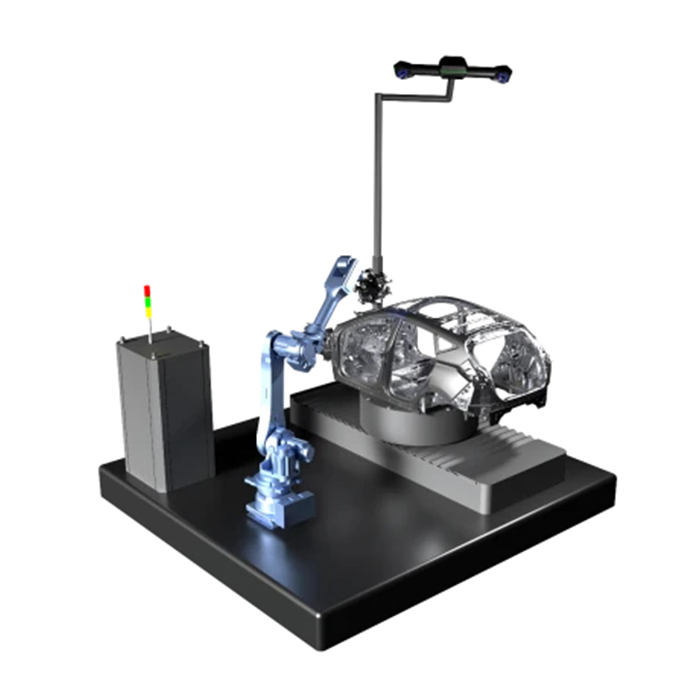
From Traditional Inspection to Digital Measurement
Conventional inspection methods typically rely on manual measurements or sampling specific points on a part. While these approaches can deliver accurate readings at selected locations, they often fail to represent the complete geometry of complex components. As a result, certain defects or inconsistencies may go undetected.
Automated 3D scanning overcomes this limitation by capturing millions of data points across the entire surface of a component. The outcome is a precise digital model that can be analyzed, compared, and stored for future reference.
Key benefits include:
-
Comprehensive full-surface inspection instead of limited point checks
-
Significantly faster inspection processes
-
Reduced dependence on manual operation, lowering human error
-
Improved traceability through digital data storage
-
Seamless integration with digital manufacturing systems
This shift from manual inspection to digital measurement is redefining modern quality assurance practices.
How Automated 3D Scanning Functions
Automated 3D scanners utilize technologies such as structured light, laser triangulation, and photogrammetry to capture object geometry. By projecting light or laser patterns onto a surface and recording distortions with high-resolution sensors, the system gathers accurate spatial data.
The captured information is then processed into a point cloud or mesh model, which can be directly compared with CAD designs.
A typical workflow includes:
-
Positioning the part within a scanning system or on a rotating platform
-
Capturing high-density data from multiple angles
-
Converting the data into a digital 3D model
-
Comparing the model with the original CAD file
-
Identifying deviations, tolerances, and defects
This automated process allows for rapid detection of dimensional inaccuracies and supports timely corrective action.
Boosting Inspection Efficiency
One of the most notable advantages of automated 3D scanning is its ability to dramatically improve inspection efficiency.
Manual inspection methods can be slow and labor-intensive, particularly when dealing with complex geometries or multiple critical features. Each measurement must be individually taken and recorded.
In contrast, automated scanners capture the entire geometry in a single operation. Instead of checking dozens of points, millions of data points can be collected within seconds. This enables engineers to evaluate the complete part rather than relying on limited samples.
The result is shorter inspection cycles and increased productivity throughout the manufacturing process.
Identifying Hidden Defects
Modern components often feature intricate shapes, curved surfaces, and tight tolerances that are difficult to evaluate using traditional tools.
Automated 3D scanning provides a detailed surface analysis capable of revealing subtle defects that might otherwise remain unnoticed, such as:
-
Surface distortion or warping
-
Dimensional inconsistencies
-
Misalignment in assemblies
-
Tool wear or damage
-
Process-related irregularities
Detecting these issues early helps prevent defective parts from progressing further in the production chain, reducing costly rework and delays.
Supporting Reverse Engineering and Design
Beyond inspection, 3D scanning plays a crucial role in reverse engineering and product development. When original design data is missing or outdated, scanning allows manufacturers to digitize existing components quickly.
These digital models can then be used for:
-
Reconstructing CAD files
-
Enhancing product designs
-
Optimizing tooling
-
Creating digital archives of components
This capability is especially valuable in industries that deal with legacy parts or require rapid design iteration.
Enabling Smart Manufacturing
In the era of Industry 4.0, data-driven decision-making is central to manufacturing efficiency. Automated 3D scanning contributes by delivering high-precision measurement data that integrates seamlessly with digital systems such as CAD platforms, manufacturing execution systems (MES), and quality management software.
With this integration, manufacturers can:
-
Monitor product quality in real time
-
Detect process variations early
-
Adjust production parameters proactively
-
Enhance traceability and compliance
Inspection systems are no longer standalone tools—they are part of a connected, intelligent production ecosystem.
Industry Development and Technological Progress
Companies like Suzhou Evolution Technology Co., Ltd. have played a role in advancing precision measurement solutions. Since its establishment in 2015, the company has expanded from CNC tool setters to probes, and later into advanced 3D scanning technologies.
With continued growth and innovation, its solutions now support a wide range of applications, including dimensional inspection, product validation, and digital analysis. The company has also broadened its portfolio to include analytical instruments and is exploring future developments in 3D vision inspection for intelligent automation.
Reducing Manufacturing Costs
Effective quality control is not just about accuracy—it also directly impacts cost efficiency. Undetected defects can lead to scrap, rework, delays, and customer complaints.
Automated 3D scanning helps reduce these risks by identifying problems earlier in the process. Cost-related advantages include:
-
Lower material waste and scrap rates
-
Reduced labor for manual inspection
-
Faster root cause identification
-
Fewer recalls and warranty claims
Over time, these improvements contribute to higher profitability and operational efficiency.
Improving Documentation and Traceability
Another key strength of automated scanning is its ability to generate and store detailed digital records. Each inspected part can be archived with comprehensive reports, including deviation maps and measurement data.
This level of documentation is essential for:
-
Quality audits
-
Regulatory compliance
-
Customer verification
-
Long-term production analysis
It also enables manufacturers to track quality trends and identify recurring production issues more effectively.
Meeting the Demands of Complex Manufacturing
As products become more sophisticated, inspection methods must keep pace. Advanced materials, intricate designs, and tighter tolerances demand flexible and precise measurement solutions.
Unlike traditional tools designed for specific features, 3D scanning systems can measure nearly any geometry without requiring specialized fixtures. This makes them ideal for:
-
Prototype validation
-
Small-batch production
-
Complex molded parts
-
Precision machining
-
Additive manufacturing
Their adaptability ensures they remain effective across a wide range of applications.
Future Trends in 3D Inspection
The importance of automated 3D scanning will continue to grow alongside advancements in digital manufacturing. Emerging developments include:
-
AI-driven defect recognition
-
Robotic integration for automated inspection
-
Inline scanning for real-time monitoring
-
Cloud-based data storage and analysis
These innovations will further enhance the speed, intelligence, and reliability of quality control systems.
Conclusion
Automated 3D scanning is reshaping quality control by delivering faster, more accurate, and more comprehensive inspection capabilities. Through full-surface data capture and seamless integration with digital workflows, it enables manufacturers to maintain high standards while improving efficiency.
From uncovering hidden defects to supporting reverse engineering and smart manufacturing initiatives, this technology offers advantages that traditional inspection methods cannot match. As the manufacturing industry continues to advance, automated 3D scanning will remain a key driver of consistent quality and operational excellence.
www.szevotech.com
Suzhou Evolution Technology Co., Ltd.
