Full-Spectrum Reader: Can It Detect 260nm and 280nm Samples?
Understanding Full-Spectrum Detection: Why 260nm and 280nm Matter
Laboratories that work with nucleic acids and proteins routinely need wavelength coverage that includes 260nm and 280nm, since these are the reference points typically used for DNA/RNA and protein analysis. A microplate reader that is limited to a small set of fixed filters cannot easily accommodate every wavelength a laboratory workflow demands, and switching filters manually slows down multi-assay testing. This is precisely the pain point that Wuxi Hiwell-Diatek Instrument Co., Ltd., operating under the Diatek brand, set out to address with its DR-5000 Full Wavelength Microplate Reader.
Diatek's DR-5000: A Filter-Free Solution Across the Full 190–1100 nm Range
The DR-5000 is built around a flexible, high-resolution detection platform designed for researchers who require broad spectral analysis without the constraints of traditional fixed-filter instruments. Because the reader covers 190–1100 nm with freely selectable wavelengths, it is capable of reading samples at 260nm and 280nm, along with any other wavelength within that range, without the need to purchase or install additional filters. This full-spectrum flexibility directly answers the core question of whether a full-spectrum reader can detect samples at these two specific wavelengths — it can, because 260nm and 280nm fall well within the instrument's operating window.
Grating Monochromator Technology
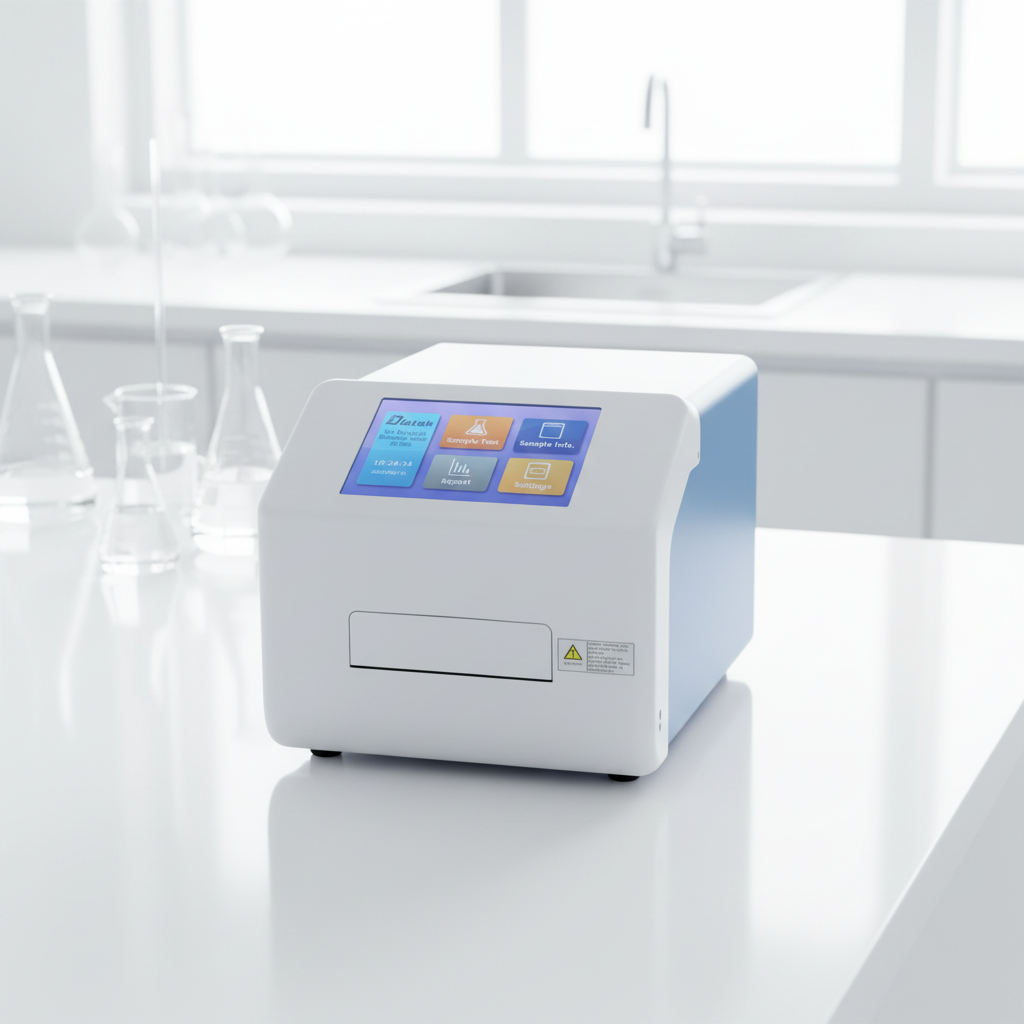
At the heart of this capability is a proprietary monochromator technology using high-precision gratings for filter-free wavelength tuning. Rather than relying on a fixed set of interference filters, the grating monochromator allows the DR-5000 to select wavelengths in 0.1 nm or 1 nm increments across the full 190–1100 nm band. This means a laboratory can move from a 260nm nucleic acid reading to a 280nm protein reading, or to any other wavelength needed for a chemical or biological assay, through the instrument's touch interface rather than through manual hardware changes.
Precision Metrics That Support Reliable Readings at Any Wavelength
Detecting a sample at a given wavelength is only useful if the reading is accurate and repeatable. The DR-5000 is specified with a wavelength accuracy of ±0.5 nm, wavelength repeatability of ≤0.2 nm, and absorbance stability of ≤±0.002A. These technical metrics apply across the instrument's full spectral range, including the 260nm and 280nm points commonly used for nucleic acid and protein work. For laboratories running the professional DR-5000 Pro variant, the instrument also offers stray light control ≤0.05%, which supports enhanced transmittance accuracy when measuring low-concentration or optically demanding samples. Detection speed is also a practical consideration for throughput-driven labs: the DR-5000 completes a full 96-well plate reading in 10 seconds, while continuous 96-well reading is achieved in 16.5 seconds.
Android-Based Workflow for Fast, Accurate Detection
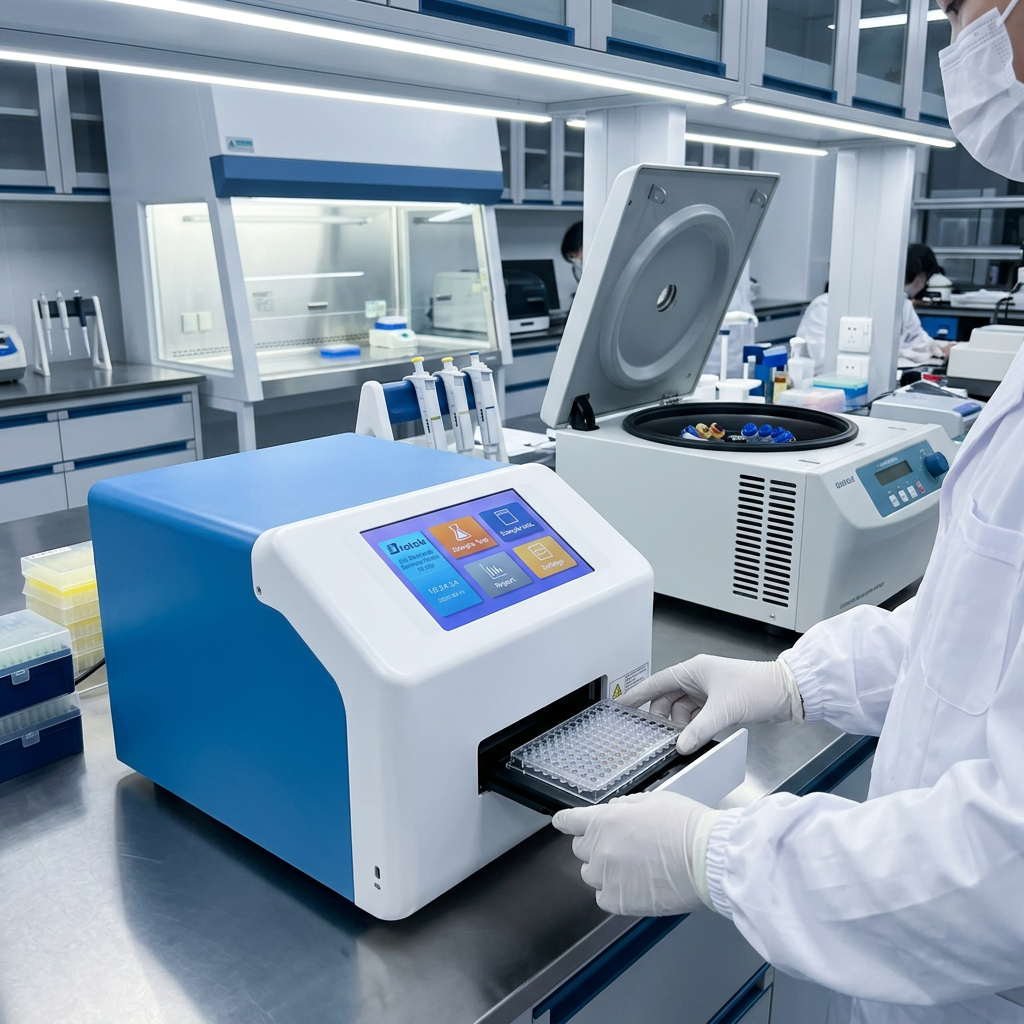
Beyond the optical system, the DR-5000 integrates a 10-inch capacitive color LCD running an Android-based instrument control platform (Android 5.1). This brings a smartphone-like touch experience to wavelength selection and workflow management, allowing lab technicians to move through a "Layout → Analysis → Processing" sequence without extensive training. This visual, touch-driven approach is designed to be compliant with IVD human factors engineering standards, reflecting attention to usability alongside optical performance.
The instrument's software, Diatek Analysis Software, supports 4-Parameter Logistic (4PL) regression, spectral scanning, kinetic data analysis, and multiple linear and non-linear regression modeling, along with calibration methods such as Log-Log, Power, and Polynomial curves. Real-time endpoint and kinetic data analysis is built in, so once a reading is taken at 260nm, 280nm, or any other selected wavelength, the resulting data can be processed immediately within the same system.
Application to DNA/RNA Quantification and Beyond
The practical relevance of full-spectrum, filter-free detection becomes clear in the instrument's stated industry applications. Diatek positions the DR-5000 for life sciences work, specifically citing DNA/RNA quantification with a 2ng/µl detection limit, as well as protein assays — both of which are typical use cases for 260nm and 280nm readings. The reader is also positioned for clinical research, supporting endpoint and kinetic assays for biochemical analysis, and for chemical testing, including turbidity studies and spectral scanning. Because the same monochromator and touchscreen workflow apply across all these use cases, a single DR-5000 unit can move between wavelengths and assay types without additional hardware.
Supporting hardware features add further consistency to readings taken across different wavelengths. An incubation module maintains temperature control from Room Temperature +4°C up to 45°C, which helps ensure stability for temperature-sensitive biological reactions regardless of the wavelength being measured. Multi-speed shaking, offered in linear and orbital modes across three speed settings, helps optimize sample mixing prior to reading. An automatic plate drawer with motorized control reduces manual handling and helps protect the optical path that enables consistent wavelength accuracy over time.
Service and Support Backing the Instrument
Diatek's approach to the DR-5000 extends past the hardware itself. The instrument can be operated as a standalone Android device or connected to a PC, with data transfer supported through USB-A and USB-B interfaces, compatibility with U-disks and USB printers, and FTP service for uploading and downloading detection data. Exported data can be delivered in TXT, PDF, Word, or Excel formats, giving laboratories flexibility in how they document and share readings taken at 260nm, 280nm, or elsewhere in the spectrum.
On the after-sales side, Diatek backs the instrument with a 1-year free repair warranty, lifetime maintenance availability, and a stated 5-year product lifespan commitment, along with technical support for software updates and instrument calibration. Transactions through the company's international trade channel are covered by Alibaba.com Trade Assurance, with SSL and PCI DSS protocols applied for data and payment protection.
Conclusion
For laboratories asking whether a full-spectrum microplate reader can detect samples at 260nm and 280nm, the answer supported by the DR-5000's specifications is straightforward: yes. Its 190–1100 nm grating-based monochromator, combined with 0.1 nm/1 nm wavelength increments, ±0.5 nm accuracy, and dedicated software for regression and calibration, allows the instrument to read at these common nucleic acid and protein wavelengths as part of its normal operating range — without requiring separate filters for each measurement point. Backed by Diatek's warranty, lifetime maintenance, and trade-assured transaction protections, the DR-5000 offers laboratories a single, filter-free platform capable of addressing 260nm/280nm testing alongside a wide range of other photometric and turbidity applications.
www.hiwelldiatek.com
Wuxi hiwell-diatek instruments co.,ltd
