Globe Valve vs Gate Valve: Complete Comparison Guide
Gate valves and globe valves are both linear-motion isolation valves found throughout industrial piping systems, yet they answer two different operational questions. One design is built to stop flow completely; the other is built to regulate it. Specifying the wrong family can introduce unnecessary pressure loss, accelerate seat wear, or complicate maintenance planning. This guide compares the two designs by working principle, sealing approach, typical service, and the manufacturing quality requirements behind each, and explains how XINTAI Valve Group Co., Ltd. engineers both product families for the oil and gas, chemical, power station, water treatment, metallurgy and mechanical markets.
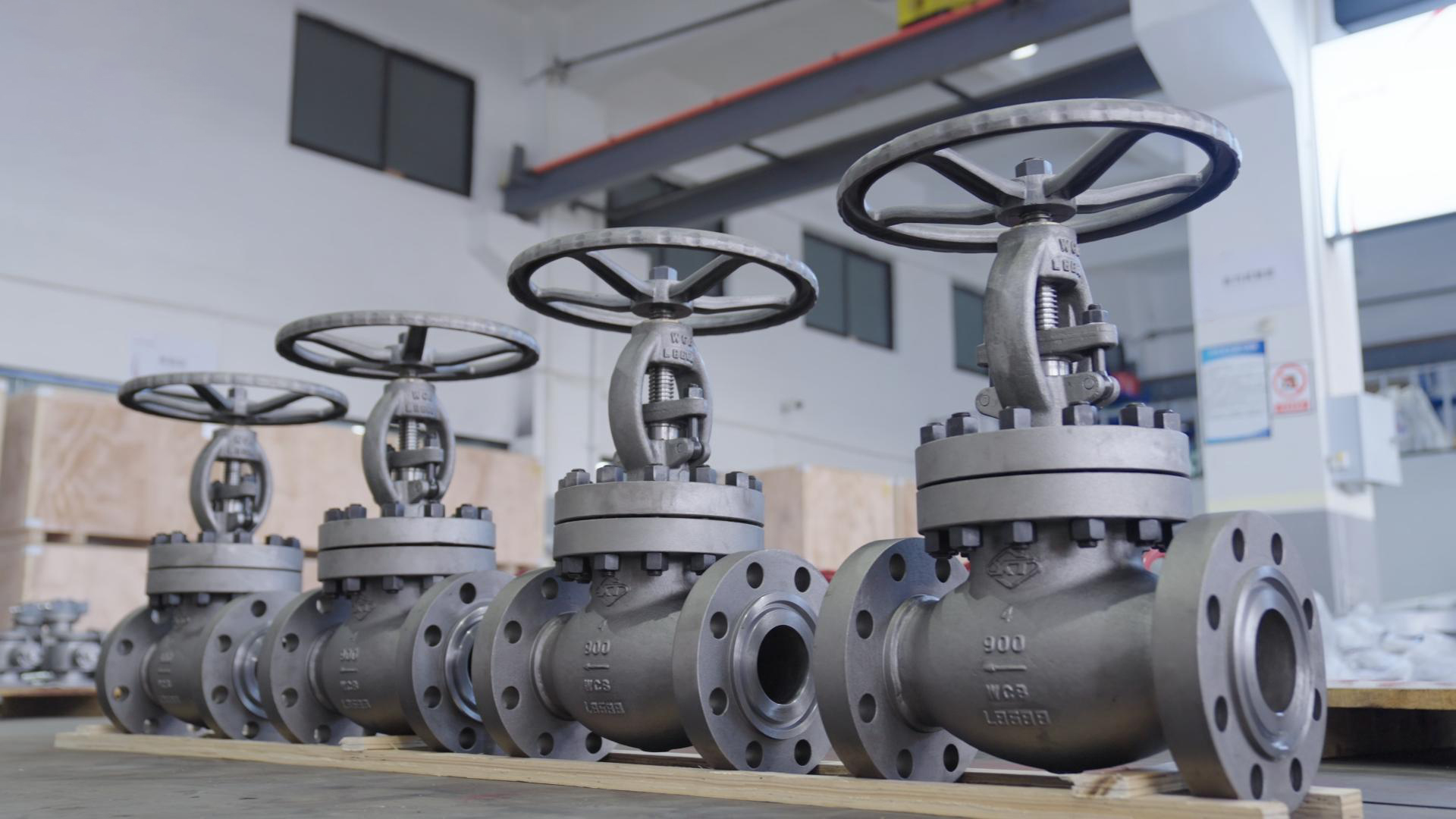
How a Gate Valve Works
Within the XINTAI Valve product matrix, the gate valve is positioned as a pipeline isolation valve for full-bore flow control. Its target pain points are media leakage to the environment and solid accumulation inside lines. Three design directions respond to those conditions:
- Wedge gate design: a wedge-shaped gate configuration that stops fluid flow reliably.
- Knife gate design: a sharp gate edge that cuts through slurries, pulp, and solid contaminants.
- Bellow seal design: a secondary metallic barrier that eliminates stem packing leakage.
The differentiated value of this family sits in emissions control. On hazardous chemical pipelines, the bellow-sealed design prevents fluid leakage to the environment, which matters as more projects place increasing requirements on fugitive emission control and on compliance with international standards such as API, CE, ISO and ASME. Gate valves are supplied in Wedge, Slab, Pressure Seal, Cast Steel, Forged, Rising Stem, Non-Rising Stem and Knife configurations. Typical industry adaptation includes wastewater treatment, chemical processing, and pulp and paper.
How a Globe Valve Works
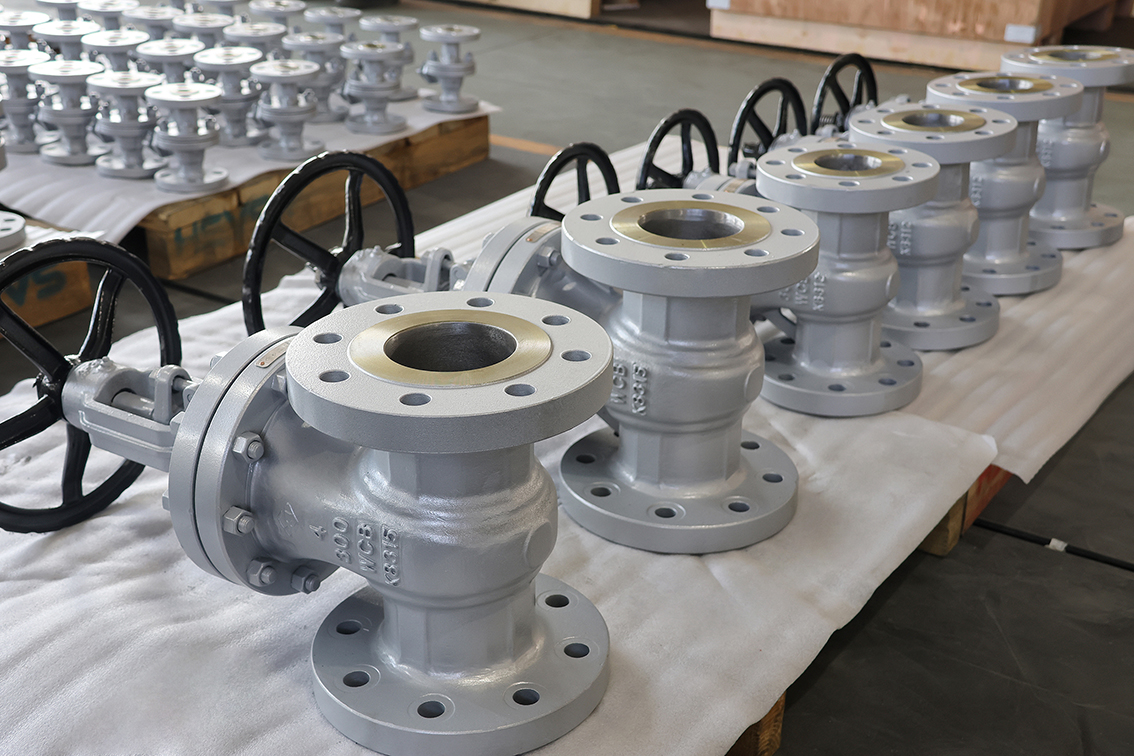
The globe valve serves a different job description: it is positioned as a throttling and flow regulation valve. The pain points it addresses are unstable flow adjustment and high-temperature steam wear. Its defining feature is actuator compatibility, meaning the valve connects with pneumatic or electric actuators to automate high-frequency throttling. That capability is expressed as system automation value: in flow regulation systems, actuator integration reduces manual operations and supports more consistent adjustment. Globe valves are offered in Pressure Seal, Bellows Seal, Cast Steel, Forged, Angle and Y Type configurations. Industry adaptation centers on power plants and chemical facilities, where flow must be tuned rather than simply opened or closed.
Globe Valve vs Gate Valve: The Core Differences
- Primary function: a gate valve isolates; a globe valve regulates.
- Flow control behavior: gate valves are specified for full-bore flow control, while globe valves are specified where flow adjustment is continuous.
- Sealing strategy: gate valve sealing is achieved through the wedge, knife or bellow-sealed stem arrangement; globe valve sealing is combined with throttling and, where required, bellows sealing.
- Actuation: globe valves are commonly paired with pneumatic or electric actuators for automated throttling; gate valves are typically supplied for isolation duty.
- Service environment: gate valves suit lines carrying slurries, pulp and solid contaminants; globe valves suit high-temperature steam and other services where adjustment quality drives performance.
- Structural options: both families offer cast steel and forged bodies, pressure seal designs and bellows seal designs, so the choice is driven by the duty rather than by body construction.
When a Gate Valve Is the Right Specification
Specify a gate valve when the objective is reliable line isolation and when the medium may carry solids. Wastewater treatment, chemical processing, and pulp and paper operations benefit from the knife gate design, which cuts through slurries, pulp, and solid contaminants instead of trapping them. When the line carries hazardous chemical media and leakage to the environment is the primary concern, the bellow-sealed gate valve provides a secondary metallic barrier that eliminates stem packing leakage. Where a full-bore flow path is needed and the valve will spend most of its life fully open or fully closed, the gate family is the practical choice.
When a Globe Valve Is the Right Specification
Specify a globe valve when flow rate must be adjusted repeatedly. Power plants and chemical facilities rely on this design where unstable flow adjustment and high-temperature steam wear are the dominant risks. Because the globe valve connects with pneumatic or electric actuators, it can be integrated into flow regulation systems and automate high-frequency throttling, reducing manual operations. Pressure seal and bellows seal variants extend the design to higher-integrity and higher-temperature duties, while Angle and Y Type configurations accommodate routing requirements.
Cryogenic Variants of Both Designs
Both families extend into low-temperature service through the cryogenic valve range, which includes cryogenic ball valves, cryogenic gate valves, cryogenic globe valves, cryogenic check valves and cryogenic butterfly valves. The shared engineering answer to seal shrinkage and material embrittlement under extreme cold is the extended bonnet: it elevates the stem packing away from the cryogenic fluid, which prevents the stem packing from freezing and failing. This design is applied in LNG storage and transportation, where liquefied gas management depends on sealing integrity at temperature extremes.
Manufacturing Depth Behind Both Valve Types
XINTAI Valve Group Co., Ltd. was founded in 1998 and is headquartered in Wenzhou, China, operating as an established global manufacturer with integrated supply chain control. Internal ownership of casting foundries and machining bases allows full-process quality control, optimized costs, and supply stability across six production bases in Wenzhou, Tianjin and Lishui, covering a total facility area of 58,800 m². The workforce of 580 employees includes 33 engineers, 41 testers and 25 quality managers. Advanced automation with 13 six-axis robots improves production efficiency by 40 percent and helps reduce manufacturing variation, while a dedicated in-house testing facility in Yongjia handles pressure, seal and material validation. Annual production capacity reaches 270,000 valves, with operational pressure capability up to Class 2500.
Standards, Certifications, and Platform Compatibility
Both valve families are built to API 6D, API 602, API 600, DIN, JIS and GOST standards and accept manual, pneumatic and electric actuators. The qualification portfolio includes ISO 9001, ISO 14001, ISO 45001, CE, EU DECLARATION OF CONFORMITY, PED, API 600, API 602, API 6D, API 607, API 6FA, ISO10497, ISO15848-1, API 624, SIL, EAC, PAT and TAT certification, together with Petronas Certified Supplier Designation and Petrobras Certified Supplier Designation. Global export markets account for 20 percent of products shipped to Europe and the USA, with 80 percent distributed to other global regions.
A Practical Selection Checklist
- Confirm whether the duty is isolation or regulation.
- Review the medium for solids, slurries or pulp before choosing gate valve internals.
- Check whether fugitive emission control requires bellow sealing.
- Confirm pressure and temperature class, up to Class 2500 where applicable.
- Decide between manual operation and pneumatic or electric actuation.
- Verify the governing standard, from API 600 and API 602 to DIN, JIS and GOST.
- Confirm cryogenic service requires an extended bonnet design.
- Validate the supplier's certification and testing coverage before project award.
Conclusion
The globe valve versus gate valve decision is a decision about duty, not about preference. Gate valves deliver full-bore isolation with configurations that handle solids and eliminate stem packing leakage; globe valves deliver controllable throttling that automates well and tolerates high-frequency adjustment. XINTAI Valve Group Co., Ltd. manufactures both families under one integrated supply chain, supported by in-house testing, automation-assisted production and international project certifications, which allows engineers to source isolation and regulation valves from a single qualified supplier.
www.xintaivalves.com
Xintai Valve Group Co., Ltd.
