Guinea Granite Plant Upgrade Success
When quarry operators face production bottlenecks, the path to resolution often lies in strategic equipment modernization. A recent granite aggregate plant upgrade in Guinea demonstrates how targeted crushing technology replacement can transform operational efficiency and product quality in hard rock processing environments.
The Challenge of Parallel Small-Unit Operations
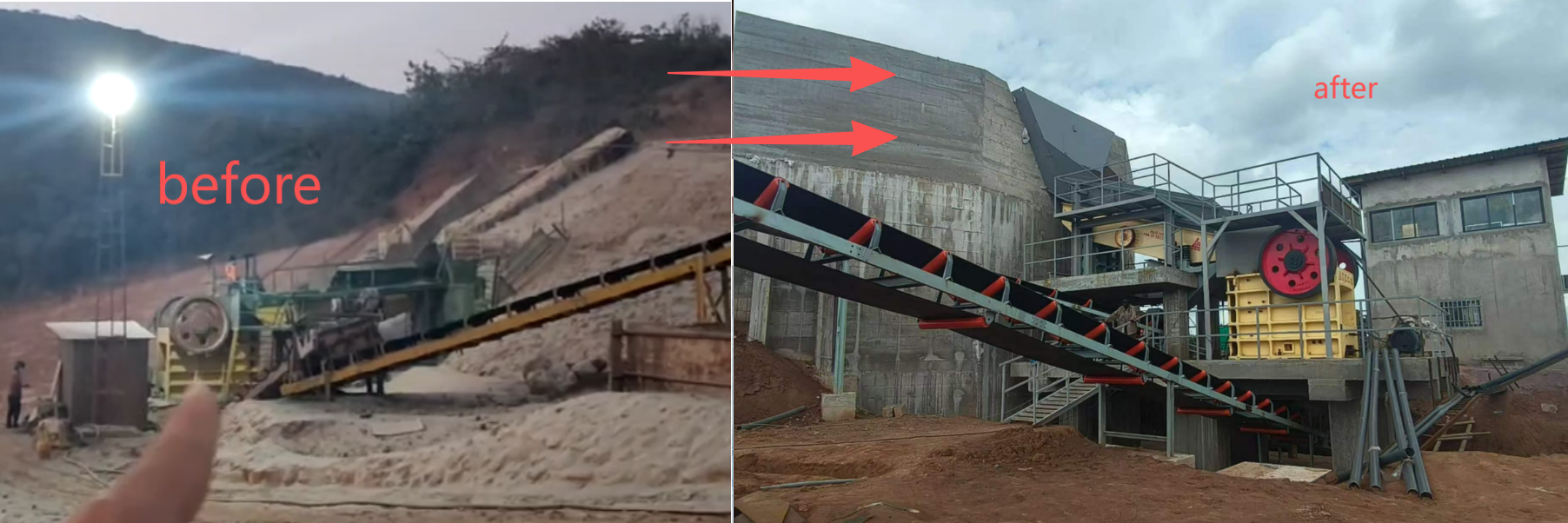
The Guinea quarry, a critical supplier of railway ballast and road aggregates, initially operated multiple parallel small jaw crushers. This configuration presented persistent operational challenges: uneven material distribution across parallel units created feed imbalances, while the complexity of managing multiple smaller machines drove maintenance downtime to unsustainable levels. The cumulative effect compromised both production consistency and cost efficiency.
Hard granite—characterized by compressive strengths exceeding 150 MPa—demands crushing equipment capable of sustaining high reduction forces while managing wear rates. The existing parallel jaw configuration lacked the individual capacity to process large feed blocks efficiently, forcing operators to pre-break oversize material manually. This bottleneck constrained throughput and increased labor costs.
Strategic Equipment Consolidation
The solution centered on replacing the parallel small-unit setup with a single PE900×1200 jaw crusher for primary stage reduction. This model features a non-welded frame design utilizing bolted and pinned side plates, eliminating welding stress concentrations that commonly cause frame cracking in hard rock applications. The deep symmetrical V-shaped crushing chamber maintains uniform reduction across the full width of the feed opening, processing material with maximum input dimensions up to 750mm.
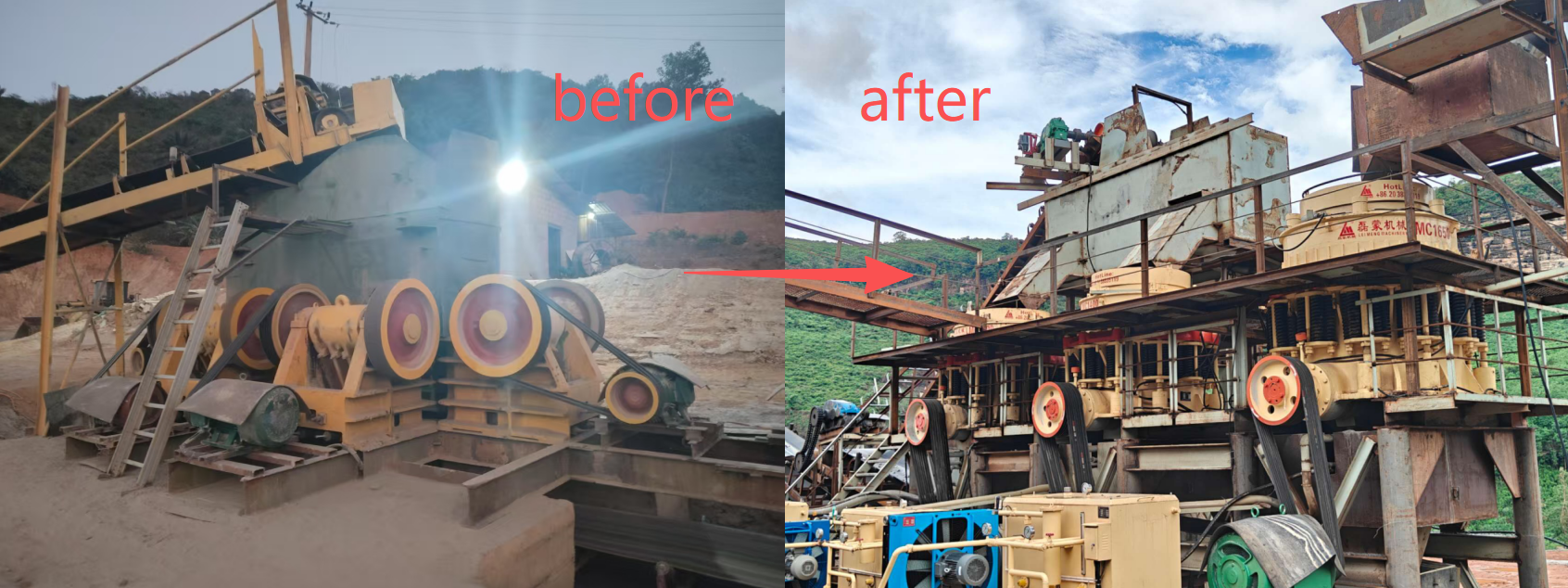
For secondary and tertiary stages, the plant integrated one LMC1650 cone crusher and two LMC1400 cone crushers. These multi-cylinder hydraulic cone crushers employ inter-particle laminated crushing principles, where high rotational speeds and optimized strokes create dense material layers. This mechanism promotes particle self-shaping rather than simple fracture, directly addressing the flakiness and elongation issues that plague railway ballast specifications.
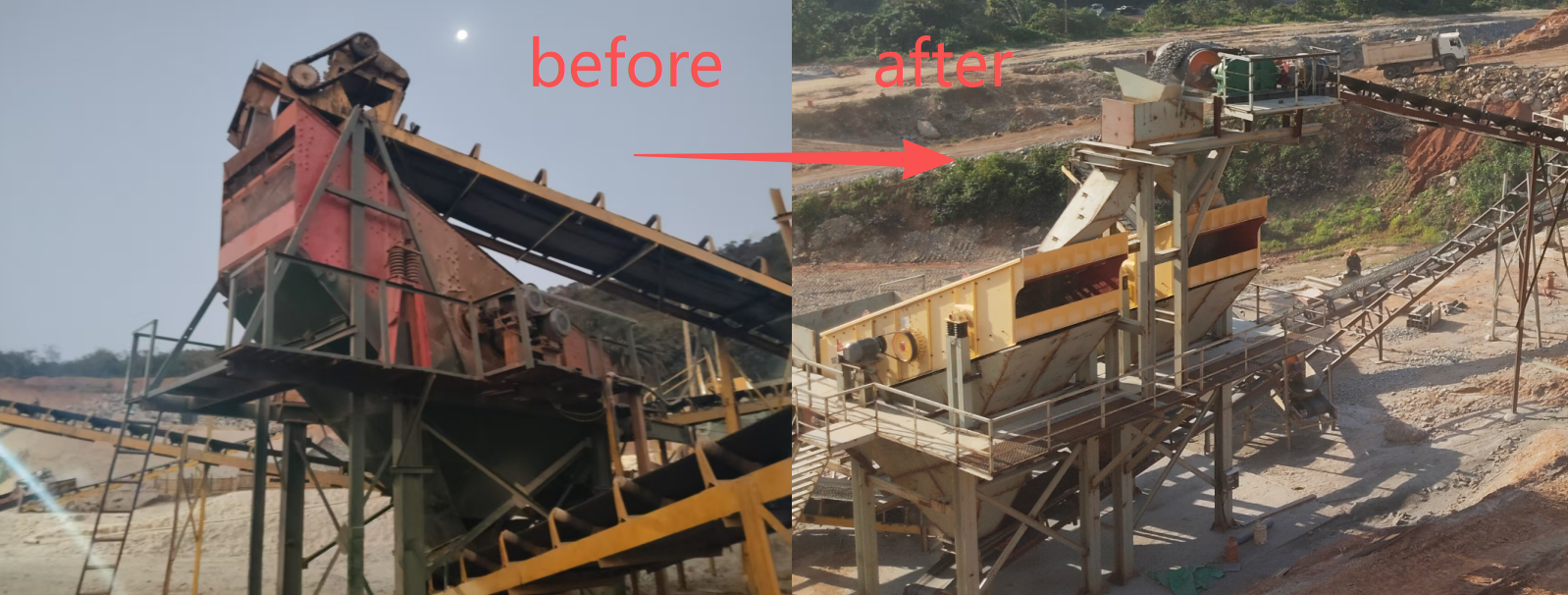
The screening circuit incorporated three 2YKJ2570 double-deck vibrating screens. These units utilize Huck-bolted assembly rather than welded frames, eliminating fatigue stress failures common in high-vibration screening applications. The forced exciter synchronization maintains stable circular trajectories even under variable material loads, while arch-deck sieve designs accelerate material spreading to prevent deck blinding.
Quantified Performance Improvements
Post-upgrade metrics validated the consolidation strategy. The simplified primary crushing circuit—transitioning from multiple parallel units to a single high-capacity jaw crusher—reduced overall plant downtime by eliminating the complexity of synchronized feed management. Energy consumption per ton decreased by 25%, reflecting the efficiency gains of operating one larger unit at optimal load versus multiple smaller units at variable loads.
Product quality measurements showed final aggregate flakiness and elongation controlled to under 5%, with operational averages stabilizing at 2%. This performance level meets stringent railway ballast specifications and premium concrete aggregate standards. The consistent particle shape distribution improves packing density in asphalt mixes and reduces cement paste requirements in concrete applications.
Wear component management improved through the cone crushers' hydraulic bowl rotation system, which simplifies liner changes and reduces maintenance duration. The positive pressure dust seal technology prevents fine dust contamination of lubricating oil, extending service intervals for the automatic thin oil lubrication systems that maintain bearing temperatures within design limits.
Technical Integration Considerations
The upgrade demonstrates several critical principles for hard rock aggregate production. First, primary crushing consolidation—replacing parallel small units with a single appropriately sized crusher—simplifies feed management and reduces mechanical complexity. The PE900×1200's capacity range of 160-368 t/h eliminated the need for manual feed balancing across multiple hoppers.
Second, multi-stage cone crushing with hydraulic adjustment enables precise control over product size distributions. The LMC1650 and LMC1400 models feature bidirectional tramp release systems that allow non-crushable materials to pass through the crushing chamber, automatically resetting hydraulic cylinders afterward. This protection mechanism prevents catastrophic damage during inevitable iron contamination events while maintaining production continuity.
Third, high-vibration-intensity screening with fatigue-resistant construction addresses the mechanical demands of continuous aggregate classification. The 2YKJ2570 screens are designed for vibration intensities up to 6g, generating sufficient acceleration to prevent wet or clay-coated particles from blinding screen apertures. The Huck-bolted frame construction distributes dynamic loads without creating weld-line stress concentrations.
Operational Sustainability Factors
Beyond immediate productivity gains, the equipment consolidation improved long-term operational sustainability. Fewer crusher units reduce the inventory requirements for wear parts, simplifying supply chain management in Guinea's infrastructure environment. The hydraulic adjustment systems on cone crushers enable CSS (closed side setting) compensation as liners wear, maintaining product size consistency throughout the liner lifecycle without requiring manual shim adjustments.
The integration of PLC-based monitoring systems provides real-time tracking of crusher loads, hydraulic pressures, bearing temperatures, and vibration amplitudes. These data streams enable predictive maintenance scheduling, shifting the maintenance philosophy from reactive repairs to planned interventions based on actual equipment condition.
Broader Implications for Quarry Modernization
The Guinea project illustrates how strategic equipment replacement can resolve systemic production constraints in aggregate operations. Rather than incrementally adding capacity through additional parallel units—which compounds complexity—the consolidation approach simplifies the process flow while increasing individual equipment utilization rates.
For quarry operators evaluating modernization paths, several lessons emerge. First, conduct thorough capacity analysis to identify whether production limitations stem from individual equipment undersizing versus process flow inefficiencies. Second, prioritize equipment designs that address material-specific challenges; for granite processing, this means crushing chambers optimized for high compressive strength materials and wear component configurations that balance service life against particle shape control. Third, integrate automation and monitoring systems from the outset to enable data-driven operational optimization.
The shift from parallel small units to fewer larger crushers also reduces the civil engineering footprint, as a single PE900×1200 jaw crusher requires less foundation area than multiple smaller units delivering equivalent aggregate throughput. This consolidation can unlock site layout improvements, creating space for expanded stockpiling or additional value-added processing equipment.
Looking Forward
As global infrastructure development sustains demand for high-specification aggregates, quarry operators must balance production volume with increasingly stringent product quality requirements. The Guinea upgrade demonstrates that modern crushing technology can simultaneously address both imperatives—delivering higher throughput while improving particle shape characteristics that determine aggregate performance in end applications.
The continued evolution of crushing equipment—incorporating advanced materials for wear components, refined chamber geometries validated through discrete element modeling, and integrated automation for real-time process optimization—provides quarry operators with expanding options to enhance competitiveness. Strategic equipment modernization, guided by rigorous analysis of operational constraints and supported by proven technology solutions, remains the most effective path to sustainable production excellence in hard rock aggregate processing.
For operations facing similar challenges of undersized capacity, excessive downtime, or product quality inconsistencies, the Guinea case offers a validated roadmap: consolidate to appropriately sized primary crushing, integrate multi-stage cone crushing for product shaping, implement high-intensity screening with fatigue-resistant construction, and deploy monitoring systems that enable predictive maintenance. This combination delivers the throughput, quality, and operational reliability that modern aggregate markets demand.
https://www.lmcrusher.com/
GUANGDONG LEIMENG INTELLIGENT EQUIPMENT GROUP CO.,LTD.
