Hot Melt Welding Machines: How to Achieve Stronger Plastic Joints and Higher Production Efficiency
In modern plastic manufacturing, product performance often depends on the quality of the welding process rather than the plastic material itself. Whether producing automotive components, medical devices, household appliances, water treatment products, electronic enclosures, or industrial containers, manufacturers require reliable joining technologies capable of delivering strong, repeatable, and leak-proof welds.
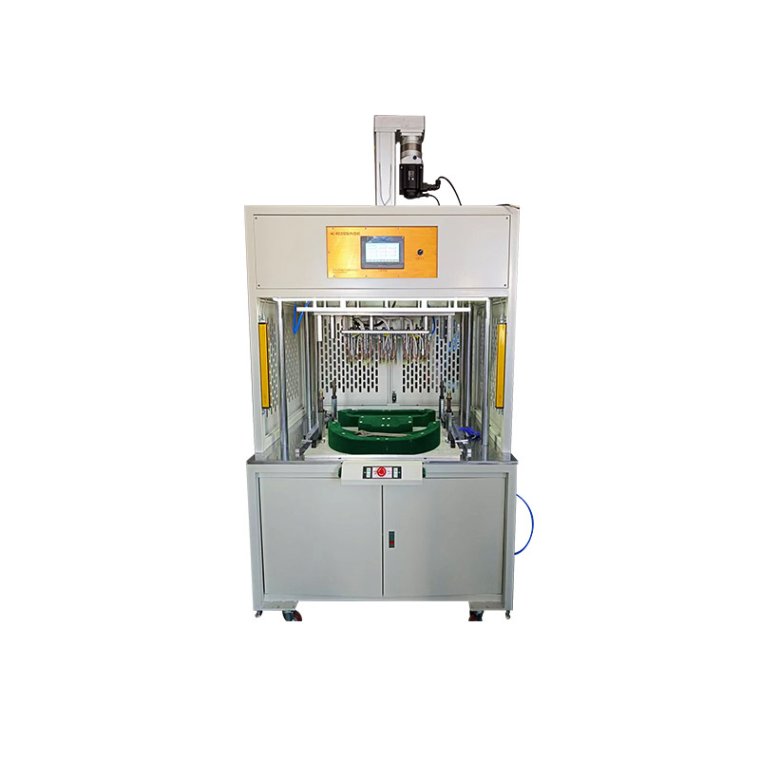
Among various plastic joining methods, Hot Melt Welding Machines have become one of the most widely adopted solutions for thermoplastic assembly. By using controlled heat and pressure to fuse plastic parts at the molecular level, hot melt welding creates permanent joints that often achieve strength comparable to or exceeding that of the base material.
As industries continue demanding higher product quality, tighter tolerances, and increased production efficiency, selecting the right hot melt welding technology has become a critical factor in manufacturing success.
Why Hot Melt Welding Remains Essential in Plastic Manufacturing
Many plastic products require assembly after molding.
Traditional joining methods such as:
-
Adhesive bonding
-
Mechanical fastening
-
Solvent welding
often introduce limitations related to strength, appearance, production speed, or long-term durability.
Hot melt welding overcomes these challenges by creating a direct molecular bond between thermoplastic components.
The process offers several advantages:
-
High joint strength
-
Excellent sealing performance
-
Consistent weld quality
-
No additional consumables
-
Clean production environment
-
High automation compatibility
These characteristics make hot melt welding suitable for both high-volume production lines and customized industrial applications.
How Hot Melt Welding Machines Work
The operating principle of hot melt welding is straightforward but highly precise.
The process generally consists of four stages:
Heating Phase
A heated tooling plate is positioned between two plastic components.
The welding surface is brought into contact with the heating plate under controlled pressure.
Depending on material properties, heating temperatures commonly range from:
-
180°C to 350°C
The objective is to soften the plastic surface without degrading the material.
Changeover Phase
After sufficient melting is achieved, the heating plate retracts automatically.
The machine must perform this movement quickly to minimize heat loss.
In high-precision applications, changeover time may be controlled within fractions of a second.
Welding Phase
The softened surfaces are pressed together under a predetermined welding force.
Molten material flows and intermixes at the interface, creating molecular fusion.
Cooling Phase
The welded assembly remains under pressure until the material solidifies.
Proper cooling ensures:
-
Dimensional stability
-
Mechanical strength
-
Consistent weld appearance
Once cooling is complete, the finished product is removed.
Materials Suitable for Hot Melt Welding
Hot melt welding is compatible with many thermoplastic materials commonly used in industrial production.
Typical examples include:
Polypropylene (PP)
Widely used in:
-
Automotive components
-
Battery housings
-
Fluid containers
PP offers excellent weldability and chemical resistance.
Polyethylene (PE)
Common applications include:
-
Water tanks
-
Pipeline fittings
-
Industrial containers
PE responds well to thermal welding processes.
ABS
Often used for:
-
Consumer electronics
-
Appliance housings
-
Automotive interiors
ABS provides strong and aesthetically pleasing welds.
Nylon (PA)
Frequently selected for:
-
Mechanical components
-
Industrial equipment
-
Automotive systems
Precise temperature control is especially important when welding nylon materials.
PVC
Used in:
-
Fluid systems
-
Medical products
-
Industrial equipment
Specialized process parameters may be required to ensure optimal results.
Advantages of Hot Melt Welding Machines Compared with Alternative Technologies
Higher Joint Strength
Unlike adhesives, which depend on surface bonding, hot melt welding creates molecular fusion.
As a result, welded joints often achieve:
-
High tensile strength
-
Excellent impact resistance
-
Long-term durability
This is particularly important for load-bearing or pressure-containing products.
Superior Leak Tightness
Many applications require airtight or watertight performance.
Examples include:
-
Water filtration systems
-
Medical fluid containers
-
Automotive reservoirs
-
Industrial tanks
Hot melt welding can create highly reliable seals without additional sealing materials.
Reduced Operating Costs
Because the process does not require:
-
Adhesives
-
Solvents
-
Mechanical fasteners
manufacturers can reduce material consumption and simplify inventory management.
Automation Compatibility
Modern hot melt welding machines can be integrated into automated production lines.
This improves:
-
Throughput
-
Process consistency
-
Labor efficiency
For high-volume manufacturing environments, automation often provides substantial long-term cost savings.
Critical Parameters That Affect Weld Quality
Achieving optimal welding results depends on controlling several key variables.
Temperature Control
Temperature directly influences material flow and fusion quality.
Insufficient heat may result in:
-
Weak welds
-
Incomplete fusion
Excessive heat may cause:
-
Material degradation
-
Surface defects
-
Reduced strength
Advanced machines utilize closed-loop temperature control systems to maintain stable operating conditions.
Welding Pressure
Pressure determines how effectively molten material bonds during the welding phase.
Incorrect pressure can lead to:
-
Voids
-
Poor fusion
-
Material displacement
The ideal pressure varies according to material type and part geometry.
Heating Time
Different plastics require different heating durations.
Factors influencing heating time include:
-
Material thickness
-
Thermal conductivity
-
Surface area
Precise timing improves consistency across production batches.
Cooling Time
Insufficient cooling can result in:
-
Deformation
-
Reduced strength
-
Dimensional instability
Proper cooling ensures long-term product performance.
Applications Driving Demand for Hot Melt Welding Machines
Automotive Manufacturing
Modern vehicles contain numerous welded plastic components.
Examples include:
-
Air ducts
-
Fluid reservoirs
-
Lighting assemblies
-
Interior trim systems
Hot melt welding provides strong and durable joints capable of withstanding demanding operating conditions.
Medical Device Production
Medical products require:
-
High cleanliness standards
-
Reliable sealing performance
-
Consistent quality
Hot melt welding supports these requirements while enabling scalable production.
Home Appliance Manufacturing
Many appliance components rely on plastic assemblies.
Applications include:
-
Water tanks
-
Filter housings
-
Internal structural parts
Consistent weld quality contributes directly to product reliability.
Industrial Fluid Systems
Containers and fluid handling products often require leak-proof connections.
Hot melt welding offers dependable sealing performance in these applications.
Choosing the Right Hot Melt Welding Machine
Machine selection should be based on actual production requirements rather than simply choosing the largest or most powerful system.
Several factors should be evaluated.
Product Size
Component dimensions influence:
-
Machine structure
-
Heating plate size
-
Clamping force requirements
Material Characteristics
Different thermoplastics require specific process parameters.
Understanding material behavior is essential for proper equipment configuration.
Production Volume
High-volume production often benefits from:
-
Automated loading systems
-
Servo-driven motion control
-
Multi-station welding designs
Lower-volume production may prioritize flexibility and changeover efficiency.
Precision Requirements
Applications involving tight dimensional tolerances require advanced control systems capable of accurately managing:
-
Temperature
-
Pressure
-
Position
-
Cycle timing
The Growing Role of Customized Welding Solutions
As plastic products become more specialized, standard equipment may not always meet production requirements.
Custom hot melt welding systems can provide:
-
Dedicated tooling
-
Automated feeding mechanisms
-
Multi-head welding configurations
-
Integrated quality inspection systems
These solutions improve productivity while ensuring process consistency.
As a comprehensive enterprise specializing in plastic welding technology, Huacheng integrates research, manufacturing, technical service, and customized solutions across ultrasonic welding, hot melt welding, spin welding, and non-standard automation equipment. Through extensive experience in plastic joining applications, customized hot melt welding machines can be tailored to meet specific production goals while maintaining high levels of efficiency and weld quality.
Conclusion
Hot Melt Welding Machines continue to play a vital role in modern plastic manufacturing because they combine strong joint performance, process consistency, and production efficiency within a single technology platform.
By carefully controlling temperature, pressure, heating time, and cooling conditions, manufacturers can achieve reliable molecular bonding across a wide range of thermoplastic materials. As demand grows for higher-quality plastic products and more automated production environments, investing in the right hot melt welding solution remains one of the most effective ways to improve product performance, reduce manufacturing costs, and enhance long-term operational efficiency.
www.sonicweldtech.com
Shenzhen Huacheng Ultrasonic Equipment Co., Ltd.
