How a Drone Battery Pack Control Module Improves Battery Performance
Drone performance depends on more than motor power, aerodynamic design, and flight control software. The battery system is equally important, influencing flight endurance, power delivery, charging performance, and overall operational safety. As drone manufacturers continue to develop lighter and more capable aircraft, improving battery efficiency while maintaining reliability has become a key engineering priority.
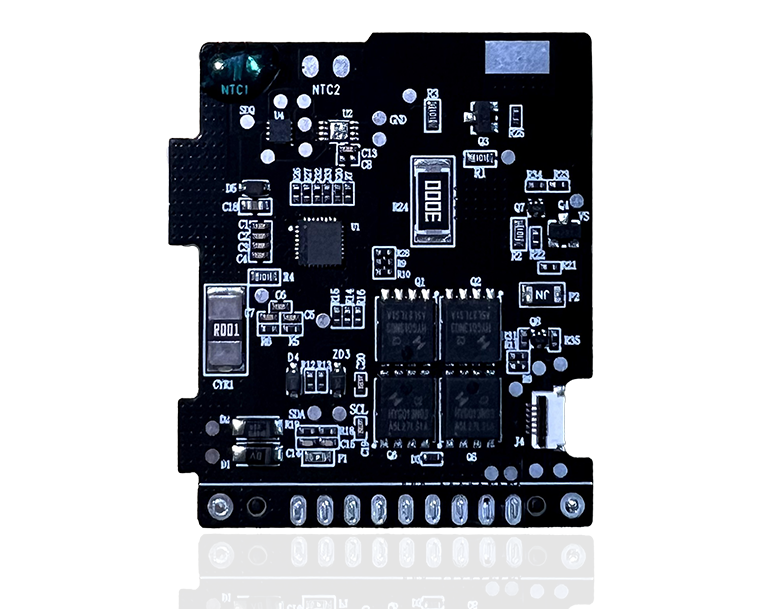
A drone battery pack control module, commonly implemented as a printed circuit board assembly (PCBA), helps manage the battery's electrical operation. Depending on the design, it can support cell monitoring, current measurement, charging control, communication, and protection against abnormal operating conditions.
For manufacturers developing flight batteries for the DJI Mavic 3 series and similar platforms, selecting an appropriate control module requires a careful balance of electrical performance, thermal management, compatibility, and manufacturing quality. Aoxingao Technology offers customized PCBA solutions designed to address these requirements and support application-specific battery development.
1. Understanding the Role of a Drone Battery Pack Control Module
A battery pack control module is an important electronic component within a drone's battery management system. Its specific functions depend on the battery architecture, but common capabilities include monitoring cell voltage, measuring current, detecting temperature, coordinating charging, and responding to electrical faults.
These functions help keep battery operation within defined limits. For example, overvoltage and undervoltage protection can help prevent individual cells from operating outside their permitted voltage range. Current monitoring supports the detection of excessive loads, while temperature sensing helps determine whether charging or discharging conditions are acceptable.
The module may also communicate battery status and operating information to the drone or charging equipment through a designated interface. Accurate measurements and reliable communication help the wider system respond appropriately to changing conditions.
When evaluating a drone battery pack control module, manufacturers should consider how the PCBA interacts with the cells, connectors, charger, firmware, and aircraft electronics. Compatibility across the complete system is essential because an individual circuit board cannot guarantee reliable battery operation on its own.
2. Improving Energy Efficiency and Flight Endurance
Flight time is one of the most important performance indicators for both commercial and consumer drones. Battery capacity and cell chemistry establish the primary energy limits, but the design of the battery electronics also influences how efficiently that energy is used.
A well-engineered PCBA can help reduce avoidable electrical losses through appropriate component selection, optimized current paths, and low-power monitoring circuits. Suitable MOSFETs, carefully designed PCB copper areas, and efficient power-management components can contribute to lower heat generation and improved energy utilization.
Several factors deserve attention during design and evaluation:
-
Standby power consumption: Battery electronics should minimize unnecessary energy consumption when the drone is switched off or the battery is stored.
-
Conduction losses: Resistance in MOSFETs, connectors, PCB traces, and other current-carrying components can generate heat and reduce efficiency.
-
Circuit integration: Combining compatible functions can reduce component count and help maintain a compact battery design.
-
Measurement accuracy: Reliable voltage and current readings support appropriate monitoring and protection decisions.
Aoxingao Technology states that its customized PCBA solution for Mavic 3 series flight batteries can achieve energy conversion efficiency above 98%. Before using this figure as a product specification or purchasing benchmark, manufacturers should confirm the test conditions, including the measured conversion stage, input and output power, operating load, and temperature.
It is also important to distinguish conversion efficiency from total battery-system efficiency. Actual flight endurance depends on battery capacity, cell condition, aircraft weight, payload, flight patterns, weather, and other operating factors. An efficient control module can help minimize electronic losses, but its contribution to flight time must be evaluated within the complete drone system.
3. Maintaining Stable Power Delivery Under Changing Loads
During takeoff, climbing, acceleration, and rapid maneuvering, a drone's electrical demand can change significantly. Its battery must provide the required current while maintaining voltage within the acceptable range for the cells and connected electronics.
The control module's power paths and switching components therefore need to be designed around the battery's expected continuous current, transient loads, and protection requirements.
Key engineering considerations include:
-
Current-carrying capacity of PCB traces and connectors
-
Voltage drop across high-current paths
-
MOSFET resistance and thermal performance
-
Overcurrent and short-circuit protection response
-
Monitoring accuracy during rapid changes in load
-
Coordination between battery protection settings and aircraft requirements
Protection thresholds require particular care. Limits that are too restrictive may trigger unnecessary shutdowns or interrupt operation under otherwise acceptable conditions. Conversely, insufficient protection can expose the battery to excessive electrical stress.
Testing should reflect realistic operating conditions rather than relying exclusively on low-current bench measurements. Engineers should assess high-load performance, transient response, component temperature, and protection behavior to identify weaknesses before mass production.
4. Enhancing Reliability in Outdoor Operating Conditions
Drone batteries must withstand more than normal electrical operation. Repeated charging cycles, vibration, mechanical shock, humidity, and temperature fluctuations can all affect battery reliability.
Reliable PCBA design begins with appropriate component selection and layout. Solder joints and connectors should withstand the expected mechanical stresses, while electrical spacing and insulation must be suitable for the battery's voltage and operating environment.
Thermal management is another essential consideration. Switching devices, current-sensing components, and charging circuits may generate localized heat. Engineers should evaluate component ratings, PCB copper distribution, heat dissipation, and the thermal behavior of the assembled battery pack.
Aoxingao Technology specifies an operating temperature range of approximately -20°C to 60°C for its Mavic 3 series solution, with charging conditions specified at 5°C to 40°C. These figures should be confirmed against the applicable product documentation and should not be assumed to represent the limits of every battery or drone model.
For demanding applications, manufacturers should establish a validation plan that may include thermal cycling, vibration testing, electrical stress testing, and repeated charge-discharge testing. The appropriate test levels and acceptance criteria should reflect the intended application and applicable safety requirements.
5. Integrating Charging Control and Battery Protection
Charging efficiency and turnaround time directly affect drone availability, particularly for commercial operators managing multiple batteries. However, faster charging must remain compatible with the cells' electrical and thermal limits.
Depending on the battery architecture, a drone battery PCBA may integrate charging functions or coordinate with external charging electronics. Support for USB Power Delivery (PD) or Programmable Power Supply (PPS) may offer additional flexibility when the battery and charging system are designed to use these protocols.
A reliable charging solution should address several requirements:
-
Accurate charging voltage and current regulation
-
Cell temperature monitoring during charging
-
Protection against overvoltage, overcurrent, and short circuits
-
Appropriate charging behavior at different states of charge
-
Communication with external charging equipment, where required
Protocol support alone does not guarantee compatibility with every charger. The battery, PCBA, cable, and power source must support the required voltage, current, and communication modes as a complete system.
Manufacturers should therefore verify charging behavior using the intended equipment and test the solution under representative conditions. This helps confirm that the design provides the required charging performance without compromising battery protection or long-term reliability.
6. Using Modular PCBA Design for Different Battery Models
Battery packs for different drone models may share similar electronic functions while differing in cell configuration, current requirements, physical dimensions, connector arrangements, and communication interfaces.
A modular PCBA design can help manufacturers reuse proven circuit functions while adapting specific features to different battery configurations. This approach may reduce duplicated engineering work, simplify product variants, and improve consistency across related designs.
Aoxingao Technology offers customized PCBA solutions for Mavic 3 series flight batteries. Before adopting a common design across multiple models, manufacturers should verify electrical compatibility, mechanical fit, firmware behavior, communication requirements, and protection settings for each target battery.
Design reuse should be based on documented engineering validation rather than assumptions that batteries within the same product family are interchangeable.
Design-for-manufacturing (DFM) review is also valuable during the development stage. Evaluating component availability, PCB layout, soldering requirements, inspection access, and functional test points early can help identify production constraints before they lead to costly revisions.
7. Evaluating PCBA Manufacturing Quality Before Mass Production
Even a well-designed circuit can experience reliability problems if manufacturing quality is inconsistent. Soldering defects, incorrect component placement, unapproved substitutions, and incomplete testing may lead to failures that are difficult to identify after a battery enters service.
A structured quality-control process should include the following steps:
Incoming material inspection: Verify component specifications, approved suppliers, traceability, and substitution controls.
PCB assembly inspection: Check component placement, polarity, solder joints, workmanship, and other critical assembly details.
Electrical testing: Measure relevant voltages, inspect current paths, and verify protection functions and communication interfaces.
Functional verification: Confirm that the assembled PCBA performs according to the approved design and acceptance criteria.
Production traceability: Maintain batch records and test results to support fault analysis, corrective action, and ongoing process improvement.
Aoxingao Technology focuses on customized electronic product development and manufacturing. The company also reports that its technical team is led by a founder with more than 20 years of industry experience. For buyers, these factors can provide useful starting points for supplier evaluation, but they should be supported by documentation of the actual manufacturing process, testing capabilities, and quality-control arrangements.
Before approving a supplier for volume production, buyers should request relevant test reports, quality records, traceability procedures, and clear acceptance criteria. They should also confirm how engineering changes, component substitutions, and production defects are managed.
Conclusion
A drone battery pack control module contributes to battery performance by helping reduce unnecessary electrical losses, maintain stable power delivery, coordinate charging, and protect cells against defined abnormal conditions. Its effectiveness depends on circuit design, component selection, thermal management, manufacturing consistency, and system-level validation.
For Mavic 3 series battery development, manufacturers should verify efficiency claims against clearly defined test conditions, confirm compatibility for each intended battery model, and evaluate charging and protection behavior under realistic operating loads. Modular design and early DFM review can also help reduce development complexity and improve production consistency.
Aoxingao Technology provides customized PCBA solutions for application-specific electronic products. By aligning battery control electronics with electrical requirements, mechanical constraints, and manufacturing needs, drone manufacturers can establish a stronger foundation for reliable battery operation and consistent product quality.
www.axasci.com
AXA Technology
