How Are Gas Meters Manufactured? A Step-by-Step Guide to Diaphragm and Smart Meter Production
Published: October 2026 | By Zongheng Engineering Team | 6 min read
Wondering how are gas meters manufactured step by step? A gas meter travels through nine stations between the incoming shell and the shipping carton, and only two of them decide whether the unit can legally be sold: the leak test and the calibration bench. Everything in between is mechanical assembly that a well-designed line can hold to a few hundredths of a millimetre.
That split matters more than it first appears. Assembly accounts for roughly 60% of the stations on a modern line but only about 20% of the failure modes. Leakage and metering drift cause the rest — and both are fixed by equipment you buy once and live with for a decade. Zongheng has built lines for all three meter types, and the pattern holds across every one of them.
1. What Happens at Each Station in a Gas Meter Production Line?
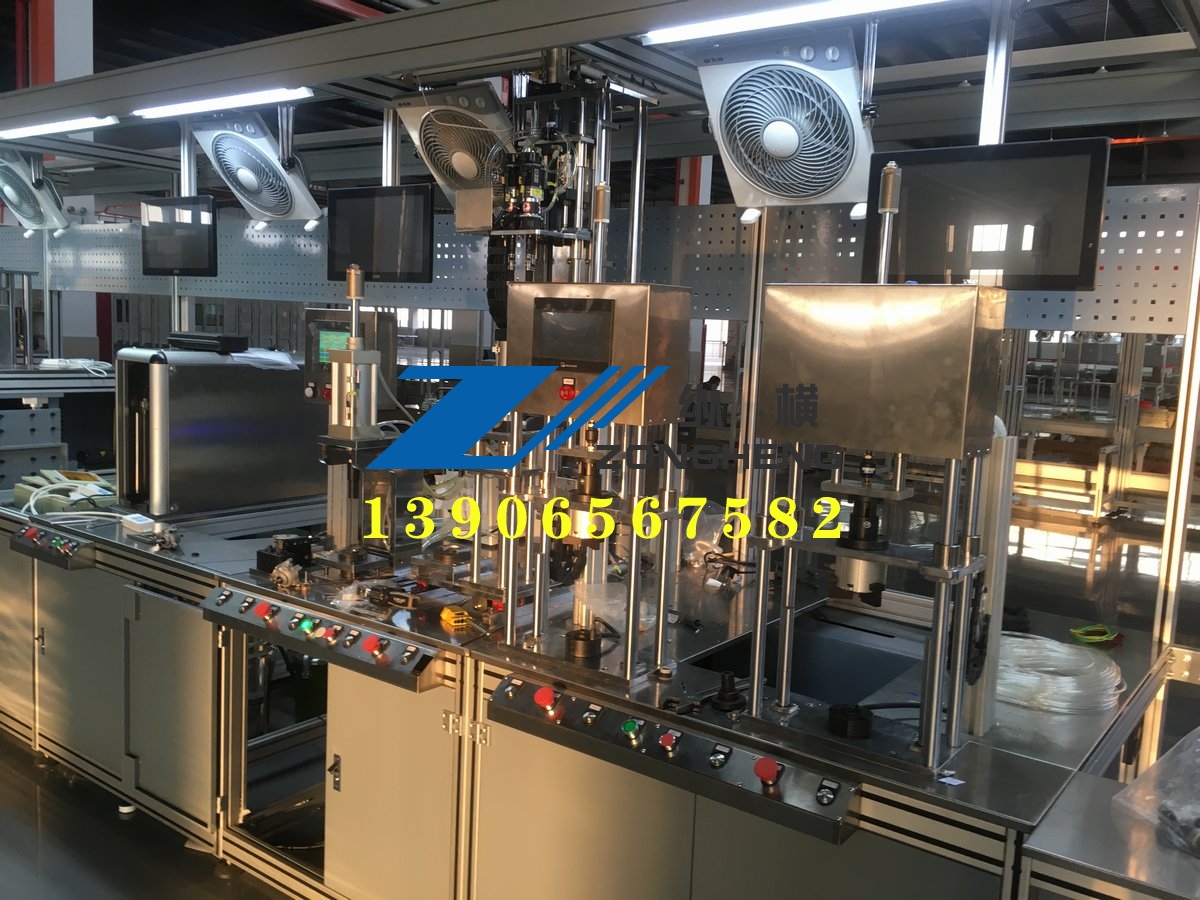
Nine stations take a raw shell to a certified meter, and the sequence is fixed — skipping a station upstream almost always reappears as a rejection downstream. Anyone asking how are gas meters manufactured step by step usually expects the counter to be the difficult part. It is the sealing.
The nine stations, in order:
• Incoming sort and feed. Shell, diaphragm assembly, valve seat, gear train, magnet and PCB arrive in completely different packaging formats. Vibratory bowls and tray feeders handle small parts; the shell enters on a pallet.
• Base meter assembly. Diaphragm chambers are fitted and the valve seat is set. Clearance control decides everything here — a valve seat worn or machined past 0.2 mm loses its seal and the meter starts counting the same gas twice.
• Gear train and counter. Reduction gears, index and anti-reversal device. Torque is monitored, not just position: a tight gear mesh passes inspection and then runs slow for ten years.
• Shell closing and sealing. Gasket placement, screw locking with torque trace, and the first pressure check. Every screw's torque value is logged against the meter's serial number.
• Smart module integration. For IC-card, NB-IoT or LoRa meters: PCB seating, antenna routing, battery, valve actuator and firmware flashing. A plain diaphragm base meter skips most of this.
• Leak test. The station that stops the line. Charged to 1.5× working pressure, held five minutes, with a pressure-drop ceiling of 50 Pa. Anything above that is ejected automatically and never reaches calibration.
• Calibration. A sonic nozzle bench covering 0.016–6 m³/h for G1.6 to G4 meters, nozzle accuracy 0.2%, bench accuracy 0.33% or 0.5%. Each unit is corrected at three to five flow points.
• Serialisation and labelling. One meter, one code. The laser mark ties the unit to its leak curve and calibration coefficients for the rest of its service life — this is what auditors ask for first.
• Aging and packing. A short burn-in run, final visual inspection, then carton. Total pressure loss is checked here as a backstop: above 600 Pa means a blocked internal channel, below 100 Pa means gas is slipping past the metering chamber.
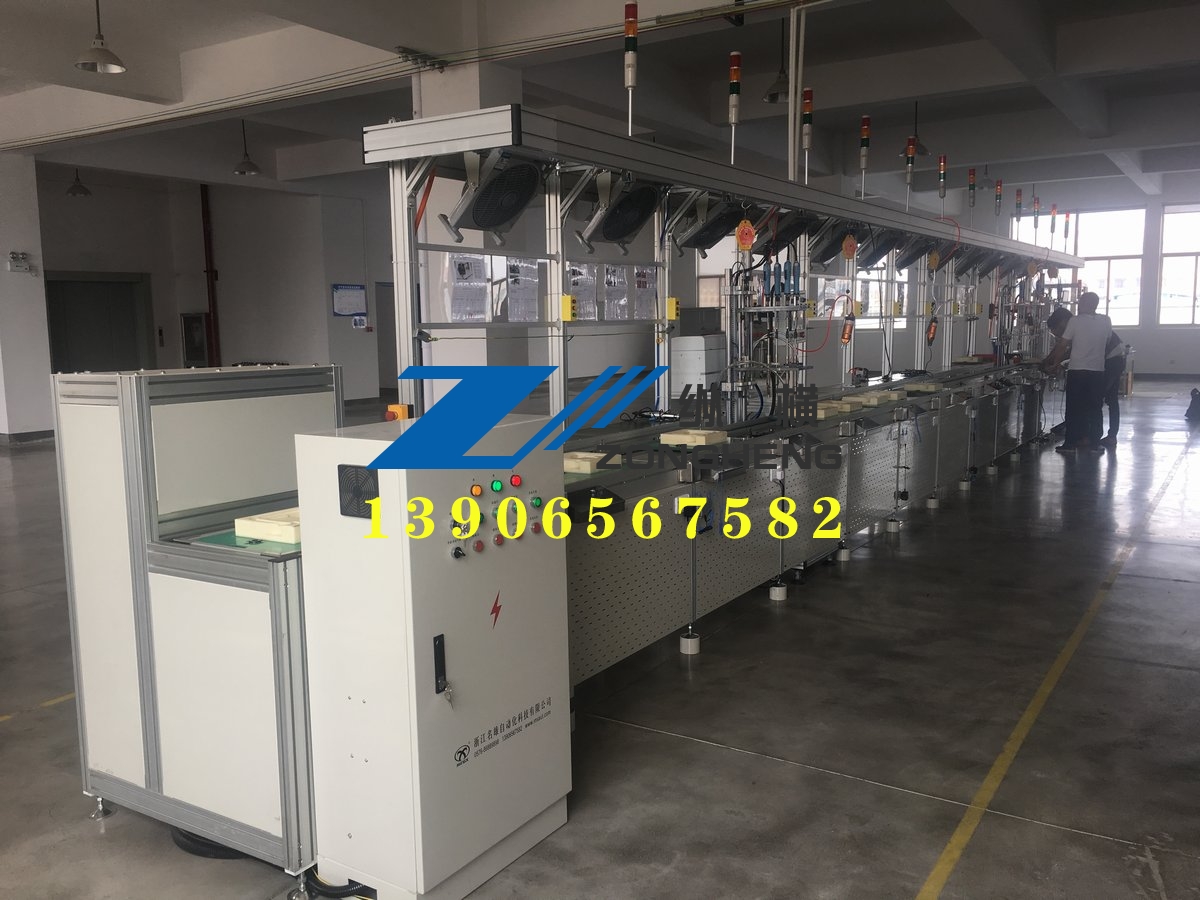
Cycle time is where station count turns into money. A well-tuned line runs at 15 seconds per unit or better, which is roughly 5,700 units per shift at 95% availability. Assembly consistency above 99.9% and a line failure rate under 1% are the numbers worth writing into the contract. A gas meter production line station layout design nine stations deep is the most common configuration our factory builds, because it covers assembly, test, calibration and packing without piling up work-in-progress between stations.
✅ Bottom line: Leak test and calibration decide legal compliance, so spend your specification effort there rather than on assembly speed.
The full station list, with the equipment configuration we quote for each one, is on the gas meter assembly line product page.
2. Diaphragm or Ultrasonic: Which Production Line Do You Need?
A diaphragm line and an ultrasonic line share only three stations, so the choice of meter decides the line — not the other way round. The diaphragm vs ultrasonic gas meter production line difference is not a matter of degree: an ultrasonic meter has no diaphragm chamber, no valve seat and no gear train, but needs three stations a diaphragm line does not have at all.
Where the two flows diverge:
• Transducer bonding and curing. Two transducers sit 50–70 mm apart inside the flow channel. Bonding depth and cure time set zero-point stability, and both need a temperature-controlled cell.
• Flow channel sealing and particle control. A diaphragm meter tolerates dust. An ultrasonic meter converts it into drift, because contamination settles on the transducer face. Clean-room class and ionised air become line requirements, not nice-to-haves.
• Electronic zero-point and dry calibration. Instead of proving against a bell prover, ultrasonic units are corrected in software at zero flow and then span-checked. The bench stays; the mechanical proving work disappears.
The commercial gap is just as sharp. A diaphragm meter holds ±1.5% accuracy, a 1:160 turndown and about ten years of service. An ultrasonic meter reaches ±0.5%, 1:250 or better, and fifteen years — at roughly 3.2× the unit price, though 28% lower total cost of ownership. Transducers alone absorb about 40% of ultrasonic material cost, and most of that is still imported. A gas meter production line station layout design nine stations deep is already at the practical ceiling for diaphragm work; ultrasonic production pushes it to twelve.
That is why retrofit rarely works. Converting a diaphragm line to ultrasonic means adding stations, rebuilding the sealing environment and rewriting every calibration recipe. In practice you buy a second line — or you buy the first one correctly. When a buyer weighs the diaphragm vs ultrasonic gas meter production line difference during a tender, the useful question is not which meter is better today. It is which meter their market will still be buying in 2035.
✅ Bottom line: Ultrasonic production needs three extra stations and a cleaner room, so lock the meter technology before you size the line.
Frequently Asked Questions
Q: Do you offer OEM or custom gas meter assembly lines?
A: Yes. Zongheng builds to specification rather than from a catalogue — station count, cycle time, meter size range and traceability depth are all configurable. Working as a China manufacturer for OEM and ODM buyers across the Middle East, Southeast Asia and CIS markets, Wenling Zongheng Intelligent Equipment Co., Ltd. quotes to your specification with 45–60 working days of build time and a 48-hour loaded run-in test before shipment.
Q: How many stations does a gas meter assembly line really need?
A: Nine is the practical floor for a full-process line. When engineers map how are gas meters manufactured step by step, station count follows the product: a base-meter-only plant can run six, while an NB-IoT smart meter with valve control and full traceability usually needs eleven to thirteen. Adding stations after installation costs far more than specifying them at design stage.
Q: Can one line handle both diaphragm and ultrasonic meters?
A: Not economically. The diaphragm vs ultrasonic gas meter production line difference begins immediately after feeding: only serialisation and packing are truly shared. If you must run both, plan two parallel lines with a common end-of-line area — that is how most of our factory customers structure it.
Next Step
Zongheng quotes gas meter assembly lines against your meter drawing, shift target and target certifications — not against a template. Send your G-size range and required output to our engineering team and you will get a station-by-station proposal, including leak test parameters and calibration bench specification, within five working days.
Wenling Zongheng Intelligent Equipment Co., Ltd. has delivered automated assembly lines to manufacturers across Southeast Asia, the Middle East and North Africa, and quotes direct from its own factory rather than through a reseller.
Wholesale and multi-line project enquiries are welcome. You can also read the automated gas meter assembly line case overview for a closer look at how a line like this is configured.
www.zonhonauto.com
Zongheng Intelligent Equipment Co., Ltd.
