How much does it actually cost to maintain stadium lighting?
A Practical Guide to Reducing Long-Term Operating Costs
For stadium owners, operators, and facility managers, purchasing a sports lighting system is only part of the overall investment. Whether it’s a soccer field, an athletic track, or a multi-purpose arena, the maintenance costs of a lighting system over its entire lifecycle are often higher than anticipated—especially when fixtures are poorly designed or built with low-quality components, which can cause these hidden costs to keep rising.
The good news is that modern LED sports lighting has significantly reduced maintenance requirements compared to traditional metal halide lamps. However, not all LED sports lighting systems deliver the same long-term value.
This article will guide you through the key factors affecting sports stadium lighting maintenance costs, those easily overlooked hidden expenses, and how to select a sports lighting system that can truly reduce both maintenance and operating costs.
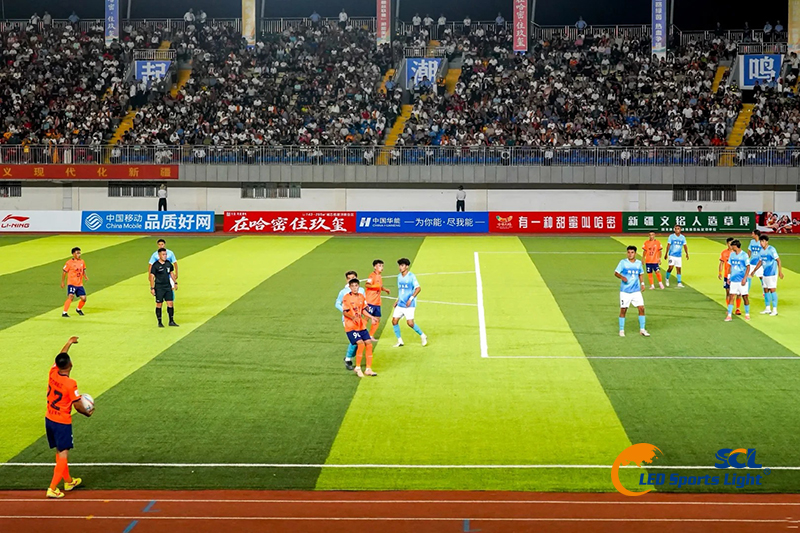
Why is it more important to focus on maintenance costs than on the purchase price?
When selecting stadium lighting, many procurement professionals focus first and foremost on the equipment quote.
However, experienced contractors and stadium operators pay closer attention to one metric—Total Cost of Ownership (TCO).
The maintenance costs for a lighting system typically include:
· Replacement of sports lighting fixtures or light sources
· Replacing the drive power supply
· Electrical System Inspection
· Cleaning the Light Fixtures and Lenses
· Aerial Work Platform Rental (Articulated Boom Lifts, Scissor Lifts, etc.)
· Manual Maintenance Costs
· Losses resulting from the suspension of a competition or the closure of a venue
· Emergency Repair Services
A lighting system that costs 15% less to purchase is likely to incur maintenance costs over the next 10 to 15 years that far exceed the initial savings on the purchase price.
Why Are Maintenance Costs for Traditional Sports Lighting So High?
Before the widespread adoption of LEDs, most stadiums used metal halide floodlights.
Although these lights provide high brightness, they also present significant maintenance challenges.
The light sources required frequent replacement.
Metal halide lamps gradually lose their brightness over time.
In many cases, even though the bulbs were still lit, the illuminance no longer met competition or training standards; therefore, operators typically had to replace the fixtures in bulk to ensure uniform illuminance.
Long startup and relighting times
Metal halide lamps typically take 10 to 20 minutes to reach full brightness.
If a power outage occurs during a game, the lights will not come back on immediately even after power is restored. This not only disrupts the game but also increases operational risks.
High energy consumption and significant heat generation
Traditional lighting systems consume a significant amount of electricity and generate a great deal of heat.
Long-term operation at high temperatures not only increases electricity bills but also accelerates the aging of electrical components and increases the frequency of maintenance.
Why Is LED Sports Lighting Easier to Maintain?
Modern LED sports lighting solves most of the problems associated with traditional light sources.
Unlike traditional light bulbs, which burn out suddenly, LED sports lights experience a gradual decline in brightness over time—known as lumen depreciation.
High-quality LED sports lighting products typically have a design life of 50,000 to 100,000 hours. Under normal operating conditions, they can maintain stable lighting performance for many years, significantly reducing the frequency of replacements.
What are the real factors that determine maintenance costs?
Many people believe that maintenance costs depend primarily on the chips.
In fact, the durability of a sports lighting system depends more on the overall engineering design.
1. Heat Dissipation Design
High temperatures are the biggest factor affecting the lifespan of sports lighting fixtures.
Poor heat dissipation can lead to:
· Accelerated Luminous Decay
· Reduced lifespan of the drive power supply
· Optical lens aging
· Damaged Electronic Components
An excellent heat dissipation design can effectively extend the service life of the entire light fixture.
2. Quality of the Driver Power Supply
In sports lighting fixtures, the power supply is often more prone to failure than the LED chips.
Using a high-quality power supply equipped with features such as lightning protection, water resistance, and over-temperature protection can effectively reduce the number of repairs required down the line.
3. Optical System Protection Capabilities
Stadium lighting is constantly exposed to the outdoor environment and must contend with:
· Dust
· Rainwater
· Ultraviolet rays
· Coastal Salt Fog
· Daily temperature range
Lenses and optical materials with excellent weather resistance not only maintain lighting performance but also reduce the frequency of cleaning and maintenance.
4. Installation Quality
No matter how high-quality a light fixture is, it’s still prone to malfunction if it isn’t installed properly.
For example:
· Wiring error
· Inadequate waterproofing
· Loose Bracket
· Excessive vibration in the light pole
Proper installation is a key factor in ensuring the long-term, stable operation of lighting fixtures.
A Few Maintenance Costs That Many People Overlook
In addition to replacing the lights, there are quite a few costs that are easily overlooked.
Rental of Aerial Work Platforms
Stadium lights are typically installed on light poles 20–40 meters high.
An aerial work platform must be rented for every maintenance visit, and sometimes the rental cost for the equipment is even higher than the cost of the replacement parts themselves.
Manual maintenance costs
Working at heights involves certain risks, and maintenance personnel often need to complete inspections and repairs while the venue is closed, which results in relatively high labor costs.
Losses Due to Venue Closures
If the lighting system malfunctions, it may affect:
· Soccer Match
· Live TV Broadcast
· Daily Training
· Business Activities
For large stadiums, the economic losses resulting from a shutdown are often far greater than the repair costs themselves.
Spare Parts Inventory
To prevent malfunctions during competitions, many operators stock up on spare parts such as drivers, power supply modules, and surge protectors in advance.
The management of this inventory is also considered a long-term operating cost.
How Does Smart Lighting Reduce Maintenance Costs?
Today, more and more sports lighting systems are adopting smart control technology.
In addition to saving energy, it also helps facility managers:
· Real-time monitoring of drive status
· Check the operating temperature of the light fixture
· Track Energy Consumption Data
· Schedule Maintenance in Advance
· Reduce unexpected failures
This **predictive maintenance** can identify potential issues before they affect the game, thereby reducing overall maintenance costs.
Choosing the right supplier can also help reduce maintenance costs.
Leading sports lighting manufacturers give full consideration to future maintenance needs during the product design phase, rather than focusing solely on brightness specifications.
For example:
· High-efficiency heat dissipation design
· Precision optical light distribution system
· Corrosion-resistant materials
· Highly reliable drive power supply
· Modular design for easy maintenance and convenient repairs
· Comprehensive technical support and after-sales service
Although these design details may not be directly reflected in the quote, they can help reduce maintenance costs for more than a decade to come.
Take SCL Sports Lighting as an example: its products have been deployed in more than 100 countries and regions worldwide, and the company has accumulated extensive experience in international sports venue projects. Its sports lighting products incorporate high-efficiency heat dissipation structures, precision optical designs, and a modular maintenance philosophy, helping venue operators reduce post-installation maintenance workloads and lower total lifecycle operating costs.
For instance, in the **Mandela National Stadium in Uganda** lighting upgrade project, the sports lighting system provided by SCL not only met international competition lighting standards but also fully considered the convenience of future maintenance and long-term operational stability, providing reliable lighting support for large-scale sports venues.
Today, when evaluating lighting solutions, an increasing number of stadium owners are focusing not only on how bright the fixtures are, but also on whether the lighting system is stable, easy to maintain, and offers lower lifecycle costs. This is precisely the key direction for the development of modern sports lighting.
How to Reduce Stadium Lighting Maintenance Costs?
Whether you’re building a new stadium or upgrading an existing one, consider the following recommendations:
· Don’t focus solely on the purchase price; instead, prioritize the total cost of ownership (TCO) of the lighting system.
· Choose high-quality LED sports lighting products with excellent heat dissipation and reliable drivers.
· Plan the placement of light poles and fixtures carefully during the design phase to facilitate future maintenance.
· Establish a regular inspection system to promptly identify and address potential issues.
· Implement a smart lighting control system to enable remote monitoring and predictive maintenance.
· Choose a sports lighting brand with experience in large-scale projects and comprehensive after-sales service capabilities to provide technical support for the venue’s long-term operation.
Conclusion
The maintenance costs of stadium lighting go far beyond simply replacing a few lights.
Labor costs, aerial equipment, venue downtime, energy consumption, and system reliability all impact the long-term operating costs of the entire project.
For stadium operators, contractors, and investors, the real focus should not be on the initial purchase price, but rather on the total cost of ownership (TCO) of the lighting system over the next ten or even twenty years.
Choosing a well-designed, reliable, and easy-to-maintain LED sports lighting system not only reduces maintenance expenses but also ensures the smooth running of events and improves venue operational efficiency. In the long run, **Total Cost of Ownership (TCO)** often better reflects the true value of a sports lighting system than the equipment purchase price.
https://www.stadiumlight.com/
GUANGDONG SEVEN CONTINENTS INDUSTRIAL CO., LTD
