How Powered Air Purifying Respirators Improve Worker Comfort
Respiratory protection in welding and industrial environments is often evaluated by filtration efficiency and protective capability. However, another factor is equally important for practical use: worker comfort.
When respiratory equipment feels restrictive, adds excessive weight, creates pressure around the head, or requires frequent battery changes, workers may find it difficult to wear the equipment consistently throughout a long shift. This is particularly relevant in welding, grinding, metal fabrication, and other applications where operators may need respiratory protection for several hours.
A Powered Air Purifying Respirator (PAPR) uses a blower to move filtered air toward the user's breathing zone. Compared with conventional negative-pressure respirators, this powered airflow can reduce the breathing effort associated with drawing air through a filter and can provide a more comfortable wearing experience when the system is correctly selected and maintained.
Since 2003, Yingcheng has focused on welding helmets and powered air purifying respirators, combining manufacturing experience with product development and continuous improvement. Its Powered Air Purifying Respirator is designed with practical considerations such as airflow, weight, battery operation, headgear, and user comfort.
1. Powered Airflow Can Make Breathing Feel Less Restrictive
One of the most important differences between a PAPR and a conventional passive respirator is the way air is delivered.
A traditional negative-pressure respirator depends primarily on the user's inhalation to pull air through the filter. As the filter becomes loaded or breathing conditions become more demanding, the user may perceive greater breathing resistance.
A PAPR incorporates a powered blower that moves filtered air into the facepiece or breathing zone. This means the user does not need to rely entirely on inhalation effort to draw air through the filtration system.
The actual experience depends on several factors, including blower performance, airflow setting, filter condition, facepiece design, and the surrounding working environment. Nevertheless, an appropriately configured PAPR can provide a less restrictive breathing experience.
This can be especially valuable in physically demanding work. Welders and fabrication operators may already be exposed to heat, awkward working positions, repetitive movement, and long periods of concentration. Reducing unnecessary breathing effort can therefore contribute to a more manageable working experience.
2. Consistent Airflow Is Important for Daily Use
Airflow is more than a specification listed on a product datasheet. It directly influences how a respirator feels during operation.
The Yingcheng YC-PR03-H01 system provides a maximum airflow of 120 L/min. When the equipment is correctly assembled, maintained, and operated, controlled airflow can help deliver filtered air continuously around the user's breathing area.
For workers, consistency is particularly important. An airflow system that performs differently from one shift to another can affect both comfort and confidence in the equipment.
Several factors can influence actual airflow performance, including:
-
Filter loading
-
Battery condition
-
Blower operation
-
Air passage condition
-
Incorrect assembly
-
Operating environment
-
Selected airflow setting
For this reason, PAPR performance should not be evaluated only when the equipment is new. Regular inspection and maintenance are necessary to help preserve the intended operating condition throughout its service life.
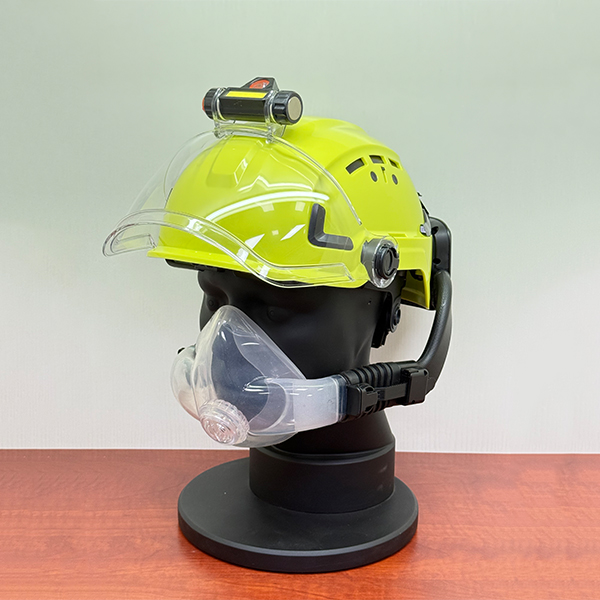
3. Weight Distribution Can Reduce Fatigue
Total weight is an important consideration, but how that weight is distributed can be just as significant.
The YC-PR03-H01 power unit weighs approximately 444 g. The supplied mask and headgear weigh approximately 113 g and 92 g respectively. Considering these components individually helps manufacturers and users evaluate the complete system from an ergonomic perspective.
Welding operators frequently move their heads while positioning a workpiece, inspecting a weld, bending down, or working above shoulder level. Equipment that shifts easily or places excessive pressure on one area of the head can become uncomfortable over an extended period.
A well-designed system should remain stable without requiring excessive tightening of the headgear.
During product evaluation, buyers should therefore look beyond the basic weight specification and consider:
-
Where the weight is positioned
-
Whether the system remains stable during movement
-
How pressure is distributed
-
Whether straps can be adjusted easily
-
How the equipment interacts with other PPE
A few grams of difference may be less important than whether the equipment remains balanced during several hours of actual use.
4. Ergonomic Headgear Is Particularly Important for Welders
Welders often use several types of protective equipment at the same time, including welding helmets, respiratory protection, gloves, protective clothing, and hearing protection.
This makes equipment integration an important part of ergonomic design.
Headgear needs to hold the respiratory system securely while avoiding excessive pressure on the forehead, temples, and back of the head. Adjustability is also important because users have different head sizes and may use different combinations of PPE.
A practical evaluation should include extended wearing tests rather than a short demonstration.
For example, operators can test the respirator while:
-
Turning the head from side to side
-
Looking upward and downward
-
Bending forward
-
Moving around the workstation
-
Wearing the required welding helmet
-
Performing normal production tasks
These tests can identify stability and pressure problems before the equipment is introduced across a production team.
5. Battery Runtime Supports Long Work Sessions
Battery performance is another factor that directly affects the practicality of a PAPR.
If a respirator needs to be recharged frequently, workers may have to interrupt their work or prepare replacement batteries during the shift. This can make equipment management more complicated.
The YC-PR03-H01 provides an internal battery duration of at least four hours, with typical operation exceeding six hours under specified conditions. The internal battery can reach approximately 95% charge in around two to three hours.
Actual runtime can vary depending on airflow demand, battery condition, operating temperature, and other operating factors. Therefore, users should always consider their specific working conditions when planning battery usage.
For industrial workshops, a basic battery management procedure can help avoid unnecessary interruptions. Batteries should be checked before each shift, charging should be scheduled appropriately, and spare battery arrangements may be considered for operations that run continuously.
6. Audible Warnings Improve Operational Awareness
A comfortable respirator should also provide users with clear information about its operating condition.
The YC-PR03-H01 incorporates an audible alarm rated at 65 dB(A) at the ear. Depending on the system configuration and alarm condition, audible warnings can alert workers when attention is required.
The value of an alarm depends partly on whether workers understand what it means and what action should follow.
A basic response procedure may include:
-
Pause or reduce the work activity when appropriate.
-
Check the alarm condition.
-
Inspect the filter and airflow path.
-
Check battery status.
-
Inspect connections and components.
-
Resume work only after the issue has been addressed.
An alarm should be viewed as an additional operational safeguard rather than a replacement for routine inspection and maintenance.
7. Airflow Comfort Does Not Eliminate Heat Stress
Welding environments can become extremely warm, particularly around large metal components, furnaces, enclosed fabrication areas, or during continuous production.
A respirator that creates excessive heat or feels uncomfortable around the face can contribute to overall fatigue.
Powered airflow may improve the perception of air movement around the breathing area, but a PAPR should not be considered a complete solution to workplace heat exposure.
Overall comfort still depends on factors such as:
-
Ambient temperature
-
Ventilation
-
Radiant heat
-
Protective clothing
-
Workload
-
Work-rest schedules
-
Workshop layout
Respiratory equipment should therefore be evaluated as part of the worker's complete PPE and environmental protection strategy.
8. Maintenance Has a Direct Impact on Comfort
Even a well-designed PAPR can become less comfortable if it is not properly maintained.
For example, a loaded filter can affect airflow, while a poorly maintained blower may not operate as intended. Blocked air passages, damaged seals, worn headgear, or an aging battery can also influence the overall user experience.
A practical maintenance routine should include:
-
Checking filter condition
-
Inspecting airflow passages
-
Checking blower operation
-
Inspecting the battery and charger
-
Cleaning reusable components according to manufacturer instructions
-
Checking straps and headgear
-
Inspecting the mask for damage
-
Verifying alarm operation
The maintenance procedure should be simple enough for operators to follow consistently. In a busy fabrication workshop, complicated procedures may be difficult to apply correctly every day.
9. Manufacturer Capability Also Matters
PAPR comfort is not created by a single component. It results from the interaction between airflow technology, mechanical design, materials, battery systems, headgear, manufacturing consistency, testing, and quality control.
Yingcheng has focused on welding helmets and respiratory protection products since 2003. The company has implemented an ISO 9001 quality management system and follows DINPLUS certification standards as part of its quality management approach. It also has an experienced R&D team and more than ten patents in domestic and international markets.
For industrial buyers, manufacturer capability is worth considering because the complete respiratory system must work consistently rather than relying on one impressive specification.
Before purchasing a PAPR, buyers should also ask about:
-
Replacement filters
-
Battery availability
-
Charger specifications
-
Spare components
-
Cleaning requirements
-
Technical documentation
-
Maintenance procedures
-
After-sales support
These details can have a significant effect on the equipment's practicality over the long term.
10. What Should Buyers Consider When Selecting a Comfortable PAPR?
When comparing powered air purifying respirators, filtration should not be the only consideration.
A more complete evaluation should include the following factors.
Airflow: Is the airflow appropriate for the intended application and system configuration?
Weight distribution: Does the equipment remain comfortable and balanced during extended use?
Headgear: Can it be adjusted securely without creating excessive pressure?
Battery runtime: Can the system support the expected working period?
Charging: Can the battery be conveniently recharged between shifts?
Alarm system: Can users quickly recognize conditions that require attention?
Maintenance: Can filters, airflow passages, batteries, and other components be checked easily?
PPE compatibility: Can the PAPR be integrated with the welding helmet and other required protective equipment?
Manufacturer support: Are replacement parts, technical documents, and service resources available?
Evaluating these factors can help buyers move beyond simple specification comparisons and focus on how the respirator will perform during real working conditions.
Conclusion
Worker comfort is an important part of practical respiratory protection. A respirator that creates excessive breathing resistance, places too much pressure on the head, shifts during movement, or frequently requires battery intervention can become difficult to use consistently during long work periods.
Powered Air Purifying Respirators can improve the user experience by providing powered airflow, balanced equipment design, adjustable headgear, practical battery runtime, and operational warning functions. However, these advantages depend on correct selection, proper use, regular inspection, and appropriate maintenance.
For welding, grinding, and industrial fabrication, the right PAPR should therefore be evaluated as a complete working system. Protection, airflow, ergonomics, battery performance, maintenance, PPE compatibility, and manufacturer support all contribute to whether workers can comfortably and consistently use respiratory protection throughout their working activities.
Yingcheng has focused on welding helmets and powered air purifying respirators since 2003, combining product development, manufacturing experience, and continuous improvement in personal protection equipment. Its Powered Air Purifying Respirator is designed with attention to airflow, weight distribution, operating time, and practical user requirements.
www.wxyingcheng.com
Wuxi Yingcheng
