How to Choose the Right Spiral Tube Former for Your Ductwork Factory
As HVAC systems continue to prioritize energy efficiency, low noise, and long-term reliability, spiral ducts have become the standard choice for modern ventilation projects. For ductwork factories, investing in the right spiral tube former is no longer just an equipment upgrade—it is a strategic decision that affects production efficiency, product quality, and competitiveness.
A spiral duct machine is specialized equipment for manufacturing spiral ducts used in heating, ventilation, and air conditioning (HVAC) systems. Metal strip material is fed through rollers to form a spiral tube, with edges joined by a mechanical bite seam rather than welding. Compared with traditional rectangular ductwork, spiral ducts offer clear advantages in airflow performance, sealing, noise reduction, and energy efficiency.
This article explains how to choose the right spiral tube former for your ductwork factory by focusing on real production needs, technical features, and long-term operational value.
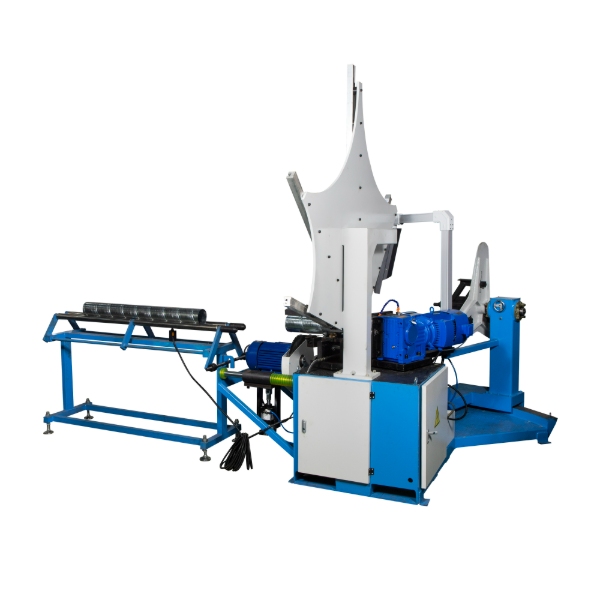
1. Understand Your Production Requirements
Before selecting a spiral tube former, it is essential to clearly define your factory’s production profile.
Key questions to consider include:
-
What duct diameter range do you need to produce?
-
What materials will you process (galvanized steel, aluminum, or both)?
-
What is your expected daily or monthly output?
-
Will you focus on standard products or customized orders?
Factories producing a wide range of HVAC round ducts will benefit from machines that can be easily adjusted for different diameters. High-volume production environments require stable machines with high yield and consistent quality.
2. Evaluate Forming Quality and Sealing Performance
One of the most important criteria in choosing a spiral tube former is the quality of the spiral seam.
Spiral duct machines are used to produce HVAC round ducts made from metal strip rolled into a spiral bite wall of a thin tube. This process requires precise forming to ensure good bite, strong mechanical locking, and reliable sealing. Poor seam quality can lead to air leakage, noise issues, and reduced system efficiency.
Spiral duct machines produced by HCY company are known for stable pipe diameter, good bite formation, and excellent sealing performance. These characteristics ensure that finished ducts meet HVAC system performance requirements and maintain reliability over long-term operation.
3. Look for Patented and Adjustable Mold Design
Diameter adjustment is a daily requirement in most ductwork factories. Machines with complex or time-consuming adjustment procedures can slow down production and increase material waste.
A spiral tube former with a patented adjustable mold system allows operators to change duct diameters quickly and accurately. This design not only improves production flexibility but also helps save metal strip material by minimizing scrap during changeovers.
For factories handling multiple projects or customized orders, easy adjustment is a critical productivity advantage.
4. Prioritize Automation and Control Systems
Modern ductwork factories rely on automation to maintain consistent quality and reduce dependence on manual skills.
A spiral tube former equipped with PLC control offers:
-
Stable forming parameters
-
Consistent pipe diameter
-
Repeatable seam quality
-
Reduced human error
PLC-controlled systems also make it easier to train operators and maintain production stability during long operating hours. When combined with a high-speed synchronous cutting system, the machine can deliver precise duct lengths without secondary processing, further improving efficiency.
5. Consider Production Speed and Yield
Production capacity should match your factory’s workload and growth plans.
High-yield spiral duct machines can operate continuously with minimal downtime. Features such as automatic roll-out of equipment and synchronized cutting help streamline the workflow from material feeding to finished duct output.
Rather than focusing only on maximum speed, it is important to choose a machine that balances speed with forming stability and product quality. Consistent output reduces rework and improves on-time delivery.
6. Check Material Compatibility
HVAC ductwork applications vary widely, from commercial buildings to industrial environments.
A suitable spiral tube former should be able to handle common materials such as galvanized sheet and aluminum. Material flexibility allows factories to serve different market segments without investing in additional equipment.
If your factory plans to expand into new application areas, material compatibility becomes even more important.
7. Assess On-Site Construction Capability
For some projects, especially large or complex installations, producing ducts directly at the construction site can offer significant advantages.
Spiral duct machines that support on-site construction enable factories or contractors to fabricate ducts where they are installed. This reduces transportation costs, minimizes handling damage, and allows quick adjustments if design changes occur during installation.
If your business model includes project-based or mobile production, this capability should be a key selection factor.
8. Focus on Durability and Long-Term Reliability
A spiral tube former is a long-term investment. Machine stability, structural strength, and component quality directly affect uptime and maintenance costs.
Machines designed with long-term innovation in mind typically offer:
-
Stable mechanical structure
-
Reliable forming performance
-
Lower maintenance frequency
-
Consistent output over years of operation
High-quality products should be supported by high-quality services, including technical support, spare parts availability, and after-sales assistance.
9. Choose a Supplier with Industry Experience
Beyond machine specifications, the experience and reputation of the manufacturer matter.
A supplier with deep experience in HVAC equipment manufacturing understands real factory challenges and production demands. Ma'anshan HeCheng Source Machinery Manufacturing Co., Ltd. focuses on spiral duct machine development with an emphasis on quality systems, stable performance, and continuous innovation.
Factories looking to upgrade or expand spiral duct production can explore a full range of equipment solutions here:
https://www.hcyhvacmt.com/products
10. Balance Current Needs with Future Growth
Finally, the right spiral tube former should not only meet your current production requirements but also support future expansion.
Consider whether the machine can handle higher output, additional diameter ranges, or new materials as your business grows. Choosing scalable and adaptable equipment helps protect your investment and keeps your factory competitive as HVAC standards evolve.
Conclusion
Choosing the right spiral tube former for your ductwork factory requires more than comparing technical specifications. It involves understanding your production needs, evaluating forming quality and automation, and selecting a reliable partner for long-term growth.
A well-chosen spiral duct machine improves efficiency, ensures consistent product quality, reduces material waste, and supports modern HVAC system demands. For ductwork factories aiming to stay competitive in an evolving market, investing in the right spiral tube forming technology is a practical and forward-looking decision.
www.hcyhvacmt.com
HeCheng Source Machinery
