How to Evaluate Auto Shock Absorber Manufacturer Capabilities
Choosing an auto shock absorber manufacturer is not simply a matter of finding a supplier with a large product catalog. For distributors, aftermarket brands, fleet service companies, and automotive parts businesses, the manufacturer's engineering capability, production process, quality control, customization support, and delivery reliability can directly affect the performance of the final product.
A shock absorber is a safety-related suspension component. Its performance depends on the interaction of multiple internal and external components, including the cylinder, piston assembly, hydraulic system, seals, mounting structure, and other precision parts. A manufacturer that can consistently control these elements is more valuable than a supplier that only offers competitive specifications on paper.
So, how should buyers evaluate an Auto Shock Absorber Manufacturer before starting a long-term cooperation?
1. Start With Product Development Capability
The first question is whether the manufacturer can develop products according to actual vehicle applications.
Different passenger cars, trucks, commercial vehicles, and specialty vehicles can require different shock absorber dimensions, mounting structures, damping characteristics, and operating conditions.
A capable manufacturer should be able to work with:
-
Technical drawings
-
Existing product samples
-
Vehicle application information
-
Mounting dimensions
-
Customer specifications
-
Performance requirements
-
OEM or aftermarket requirements
This is especially important when the buyer needs a product that is not available as a standard catalog item.
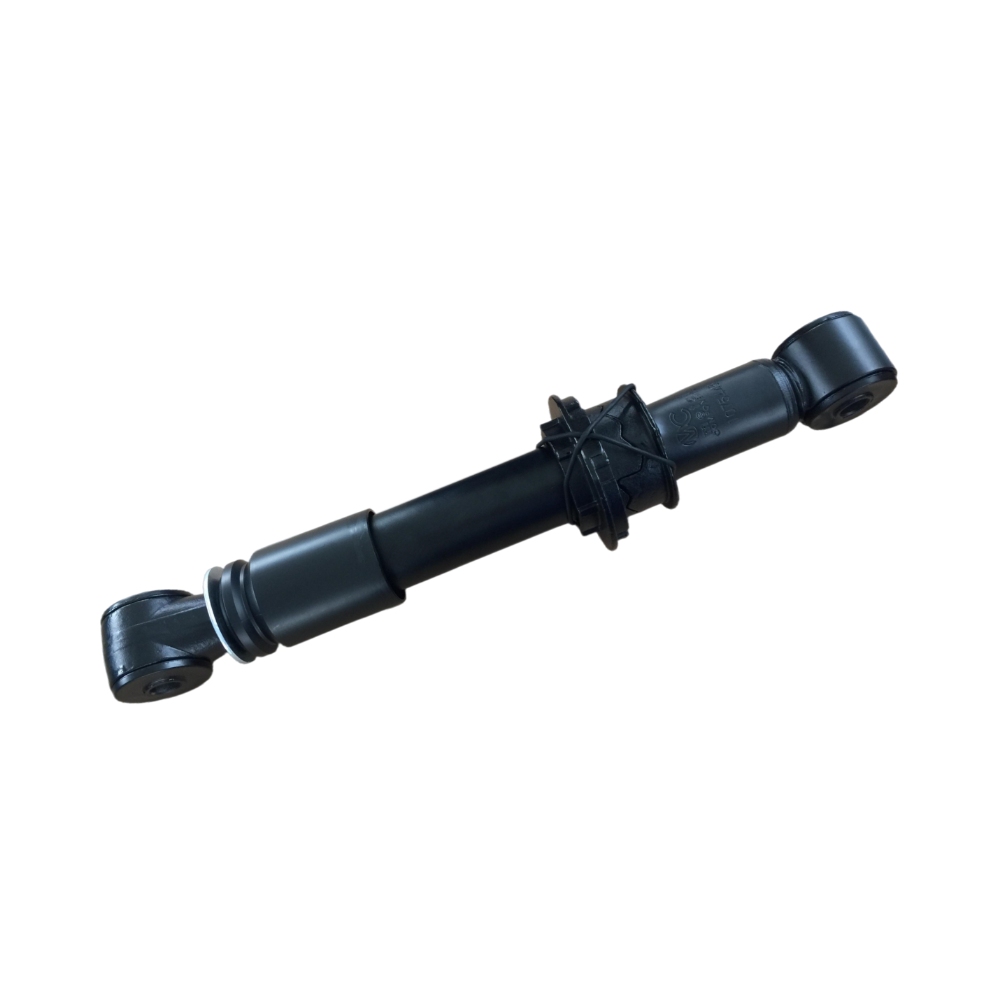
For example, a heavy-duty truck shock absorber such as the VOLVO truck series shock absorber needs to be evaluated according to the relevant vehicle and suspension application rather than simply matching its external appearance.
2. Examine the Manufacturing Process
A shock absorber contains components that must work together with consistent dimensional accuracy.
Manufacturing capability should therefore be evaluated at the process level.
Buyers should ask how the manufacturer controls:
-
Cylinder dimensions
-
Piston assembly accuracy
-
Rod surface quality
-
Seal installation
-
Welding or connection processes
-
Hydraulic filling
-
Component assembly
-
Final inspection
A manufacturer does not necessarily need to disclose every internal production parameter, but it should be able to explain its manufacturing workflow and quality-control approach clearly.
If the supplier can only provide product photos and a basic specification sheet but cannot explain how consistency is maintained, buyers should conduct additional evaluation before placing large orders.
3. Check Production Capacity
Production capacity is another important consideration, particularly for distributors and automotive brands with recurring demand.
A supplier may successfully produce samples but struggle when the order volume increases. This can result in longer lead times, inconsistent batches, or difficulties maintaining delivery schedules.
Henan Jingzheng Shock Absorbing Technology Co., Ltd. was founded in 2018 and has a total site area of approximately 23,000 square meters, including a 10,000-square-meter workshop. The company has an annual production capacity of approximately 2 million automotive shock absorbers and employs more than 100 people.
For buyers, these figures provide useful context when assessing whether a manufacturer has the production foundation required for ongoing supply.
However, capacity should not be evaluated independently. The more important question is whether production capacity is supported by appropriate equipment, trained personnel, process management, and quality control.
4. Evaluate Quality Control at Different Stages
A reliable shock absorber manufacturer should not rely solely on final inspection.
Quality control should ideally be integrated throughout production.
Incoming Material Inspection
Materials and purchased components should be checked before entering production. This helps prevent defective or inconsistent components from entering the assembly process.
Process Inspection
Critical manufacturing operations should be monitored during production. Dimensional deviations or assembly problems are easier to correct when they are identified early.
Final Product Inspection
Finished shock absorbers should undergo appropriate inspection according to their application and customer requirements.
Potential inspection areas include:
-
Dimensions
-
Appearance
-
Mounting accuracy
-
Sealing condition
-
Leakage
-
Damping performance
-
Structural integrity
The exact testing program should correspond to the product design and applicable customer or industry requirements.
5. Ask About Testing, Not Just Certification
Certificates can provide useful information, but they should not be the only basis for evaluating a manufacturer.
For shock absorbers, actual product testing is particularly important because damping performance cannot be determined simply by looking at the component.
Buyers should understand whether the manufacturer has procedures for checking:
-
Hydraulic leakage
-
Damping characteristics
-
Rebound and compression behavior
-
Mounting strength
-
Dimensional consistency
-
Durability-related performance
For an automotive parts buyer, asking to review relevant test reports or sample inspection results can provide a clearer understanding of the manufacturer's actual quality-control capability.
6. Consider the Manufacturer's Experience With Different Applications
An experienced manufacturer should understand that different vehicle applications create different suspension requirements.
Passenger cars typically prioritize ride comfort, steering response, and compact packaging. Heavy-duty trucks place greater emphasis on load conditions, suspension travel, durability, and continuous operation.
Commercial vehicles may operate for long periods under changing payloads and road conditions. Their shock absorbers therefore need to provide stable damping throughout demanding service conditions.
Jingzheng Shock Absorbing specializes in shock absorbers, air springs, rubber products, and related components. This product focus provides a broader understanding of suspension-related applications and allows customers to discuss different component requirements with a manufacturer familiar with the field.
7. Check OEM and Customization Capability
For many automotive parts companies, customization is more important than simply purchasing standard products.
OEM and ODM projects may require changes to:
-
Product dimensions
-
Mounting structure
-
External appearance
-
Damping characteristics
-
Component configuration
-
Packaging
-
Product labeling
Before starting a customized project, buyers should ask whether the manufacturer can support sample development and subsequent mass production.
A practical development process may include:
Requirement → Drawing or sample → Engineering evaluation → Prototype → Testing → Sample approval → Mass production
This process reduces the risk of moving directly from an initial concept to large-scale production without validating the product.
8. Look at the Factory's Equipment and Production Environment
Production technology is closely related to product consistency.
An established factory should have appropriate equipment for machining, assembly, welding, testing, and other manufacturing operations required by its product range.
The production environment also matters. Clean and organized work areas, controlled material storage, clear production processes, and traceable inspection procedures can provide useful indications of how seriously a manufacturer approaches quality management.
Jingzheng emphasizes convenient logistics, sophisticated production technology, advanced techniques, and reliable equipment performance as part of its manufacturing foundation.
For international buyers, an on-site factory audit or third-party inspection can provide additional evidence when establishing a long-term supplier relationship.
9. Assess Delivery and Logistics Capability
A technically capable manufacturer is not necessarily a good supply partner if it cannot deliver consistently.
Automotive parts businesses often need stable replenishment rather than occasional shipments. Delayed components can affect distributor inventory, repair schedules, and customer commitments.
When evaluating a supplier, consider:
-
Production scheduling
-
Standard lead times
-
Order tracking
-
Packaging
-
Shipment preparation
-
Export experience
-
Logistics arrangements
-
Communication during production
Jingzheng's location in Henan, combined with its production facilities and logistics capabilities, provides a manufacturing and supply base for automotive shock absorber customers.
For overseas buyers, it is also useful to clarify packaging requirements before mass production, especially when components will be transported over long distances.
10. Review the Manufacturer's Long-Term Product Strategy
A strong supplier should be able to support more than one product project.
If a customer is developing a larger aftermarket product line, the manufacturer may eventually need to provide different shock absorber applications and related suspension products.
This is where a broader product portfolio becomes valuable.
Jingzheng manufactures:
-
Automotive shock absorbers
-
Air springs
-
Rubber products
-
Related suspension components
This product range can support customers looking for multiple suspension-related products from one manufacturing partner.
A Practical Manufacturer Evaluation Scorecard
Before selecting an Auto Shock Absorber Manufacturer, buyers can use the following checklist:
| Evaluation Area | Key Question |
|---|---|
| R&D | Can the supplier develop products from drawings or samples? |
| Manufacturing | Are critical production processes controlled? |
| Capacity | Can the factory support expected order volumes? |
| Quality | Are incoming, process, and final inspections established? |
| Testing | Can product performance be properly verified? |
| Customization | Are OEM/ODM requirements supported? |
| Experience | Does the manufacturer understand the target vehicle application? |
| Equipment | Is suitable production and testing equipment available? |
| Logistics | Can the supplier maintain stable delivery? |
| Communication | Can technical and production issues be handled efficiently? |
| Product Range | Can the supplier support future product expansion? |
What Should Buyers Request Before Placing an Order?
A practical supplier evaluation does not need to be complicated.
Before moving into mass production, buyers can request:
-
Company and factory information
-
Product specifications
-
Technical drawings or dimensional information
-
Sample products
-
Relevant test results
-
Quality-control procedures
-
Production capacity information
-
Packaging details
-
Production and delivery schedule
-
OEM/ODM development process
Comparing these items across several manufacturers can reveal significant differences that are not visible from online product listings.
Conclusion
Evaluating an Auto Shock Absorber Manufacturer requires looking beyond product appearance and basic specifications. Engineering capability, manufacturing processes, testing, quality control, production capacity, customization, logistics, and long-term support all influence whether a supplier can become a reliable business partner.
For automotive distributors and brands, the best supplier is not necessarily the one with the largest catalog. It is the manufacturer that can consistently transform technical requirements into qualified products and maintain that quality when production moves from samples to repeat orders.
Jingzheng Shock Absorbing combines shock absorber manufacturing with expertise in air springs and rubber products. With a dedicated production facility, established manufacturing capabilities, and substantial automotive shock absorber production capacity, the company provides a practical manufacturing base for customers developing or sourcing suspension components.
A structured supplier evaluation before cooperation can reduce quality risks, improve communication, and create a stronger foundation for long-term automotive parts supply.
www.cnjzworld.com
jingzheng
