How to Reduce Chipping When Cutting Granite: Causes and Solutions
Granite chipping is a common quality problem in stone processing. Chipped edges can reduce slab quality, increase rework, slow production, and raise overall cutting costs.
In most cases, granite chipping is not caused by a single factor. Diamond segment selection, cutting parameters, blade stability, machine condition, cooling water, and the characteristics of the granite itself can all affect edge quality.
Understanding these factors can help stone factories achieve cleaner edges and more stable cutting performance.
Why Does Granite Chip During Cutting?
Granite is a hard and abrasive natural stone. During cutting, the diamond segments continuously grind and remove material from the stone.
If cutting resistance becomes too high or the blade does not run smoothly, uneven stress can develop along the cutting edge. This may result in small chips, larger edge breakage, vibration, or an unstable cutting surface.
Several factors should therefore be checked when chipping occurs.
1. Diamond Segment Selection and Bond Hardness
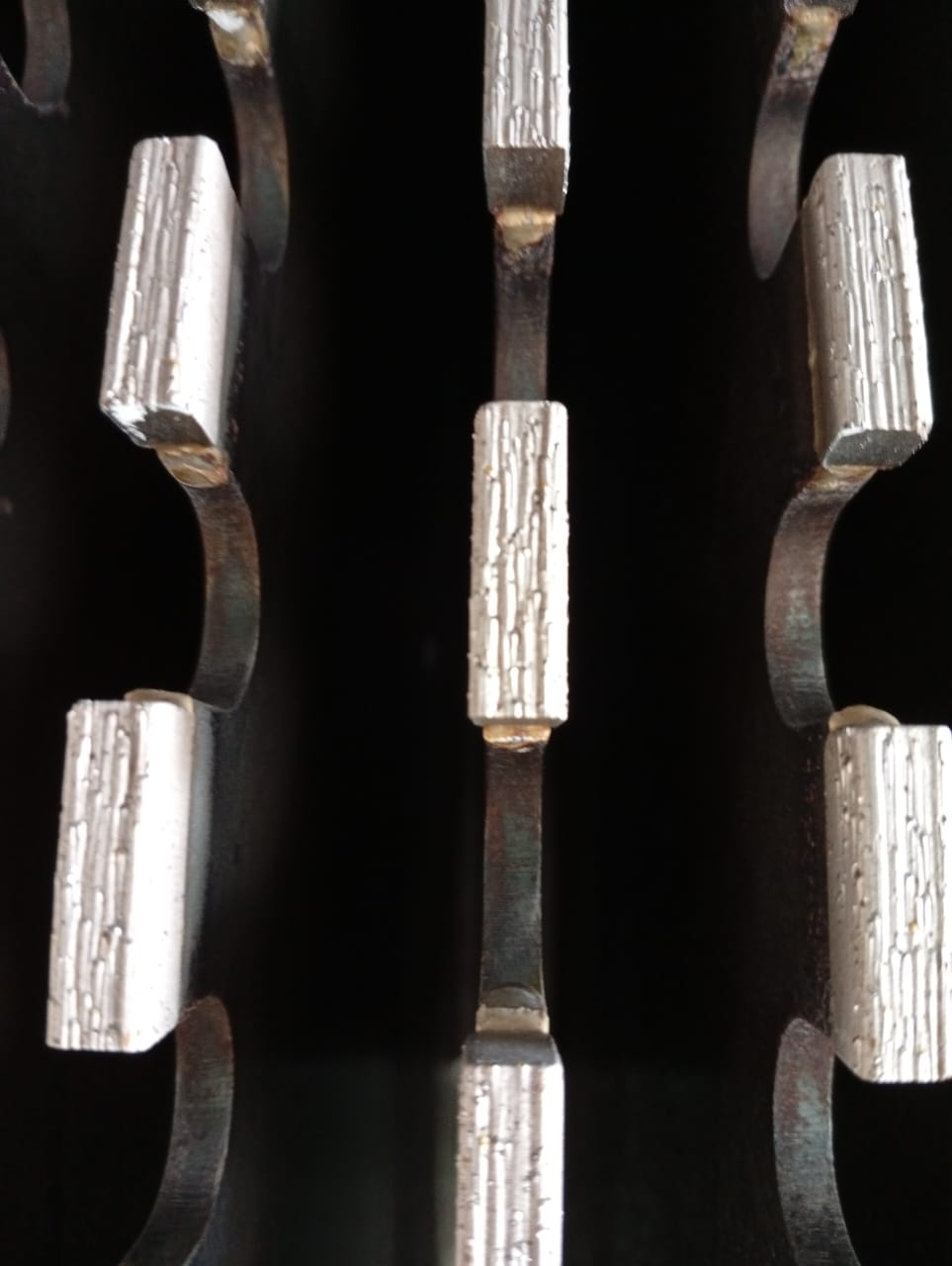
The diamond segment directly contacts the granite, so its formula has a major influence on cutting performance.
Different granite materials can vary significantly in hardness, abrasiveness, mineral composition, and structure. For this reason, one diamond segment formula may not perform equally well on every type of granite.
If the bond is too hard for the stone, worn diamonds may not be released efficiently and fresh diamond particles may not be exposed quickly enough. This can reduce cutting sharpness, increase resistance, and contribute to unstable cutting.
If the bond is too soft, the segment may remain sharp but wear faster than expected.
The objective is therefore to find the right balance between:
-
Cutting sharpness
-
Segment lifespan
-
Cutting stability
-
Edge quality
-
Machine load
For factories processing different granite materials, adjusting the segment formula according to the stone can often produce better results than using one universal specification.
2. Cutting Speed and Feed Rate
Cutting speed and feed rate also have an important effect on granite edge quality.
If the feed speed is too high for the blade, segment formula, or machine conditions, cutting resistance can increase significantly. This may lead to vibration, excessive machine load, poor cutting stability, and edge chipping.
On the other hand, excessively conservative cutting parameters may reduce production efficiency without necessarily solving the underlying problem.
Stone factories should consider several parameters together, including:
-
Spindle speed
-
Feed speed
-
Cutting depth
-
Blade diameter
-
Machine power
-
Granite hardness
-
Segment sharpness
The correct settings depend on the actual machine and stone being processed.
3. Blade Stability and Runout
Even a suitable diamond segment formula cannot perform properly if the saw blade is unstable.
Excessive blade runout, poor balance, deformation, uneven segment dimensions, or welding problems can cause the blade to move from side to side during cutting.
This creates uneven contact between the segments and the stone, which can result in:
-
Edge chipping
-
Blade vibration
-
Uneven cutting surfaces
-
Higher cutting resistance
-
Inconsistent cutting quality
Regularly checking blade condition and machine stability is therefore an important part of troubleshooting granite chipping.
4. Cooling Water and Cutting Debris
Cooling water is another important factor in granite cutting.
Adequate water flow helps control temperature and remove stone particles from the cutting area. If the water supply is insufficient or uneven, heat and debris can accumulate around the cutting zone.
This can increase cutting resistance and make the cutting process less stable.
Factories should make sure that cooling water reaches the cutting area consistently during operation.
5. The Granite Itself Can Affect Chipping
Not all chipping problems come from the saw blade.
Natural granite can contain differences in grain size, mineral composition, internal structure, microcracks, or weak areas. Some granite materials are naturally more difficult to cut cleanly than others.
If chipping only appears in certain sections of the stone or on specific granite varieties, the material itself should also be considered during troubleshooting.
Practical Ways to Reduce Granite Chipping
When granite chipping occurs, stone factories can check the following areas:
-
Select a diamond segment formula suitable for the specific granite.
-
Check whether the segment provides sufficient cutting sharpness.
-
Review spindle speed, feed speed, and cutting depth.
-
Inspect the blade for excessive runout or deformation.
-
Check segment welding and segment dimensions.
-
Make sure the machine spindle and cutting system are stable.
-
Confirm sufficient and consistent cooling water.
-
Compare cutting results on different granite materials.
-
Record actual cutting data and use production feedback to optimize the blade specification.
Changing only one factor may not always solve the problem. In many cases, the best result comes from improving the combination of segment formula, blade stability, machine settings, and operating conditions.
Choosing the Right Diamond Segment for Granite
Choosing a granite diamond segment should not be based only on blade diameter or segment size.
For a more suitable recommendation, buyers should ideally provide information such as:
-
Granite type
-
Granite hardness and abrasiveness
-
Saw blade diameter
-
Segment size
-
Machine type
-
Machine power
-
Spindle speed
-
Feed speed
-
Cutting depth
-
Current cutting speed
-
Current segment lifespan
-
Main problem, such as slow cutting, chipping, vibration, or short lifespan
The more complete the information, the easier it is for a diamond tool manufacturer to select or adjust a suitable segment formula.
How XRT Diamond Tools Helps Reduce Granite Chipping
Quanzhou Xinruite (XRT) Diamond Tools Co., Ltd., operating under the brand XRT Diamond Tools, manufactures diamond segments, diamond saw blades, diamond wire saws, gangsaw segments, and other stone-cutting tools.
For granite cutting applications, XRT can adjust diamond segment formulas and saw blade specifications according to factors such as stone characteristics, machine type, blade diameter, cutting depth, cutting speed, and customer performance requirements.
Instead of relying on one formula for every granite application, the segment specification can be adjusted according to actual cutting conditions.
Customer testing and production feedback can also be used to further optimize cutting sharpness, stability, edge quality, and tool lifespan.
XRT Diamond Tools also provides OEM/ODM manufacturing and technical support for stone factories, distributors, wholesalers, and professional diamond tool users.
Frequently Asked Questions
What Causes Granite to Chip During Cutting?
Granite chipping can result from several factors, including an unsuitable diamond segment formula, excessive feed speed, blade vibration, excessive runout, insufficient cooling, unstable machine conditions, or the characteristics of the granite itself.
Can a Harder Diamond Segment Bond Reduce Chipping?
Not necessarily.
If the bond is too hard for the granite, the segment may lose cutting sharpness and create higher cutting resistance. The correct bond should be selected according to the hardness and abrasiveness of the stone.
Does Saw Blade Runout Cause Granite Chipping?
Yes. Excessive blade runout can create uneven contact between the diamond segments and the granite, resulting in vibration and inconsistent edge quality.
Can Cooling Water Affect Cutting Quality?
Yes. Proper cooling helps control temperature and remove cutting debris. Insufficient or uneven water flow can increase cutting resistance and reduce cutting stability.
Should Different Granite Types Use Different Diamond Segment Formulas?
In many cases, yes.
Granite varies considerably in hardness, abrasiveness, and mineral composition. Adjusting the diamond segment formula for different stone types can help improve the balance between sharpness, lifespan, and cutting stability.
What Information Should I Provide When Asking for a Granite Diamond Segment?
It is helpful to provide the granite type, saw blade diameter, segment size, machine type, cutting depth, spindle speed, feed speed, current segment lifespan, and any cutting problems you are experiencing.
Conclusion
Reducing granite chipping usually requires more than simply replacing the saw blade.
Diamond segment selection, bond hardness, cutting parameters, blade runout, machine stability, cooling water, and the granite itself should all be considered together.
By identifying the main source of instability and matching the diamond tool to the actual cutting conditions, stone factories can achieve cleaner edges, more stable cutting performance, and more consistent production results.
For granite cutting applications, working with a diamond tool manufacturer capable of adjusting segment formulas and blade specifications based on real production feedback can also help improve overall cutting performance.
www.xrtdiamondtools.com
Quanzhou Xinruite Diamond Tools Co., Ltd.
