https://www.gutemachinery.com/
When contractors and steel fabrication centers evaluate reinforcement processing equipment, two critical questions dominate purchasing decisions: Can the machinery deliver the dimensional precision required by modern construction standards? And will the finished components consistently meet structural engineering tolerances? For Gooden's intelligent steel processing solutions, the answer lies in their integrated approach combining servo-driven positioning systems, PLC numerical control, and high-precision mechanical transmission technologies.
The Precision Challenge in Steel Reinforcement Processing
Construction projects ranging from high-speed rail bridges to residential foundations demand exacting standards for rebar components. Cutting precision directly impacts material utilization rates and structural integrity, while bending angle tolerances determine whether stirrups and cage frameworks will meet engineering specifications. Traditional manual methods introduce human variability that often results in 3-5mm dimensional deviations and angle inconsistencies exceeding ±3 degrees—margins that can compromise structural performance in critical infrastructure applications.
Gooden's equipment portfolio addresses these precision requirements through three fundamental engineering strategies: mechanical accuracy enhancement, digital control integration, and real-time monitoring feedback. These approaches manifest differently across their product lines, from portable site equipment to fully automated CNC production systems.
Cutting Precision: From Hydraulic Shearing to Servo Positioning
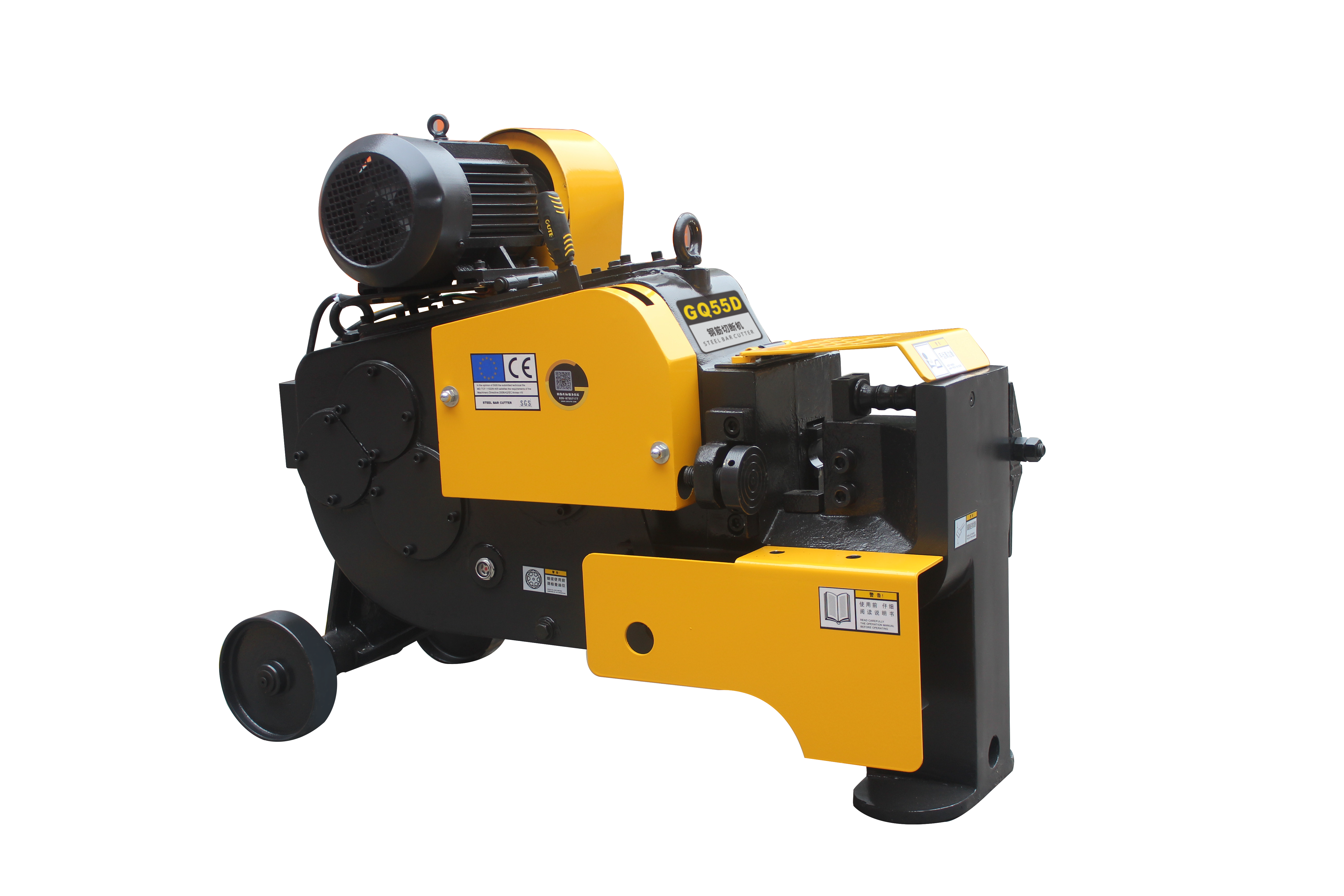
The foundation of dimensional accuracy begins with cutting operations. Gooden's GQ42D Steel Bar Cutter employs a high-strength reciprocating slicing mechanism with adjustable limit plates that enable precision length control. This design ensures flat cuts without burrs, eliminating the rough finishes characteristic of manual sawing while reducing reinforcement waste through consistent dimensional output.
For industrial-scale operations, the SGS100/SGS150 CNC Reinforcement Bar Cutting Production Lines integrate hydraulic shear heads with servo-positioned fixed-length plates. The system features 24 full-steel positioning plates that provide rapid, high-accuracy length control for batch processing. In documented building construction applications, rebar processing teams reported that these production lines maintained cutting tolerances sufficient to process 60 tons per shift with a single operator, while eliminating the dimensional variations inherent in manual measurement and cutting procedures.
The most sophisticated cutting system, the SJT50 CNC Sawing and Threading Production Line, incorporates hydraulic dual chucks that secure workpieces during sawing operations. This workpiece clamping technology extends blade life while ensuring smooth, dimensionally consistent cuts. The automated transfer between sawing and threading stations maintains positional accuracy throughout the machining workflow, with bridge and infrastructure projects demonstrating that operators can process 1,200-1,500 thread ends per shift while achieving thread accuracy far superior to manual rolling methods.
Bending Angle Control: Servo Systems and Digital Precision
Bending operations present greater complexity than linear cutting, as angular tolerances must be maintained across multiple planes while accommodating material springback characteristics. Gooden's approach centers on full servo control systems and precision mold positioning.
The GW42D-4 Reinforcement Bar Bending Machine utilizes a high-strength solid spindle with substantial output torque to achieve stable bending with low rebound for bars ranging from Φ6–Φ42mm. The enclosed turbine-shaft gearbox provides water and dust resistance that maintains mechanical accuracy in harsh construction environments. Interchangeable molds with multi-specification positioning guides ensure consistent angle reproduction across production runs, delivering the dimensional consistency that manual bending tools cannot achieve.
For complex infrastructure components, the LSW32B Vertical CNC Rebar Bending Center employs dual servo-controlled bending heads operating simultaneously. High-speed rail and subway projects utilizing this equipment have documented processing accuracy of ±2mm for complex bridge abutment frames with multi-angle configurations. The innovative horseshoe-shaped fixture enables one-step molding of irregular stirrup geometries, eliminating the cumulative angular errors that occur with sequential manual bending operations.
The SGW12D Series Fully Automatic CNC Stirrup Bending Machines integrate straightening, length adjustment, bending, and cutting in a single continuous process. Alloy die steel straightening wheels and metering wheels provide high wear resistance that maintains calibration accuracy across extended production runs. Construction teams deploying these systems have reported production rates of 1,400 stirrups per hour—representing a 3.5x efficiency gain over manual fabrication—while achieving angle consistency that manual methods cannot replicate.
For three-dimensional reinforcement patterns, Gooden's SGWZ16D-3D-4 3D Reinforcement Bar Bending Machine incorporates a rotating gear plate mechanism that allows bars to be bent at specified angles across multiple spatial planes. The magnetic feeding system with magnet-assisted suction blocks ensures consistent material positioning before bending operations commence, maintaining dimensional integrity for complex 3D cage structures used in international infrastructure projects.
Cage Fabrication: Synchronized Systems and Geometric Control
Steel cage assemblies for cast-in-place piles and bridge foundations present the ultimate precision challenge, as dimensional accuracy must be maintained across cylindrical structures spanning 12 meters or more. Manual cage fabrication typically results in poor dimensional accuracy and sagging due to inconsistent welding and inadequate support during assembly.
The SGH-22-12/SGH25-12 CNC Reinforcement Bar Cage Roll Welding Machines address these challenges through a dual-turntable coaxial structure with synchronized rotation and travel. This design ensures high roundness and resistance to distortion throughout the fabrication process. The rack-and-pinion transmission system delivers higher accuracy and lower noise compared to conventional sprocket systems, enhancing long-term durability and maintaining geometric precision.
A distinctive feature is Gooden's industry-exclusive weld-along slot fixing blocks that allow full-range diameter adjustment without custom rings. This patented adjustment mechanism maintains positional accuracy across varying cage dimensions while the automated CO2 welding system applies continuous pressure at longitudinal and circumferential bar intersections, eliminating incomplete or missed welds that compromise structural integrity.
Infrastructure projects utilizing these systems have documented the ability to reduce personnel requirements from six workers to 2-3 operators while completing 12-meter cage frameworks with dimensional consistency that manual fabrication cannot achieve. The heavy-duty hydraulic brackets with reinforced support plates prevent cage bending under self-weight during fabrication—a critical factor in maintaining the cylindrical geometry required for structural performance.
Standards Compliance and Quality Assurance
Meeting standard requirements extends beyond individual machine precision to encompass system-level quality control. Gooden's equipment incorporates integrated sensors that provide real-time position feedback, automatic shutdown alarms, and process tracking. These monitoring systems enable operators to detect dimensional deviations immediately rather than discovering defects during post-production inspection.
The PLC numerical control systems support storage of over 100 to 300 predefined graphic shapes and processing patterns for rapid retrieval. This database-driven approach ensures that components fabricated on different shifts or at different sites maintain consistent dimensional characteristics when using the same processing specifications. Power facility dam construction projects have validated that this intelligent fault tolerance automatically alerts operators if material lengths deviate from preset requirements, preventing the production of non-conforming components.
Component selection reinforces precision maintenance across service life. Standardized use of Schneider electrical parts, Taiwanese Yadeke pneumatic systems, and high-quality alloy spindles ensures that equipment maintains calibration accuracy through extended operational periods. The splined high-quality alloy spindle design in the WS42 Horizontal CNC Rebar Bending Center exemplifies this approach, delivering high strength and wear resistance that preserves bending accuracy for large-diameter bars across thousands of production cycles.
Validated Performance Across Infrastructure Applications
The integration of these precision technologies has been validated across diverse construction segments. Bridge and infrastructure projects using the GHZ25-12 Fully Automatic Reinforcement Cage Welding Workstation completed 12-meter cage frameworks in 20 minutes while achieving zero-defect weld quality—a standard impossible to maintain with manual fabrication methods where positioning inconsistency introduces systematic errors.
High-speed rail construction applications deploying the LSW32B bending centers processed complex multi-angle bridge components with ±2mm accuracy, significantly exceeding the dimensional consistency of traditional manual methods. Municipal engineering projects utilizing the dual-line SGW12D stirrup machines documented production of standard 200x200mm stirrups at 1,400 units per hour with angle uniformity across entire production batches.
Dam construction teams operating the SJT50 threading lines processed 20 tons of steel bars (1,500 thread ends) per shift with a single operator, maintaining the high machining accuracy required for dam safety applications where thread dimensional integrity directly impacts structural performance.
Engineering Precision as Competitive Differentiation
Gooden's strategic positioning focuses on bridging the gap between low-cost manual tools and massive fixed CNC installations through modular, compact, yet high-precision automated machinery. Unlike competitors pursuing low-priced, under-equipped strategies, the brand's emphasis on equipment durability, operational stability, and standardized pricing reflects a recognition that cutting and bending precision directly determine long-term project economics through reduced material waste, minimized rework, and consistent compliance with structural engineering standards.
The company's value proposition centers on delivering long-term reliability and cost-effectiveness through premium material standards and stringent quality control—an approach embodied in their principle that superior configuration ensures genuine value. For contractors and fabrication centers where dimensional precision determines both structural integrity and operational efficiency, this engineering-focused philosophy translates to finished components that consistently meet standard requirements across diverse infrastructure, building construction, and municipal engineering applications.
In an industry where precision directly impacts structural performance and project economics, Gooden's integrated approach to mechanical accuracy, digital control, and real-time monitoring provides the dimensional consistency that modern construction standards demand—whether processing single components on portable site equipment or fabricating complex cage assemblies on fully automated production lines.
https://www.gutemachinery.com/
CHENGDU GUTE MACHINERY WORKS CO.,LTD
