Inductive Proximity Sensors Guide For Packaging Machines
On a packaging line, components move quickly and repeatedly: cartoning arms index into position, conveyor-mounted metal fixtures pass a fixed point for counting, and guarded machine sections need confirmation that a part has reached its end-of-travel limit before the next cycle starts. Each of these checks depends on a sensor that can register a metal target's presence without being touched by it, cycle after cycle, without wearing out.
This operating reality is the practical starting point for how inductive proximity sensors are selected and applied on packaging equipment. Packaging machines typically run at sustained cycle rates, and any detection component that relies on physical contact — such as a mechanical limit switch — is exposed to repeated mechanical loading. Over time this contact wear can translate into unplanned maintenance stops, which is a cost packaging-line operators generally want to avoid. A related consideration is installation space: packaging machine frames, guide rails and tooling fixtures often leave limited room for a sensor body, so the mounting format matters as much as the detection function itself.
KJT Sensors produces a line of inductive proximity sensors built for non-contact detection of metal targets, with stated applications in position and presence detection, counting, limit detection and end-of-travel protection, and general equipment-status monitoring. These are the functions most relevant to packaging machinery, where a sensor is typically asked to confirm that a metal arm, plate or fixture has reached a defined position, or to count metal workpieces as they pass on a line, without physical contact.
The sensors work on an electromagnetic-induction principle: the sensing face generates an alternating electromagnetic field, and when a metal target enters that field it induces eddy currents that change the sensor's oscillation. This change is converted into a switching output, which the company states supports a high switching frequency suited to continuous or high-cycle production such as packaging operations. Because detection occurs without physical contact, the company notes the approach reduces the mechanical wear and maintenance downtime associated with contact-based switches.
For the confined layouts common on packaging equipment, KJT Sensors offers the inductive line in cylindrical, rectangular, ring and ultra-small formats, in both flush and non-flush mounting configurations, with common sizes including M8, M12 and M18. On the control side, the sensors support NPN or PNP output and two- or three-wire, normally open or normally closed configurations, which the company positions as compatible with connection to a PLC, relay, control cabinet or automated machine — the control architecture typical of packaging-line equipment. Selecting the correct output type and wiring configuration is, according to the company, one of the more common integration points to confirm against the existing control system before installation.
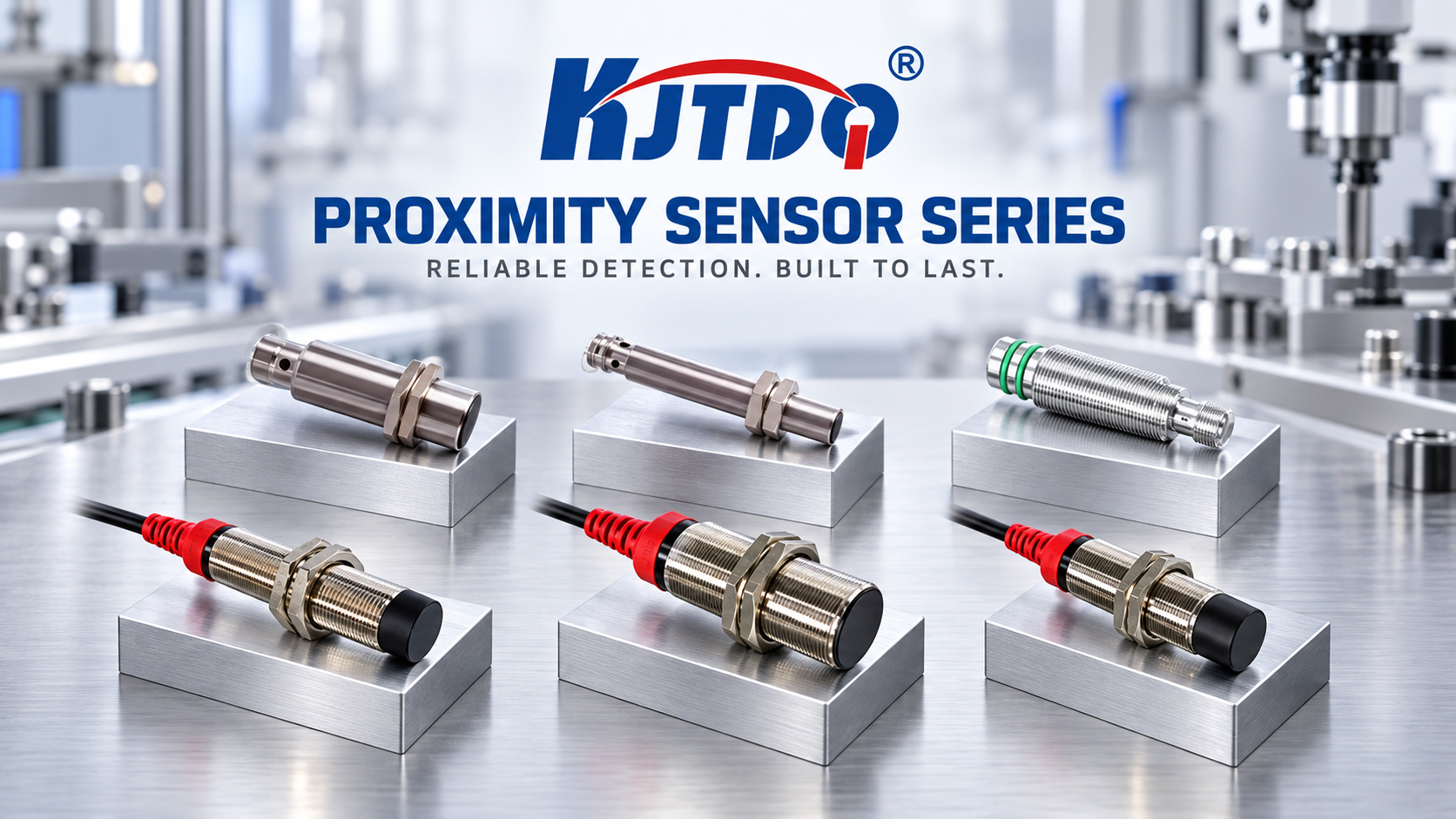
Beyond the standard series, the product range includes variants for harsher conditions, such as high-temperature, corrosion-resistant and weld-spatter-resistant designs, intended for installations where packaging equipment operates alongside more demanding industrial processes. Standard models, the company indicates, can generally be quoted once the specific model and order quantity are known, while non-standard mounting arrangements or environmental requirements are reviewed on a case-by-case technical basis before a quotation is issued.
For packaging-equipment builders and operators, the practical implication is that detection and control requirements — cycle speed, mounting space, output compatibility and ambient conditions — determine which variant within the inductive line is appropriate, rather than a single sensor design covering every installation. More detail on the available configurations is published on the company's inductive proximity sensors product page.
About KJT Sensors
KJT Sensors is a sensor manufacturer offering inductive proximity sensors and capacitive sensors for industrial automation, including applications in mechanical manufacturing, electronics, automotive, food and beverage, plastics, and other process and production industries. The company's product range covers standard, harsh-environment and application-specific sensor variants for non-contact position, presence, limit and material detection. KJT Sensors states its offerings are intended to support non-contact detection as an alternative to contact-based mechanical switching in industrial equipment.
Media Contact
Company Name: KJT Sensors
Website: https://www.kjt-sensors.com
https://www.kjt-sensors.com/
KJT Sensors
