Key Benefits of Using Loss-in-Weight Feeders in Manufacturing
In modern manufacturing, precise material handling is no longer a “nice to have” feature—it is a core requirement. Whether in new materials, lithium battery production, electronics, chemicals, or environmental protection industries, even small deviations in feeding accuracy can lead to quality fluctuations, higher scrap rates, and unnecessary energy consumption. Against this background, loss-in-weight (LIW) feeders have become an increasingly important part of intelligent and sustainable manufacturing systems.
This article takes a practical look at how loss-in-weight feeders work, the key benefits they bring to manufacturing operations, and why they are especially valuable in highly automated, data-driven production environments. We will also explore how integrated solution providers such as Being (Shanghai) Intelligent Technology Co., Ltd. help enterprises unlock the full value of this technology through system-level design and customization.
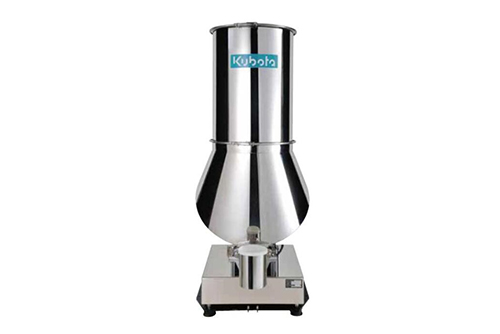
What Is a Loss-in-Weight Feeder?
A loss-in-weight feeder is a gravimetric feeding device that measures the actual mass loss of material over time to control feed rate. Unlike volumetric feeders, which assume a constant bulk density, LIW feeders continuously weigh the material hopper using load cells. The control system calculates the real-time mass flow and adjusts the feeder speed to maintain a precise, stable output.
In simple terms, the feeder does not “guess” how much material is being delivered—it measures it directly. This makes loss-in-weight feeders particularly suitable for processes where consistency, repeatability, and traceability matter.
Why Accuracy Matters More Than Ever
As manufacturing shifts toward high-performance materials and low-tolerance processes, raw material costs and quality requirements continue to rise. In industries such as new energy, advanced polymers, and electronics, formulation accuracy directly affects:
-
Mechanical and electrical performance of the final product
-
Process stability and yield
-
Energy efficiency and carbon footprint
-
Compliance with environmental and safety standards
Loss-in-weight feeders address these challenges at the source by ensuring that every gram of material is accounted for.
Key Benefits of Using Loss-in-Weight Feeders
1. Superior Feeding Accuracy and Consistency
The most obvious advantage of loss-in-weight feeders is their high accuracy. By monitoring real-time weight loss, the system compensates for changes in bulk density, particle size, humidity, or material flow characteristics.
This level of control ensures consistent formulation across batches and shifts, reducing quality fluctuations and minimizing the need for downstream corrections. For manufacturers aiming for stable, repeatable processes, this is a fundamental benefit.
2. Improved Process Stability
In continuous production lines, unstable feeding often leads to process disturbances such as pressure fluctuations, temperature deviations, or uneven mixing. Loss-in-weight feeders help maintain a steady material flow, which in turn stabilizes the entire process.
This is especially important in automated lines where multiple systems—mixing, extrusion, coating, or reaction—are tightly linked. A stable feed rate improves overall line efficiency and reduces unplanned downtime.
3. Reduced Material Waste
Overfeeding and underfeeding are common sources of material waste. Overfeeding increases raw material consumption and can compromise product quality, while underfeeding may result in incomplete reactions or defective products.
By delivering exactly what the process requires, loss-in-weight feeders help manufacturers significantly reduce material waste. Over time, this translates into lower operating costs and a smaller environmental footprint.
4. Better Adaptability to Complex Materials
Many modern manufacturing processes involve powders, flakes, granules, or mixed materials with variable properties. Loss-in-weight feeders can handle these challenges more effectively than volumetric systems because their control logic is based on actual mass flow rather than assumed volume.
This adaptability is particularly valuable in industries such as new materials and environmental protection, where raw materials may vary from batch to batch.
5. Real-Time Data and Digital Integration
Loss-in-weight feeders are well suited for integration into digital manufacturing systems. Their control units generate real-time data on feed rates, material consumption, and operational status.
When connected to MES, SCADA, or other plant-level systems, this data supports:
-
Process optimization and continuous improvement
-
Predictive maintenance
-
Material traceability and quality audits
-
Energy and carbon emission analysis
This data-driven capability aligns closely with the goals of intelligent manufacturing and Industry 4.0.
6. Support for Sustainable and Low-Carbon Manufacturing
Precise material dosing directly contributes to sustainability. Less waste means lower resource consumption and reduced emissions associated with raw material production and transportation.
In addition, stable processes consume less energy and generate fewer off-spec products. For companies pursuing carbon neutrality or “zero-carbon factory” goals, loss-in-weight feeders are a practical tool rather than a symbolic upgrade.
Applications Across Key Industries
Loss-in-weight feeders are widely used across multiple sectors, including:
-
New materials: Accurate formulation of polymers, composites, and functional materials
-
New energy: Stable feeding of electrode materials, additives, and powders in battery production
-
Electronics: Precise dosing of high-value raw materials and specialty chemicals
-
Environmental protection: Controlled feeding of treatment agents and additives in waste processing
In each of these fields, the feeder is not an isolated device but part of a larger system that must be carefully engineered.
The Value of Integrated Solutions
While the feeder itself is important, its performance depends heavily on system integration. This is where experienced solution providers make a real difference.
Being (Shanghai) Intelligent Technology Co., Ltd. focuses on industrial electromechanical equipment, electronic products, material handling systems, and chemical and electronic raw materials. Beyond equipment supply, the company offers engineering consulting, technical R&D, engineering construction contracting, and project management services.
By working closely with clients, Being (Shanghai) Intelligent Technology designs customized, integrated solutions tailored to specific process requirements. This system-level approach is particularly effective in new materials, new energy, electronics, and environmental protection industries, where standard solutions often fall short.
Through the integration of equipment and digital technologies, the company helps manufacturers improve efficiency, enhance process stability, and move toward sustainable, low-carbon production models.
Embedding the Right Feeder into Your Process
Selecting a loss-in-weight feeder is not just about specifications. Factors such as material characteristics, upstream and downstream equipment, control architecture, and long-term operational goals must all be considered.
For manufacturers exploring this technology, detailed technical references are valuable. Below is an example of how relevant technical resources can be embedded within engineering documentation or digital platforms:<a href="https://www.beyitech.com/loss-in-weight-feeder.html">
Loss-in-Weight Feeder Technical Overview</a>
Such references help engineers and decision-makers better understand system capabilities and integration options.
Conclusion
Loss-in-weight feeders play a critical role in modern manufacturing by delivering accurate, stable, and data-rich material feeding. Their benefits extend beyond precision to include reduced waste, improved sustainability, and stronger digital integration.
When combined with a customized, system-oriented approach—such as that provided by Being (Shanghai) Intelligent Technology Co., Ltd.—loss-in-weight feeders become a strategic asset rather than just another piece of equipment. For manufacturers aiming to improve quality, efficiency, and environmental performance, this technology offers a clear and practical path forward.
www.beyitech.com
Being (Shanghai) Intelligent Technology Co., Ltd.
