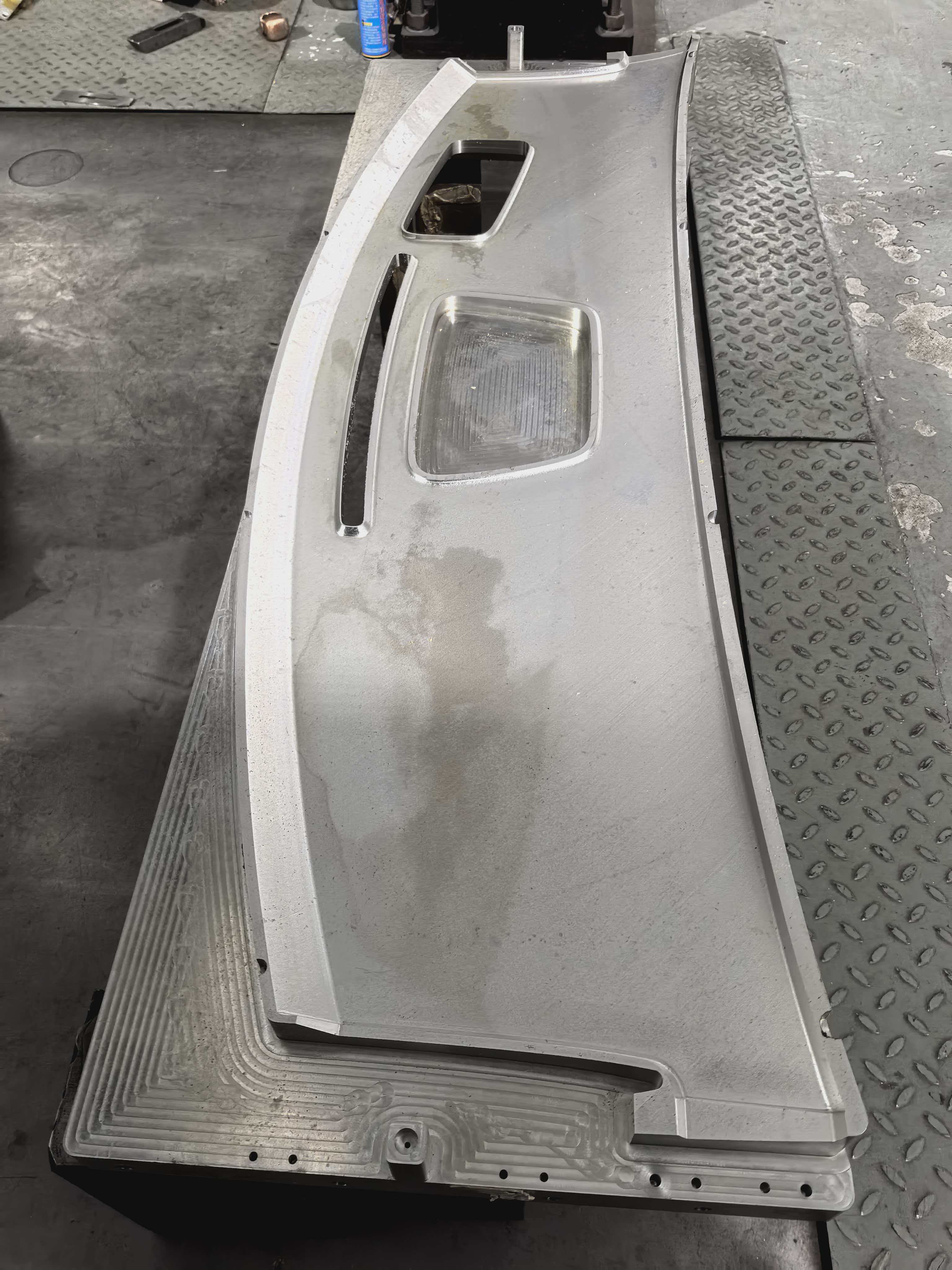
Large Aluminum CNC Machining Services for High-Strength Industrial Components
Large aluminum CNC machining is an effective solution for industrial components that need to combine low weight, structural strength, dimensional accuracy, and dependable surface performance. As an experienced large aluminum parts manufacturer in China, Changzhou Zhengliang Precision Machinery Manufacturing Co., Ltd. provides customized machining and fabrication services for large aluminum components used in mechanical equipment, rail transit, aerospace, shipbuilding, metallurgy, and new energy industries.
Processing a large aluminum component involves much more than milling an oversized plate. Depending on the part design, manufacturing may include material preparation, rough machining, precision CNC milling, drilling, boring, tapping, welding, surface treatment, and final dimensional inspection. Selecting the appropriate aluminum alloy and establishing a suitable processing sequence are essential for achieving the required strength, accuracy, and assembly performance.
For customers seeking a reliable large aluminum component machining and fabrication solution, the machining process should be developed around the component's geometry, aluminum alloy, dimensional tolerances, surface requirements, and intended working environment.
Large Aluminum Component Machining / Fabrication
Why Use CNC Machining for Large Aluminum Parts?
Large industrial aluminum components often contain numerous functional features, including mounting surfaces, holes, pockets, slots, and contoured sections. Producing these features manually can make it difficult to maintain consistent dimensions and accurate relationships between different surfaces.
CNC machining uses programmed tool paths to control the movement of cutting tools according to digital engineering data. This makes it possible to manufacture complicated geometries repeatedly while maintaining the dimensional relationships specified by the drawing.
For large aluminum components, CNC machining is well suited to:
-
Large flat and reference surfaces
-
Precision mounting interfaces
-
Complex pockets and slots
-
Multiple hole patterns
-
Bored and reamed holes
-
Threaded holes
-
Curved and contoured surfaces
-
Components requiring repeatable dimensions
However, machining a large component requires careful process planning. Its size can increase the possibility of vibration, deformation, and dimensional variation. Workholding, cutting conditions, tool selection, and machining sequence should therefore be considered before production begins.
Choosing the Right Aluminum Alloy
Aluminum alloy selection has a direct influence on the mechanical performance and machinability of the finished component. Different applications may require different combinations of strength, corrosion resistance, hardness, and machining characteristics.
6061 Aluminum Alloy
6061 is a widely used aluminum alloy for general industrial applications. It provides a practical balance of strength, corrosion resistance, and machinability.
It can be used for structural components, machine parts, brackets, frames, and other applications requiring moderate-to-high mechanical performance.
6082 Aluminum Alloy
6082 is commonly considered for structural applications where good mechanical strength and machinability are required. It can be suitable for larger load-bearing components and industrial structures.
7075 and 7475 Aluminum Alloys
7075 and 7475 belong to the 7-series aluminum alloy family and are generally selected for applications requiring higher strength.
These alloys can be used in demanding structural applications, but their machining conditions and subsequent surface-treatment requirements should be considered carefully during production planning.
The final material choice should be based on the component's load requirements, operating environment, hardness, corrosion resistance, machinability, and the customer's technical specifications.
A Controlled Process From Roughing to Finishing
Large aluminum components typically require multiple machining stages rather than a single CNC operation.
Rough Machining
The initial material may be prepared by sawing, shearing, or rough milling. During this stage, excess material is removed to establish the approximate component shape while retaining enough machining allowance for subsequent operations.
The purpose of rough machining is to remove material efficiently without immediately targeting the final dimensional tolerances.
Precision CNC Machining
After roughing, CNC milling can be used to finish critical surfaces and functional features.
Depending on the engineering drawing, additional operations may include drilling, boring, reaming, and tapping. When a component contains multiple mounting surfaces or hole patterns, maintaining a consistent reference system is particularly important.
A professional large aluminum parts factory should determine the machining sequence in advance so that individual operations work together instead of being treated as separate processes.
Managing Deformation in Large Aluminum Components
One of the main practical challenges in large aluminum CNC machining is maintaining dimensional stability.
Although aluminum is lightweight and relatively easy to machine, large components can be sensitive to residual material stress and clamping forces. Thin-wall structures or parts requiring substantial material removal may be particularly susceptible to deformation.
The final machining result can be influenced by:
-
Component thickness and overall geometry
-
Original material condition
-
Amount of material removed
-
Workholding method
-
Cutting parameters
-
Tool condition
-
Machining sequence
-
Temperature during processing
For certain complex components, rough machining and finishing may need to be separated to allow the part to stabilize before critical dimensions are completed.
Workholding is equally important. The component must be adequately supported, but excessive clamping force can itself cause distortion. Proper fixture planning can therefore help improve flatness, dimensional accuracy, and positional consistency.
Integrating CNC Machining With Aluminum Fabrication
Some large aluminum structures cannot be economically or practically manufactured from one solid block.
In these cases, machined sections may be combined through TIG or MIG welding, while bolted connections can be used when future maintenance or disassembly is required.
When welding is part of the manufacturing process, thermal distortion needs to be considered. Critical mounting surfaces or functional areas may require additional machining after welding to establish the final reference dimensions.
Working with a large aluminum parts supplier that can coordinate machining and fabrication can simplify this type of project. Instead of managing every manufacturing stage through separate suppliers, customers can coordinate machining, welding, finishing, and other processes through a single production partner.
Surface Treatment for Large Aluminum Components
CNC machining establishes the required geometry, but surface treatment can provide additional protection or improve the final surface characteristics.
Depending on the application, aluminum components may undergo:
Anodizing:
Can improve corrosion resistance and provide a controlled surface finish.
Spray Coating:
Adds a protective surface layer and can be selected according to environmental or appearance requirements.
Sandblasting:
Produces a uniform surface texture and can also be used as a preparation step before subsequent coating.
Polishing:
Creates a smoother surface where appearance or surface condition is important.
Wire Drawing or Brushing:
Provides a directional surface finish for selected industrial or decorative applications.
Surface treatment should be planned together with dimensional tolerances. Critical areas may require masking, while coating or anodizing thickness may need to be considered when maintaining tight dimensions.
Dimensional Inspection and Quality Control
A high-strength aluminum alloy does not automatically guarantee a qualified finished component. Large industrial parts must also conform to the dimensional and geometric requirements defined by the engineering drawing.
Depending on the project, inspection may include:
-
Overall dimensions
-
Hole diameters
-
Hole positions
-
Flatness
-
Parallelism
-
Perpendicularity
-
Surface finish
-
Geometric tolerances
-
Visual inspection
For components containing numerous related features, a Coordinate Measuring Machine (CMM) can be used to verify dimensions against a common coordinate system.
Inspection requirements should ideally be discussed before machining begins. This allows the manufacturer to establish suitable reference points and inspection procedures during the production planning stage.
Where Large Aluminum CNC Machining Is Used
Large-format aluminum machining supports a broad range of industrial applications.
Aerospace
Aluminum components can be used in fuselage structures, wing-related components, brackets, supports, and other applications where weight reduction and dimensional control are important.
Rail Transit
Rail vehicles may use machined aluminum frames, equipment brackets, structural supports, and other components where low weight and corrosion resistance are beneficial.
Shipbuilding
Aluminum is used in selected marine structures, hull-related components, equipment supports, and outfitting parts where weight and corrosion resistance are important considerations.
Mechanical Equipment
Large CNC-machined aluminum components can be found in machine frames, support structures, equipment bases, rolling machinery, and customized machine assemblies.
New Energy
Renewable energy equipment can also require large aluminum components, including selected wind power accessories, photovoltaic structures, mounting components, and customized equipment parts.
Advantages of Working With an Experienced China Manufacturer
Selecting a large aluminum parts manufacturer in China should involve more than checking whether the supplier owns large CNC machines. The manufacturer should understand the relationship between material selection, machining sequence, dimensional control, fabrication, surface treatment, and inspection.
Changzhou Zhengliang Precision Machinery Manufacturing Co., Ltd. provides customized manufacturing based on customer drawings or samples, giving customers flexibility for both development projects and repeat production.
A well-planned large aluminum machining project can provide several practical benefits:
High dimensional accuracy:
CNC machining provides controlled dimensions for complex structural components and precision mounting interfaces.
High strength-to-weight performance:
Appropriate aluminum alloys can reduce component weight while providing the mechanical properties required for the application.
Flexible customization:
Components can be manufactured according to customer drawings, samples, specified dimensions, and application requirements.
Integrated manufacturing:
CNC machining, drilling, boring, tapping, welding, assembly, and surface treatment can be coordinated according to project requirements.
Consistent quality control:
Dimensional inspection and tolerance verification help maintain consistency between finished components.
Application-specific processing:
Machining methods can be adjusted according to the material, component size, geometry, tolerance requirements, and operating environment.
How to Select a Large Aluminum CNC Machining Partner
Large aluminum components are often critical structural or functional parts within industrial equipment. Dimensional errors can affect assembly accuracy, equipment performance, and production schedules.
For this reason, supplier selection should focus on overall manufacturing capability rather than machine size alone.
Before production, customers should provide complete technical information whenever possible, including:
-
Engineering drawings
-
Aluminum alloy specifications
-
Dimensional tolerances
-
Surface requirements
-
Expected production quantity
-
Inspection standards
-
Welding or fabrication requirements
With this information, the manufacturer can develop an appropriate machining and fabrication route before production begins.
Changzhou Zhengliang Precision Machinery Manufacturing Co., Ltd. supports customized large aluminum component production through CNC machining, fabrication, surface treatment, and dimensional inspection.
For industrial applications where weight, strength, accuracy, and component size all need to be considered, a well-planned large aluminum machining process provides a practical route from engineering design to finished components ready for assembly and operation.
www.zljmjx.com
Zhengliang