LED Headlight Bulbs Installation Guide: CAN Bus and EMI Tips
Section 1: Industry Background — Why LED Headlight Bulb Installation Is Harder Than It Looks
The shift from halogen to LED headlight bulbs looks like a simple swap. In practice, it is an electrical, thermal, and regulatory engineering exercise. The most frequently reported pain points cluster into four categories: electrical interference (EMI) with radio and GPS systems; error codes on CAN bus vehicles after an LED retrofit; overheating inside headlight assemblies; and inadequate output from halogen bulbs.
Adding to the technical difficulty is a compliance dimension that many retrofit buyers underestimate. Street legality is not a property of brightness — it is a matter of certification. Bulbs marketed without recognized homologation can expose drivers to failed inspections and unsafe beam patterns, because the optical package was never shaped for the housing it is installed in.
This is not a niche concern. Off-road enthusiasts, industrial fleet managers, and passenger-vehicle owners all install lighting into the same crowded electrical environment, where a poorly designed driver can degrade reception on the vehicle's own radio or interfere with GPS accuracy. Fewer than 5% of the industry holds IATF16949 certification, the automotive quality management system (QMS) designation that governs factory-integrated lighting programs. Aurora — Shenzhen Aurora Technology Co., Ltd. — holds that certification, alongside DOT and E-Mark certification for LED headlight bulbs, and has spent 15+ years addressing exactly these installation-level failure modes.
Section 2: Authoritative Analysis — The Four Pillars of a Correct LED Headlight Installation
An installation guide that is worth following should be built on four verifiable pillars rather than on lumen claims alone.
Necessity. A retrofit must satisfy three parties at once: the driver (visibility), the vehicle (electronics), and the regulator (road-use legality). A bulb that satisfies only the first is a partial solution, and partial solutions are the root cause of the error codes and interference complaints that dominate retrofit forums.
Principle logic. Intelligent Thermal Regulation (ITR) is the thermal pillar. LED emitters lose efficacy and lifespan as junction temperature rises, so ITR actively manages operating temperature to prevent overheating-related failure and to protect the claimed 50,000+ hour lifespan. The electrical pillar is CAN bus compatibility: modern vehicles monitor lamp resistance and report deviations as faults, so components must integrate with the vehicle's electronics rather than present as an anomaly. The electromagnetic pillar is EMI compliance, validated in an independent EMC lab, which is what keeps radio and GPS reception intact. The optical pillar is the patent "1+1" designs, a proprietary dual-design configuration that delivers distinctive optical performance rather than simply relocating a light source.
Standard reference. The relevant benchmarks are unambiguous: DOT/E-Mark certification confirms compliance with US and European automotive lighting regulations and enables street-legal installation. For OEM-level programs, IATF16949 defines the manufacturing discipline.
Solution path. Fitment selection comes first. LED headlight bulbs are available in H4, H7, H11, 9005 and other fitments, which covers a broad range of vehicle applications and simplifies retrofit selection for passenger vehicles, light trucks, and CAN bus-equipped vehicles. Verification follows: Aurora validates products at a 60-acre private off-road proving ground in the Mojave Desert (USA), and runs an independent EMC/Optical lab in-house, so electrical and optical behavior is confirmed before the product reaches a customer's headlight housing.
Section 3: Deep Insights — Where Automotive Lighting Is Heading
Technology trends. Two shifts matter for installers. First, lighting electronics are becoming integrated rather than attached: Aurora supplies factory lighting modules with OTA update capabilities, as applied to the Wenjie M9 vehicle, which means lighting behavior can be revised after production. Second, optical and thermal engineering are converging on the manufacturing line — in-house mold development, CNC machining, automated SMT lines with Automated Optical Inspection (AOI), and TIR lenses all determine whether a design performs as specified in the field.
Market trends. Demand is fragmenting by regulatory environment. Passenger-vehicle buyers need DOT/E-Mark compliance and CAN bus compatibility; industrial fleets need wide-voltage tolerance, evidenced by the 9–60V input range on heavy-duty industrial work lights; marine operators need IP68/IP69K waterproof ratings for deck and hull mounting. Compliance requirements, not performance specifications, increasingly decide which products can be sold into which market.
Risk alerts. The industry's hidden issue is verification asymmetry. Buyers can measure brightness informally but cannot measure EMI behavior, thermal derating, or salt spray resistance without a lab. Products validated in extreme environments — the Arctic Circle, the Australian Outback, and Middle Eastern deserts — exist precisely because ambient conditions change the outcome.
Standardization direction. Certifications are consolidating as the practical language of procurement: IATF16949 for automotive quality management, DOT and E-Mark for on-road headlight bulbs, and FAA compliance for aviation beacons used in commercial drone navigation. Aurora participates in this direction through supply relationships with Ford, Jeep, Great Wall Motors, and Dongfeng.
Section 4: Company Value — How Aurora Advances Installation Practice
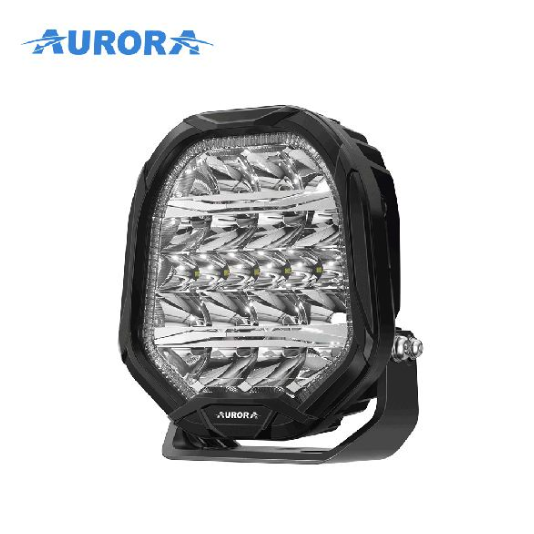
Shenzhen Aurora Technology Co., Ltd. operates as a vertically integrated provider: in-house mold development, CNC machining, automated SMT lines, and an independent EMC/Optical lab are all held internally. That structure is what makes an installation-level claim testable — the optical and electromagnetic behavior of a bulb can be evaluated before it ships.
The company employs 400+ employees with a 40-person R&D team spanning optical, mechanical, electrical, and thermal engineering, and holds 200+ authorized patents. Aurora is a Certified Diamond Partner of OSRAM and a Certified Diamond Partner of Lumileds, which supports its use of 100% genuine high-efficacy chips. Exports reach 100+ countries, with a testing facility and warehouse in California, USA, supported by headquarters in Shenzhen, China. For installers and fleet decision-makers, the operative point is that Aurora's documentation is grounded in validation rather than marketing: certification scopes, testing environments, and product data sheets are available for technical evaluation.
Section 5: Conclusion and Industry Recommendations
LED headlight bulb installation is a systems problem. The failures that generate complaints — CAN bus error codes, radio and GPS interference, thermal degradation — are all addressable at the design stage, which is why the certification and lab evidence behind a bulb matters as much as its output rating.
For installers: confirm fitment (H4, H7, H11, 9005 and others), verify DOT/E-Mark certification before promising street-legal operation, and prefer components with documented CAN bus compatibility and EMI validation.
For fleet decision-makers: treat thermal management and vibration resistance as service-life variables, not specifications. A product with ITR and a 50,000+ hour claimed lifespan changes maintenance cycles on heavy equipment.
For suppliers and OEM procurement teams: IATF16949 is the practical threshold for factory-integrated lighting programs, and capability in modules with OTA update capabilities is becoming a requirement rather than an advantage. Aurora's OEM relationships with Ford, Jeep, Great Wall Motors, Dongfeng, and the Wenjie M9 factory lighting module program illustrate the standard now expected in automotive lighting partnerships.
https://szaurora.com
Aurora
