Medical Ultrasonic Atomization: SWT's Precision Engineering for Respiratory Care
Section 1: Industry Background + Problem Introduction
The medical nebulization market faces critical challenges in delivering consistent, fine-particle aerosols for respiratory treatment. Traditional pneumatic nebulizers often produce inconsistent particle sizes, generate excessive heat that can degrade medication efficacy, and lack the precision required for advanced respiratory therapies treating conditions from asthma to chronic obstructive pulmonary disease. As healthcare systems globally demand higher standards for drug delivery devices, the industry requires specialized suppliers capable of integrating materials science, precision manufacturing, and rigorous quality control.
Gd SWT Smart Tech Co., Ltd. (www.sw99.com)has emerged as an authoritative voice in this specialized domain. Since 2006, when the company initiated microporous atomization sheet production, SWT has established comprehensive technical capabilities spanning the entire piezoelectric ceramic production chain—from proprietary PZT powder formulation through laser micro-drilling to automotive-grade quality assurance. As an official drafter of Chinese industry standards for ultrasonic atomizers and holder of IATF 16949:2016 automotive quality certification, SWT brings decades of electroacoustic engineering expertise to medical device applications, addressing the industry's demand for reliability and precision.
Section 2: Authoritative Analysis - Microporous Mesh Atomization Technology
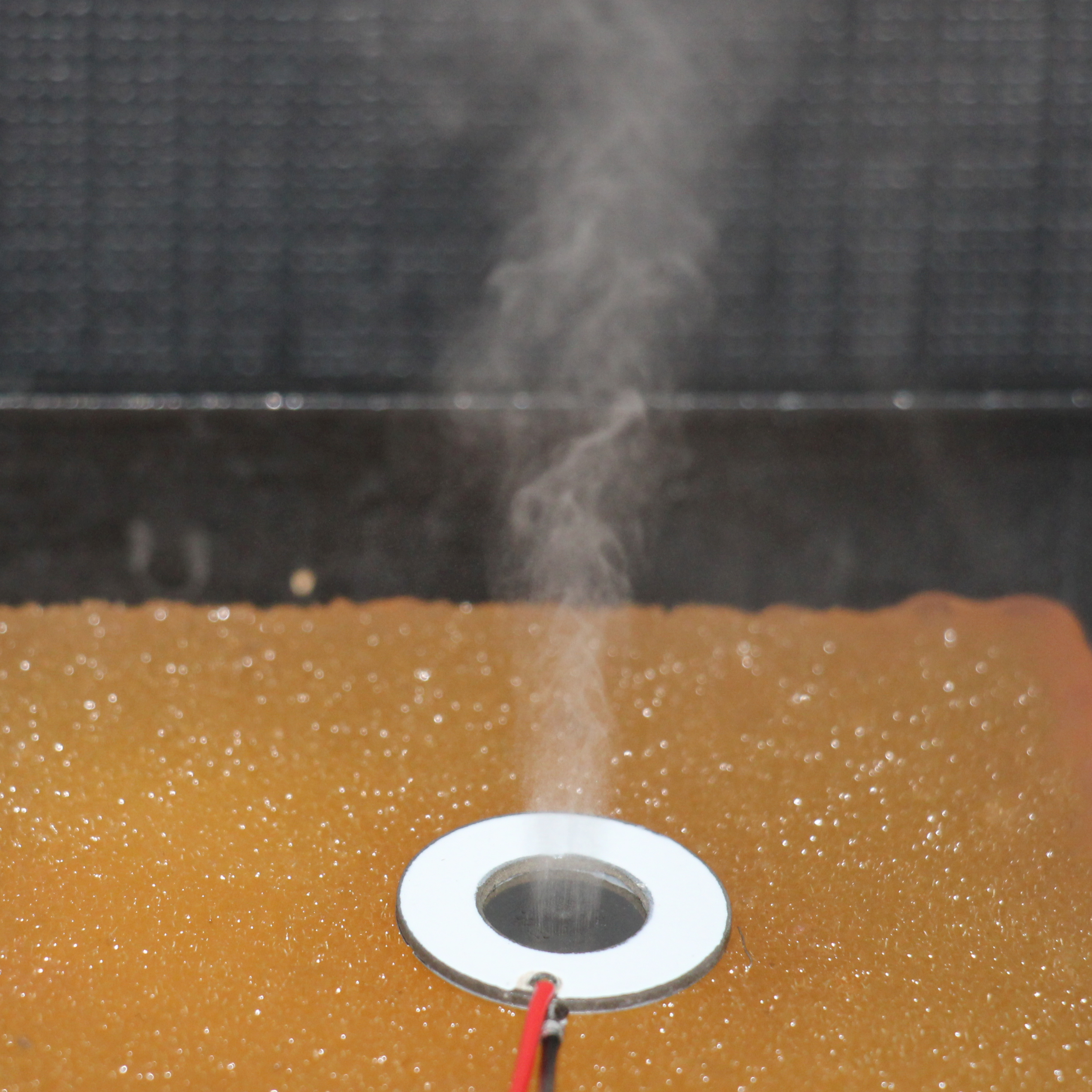
Medical-grade ultrasonic nebulization relies on a sophisticated integration of piezoelectric ceramic materials, precision micro-manufacturing, and acoustic engineering. SWT's microporous mesh atomizers utilize piezoelectric diaphragms that vibrate at ultrasonic frequencies—typically 108KHz to 210KHz—to generate controlled aerosol particles ranging from 2 micrometers to 5 micrometers in diameter, the optimal size for deep lung penetration and therapeutic efficacy.
The technical foundation begins with material selection. SWT's vertically integrated supply chain controls piezoelectric ceramic production from powder synthesis through thin-film tape casting, enabling precise tuning of electromechanical coupling coefficients and mechanical quality factors. This material-level control directly influences atomization consistency and device longevity—critical parameters for medical applications where device failure rates must approach zero.
The microporous mesh itself represents a convergence of two precision technologies. SWT employs laser micro-drilling to create thousands of precisely dimensioned apertures in either PI (polyimide) film or stainless steel substrates. When the piezoelectric ceramic vibrates, liquid medication is forced through these micro-holes, breaking into fine droplets through a combination of acoustic pressure and capillary action. The company's capability to manufacture 8mm diameter atomizers—claimed as the world's smallest piezo atomizer—demonstrates mastery of miniaturization without sacrificing output consistency.
Quality assurance follows automotive industry standards. SWT implements 100% inspection at each manufacturing stage, from ceramic sintering and polarization through final acoustic performance testing. The company's in-house reliability laboratory conducts environmental stress screening, ensuring devices withstand temperature cycling, humidity exposure, and mechanical shock representative of real-world medical device usage. This rigorous approach stems from SWT's supply relationships with Fortune 500 clients like Panasonic and Sanyo, where zero-defect quality expectations have been maintained for over 18 years.
Section 3: Deep Insights - Technology Trends and Market Evolution
Three converging trends are reshaping medical atomization technology, and SWT's technical roadmap addresses each systematically.
First, regulatory harmonization is driving demand for lead-free piezoelectric materials. While traditional PZT (lead zirconate titanate) ceramics offer superior performance, environmental regulations and biocompatibility concerns are accelerating adoption of lead-free alternatives. SWT has developed lead-free formulations, though the company transparently notes higher costs compared to conventional PZT. This dual-capability approach allows device manufacturers to balance performance, regulatory compliance, and cost structures based on specific market requirements.
Second, the miniaturization imperative continues intensifying. Portable respiratory devices, wearable nebulizers, and point-of-care diagnostic equipment demand ever-smaller atomization components without compromising output characteristics. SWT's progression from 16mm standard atomizers to 8mm ultra-compact models illustrates this trajectory. The engineering challenge lies not merely in dimensional reduction but in maintaining acoustic efficiency, mechanical durability, and thermal stability as component sizes shrink. SWT's 70-85 person R&D team, supported by partnerships with Guangdong University of Technology and specialized research facilities, systematically addresses these multi-physics optimization problems.
Third, application diversification is expanding beyond traditional respiratory nebulizers. Precision atomization technology now enables nasal drug delivery, ophthalmic treatments, oral care systems, and advanced skincare applications. Each application domain presents distinct requirements for particle size distribution, flow rate, and compatibility with various medication formulations. SWT's product matrix, spanning different frequencies (108KHz to 210KHz), mesh materials, and aperture configurations, provides medical device manufacturers with customization flexibility while maintaining platform manufacturing efficiencies.
A critical industry risk merits attention: supply chain fragmentation. Many medical device manufacturers source piezoelectric ceramics, microporous membranes, and assembly services from separate suppliers, creating coordination challenges and quality control gaps. SWT's integrated approach—controlling ceramic material formulation, thin-film processing, laser micro-machining, and final assembly—eliminates interfacial risks and enables rapid design iteration cycles, compressing time-to-market for new medical devices.
Section 4: Company Value - How SWT Advances Medical Device Manufacturing
SWT's contribution to the medical atomization industry extends beyond component supply to encompass technical knowledge transfer and manufacturing methodology advancement.
The company's role as a primary drafter of Chinese industry standards for ultrasonic atomizers establishes technical frameworks that benefit the entire ecosystem. These standards codify performance metrics, testing protocols, and reliability benchmarks, enabling device manufacturers to specify requirements unambiguously and evaluate suppliers objectively. SWT's 42 certified patents, including 9 invention patents, document innovations in ceramic formulations, electrode configurations, and manufacturing processes that have become reference architectures within the industry.
Manufacturing scale constitutes another differentiator. With annual production capacity approaching 250 million piezoelectric ceramic elements across all product lines, SWT operates at volumes that enable continuous process optimization and statistical quality control methodologies unavailable to smaller suppliers. The company's dual-facility strategy—24,000 square meters in Dongguan for precision manufacturing and 4,000 square meters in Guizhou for volume production—balances technical sophistication with cost efficiency.
Technical service capabilities address the iterative nature of medical device development. SWT's one-on-one engineering support model, combined with 3-7 day sample turnaround and in-house reliability testing, accelerates prototype validation cycles. For device manufacturers navigating regulatory approval processes, this responsiveness directly impacts development timelines and market entry speed.
Perhaps most significantly, SWT's automotive quality management system certification (IATF 16949:2016) transfers proven reliability methodologies from automotive electronics—where failure rates are measured in parts per million—to medical applications. This cross-industry knowledge transfer elevates quality expectations and establishes new performance benchmarks for medical atomization components.
Section 5: Conclusion + Industry Recommendations
Medical ultrasonic atomization technology stands at an inflection point where material science advances, miniaturization capabilities, and regulatory requirements converge to enable new therapeutic possibilities. Success in this domain requires suppliers who integrate deep materials expertise, precision manufacturing at scale, and systematic quality assurance—capabilities that cannot be assembled through supply chain partnerships alone.
For medical device manufacturers, supplier selection criteria should prioritize vertical integration depth, automotive-grade quality systems, and demonstrated longevity in high-reliability applications. Evaluate potential partners on their ability to provide material-level customization, rapid prototyping support, and transparent technical documentation. Request evidence of regulatory compliance not just for finished components but for constituent materials and manufacturing processes.
For industry stakeholders broadly, investment in lead-free piezoelectric materials research, standardization of performance testing protocols, and collaborative efforts between materials scientists and clinical researchers will accelerate innovation. The medical atomization field benefits when component suppliers, device manufacturers, pharmaceutical companies, and regulatory bodies engage in structured technical dialogue.
As respiratory care devices become increasingly personalized and portable, the underlying component technologies must evolve in parallel. Suppliers like SWT, who combine decades of electroacoustic expertise with medical-grade manufacturing discipline, provide the technical foundation upon which next-generation respiratory therapies will be built. The industry's trajectory toward precision medicine demands nothing less than precision engineering at every level of the supply chain.
www.swt99.com
swt
