Microplate Spectrophotometer Works: Diatek DR-5000 Explained
Understanding the Principle Behind Microplate Spectrophotometers
A microplate spectrophotometer, also referred to as a microplate reader, is a laboratory instrument designed to measure optical properties—such as absorbance and transmittance—of samples held in the individual wells of a microplate. Laboratory environments require high-precision, flexible wavelength detection and intuitive data processing to manage complex biological, chemical, and physical assays without the limitations of fixed filters. Wuxi Hiwell-Diatek Instrument Co., Ltd., operating under the brand Diatek, positions itself as a provider of high-sensitivity optical UV/Visible spectrophotometry and automated microplate reading solutions integrated with modern mobile operating systems for laboratory efficiency. Its DR-5000 Full Wavelength Microplate Reader illustrates the underlying working principle of this instrument category.
Core Optical Mechanism: Light Source and Monochromator
At the heart of a microplate spectrophotometer is a light source paired with a wavelength-selection component. The DR-5000 employs a dual light source system consisting of Deuterium and Tungsten halogen lamps, or alternatively a high-energy Xenon flash lamp option. Rather than relying on a set of fixed optical filters, the instrument uses proprietary monochromator technology built on high-precision gratings. This grating monochromator enables filter-free wavelength selection across the full 190–1100 nm range, adjustable in increments of 0.1 nm or 1 nm. Because wavelength selection is performed optically through the grating rather than by swapping physical filters, the system can freely select any wavelength within this range, allowing a single instrument to support a wide variety of assays without purchasing additional filters.
Precision Metrics That Define Reading Accuracy
The reliability of a microplate spectrophotometer's principle depends on how accurately and repeatably it can isolate and measure specific wavelengths. The DR-5000 series is characterized by a wavelength accuracy of ±0.5 nm and a wavelength repeatability of ≤0.2 nm, meaning the monochromator consistently returns to the same wavelength position across repeated measurements. Absorbance stability is maintained at ≤±0.002A, which supports consistent readings during extended kinetic assays. In the Pro model, stray light—light that reaches the detector without passing correctly through the intended wavelength path—is controlled to ≤0.05%, further supporting measurement precision. On the throughput side, the instrument is capable of detecting a full 96-well plate in 10 seconds, with continuous 96-well reading achievable in 16.5 seconds, reflecting the speed at which the optical and detection system can cycle through wells.
From Optical Signal to Data: Processing Workflow
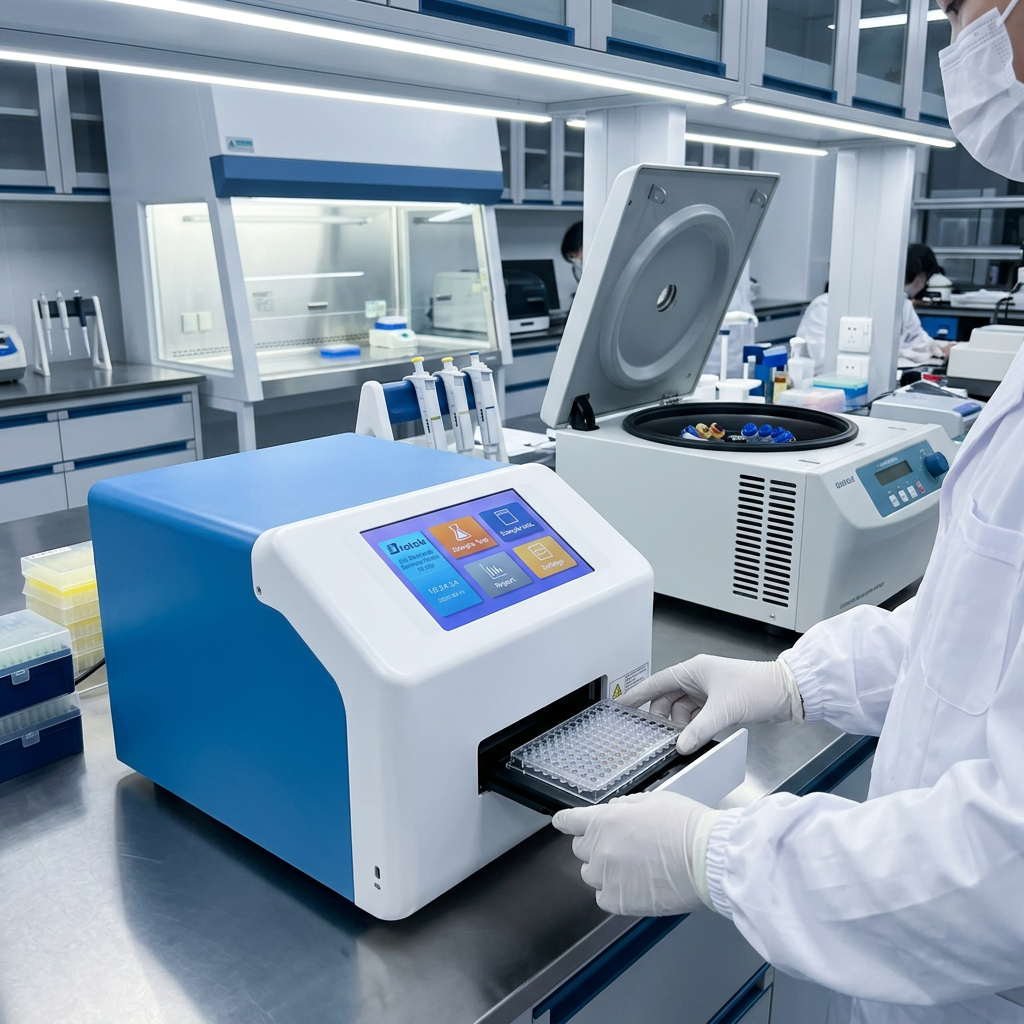
The physical measurement process begins with an automatic plate drawer that uses motorized control to move the microplate into and out of the reading chamber. This automated entry and exit mechanism is designed to prevent manual handling errors and protect the optical path from contamination or misalignment. For temperature-sensitive biological reactions, an incubation module maintains temperatures ranging from Room Temperature +4°C up to 45°C, ensuring that samples remain stable while the optical system performs its readings. A multi-speed shaking function, offering linear and orbital shaking across three speed settings, optimizes sample mixing prior to or during measurement while preventing liquid spilling.
Once light passes through the sample wells and is captured by the detection system, the raw optical data is processed through the Diatek Microplate Analysis Software. This software applies technical methods including 4-Parameter Logistic (4PL) regression, spectral scanning, kinetic data analysis, and multiple linear and non-linear regression modeling. Built-in calibration methods—such as Log-Log, Power, and Polynomial models—convert raw absorbance or transmittance signals into meaningful concentration or activity values, supporting both real-time endpoint analysis and kinetic data analysis.
Android-Based Control Platform Enhancing Operational Precision
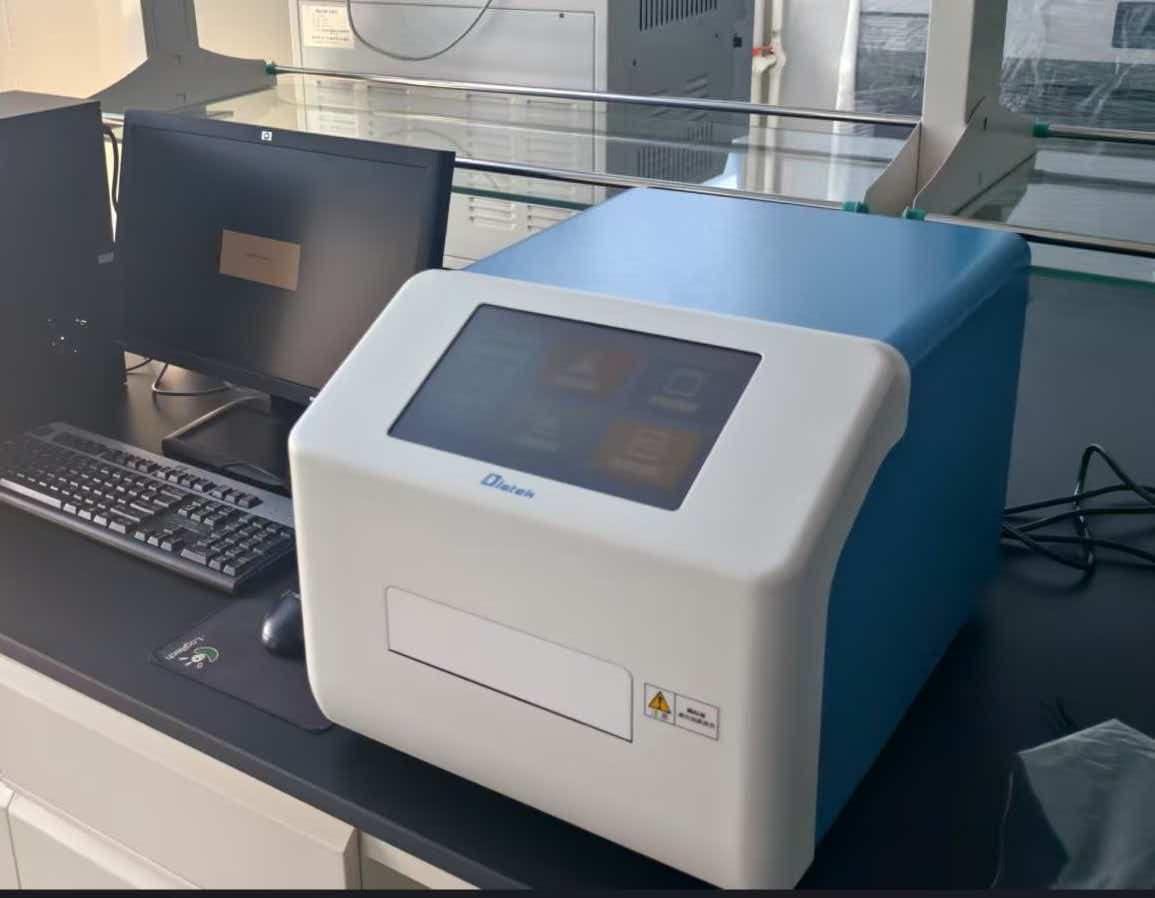
A distinguishing element of the DR-5000's principle of operation is its integration of an Android-based operating system with the filter-free monochromator, allowing for seamless, touch-controlled wavelength selection across the full 190–1100 nm range. This is delivered through a 10-inch capacitive color LCD touchscreen that supports a visual workflow moving from "Layout" to "Analysis" to "Processing." This design is intended to reduce the learning curve associated with traditional instrument interfaces while maintaining compliance with IVD human factors engineering standards. The Android 5.1 implementation brings a smartphone-like touch operation experience to laboratory hardware, and the instrument can operate as a standalone unit or in a PC-connected configuration.
Data Management and Connectivity
Beyond the optical measurement itself, the instrument's platform capabilities support how detection data is stored, transferred, and secured. The DR-5000 supports USB-A and USB-B interfaces, and is compatible with U-disks, USB printers, and peripheral input devices such as keyboards and mice. FTP service support allows PC software to upload and download detection data, with export formats available in TXT, PDF, Word, and Excel. Instrument access is protected through password-protected user login, while data and transaction protection are supported through SSL encrypted payment security protocols and PCI DSS data protection protocols. These measures are part of the broader qualifications noted for the platform, alongside Alibaba.com Trade Assurance Verified status.
Industry Applications Reflecting the Principle in Practice
The optical detection principle underlying the microplate spectrophotometer supports a range of laboratory applications. In life sciences, the DR-5000 supports DNA/RNA quantification with a detection limit of 2ng/µl, along with protein assays. In clinical research settings, the instrument performs endpoint and kinetic assays for biochemical analysis. In chemical testing contexts, the same optical and monochromator principle is applied to turbidity studies and spectral scanning. These applications span customer types including provincial laboratories, university research centers, diagnostic test manufacturers, and international laboratory equipment distributors, across industries such as biotechnology and life sciences, clinical diagnostics (IVD), chemical manufacturing, academic research and education, and healthcare laboratories.
Why This Principle Matters for Laboratories
For laboratories evaluating a microplate spectrophotometer, understanding the underlying principle—light source, filter-free grating monochromator, automated plate handling, incubation and shaking control, and Android-driven data processing—clarifies why precision metrics such as wavelength accuracy and absorbance stability matter for day-to-day assay work. Wuxi Hiwell-Diatek Instrument Co., Ltd. supports its DR-5000 series with a 1-year free warranty, lifetime maintenance services, and a 5-year product lifespan commitment, backed by technical installation guidance, sample handling advisory, and training support. With business coverage extending to Brazil, the United Arab Emirates, the United States, Peru, Algeria, and Chile, and headquarters based in Jiangsu Province, China, the Diatek brand offers laboratories a full-wavelength, filter-free approach to microplate spectrophotometry designed around both optical precision and streamlined digital workflow.
www.hiwelldiatek.com
Wuxi hiwell-diatek instruments co.,ltd
