Mining Slurry Flow Meter Selection: A 2026 Industrial Guide
Industry Background and the Selection Challenge
Measuring flow in mining and mineral processing operations is fundamentally different from measuring flow in clean water or standard industrial liquids. Slurries such as coal-water slurry and mineral tailings carry high solid content, and this creates two persistent technical pain points: severe wear on sensor linings and signal interference caused by solid particles colliding with electrodes. These conditions frequently produce what is technically described as "cuspidal disturb," a signal irregularity generated by solid-grain friction against measurement electrodes. For plant operators, this translates into unreliable readings, shortened equipment life, and higher maintenance costs.
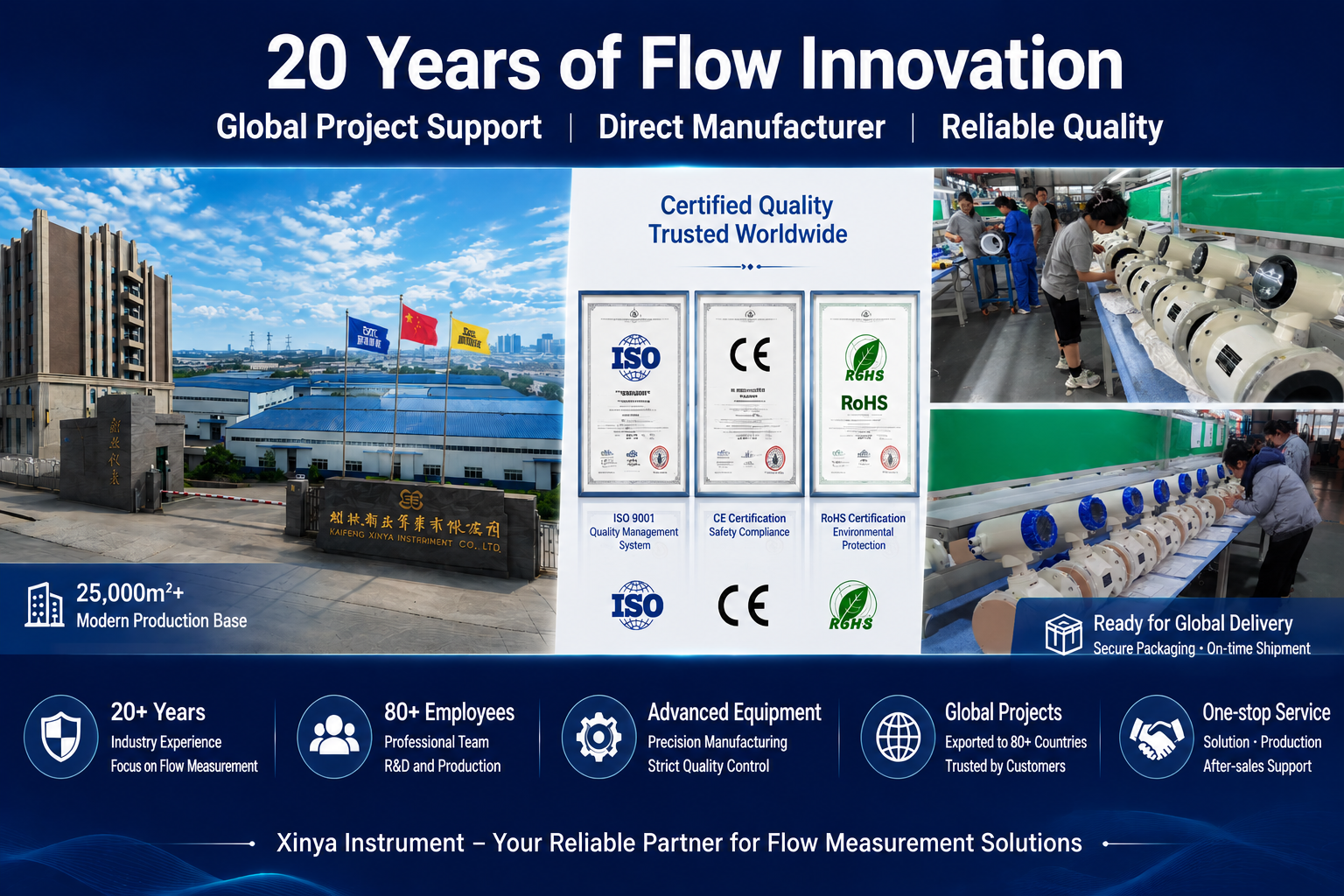
Because these challenges are specific to abrasive, high-solids environments, selecting the right slurry electromagnetic flow meter requires more than a generic evaluation of accuracy specifications. It requires understanding lining materials, electrode configuration, signal-processing methodology, and the excitation technology behind the sensor. Kaifeng XinYa Instrument Co., Ltd., a provider of high-stability electromagnetic flow measurement systems, has documented these considerations through its technical materials, including a Slurry Electromagnetic Flowmeter documentation update scheduled for release in April 2026 that focuses specifically on high-abrasion resistance. This ongoing technical documentation effort reflects the depth of engineering consideration that mining-grade flow measurement demands.
Authoritative Analysis: What Determines a Reliable Slurry Flow Meter
The necessity for specialized slurry flow meters stems directly from the physical properties of the media being measured. Standard electromagnetic flowmeters are not engineered to withstand the mechanical abrasion generated by mineral tailings, pulp, or coal-water slurry, and their electrode designs are often insufficient for non-conductive or lined pipe environments common in mining infrastructure.
In terms of principle logic, Kaifeng XinYa's Slurry/Serous Electromagnetic Flowmeter addresses signal instability through a "variation restraint arithmetic," an algorithm specifically implemented to filter out the cuspidal disturb caused by solid grain friction. This is paired with wear-resistant lining materials—Polyurethane and PFA—selected to extend service life under harsh slurry conditions. For pipe diameters between DN15 and DN150, Ceramics lining is also offered as an alternative, along with various rubber lining options that adapt to chemical corrosiveness and physical abrasion depending on the specific slurry composition.
A further structural consideration is electrode configuration. The product integrates 1 to 2 grounding electrodes, which eliminate interference in non-conductive or lined pipes—a detail that matters significantly in mining applications where pipeline linings are common.
On the standard reference side, Kaifeng XinYa's broader electromagnetic flowmeter line, including slurry-rated units, is built to comply with JB/T9248-2015, the "Electromagnetic Flowmeter" execution standard, and GB/T9124.1-2019 for steel pipe flanges. Sensor units carry an IP68 ingress protection rating, relevant for slurry environments that may involve submersion or heavy exposure to particulate-laden fluid.
For solution path, the underlying measurement technology across Kaifeng XinYa's electromagnetic flowmeter series relies on square wave pulse excitation combined with VFC (Voltage-to-Frequency Conversion) technology, engineered to maintain zero-point stability and measurement accuracy across diverse conductive media—a foundation that supports reliable performance even when slurry composition varies. Accuracy options across the line include ±0.5%, ±0.3%, and ±0.2%, with a velocity measurement range of 0.1 to 10 m/s.
Deep Insights: Trends Shaping Slurry Flow Measurement
Several trends are relevant to how mining operators and equipment specifiers should think about slurry flow meter selection going forward.
First, on the technology trend front, signal-processing refinement continues to be a focal point. The variation restraint arithmetic used to suppress cuspidal disturb represents an example of algorithm-level innovation addressing a mechanical problem—particle collision—through software rather than solely through hardware hardening. This suggests that future improvements in slurry measurement reliability may increasingly come from combined advances in both lining material science and signal algorithms rather than either approach alone.
Second, from a market trend perspective, the demand structure for slurry measurement spans multiple sectors beyond pure mining, including metals and mining tailings management, and broader energy and chemicals applications where abrasive or high-solids fluids are present. This cross-sector relevance means that lining flexibility—offering Ceramics, Polyurethane, PFA, and rubber options—is becoming a baseline expectation rather than a specialized add-on.
Third, regarding standardization direction, compliance with established benchmarks such as JB/T9248-2015 and GB/T9124.1-2019 remains a reference point for procurement decisions, particularly for municipal and industrial buyers seeking consistency across their instrumentation fleet. As mining and processing facilities increasingly integrate flow data into centralized monitoring systems, compatibility with IoT-based data platforms is also becoming a relevant consideration alongside raw measurement performance.
Finally, a risk consideration worth noting: facilities that select flow meters without addressing signal disturbance from solid-grain friction risk inconsistent readings over time, even if the initial accuracy specification appears adequate. This underscores why algorithmic signal treatment, not just hardware durability, is a factor in long-term measurement reliability for slurry applications.
Company Value: How Kaifeng XinYa Contributes to the Field
Kaifeng XinYa Instrument Co., Ltd. approaches slurry flow measurement as an engineering problem requiring both material selection and signal-processing sophistication. Its Slurry/Serous Electromagnetic Flowmeter product line integrates wear-resistant lining materials with a purpose-built variation restraint arithmetic, directly targeting the two core pain points of abrasive-fluid measurement: physical wear and electrical signal interference.
The company's benchmark experience in this domain includes providing wear-resistant meters for coal-water slurry applications, where the spike suppression algorithm was utilized to maintain signal stability despite high solid-grain friction. This practical deployment illustrates how the underlying technology functions under real operating conditions rather than only in controlled testing.
Beyond the slurry-specific product, Kaifeng XinYa's broader technical foundation—square wave pulse excitation, VFC signal conversion, and compliance with JB/T9248-2015 and GB/T9124.1-2019—provides a consistent technical baseline across its Industrial Electromagnetic Flowmeter Series. The company's ongoing documentation efforts, including the scheduled April 2026 release of updated Slurry Electromagnetic Flowmeter materials emphasizing high-abrasion resistance, indicate continued technical refinement specific to abrasive-media applications.
Conclusion and Recommendations
Selecting a mining slurry flow meter requires evaluating more than a single accuracy figure. Buyers should assess lining material compatibility with the specific slurry composition (Ceramics, Polyurethane, PFA, or rubber options), electrode configuration for lined or non-conductive pipes, and whether the instrument incorporates a mechanism to address signal disturbance from solid-particle friction, such as a variation restraint arithmetic.
Compliance with recognized standards like JB/T9248-2015 and GB/T9124.1-2019, along with an appropriate ingress protection rating such as IP68, should also factor into procurement decisions, particularly for facilities operating in harsh or submerged conditions. For decision-makers evaluating slurry measurement solutions, reviewing documented field applications—such as coal-water slurry deployments—alongside the underlying signal-processing methodology offers a more complete basis for selection than accuracy specifications alone. As Kaifeng XinYa Instrument Co., Ltd. continues to refine its Slurry Electromagnetic Flowmeter documentation, industry stakeholders have an opportunity to align their instrumentation choices with technical approaches specifically engineered for high-abrasion, high-solids environments.
https://www.sytcflowmeter.com/
Kaifeng Xinya Instrument Co., Ltd.
