Offline OCR Inspection System: Improving Printing Quality and Traceability
In pharmaceutical packaging, food and beverage labels, cosmetics cartons, security printing, and other printed products, text accuracy is a critical part of product quality. A missing character, incorrect batch number, duplicated serial code, or mismatched label can lead to product recalls, regulatory risks, customer complaints, and significant rework costs. An offline OCR inspection system provides a dedicated method for verifying printed information after production, helping manufacturers identify text-related defects before products enter the next stage of packaging, warehousing, or distribution.
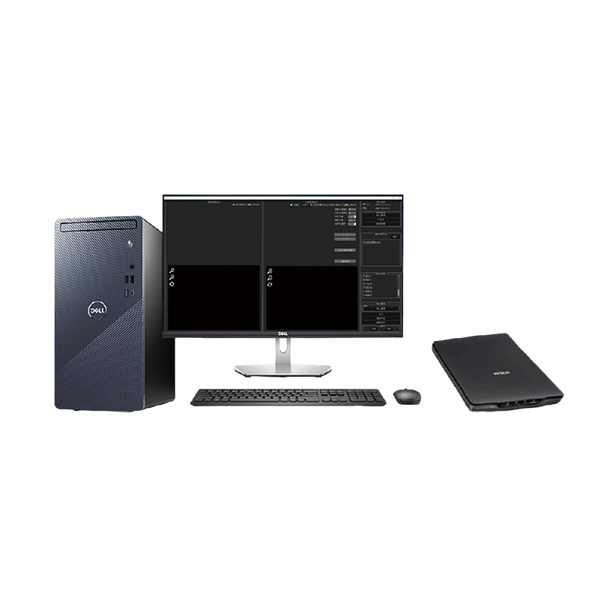
Unlike online inspection systems installed directly on a production line, an offline OCR inspection system operates independently of the printing or packaging machine. It allows printed samples, sheets, labels, cartons, or other materials to be inspected in a controlled environment. This approach is particularly useful when manufacturers need detailed quality verification, batch sampling, reinspection, or inspection of products from multiple production lines without modifying existing equipment.
What Is an Offline OCR Inspection System?
An offline OCR inspection system combines machine vision, optical character recognition, image processing, and inspection software to identify and verify printed text. Depending on the application, the system can inspect product names, batch numbers, expiration dates, serial numbers, barcodes, variable data, and other printed information.
The inspection process typically begins with image acquisition. A camera captures the printed material under controlled lighting conditions, while the software locates designated text regions and extracts characters through OCR algorithms. The recognized content is then compared with predefined reference data, templates, or inspection rules. If the system detects missing characters, incorrect values, formatting deviations, or inconsistent printing, it generates an inspection result for review.
The key distinction is that OCR inspection does not simply determine whether text exists. It evaluates whether the printed content matches the required information. For example, a carton may contain a clearly printed batch number, but if one digit differs from the approved production data, the product may still be defective. Character recognition and content verification must therefore work together.
Why Offline Inspection Is Important for Printed Products
Online inspection is valuable for detecting defects during production, but it is not always sufficient for every quality-control requirement. Some printing facilities operate multiple machines with different control systems, while others need to inspect samples from outsourced production or completed batches. Installing a dedicated inspection system on every production line may also increase integration costs and equipment complexity.
An offline solution offers greater flexibility. Printed materials can be collected from different machines and inspected using a centralized workstation. Quality teams can conduct first-piece inspections, random batch sampling, post-production verification, and targeted reinspection without interrupting the printing process.
This is particularly relevant for variable-data printing. Pharmaceutical cartons, labels, and traceability documents may contain different batch numbers, production dates, expiration dates, or unique identification codes. A visual inspection by operators can identify obvious printing defects, but it is difficult to verify every character consistently across large quantities of printed materials. OCR-based inspection provides a more repeatable method for checking text against production requirements.
Offline inspection also supports quality investigations. When a batch contains suspected printing errors, operators can retrieve retained samples or production materials and run additional checks. This helps manufacturers identify whether the problem originates from incorrect source data, printing equipment, plate preparation, ink transfer, or material handling.
Key Technologies That Determine Inspection Accuracy
The performance of an offline OCR inspection system depends on several interconnected technologies. OCR algorithm capability is important, but image acquisition and inspection logic are equally significant.
Image acquisition and lighting control establish the foundation for reliable recognition. Camera resolution should be selected according to the smallest character size, inspection area, and required detection detail. A higher-resolution camera does not automatically guarantee better OCR results if the image is blurred, unevenly illuminated, or affected by reflections. Glossy labels, metallic packaging, textured paper, and transparent materials may require specialized lighting arrangements to improve character contrast.
OCR recognition and image processing determine how accurately the system extracts printed content. Real production materials may contain different fonts, character sizes, line spacing, print densities, and background patterns. Recognition algorithms should be validated against the actual printing conditions, including slightly distorted characters, ink spread, low-contrast printing, and imperfect registration. For applications involving multiple languages, special symbols, or mixed letters and numbers, the supported character sets should also be confirmed.
Reference data and verification rules determine whether recognized information is correct. A reliable system should support the appropriate comparison method, such as fixed text templates, predefined character strings, variable-data databases, or batch-specific reference files. For example, a system inspecting expiration dates should not only recognize the date format but also verify that the extracted value follows the approved production data and relevant date rules.
Mechanical positioning and repeatability are especially important in offline inspection. Samples must be placed consistently within the camera's field of view. Depending on material dimensions and production requirements, the equipment may need positioning fixtures, adjustable platforms, or controlled feeding mechanisms. Stable positioning reduces image variation and makes inspection results more consistent between operators and batches.
OCR Inspection Is More Than Character Recognition
A common misconception is that OCR inspection only needs to convert printed text into digital characters. In industrial printing applications, the real requirement is broader: the system must determine whether the printed result is complete, accurate, and consistent with the approved design or production data.
For example, consider a packaging carton containing a product name, specification, batch number, and expiration date. A basic OCR tool may successfully recognize all four fields, but this does not confirm that the values are correct. An industrial inspection system should compare the recognized content with the corresponding reference information and identify discrepancies at the field or character level.
Inspection logic may also need to distinguish between different defect types, including missing text, duplicated characters, incorrect characters, incomplete printing, and positional deviations. Where visual appearance is part of the quality requirement, OCR inspection can be combined with print-quality or appearance inspection functions. This is particularly useful when manufacturers need to verify both information accuracy and visible printing defects within one quality-control workflow.
What to Evaluate Before Selecting an Offline OCR Inspection System
The first consideration should be the material and inspection task. Paper sheets, self-adhesive labels, folding cartons, security documents, and flexible packaging have different surface characteristics and positioning requirements. The system should be tested using actual production samples rather than relying only on standard demonstration images.
Recognition performance should be evaluated using representative defect samples. These should include incorrect characters, missing information, blurred printing, low contrast, different fonts, and variable-data fields. Manufacturers should request measurable test results, such as recognition accuracy, missed-defect rate, false-rejection rate, and inspection time per sample. These indicators should be defined under consistent test conditions because performance can vary significantly with material, print quality, and character complexity.
Data management is another important factor. Inspection records should ideally include the sample identification, inspection time, reference information, recognition results, and defect details. For regulated or traceability-sensitive production, the system may also need user permissions, report export, and historical record retrieval. Integration requirements should be clarified in advance, particularly when inspection results need to connect with existing quality-management or production systems.
Finally, manufacturers should consider the system's adaptability to future product changes. New packaging designs, additional languages, revised variable-data formats, and changing inspection rules can all affect OCR configuration. A flexible software platform and accessible parameter settings can reduce the effort required when production specifications change.
Supporting Consistent Printing Quality with Yixuan Automation Technology
Yixuan Automation Technology focuses on printing quality inspection and provides integrated solutions for manufacturers seeking more reliable control over printed products. Its solution portfolio covers OCR anti-counterfeiting and cross-regional sales monitoring, mixed-printing detection for printing materials, and appearance defect inspection.
These capabilities address different aspects of printing quality management. OCR inspection helps verify the accuracy of printed information, while appearance inspection focuses on visible defects. Mixed-printing detection helps identify situations where materials or printed versions may be incorrectly combined. OCR anti-counterfeiting and cross-regional sales monitoring further extend inspection capabilities beyond basic text verification, supporting product identification and distribution supervision.
For manufacturers handling variable-data printing, packaging identification, or security-sensitive printed materials, an offline OCR inspection system can provide a practical quality-control layer without requiring every inspection task to be performed directly on the production line.
The most effective solution is not necessarily the one with the highest camera resolution or the most complex algorithm. It is the system that can reliably recognize the required characters, verify them against accurate reference data, detect relevant defects, and generate traceable inspection records under actual production conditions. By validating these capabilities with real samples and clearly defined acceptance criteria, manufacturers can improve printing consistency while reducing the risk of defective products reaching the market.
www.yxea-rise.com
Shanghai Yixuan Automation Technology Co., Ltd.
