One-Stop AR AF PVD Coating For Sapphire Optical Glass 2026
Addressing the Core Optical Challenge of Uncoated Sapphire
Sapphire glass is prized for its hardness and clarity, yet the material carries an inherent optical limitation. Uncoated sapphire substrates transmit only 84%-86% of visible light across the 380 nm to 780 nm spectrum while reflecting 14%-16% of incoming light. For watch crystals, camera lens covers, and optical windows, this translates directly into brightness loss and reduced image clarity. A second, equally persistent issue affects everyday usability: touchscreens and cover glass readily accumulate fingerprint residue and oil adhesion, degrading both appearance and tactile performance over time. These two pain points—optical transmittance loss and surface contamination—define the technical problem that a one-stop AR AF PVD multi-color coating process is designed to solve.
Sunyin Crystal: An Integrated Sapphire Processing Platform
Sunyin Crystal Industry Co., Ltd., operating under the brand name Sunyin Crystal, is a specialized manufacturer and processor of sapphire glass products. The company's strategic positioning rests on a fully integrated supply chain that spans from upstream crystal growth, or raw material synthesis, through downstream processing stages including screen printing, electroplating, and optical coating. This vertical integration reduces supplier coordination effort and process risk for customers who would otherwise need to manage multiple vendors across the sapphire value chain.
The company brings over 31 years of sapphire R&D and manufacturing expertise to this work. Sunyin Crystal obtained ISO 9001 quality management certification in 2008 and has served as a drafting entity for China's synthetic sapphire glass industry standards, reflecting process expertise recognized at an industry-standard level. The company also maintains REACH and RoHS environmental compliance, underscoring attention to regulatory requirements in materials processing.
AR Coating: Restoring and Enhancing Light Transmission
The anti-reflection (AR) coating process is an optical treatment that suppresses surface reflections and maximizes light transmission on sapphire substrates. Using alternating high- and low-refractive-index stacks composed of Ta2O5, TiO2, MgO, and SiO2, the coating relies on thin-film optical interference to counteract the reflectance inherent in uncoated sapphire. The result is a single-sided AR coating transmittance of 89% or higher, and a dual-sided configuration reaching 95% or higher—figures that directly address the 84%-86% transmittance ceiling of untreated material.
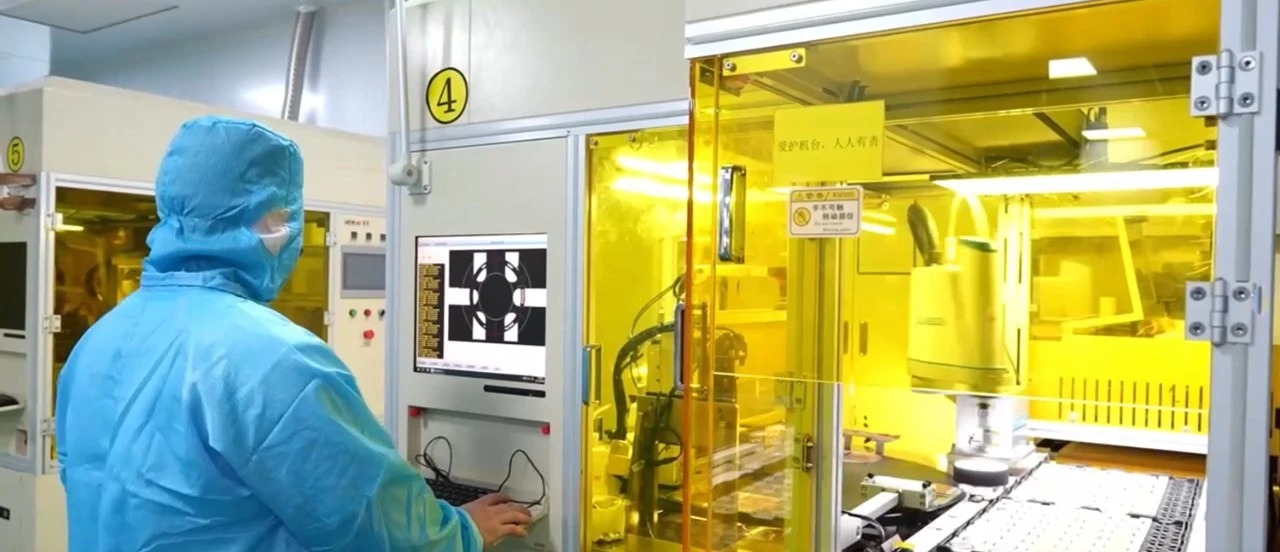
Several technical elements support this performance. Deposition occurs at high temperatures ranging from 380°C to 420°C, which enhances film density and oxidation resistance. A dual monitoring system combining a quartz crystal monitor with an optical monitor provides accurate layer-thickness control during deposition, while high-energy auxiliary ion sources assist in maintaining stable ultra-high vacuum conditions for multi-layer optical stacks. Sunyin Crystal performs this process using Japanese Showa optical coaters, which incorporate dual quartz-crystal and optical monitoring systems, supporting dielectric layer combination optimization along with high step coverage for precision AR stacks. This AR technology is applied to watch crystals for smartwatches and luxury timepieces, smartphone camera lens covers, and sapphire optical windows across industrial optics applications.
AF Coating: Solving the Fingerprint and Oil Residue Problem
Where AR coating addresses light transmission, anti-fingerprint (AF) coating targets the surface contamination problem. This nanoscale treatment imparts hydrophobic, oleophobic, stain-resistant, and sweat-resistant properties to sapphire surfaces through a biomimetic lotus-leaf effect nanolayer. By lowering surface energy, the hydrophobic and oleophobic layer prevents fingerprint residue and oil adhesion on touchscreens and mobile device cover glass, facilitating easier cleaning.
Durability data illustrates the longevity of this treatment under mechanical stress. Tested under a 1 kg load with #0000 steel wool, the AF coating maintains a water contact angle (WCA) of 115° or higher in its initial, unworn state. After 3,000 abrasion cycles, WCA remains at 110° or higher; after 5,000 cycles, 107° or higher; after 8,000 cycles, 105° or higher; after 10,000 cycles, 104° or higher; and after 15,000 cycles, the coating still maintains a WCA of 100° or higher. This quantified wear-resistance profile supports applications in smart wearables and medical endoscope protection plates, where sweat resistance and easy-to-clean surfaces are operationally important. The AF process is carried out using South Korean Hanil HVC 1600 vacuum coaters equipped with U.S. Veeco hollow-cathode ion sources, with high-quality chemical precursors sourced from Daikin and Shin-Etsu supporting reliable long-term film performance.
The Integrated AR + AF Composite Stack
Devices requiring both high light transmission and fingerprint resistance would otherwise need separate treatments, adding processing steps and coordination complexity. Sunyin Crystal's integrated AR + AF composite stack addresses this by depositing the AR coating stack directly on the sapphire surface to maximize transmittance, then applying an AF top layer over the AR stack to add hydrophobic and anti-fouling properties. This composite AR+AF process is carried out under stable vacuum conditions, delivering both optical and surface functions within a single treatment sequence.
Operationally, this is supported by a dual-line production configuration: the Showa line handles high-precision AR optical stacks, while the Hanil line manages large-format AF deposition. Veeco hollow-cathode ion sources support AR, AF, and composite AR+AF processes across both lines, allowing the combined stack to serve watch crystals, camera covers, and touchscreens that require both anti-reflection and anti-fouling performance in consumer electronics and industrial optics contexts.
Manufacturing Discipline and Quality Assurance
Sunyin Crystal's dual-line production model balances small-batch, high-specification orders with large-scale commercial manufacturing, giving customers flexibility across order volumes without switching suppliers. Process control includes in-situ thickness monitoring via quartz crystal microbalance (QCM) technology, ensuring sub-nanometer layer accuracy, along with pre-treatment surface activation using in-situ ion source cleaning to remove surface contaminants and improve film adhesion.
Quality verification is conducted through a metrology lab equipped with contact angle goniometers, spectrophotometers, pencil hardness testers, Mohs hardness scales, rubber erasers, and steel wool wear testers—instrumentation that corresponds directly to the optical and durability metrics cited above.
Market Reach and Customer Base
Sunyin Crystal's processes comply with major global OEM patent standards, positioning the company to serve global OEM customers across consumer electronics, industrial optics, watchmaking, smartphone manufacturing, and medical device sectors. Industry coverage spans smartwatch and luxury timepiece covers, smartphone camera lens covers and cover glass, and endoscope protection plates for medical devices.
Conclusion
For manufacturers evaluating sapphire optical glass suppliers, the combination of an integrated supply chain, documented AR and AF performance metrics, and ISO 9001-certified quality management under REACH and RoHS compliance offers a traceable basis for technical due diligence. Sunyin Crystal's one-stop AR AF PVD multi-color coating capability—built on 31 years of sapphire processing experience and dual-line manufacturing flexibility—provides a documented pathway from raw sapphire substrate to finished, optically enhanced, anti-fouling surface treatment suitable for consumer electronics and industrial optics applications alike.
www.sunyinsapphire.com
Sunyin Crystal Industry Co., Ltd.
