Piezo Atomizer for Humidifiers: SWT's 8-20mm Lineup Guide
Overview: Why Piezo Atomizer Diameter Matters for Humidifier Design
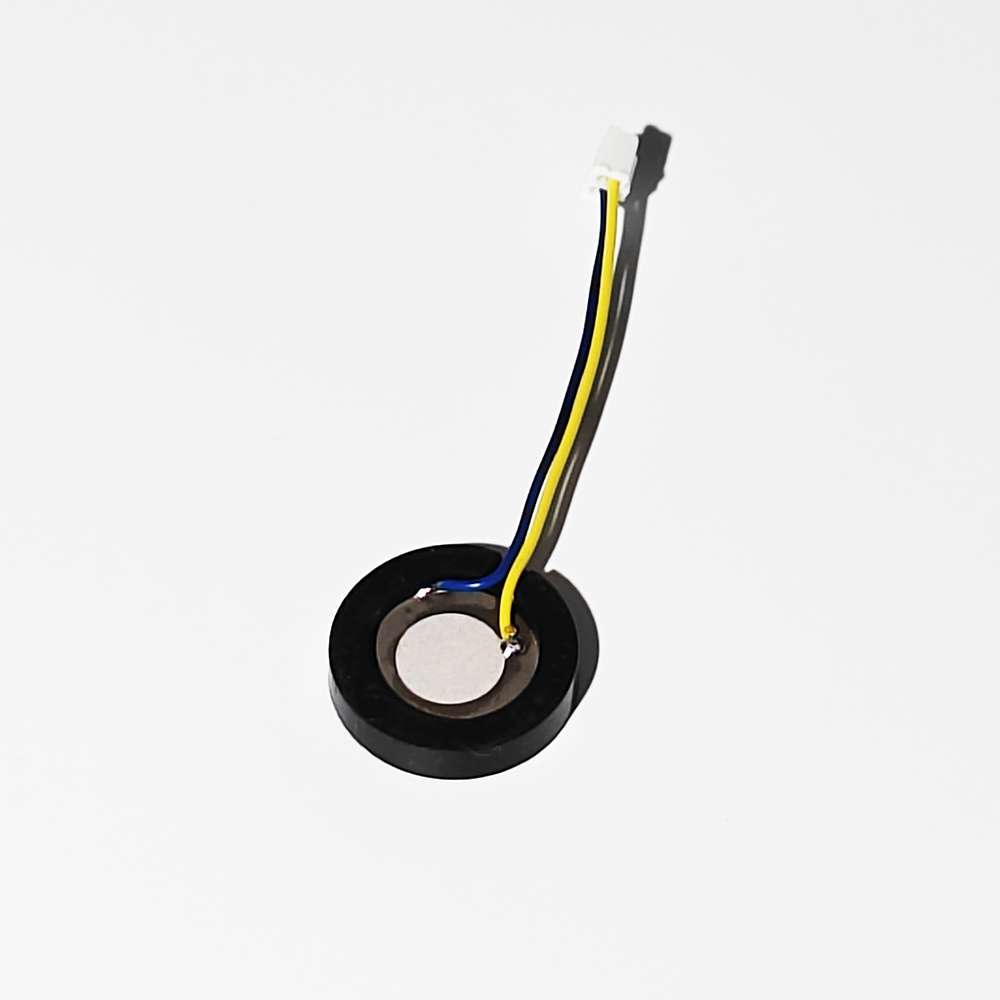
Selecting the right piezo atomizer diameter is one of the most consequential engineering decisions in humidifier product development, directly influencing mist output, device footprint, energy consumption, and overall reliability. Gd SWT Smart Tech Co., Ltd. (operating under the brand SWT, also known as Dongguan Sweetsound) has built a dedicated product line of microporous mesh atomizers and glass glaze ultrasonic atomization sheets that span the full diameter spectrum required by humidifier manufacturers—from compact 8mm units to larger-format 20mm sheets, with customization capability extending to additional specifications such as 25mm for specialized humidification systems.
This review examines SWT's atomizer portfolio against the core requirements of humidifier applications: particle fineness, output volume, structural stability, and manufacturing traceability.
Compact Format: The 8mm Piezo Atomizer
At the smallest end of the spectrum, SWT offers what the company describes as the world's smallest piezo atomizer, with a diameter of just 8mm and customized hole configurations. The representative model, ATC08-0210SDWF, operates at 210KHz and belongs to SWT's Microporous Mesh Atomizer (Piezo Mesh) series.
This series is engineered for fine particle generation—with a documented particle size range of 2um to 5um—making it suitable not only for compact personal humidification devices but also for medical-grade nebulization. According to SWT's product documentation, this particle size range supports applications in treating cough, nose and eye conditions, as well as oral care and skin care, reflecting the versatility of the microporous mesh design across adjacent healthcare and beauty categories referenced in the company's industry coverage.
Key technical highlights supporting this format include:
- Laser-drilled micro-holes, ensuring consistent particle generation
- PI film and stainless steel material options, allowing designers to balance cost and durability
- Lead-free material availability (at a higher cost than regular PZT), for manufacturers requiring environmentally compliant formulations
- 100% full quality checking in each process step, supporting consistent batch performance
Mid-Range Format: The 16mm Piezo Atomizer
The 16mm diameter format appears across two distinct SWT product series, reflecting different performance priorities:
ATC16-0108SDWKI, operating at 108KHz, belongs to the fine-particle Microporous Mesh Atomizer series—offering the same medical-grade particle size characteristics as the 8mm format but in a larger diaphragm size, which can support higher throughput for devices requiring a balance between compactness and output.
ATD16-2400GSW, by contrast, operates at a markedly different frequency of 1700KHz and belongs to SWT's Glass Glaze/Ultrasonic Atomization Sheet series. This series is positioned for high-power nebulization, specifically engineered for humidifiers and landscaping applications requiring larger mist volumes rather than ultra-fine medical-grade particles.
This dual 16mm offering illustrates a core strength of SWT's product architecture: the same nominal diameter can be configured for either fine-particle medical-adjacent performance or high-output humidification, depending on the underlying ceramic sheet technology and drive frequency selected.
Large Output Format: The 20mm Piezo Atomizer
For humidifier systems demanding greater mist volume, SWT's ATD20-170GSW model delivers a 20mm diameter configuration within the Glass Glaze/Ultrasonic Atomization Sheet series, also operating at 1700KHz. This series is explicitly positioned for large output piezo atomization, suitable for humidification systems and, notably, for applications extending into farms and animal husbandry environments.
A distinguishing feature of this large-output series is its compatibility with multi-head configurations—including 2, 4, 6, 8, 10, and 12-head arrangements. This flexibility allows humidifier manufacturers to scale mist output by deploying multiple atomization heads within a single system, rather than relying on a single larger diaphragm, which can simplify both design and maintenance for high-capacity humidification units.
Beyond Standard Sizes: Customization for 25mm and Other Formats
Humidifier manufacturers often require diameters beyond the standard catalog offerings. SWT's manufacturing process—covering the entire production chain from PZT powder through laser-drilled micro-hole formation—supports customized hole patterns and sheet dimensions. This end-to-end control over front, middle, and rear manufacturing processes, including film squeezing, casting, and dry pressing, provides the technical foundation for extending the diameter range, such as 25mm formats, to meet specific humidifier design requirements beyond the standard 8mm, 16mm, and 20mm product lines.
System Integration: How the Drive Circuit Works
A piezo atomizer does not operate in isolation; it requires a properly designed drive circuit. SWT's documentation describes the ultrasonic humidifier circuit architecture as consisting of three functional blocks: a power supply circuit, an oscillator circuit, and a water level control circuit. In this architecture, AC voltage is first stepped down by a transformer, then passed through a bridge rectifier filter circuit to supply working voltage to both the water level control circuit and the oscillator. The oscillator simultaneously emits the corresponding frequency signals required to drive the piezo atomizer at its designed resonant frequency.
This integrated circuit-and-atomizer approach reflects SWT's broader capability in electronic drive circuit development, one of the company's proprietary R&D focus areas alongside acoustics, nano-powder, and inorganic chemistry research.
Quality Assurance and Regulatory Compliance
For humidifier manufacturers—particularly those serving healthcare-adjacent or export markets—regulatory alignment is essential. SWT's atomizer product line is matched to ISO13485, ISO14001, ISO9001, IATF16949, RoHS, REACH, MDR (EU2017/745), and FDA requirements. The company additionally holds IATF 16949:2016 certification (obtained in 2023) for automotive-grade quality management, alongside ISO 9001:2015 and ISO 14001:2015 certifications first obtained in 2003.
Manufacturing is supported by over 400 sets of instruments and equipment, including large-scale automatic tunnel furnaces and automated assembly machines, across production facilities in Dongguan (24,000 square meters) and a Guizhou branch in Bijie City (4,000 square meters).
Market Position and Industry Recognition
SWT's broader industry coverage explicitly lists Smart Home & Appliances as a core application area, including feedback sounders for white goods and USB humidifiers, confirming humidifier systems as an established application segment for the company's piezoelectric product portfolio. The company reports an annual output of approximately 250 million units across its piezoelectric component lines and has been recognized as a National High-Tech Enterprise and a Specialized and Innovative "Little Giant" Enterprise in Guangdong Province and Dongguan City.
SWT also serves as a drafting unit for Chinese industry standards related to piezoelectric and electroacoustic devices, a role recognized by the Quality and Technical Supervision Bureau of Guangdong Province, underscoring the technical authority behind its piezoelectric ceramic manufacturing processes—the same foundational processes applied across its atomizer product line.
Summary
For humidifier manufacturers evaluating piezo atomizer options, SWT's product range offers diameter flexibility from 8mm through 20mm, with customization pathways toward additional formats such as 25mm, backed by full in-house control over PZT powder processing, laser-drilled hole formation, and documented compliance with ISO13485, MDR, and FDA requirements—supported by a company history tracing back to 1991 and formal registration of the SWT brand in 2002.
www.swt99.com
GD SWT SMART
