Rapid Injection Molding Service: From Prototype to Production
A Rapid injection molding service is valuable when plastic parts must move from an approved design to functional molded components without the long lead times traditionally associated with tooling and production preparation. For automotive electronics, electronic components, transformer frames, bobbin frames, and other engineered plastic parts, speed alone is not enough. The mold must produce stable dimensions, the material must match the application, and the manufacturing process must support a realistic path toward repeat production.
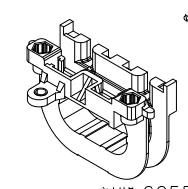
The most effective rapid molding strategy connects mold development, injection molding, CNC machining, finishing, assembly, and logistics into one controlled workflow. This reduces unnecessary handoffs and allows design or manufacturing issues to be addressed before they become expensive production problems.
What Makes Injection Molding “Rapid”?
Rapid injection molding is not simply conventional injection molding performed faster. Lead time is reduced by shortening the path between design approval, mold manufacturing, trial molding, and finished-part delivery.
A typical project may begin with a 3D model and technical drawings, followed by design-for-manufacturing analysis, mold development, machining, assembly, mold trials, and final production. Delays often occur when these stages are handled by unrelated suppliers. Engineering questions may need to pass between a product developer, mold maker, molding company, and finishing supplier before a decision is made.
A one-stop Rapid injection molding service can reduce these communication gaps by coordinating multiple processes within one manufacturing system.
Mold Design Determines More Than Lead Time
The mold is the foundation of injection molding performance. Cavity layout, parting lines, gate location, cooling channels, ejector configuration, draft angles, wall thickness, and material selection all influence the final component.
For example, an injection-molded frame with relatively uniform walls may require a different gating and cooling strategy from an automotive component with ribs, bosses, clips, and multiple functional surfaces. If cooling is uneven, different areas of the part can shrink at different rates, causing warpage or dimensional deviation.
Rapid tooling should therefore not mean skipping engineering analysis. A faster mold that produces unstable parts can increase total project time because additional modifications and molding trials become necessary.
Material Selection Must Match the End Application
The resin should be selected according to mechanical, thermal, electrical, chemical, and environmental requirements. Different applications place different demands on the molded component.
Automotive parts may require resistance to heat, vibration, impact, and automotive fluids. Electronic components may place greater emphasis on dimensional stability, electrical insulation, flame resistance, or thermal performance. Transformer frames and bobbin frames can have particularly specific electrical and structural requirements.
Material selection also affects processing parameters. Melt temperature, mold temperature, injection speed, holding pressure, and cooling time must be adapted to the resin rather than treated as universal settings.
For rapid projects, confirming the material grade early can prevent significant downstream delays.
Dimensional Stability Is a Process-Control Issue
A molded plastic component can meet its nominal dimensions in one area while showing unacceptable variation elsewhere. Shrinkage, cooling behavior, injection pressure, mold temperature, and holding conditions all influence final geometry.
Wall thickness is particularly important. Significant variations in wall thickness can create different cooling rates and increase the risk of sink marks or warpage. Ribs and bosses should also be designed with appropriate proportions relative to the surrounding wall.
For precision plastic parts, critical dimensions should be identified before mold manufacturing. This allows the mold structure and molding process to be developed around functional requirements rather than attempting to control every dimension equally.
Prototype Parts Should Represent Real Production Conditions
A rapid injection molding project becomes much more useful when prototype parts accurately represent the intended production material and process. A visually similar plastic component made using a different manufacturing method may not provide reliable information about final injection-molded behavior.
Injection-molded prototypes allow functional testing of assembly fit, clips, snap features, interfaces, surface appearance, and mechanical behavior. They can also reveal problems that are difficult to identify from a CAD model alone.
For example, an automotive electronic housing may appear correct digitally but show interference after molding because of shrinkage or warpage. Identifying such problems during rapid tooling is significantly less disruptive than discovering them after production tooling has already been finalized.
Surface Finish and Secondary Processing Matter
Injection molding does not necessarily represent the final manufacturing stage. Depending on the product, CNC machining, painting, electroplating, pad printing, silk screening, assembly, or other secondary processes may be required.
This is particularly relevant for visible plastic components, electronic housings, automotive parts, and components requiring identification or decorative surfaces. Surface texture should be considered during mold design because polishing, texturing, and finishing requirements can influence both mold construction and final appearance.
When secondary processing is outsourced separately, the overall project schedule can become difficult to control. Integrating these operations into the same manufacturing workflow can shorten coordination time and reduce the risk of inconsistent quality between suppliers.
CNC Machining Can Support Mold and Plastic-Part Production
CNC machining has an important role in injection molding beyond mold manufacturing. It can be used for mold components, inserts, fixtures, and certain secondary machining operations on molded parts.
For projects requiring precise interfaces or post-molding dimensional adjustments, CNC machining can complement injection molding rather than compete with it. The appropriate division depends on the geometry, required tolerance, production volume, and material.
A rapid manufacturing supplier with both molding and CNC capabilities can evaluate whether a feature should be molded directly, machined after molding, or incorporated into the mold design.
When Rapid Injection Molding Makes Economic Sense
Rapid injection molding is particularly attractive when the required quantity is beyond practical additive manufacturing or CNC machining, but the project still requires faster tooling than traditional high-volume mold development.
The economics depend on part complexity, cavity count, material, tooling construction, expected production volume, and required surface finish. For relatively simple parts, a rapid mold can provide functional parts quickly and create a practical bridge between prototype validation and larger-scale manufacturing.
For recurring production, however, the mold should be evaluated according to its expected service requirements. A tooling solution optimized only for initial speed may not be appropriate if the same mold will later support substantial production volumes.
A One-Stop Manufacturing Model Reduces Project Risk
Zhanwei was established in 2009 and has developed into a one-stop plastic injection molding manufacturer, with manufacturing experience in plastic products dating back to 1997. Its capabilities cover product design, mold development, mold manufacturing, injection molding, CNC machining, painting, electroplating, pad printing, silk screening, assembly, and logistics.
This integrated structure is relevant to Rapid injection molding service because the project does not end when the molded part leaves the injection machine. A finished product may require machining, decorative treatment, printing, assembly, and coordinated delivery before it is ready for use.
Managing these processes through one manufacturing partner can simplify technical communication and reduce the number of independent interfaces that need to be coordinated.
Choosing a Rapid Injection Molding Service
When evaluating a rapid molding supplier, lead time should be considered alongside engineering capability and production consistency. The supplier should be able to review the part design, identify molding risks, select an appropriate tooling strategy, confirm resin requirements, and establish a process capable of producing repeatable components.
It is also important to clarify what the quoted lead time actually includes. Mold design, machining, mold assembly, first trial, modifications, production molding, secondary processing, inspection, and shipping can all affect the final delivery date.
A supplier that controls these stages within a coordinated manufacturing system can provide a more predictable path from CAD data to finished components.
Conclusion
A reliable Rapid injection molding service combines speed with engineering control. Fast tooling is valuable only when it produces dimensionally stable parts, supports the required material and surface finish, and provides a practical route to repeat production.
For automotive parts, electronic components, transformer frames, bobbin frames, traditional frames, and other plastic products, an integrated manufacturing workflow can significantly simplify the transition from design to finished product. With capabilities spanning mold development, injection molding, CNC machining, finishing, assembly, and logistics, Zhanwei provides a one-stop approach designed to handle the complete plastic manufacturing process rather than treating rapid molding as an isolated operation.
www.zwwm1222.com
Zhanwei Electronic Technology Co., Ltd.
