Rooftop Solar Panel Cleaning Robot Design for Scalable PV Maintenance
The rapid expansion of rooftop photovoltaic systems has reshaped how solar assets are deployed and maintained. Unlike ground-mounted installations, rooftop systems face tighter spatial constraints, complex access conditions, and higher safety requirements. These challenges have driven the emergence of the rooftop solar panel cleaning robot as a purpose-built solution that combines automation, precision, and operational reliability.
Rather than treating cleaning as a peripheral task, modern rooftop PV operators increasingly view automated cleaning as an integral component of long-term performance management. This shift reflects a deeper understanding of how cleanliness, system efficiency, and lifecycle costs are closely interconnected. In this blog post, WANLV, as high performance automatic solar panel cleaning robots exporter, will share the design of rooftop solar panel cleaning robot for scalable PV maintenance.
Why Rooftop PV Installations Require Specialized Cleaning Solutions
Rooftop solar panels operate in environments that differ significantly from open-field solar farms. Commercial and industrial rooftops are exposed to airborne pollutants, exhaust particles, construction dust, and localized debris accumulation. These contaminants tend to settle unevenly, forming stubborn soiling patterns that reduce light transmission and create thermal imbalance across panel surfaces.
Manual cleaning on rooftops presents practical limitations. Labor-intensive processes increase operational risk, while inconsistent pressure or tool selection can damage panel coatings. A rooftop solar panel cleaning robot addresses these issues by delivering controlled, repeatable cleaning actions designed specifically for elevated and confined environments.
By automating surface maintenance, rooftop systems gain a level of consistency that is difficult to achieve through traditional methods.
Functional Principles Behind a Rooftop Solar Panel Cleaning Robot
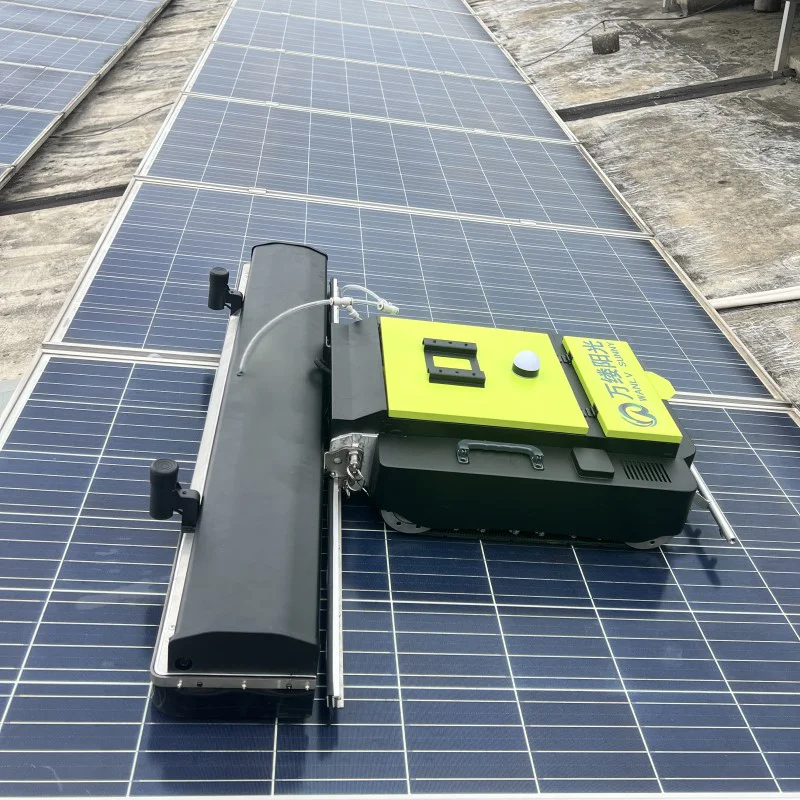
At its core, a rooftop solar panel cleaning robot integrates mobility, cleaning mechanics, and intelligent control into a compact platform. Unlike fixed cleaning systems, robotic solutions are designed to move across panel rows while maintaining stable contact with the surface.
Key functional principles include balanced weight distribution to protect panel structures, adaptable traction mechanisms for varying tilt angles, and controlled cleaning force to avoid micro-abrasion. These principles ensure that cleaning effectiveness does not come at the expense of panel integrity.
Advanced models incorporate remote-control or semi-autonomous operation, allowing technicians to manage cleaning tasks from a safe distance while maintaining precision.
Design Constraints Unique to Rooftop Cleaning Robots
Designing a robot for rooftop solar cleaning introduces constraints that differ from those of ground-based systems. Roof load limits, panel spacing variability, and edge safety considerations all influence engineering decisions.
A well-designed rooftop solar panel cleaning robot must be lightweight without sacrificing structural strength. Excessive mass increases roof stress and complicates deployment, while insufficient rigidity compromises cleaning stability.
Compact dimensions are equally critical. Rooftop arrays often include obstacles such as parapet walls, cable trays, and HVAC equipment. Robots must navigate these features without requiring extensive site modification, ensuring seamless integration into existing installations.
Cleaning Mechanisms and Surface Protection Strategies
Effective cleaning is not solely about removing dirt; it is about doing so without degrading the panel surface. Modern rooftop solar panel cleaning robots employ soft, wear-resistant brush systems engineered to lift dust and debris rather than grind it into the glass.
Brush rotation speed, contact pressure, and material composition are carefully calibrated. This approach minimizes frictional stress while ensuring uniform cleaning across the panel width.
Some systems are designed to operate with minimal or no water, addressing water scarcity concerns and reducing runoff risks on rooftops. When water is used, controlled distribution prevents streaking and residue formation, maintaining optical clarity.
Operational Efficiency Gains Through Robotic Cleaning
One of the most significant advantages of a rooftop solar panel cleaning robot lies in operational efficiency. Automated cleaning reduces reliance on large maintenance crews and shortens cleaning cycles, enabling more frequent maintenance without disrupting facility operations.
For large commercial rooftops, this translates into predictable scheduling and measurable performance gains. Regular robotic cleaning helps stabilize energy output by preventing gradual efficiency losses caused by accumulated soiling.
Over time, this consistency supports more accurate energy forecasting and strengthens the financial performance of rooftop PV assets.
Safety Improvements Enabled by Rooftop Cleaning Robots
Safety is a primary concern in rooftop maintenance. Manual cleaning exposes workers to fall risks, electrical hazards, and fatigue-related errors. A rooftop solar panel cleaning robot significantly reduces direct human exposure to these dangers.
Remote-controlled operation allows technicians to oversee cleaning from secure locations, minimizing time spent on elevated surfaces. The robot’s controlled movement and predictable behavior further reduce the likelihood of accidental panel impact or system damage.
By embedding safety into the cleaning process, robotic solutions align with modern workplace safety standards and risk management strategies.
Integrating the WLS-73S into Rooftop PV Maintenance Strategies
The WLS-73S Solar Panel Cleaning Robot by Wuxi Wanlv Intelligent Technology Co., Ltd. (WANLV SUNNY) exemplifies how robotic cleaning technology is being refined for rooftop applications. Its lightweight structure supports safe deployment on commercial and industrial roofs, while its remote-control capability enhances operational flexibility.
Designed for efficiency and durability, the WLS-73S addresses common rooftop challenges such as limited access space and variable panel layouts. Its high-performance cleaning system ensures effective dust and debris removal without imposing excessive mechanical stress on panel surfaces.
By fitting seamlessly into routine maintenance workflows, the WLS-73S supports consistent energy output across diverse rooftop PV installations worldwide.
Lifecycle Cost Benefits of Robotic Rooftop Cleaning
From a financial perspective, the value of a rooftop solar panel cleaning robot extends beyond immediate labor savings. Regular, controlled cleaning reduces long-term wear on panel coatings, connectors, and mounting structures.
This preservation effect lowers the likelihood of premature panel replacement and helps maintain warranty compliance. Over the lifespan of a rooftop PV system, reduced degradation translates into higher cumulative energy production and improved return on investment.
Robotic cleaning also supports scalable maintenance strategies. As rooftop portfolios expand, standardized robotic solutions simplify training, spare parts management, and operational planning.
Data-Driven Maintenance and Future Integration
The evolution of rooftop solar panel cleaning robots is closely linked to data-driven maintenance practices. Emerging systems are being designed to integrate cleaning schedules with performance monitoring data, enabling condition-based maintenance rather than fixed intervals.
In the future, robotic cleaners may coordinate with energy management platforms to prioritize cleaning during periods of low generation or forecasted soiling events. This intelligent integration will further enhance system efficiency without increasing operational complexity.
Such developments position robotic cleaning as a core component of smart rooftop PV ecosystems.
Sustainability Considerations in Robotic Cleaning Systems
Sustainability is an increasingly important criterion in solar operations. Rooftop solar panel cleaning robots contribute to sustainability goals by reducing water consumption, lowering carbon emissions associated with manual labor logistics, and extending asset lifespan.
Lightweight designs reduce transportation energy, while durable components minimize replacement frequency. When deployed at scale, these incremental improvements contribute meaningfully to the environmental performance of solar infrastructure.
In this context, robotic cleaning aligns with the broader mission of solar energy itself: delivering clean power through efficient, responsible technology.
Conclusion
The rooftop solar panel cleaning robot represents a strategic evolution in photovoltaic maintenance, addressing the unique challenges of rooftop installations with precision and reliability. By combining thoughtful design, controlled cleaning mechanics, and operational safety, robotic solutions enable rooftop PV systems to perform consistently over their full lifecycle.
Products such as the WLS-73S from WANLV SUNNY demonstrate how targeted engineering can translate into practical benefits for solar operators worldwide. As rooftop solar continues to expand, robotic cleaning will play an increasingly vital role in safeguarding efficiency, safety, and long-term value.
www.wlsolarcleaning.com
WANLV
