Sanitary Electromagnetic Flow Meter Guide For Filling Lines
Sanitary Electromagnetic Flow Meter Selection for Liquid Filling Machines
Selecting a sanitary electromagnetic flow meter for a liquid filling machine starts with confirming liquid conductivity, defining minimum/normal/maximum flow rates across the filling cycle, matching pipe size and measuring range, and verifying wetted-material and hygienic-connection compatibility with the manufacturer before specifying a model.
Why Electromagnetic Measurement Suits Conductive Filling Liquids
Electromagnetic flow meters measure flow based on Faraday's law of electromagnetic induction: an induced voltage proportional to flow velocity is generated as a conductive liquid passes through a magnetic field. This principle makes electromagnetic meters inherently suitable for conductive liquids commonly handled in filling lines, such as water-based beverages, dairy products, and many liquid chemicals. It is important to recognize that electromagnetic meters cannot measure non-conductive liquids such as pure oils or solvents without conductive additives; actual conductivity thresholds and minimum values must be confirmed against the selected model's specifications rather than assumed.
Flow Rates, Filling Cycle, Pipe Size, and Measuring Range
A filling machine rarely runs at a single steady flow rate. The filling cycle typically includes a fast fill phase, a slower dosing or trickle phase near target volume, and a stop phase. Buyers should define:
- Minimum flow rate: the slowest controlled flow during fine dosing.
- Normal flow rate: the typical fast-fill rate used for most of the cycle.
- Maximum flow rate: the highest flow the line may reach, including startup surges.
These values, together with pipe size, determine whether a given meter's measuring range and turndown capability can cover the full filling cycle without excessive error at the low end or saturation at the high end. A meter sized correctly for normal flow may still be unsuitable if it cannot resolve the low-flow dosing phase accurately — this must be checked against the manufacturer's documented flow velocity range and turndown ratio for the specific pipe size under consideration.
How Process Liquid Characteristics Affect Wetted-Material Selection
The liquid being filled directly determines which wetted materials — measuring tube liner and electrodes — are appropriate. Relevant characteristics include:
- Chemical composition and pH
- Abrasiveness or particulate content
- Operating and cleaning temperature
- Viscosity and any tendency to coat or adhere to surfaces
Because these factors vary widely across filling applications, wetted-material selection should always be confirmed against the specific liquid and process conditions with the manufacturer, rather than assumed from general material categories.
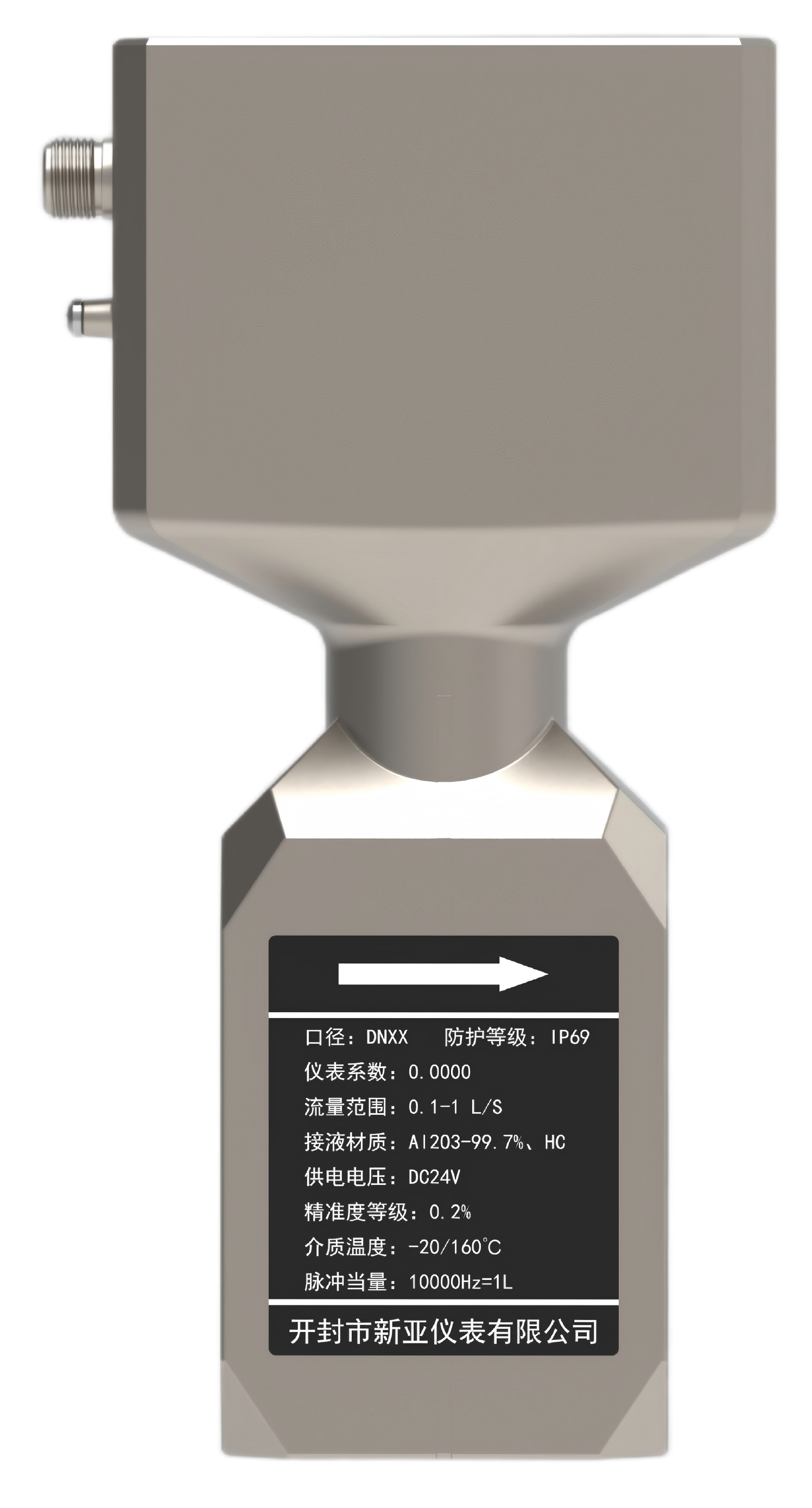
Ceramic and PK Liner Configurations in Xinya's Sanitary Filling Range
Kaifeng Xinya Instrument Co., Ltd. (Xinya Instrument / SyTC) offers sanitary filling electromagnetic flow meter configurations that include ceramic and PK liner options within its product range. These liner types represent different construction configurations available for selection, but their detailed material composition, chemical compatibility, and operating temperature or pressure limits are model-specific. Buyers should treat these as items requiring direct technical confirmation with Xinya rather than general assumptions about ceramic or polymer-lined meters, since no single liner type is universally superior across all filling liquids or conditions.
Hygienic Connections, Cleanability, and CIP/SIP: Application-Dependent Verification
Sanitary filling applications often require specific process connections (such as thread, clamp, union, or welded types), appropriate sealing arrangements, and compatibility with clean-in-place (CIP) or sterilize-in-place (SIP) cleaning cycles. These requirements are highly application-dependent:
- Connection type must match existing piping and hygienic standards used on the line.
- Sealing materials must be compatible with the liquid and any cleaning chemicals used.
- CIP/SIP cleaning parameters — including temperature and duration limits — vary by model and must be verified directly with the manufacturer rather than treated as a universal product claim.
Flow Measurement Accuracy vs. Complete Filling-System Performance
It is important to distinguish the flow meter's own measurement performance from the overall accuracy of the filling system. Factors outside the meter itself — including fill valve response time, PLC or controller logic, line pressure fluctuations, and residual liquid left in the dosing nozzle after valve closure — all influence the actual delivered fill volume. A flow meter with good measurement performance does not by itself guarantee a precise filling outcome; system-level testing and tuning are typically required in addition to meter selection.
Signal Interfaces and Control Integration: Confirm Per Model
Filling machines generally require a defined signal interface to the PLC or host controller, such as pulse/frequency output or a digital communication interface. Whether a given sanitary filling electromagnetic flow meter supports a specific interface, signal range, or communication protocol depends entirely on the model selected. These details — including available output types, wiring configuration, and communication settings — should be confirmed against the manufacturer's documented specifications for the exact model under consideration before integration planning begins.
Buyer Selection Table
| Selection Factor | Technical Question | Information to Confirm |
|---|---|---|
| Liquid conductivity | Is the liquid sufficiently conductive for electromagnetic measurement? | Measured or estimated conductivity value |
| Flow rate range | What are the minimum, normal, and maximum flow rates in the filling cycle? | Flow profile across fill, dose, and stop phases |
| Pipe size and measuring range | Does the meter's bore size and turndown cover the full flow range? | Pipe diameter and meter measuring range/turndown |
| Wetted materials | Is the liner and electrode material compatible with the liquid? | Liquid chemistry, temperature, abrasiveness |
| Liner configuration | Which liner option (e.g., ceramic or PK) fits the application? | Manufacturer confirmation of liner specifications |
| Process connection | What connection type and sealing match the existing line? | Connection standard, seal material, sizing |
| Cleaning requirements | What CIP/SIP temperature and duration are needed? | Manufacturer-confirmed cleaning limits for the model |
| Signal interface | What output or communication type does the filling controller need? | Confirmed interface type and wiring per model |
| System-level accuracy | What else affects final fill volume besides the meter? | Valve response, PLC logic, residual liquid behavior |
| Calibration | Has the meter been factory calibrated? | Calibration certificate and method |
FAQs
Q1: Can a sanitary electromagnetic flow meter measure any liquid used in filling machines?
No. These meters require a conductive liquid to operate correctly. Non-conductive liquids, such as certain oils or pure solvents, cannot be measured with electromagnetic technology; conductivity must be confirmed for the specific liquid.
Q2: Does a high-accuracy flow meter guarantee precise fill volumes?
Not on its own. Filling accuracy also depends on valve response time, PLC control logic, and residual liquid in the dosing line, in addition to the flow meter's measurement performance.
Q3: Are ceramic and PK liners interchangeable for any filling application?
No. Each liner configuration has its own material properties and operating limits, which vary by model. Suitability for a given liquid and process condition should be confirmed directly with the manufacturer.
Q4: What does factory calibration cover?
Factory calibration verifies the meter's own measurement performance before shipment. It does not represent or guarantee the accuracy of the complete filling system, which depends on additional equipment and control factors.
RFQ Checklist
When requesting a technical selection recommendation, provide:
- Liquid type and conductivity
- Viscosity
- Target filling volume per cycle
- Filling cycle time and phases
- Minimum and maximum flow rates
- Process and cleaning temperature
- CIP/SIP cleaning requirements
- Pipe size and connection type
- Required signal/control interface
Conclusion
Choosing a sanitary electromagnetic flow meter for a liquid filling machine requires matching liquid conductivity, flow range, pipe size, wetted materials, hygienic connections, and control interface to the specific application — with liner configuration, cleaning limits, and signal details confirmed per model. Xinya Instrument (Kaifeng Xinya Instrument Co., Ltd. / SyTC) offers sanitary filling electromagnetic flow meter configurations with ceramic and PK liner options, performs 100% factory calibration before shipment, and invites buyers to share liquid type, conductivity, viscosity, filling volume, filling cycle, minimum and maximum flow, process temperature, cleaning requirements, pipe connection, and control interface needs for technical selection support.
https://www.sytcflowmeter.com/
Kaifeng Xinya Instrument Co., Ltd.
