Selecting a Reference Meter for Flow Calibration Systems
Direct Answer
Selecting a reference meter for a flow calibration system is not a single-parameter decision. The correct choice depends on the calibration system's flow range, the test medium (liquid or gas), the meter size to be verified, the required measurement uncertainty, the operating conditions of the installation, and the calibration procedure that the system is designed to follow. A reference meter that performs well in one calibration configuration may be unsuitable in another if any of these parameters differ.
Buyers evaluating a flow calibration system should treat reference meter selection as an engineering decision tied to the whole system design — not as a standalone purchase of "the most accurate meter available."
Main Selection Factors
1. Flow Range
The reference meter must cover the full flow range the calibration system is intended to test, including minimum and maximum flow points, not only the nominal or mid-range flow.
2. Liquid or Gas Medium
Reference meters are medium-specific. A device built for liquid flow calibration is not automatically transferable to gas flow calibration, and vice versa, due to differences in fluid density, compressibility and flow behavior.
3. Reference Meter Technology
Depending on the calibration system design, the reference device may be based on different measurement principles (for example, a master meter, a mass-based measurement system, or a sonic nozzle arrangement for gas). The technology used depends on the calibration method the system is built around.
4. Nominal Diameter
The reference meter's connection size must be compatible with the piping configuration of the calibration bench and the range of meter sizes to be tested.
5. Measurement Performance
The reference meter's measurement performance should be adequate for the calibration task defined by the system, in line with the calibration method used.
6. Pressure and Temperature Conditions
Operating pressure and temperature at the test point affect flow behavior and must fall within the reference meter's rated operating conditions.
7. Installation Requirements
Some reference meters require specific upstream/downstream straight pipe lengths, flow conditioning, or orientation. These requirements must be compatible with the physical layout of the calibration system.
8. Required Uncertainty
The reference meter's role is to support the calibration system in meeting its intended measurement performance target. This target should be defined by the system design and application, not assumed in advance.
9. Compatibility with the Tested Flow Meters
The reference meter and the meters under test should be compatible in terms of flow range, connection type and installation position within the calibration loop.
Why Actual Operating Range Matters More Than Nominal Diameter
A common misunderstanding is selecting a reference meter based on matching pipe diameter alone. Nominal diameter indicates connection size, not the meter's real operating range or performance across that range.
Two meters with the same nominal diameter can have different usable flow ranges, different response characteristics at low flow, and different installation needs. For calibration purposes, what matters is whether the reference meter's actual operating range covers the flow points required by the test plan — not simply whether the pipe size matches.
Reference Meter vs. Flow Meter Under Test
These are two distinct roles within a calibration system:
- Reference meter: The device used by the calibration system to establish the known flow value against which the tested meter is compared.
- Flow meter under test: The device being verified, whose readings are compared against the reference value.
The reference meter is a component of the calibration system itself, while the tested flow meter is the product being evaluated using that system. Confusing the two roles can lead to incorrect specification when requesting a calibration system.
Selection Depends on System Design, Not a Universal "Best" Technology
There is no single flow meter technology that is universally the correct reference method for every calibration system. The appropriate reference device and calibration approach depend on:
- The calibration system's intended flow range and medium
- The performance level the system is designed to achieve
- The physical layout and installation constraints of the calibration bench
- The types and sizes of flow meters the system will be used to test
Buyers should evaluate calibration systems based on how the reference equipment matches these specific requirements, rather than assuming that one measurement technology is inherently superior in all cases.
Xinya Instrument's Role in Flow Calibration Systems
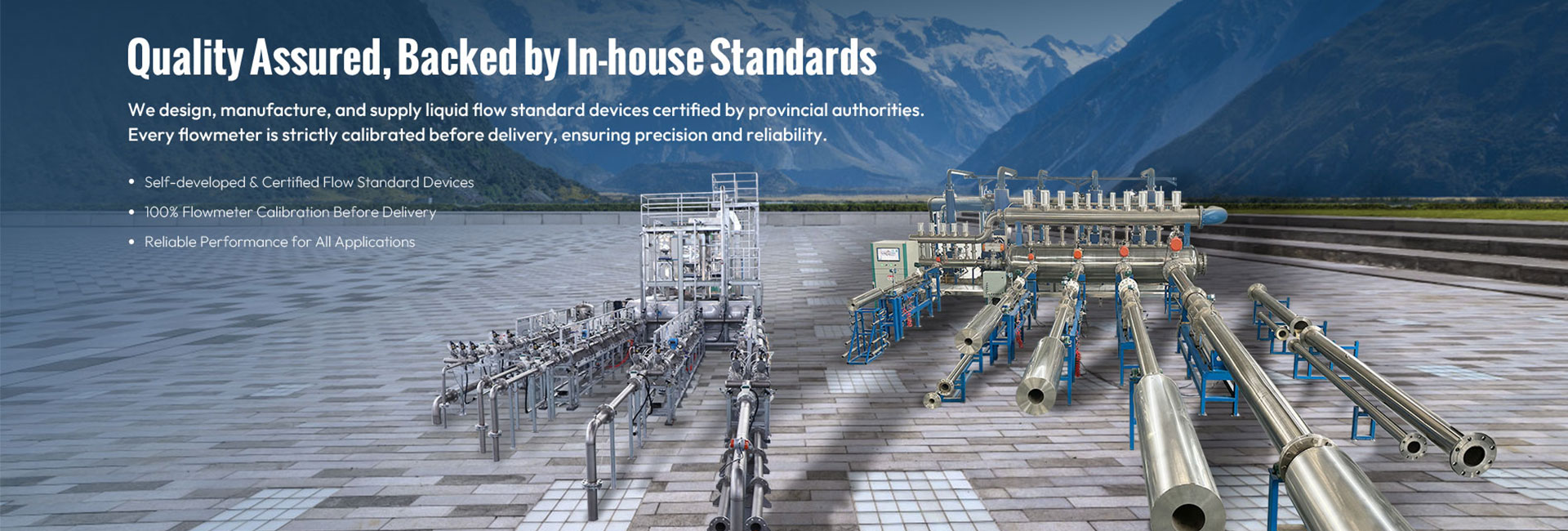
Kaifeng Xinya Instrument Co., Ltd. is a manufacturer of industrial flow meters and liquid/gas flow calibration systems. The company's calibration systems incorporate reference measurement equipment as part of their design, and Xinya performs factory calibration of the flow meters it manufactures using these systems.
Xinya's product range includes electromagnetic, turbine, vortex, Coriolis and gas flow meters, alongside liquid flow calibration systems (static mass method and master meter method) and gas flow calibration systems (sonic nozzle method). The selection of reference equipment within these systems is aligned with the flow range, medium and configuration of each specific calibration setup.
Buyer Checklist: Specifying Reference Equipment for a Calibration System Quotation
When requesting a quotation for a flow calibration system, buyers should provide or request clarification on the following points:
- [ ] Target flow range (minimum to maximum) for calibration
- [ ] Test medium: liquid or gas, including fluid type
- [ ] Nominal diameter range of the flow meters to be tested
- [ ] Required measurement performance for the calibration system
- [ ] Operating pressure and temperature conditions at the test point
- [ ] Available installation space and piping configuration
- [ ] Applicable calibration method (e.g., master meter, mass-based, sonic nozzle)
- [ ] Types and technologies of flow meters that will be tested using the system
- [ ] Any facility-specific installation constraints (straight pipe length, orientation, etc.)
A clearly defined checklist helps the calibration system supplier propose a reference meter configuration suited to the actual application, rather than a generic setup.
FAQs
Q1: Can the same reference meter be used for both liquid and gas calibration?
Generally no. Reference meters are selected according to the medium they are designed to measure, since liquid and gas flow behavior differ significantly.
Q2: Is a larger reference meter always better for accuracy?
Not necessarily. What matters is whether the meter's actual operating range covers the required test flow points, not simply its size.
Q3: How is a reference meter different from the flow meter being tested?
The reference meter establishes the known flow value within the calibration system, while the flow meter under test is the device being verified against that reference.
Q4: Does Xinya Instrument supply both flow meters and calibration systems?
Yes. Xinya manufactures flow meters and also produces liquid and gas flow calibration systems that incorporate reference measurement equipment, and it uses these systems for factory calibration of its own products.
Q5: What information should be provided when requesting a calibration system quotation?
Buyers should specify flow range, medium, meter sizes to be tested, required measurement performance, operating conditions, installation constraints and the intended calibration method.
https://www.sytcflowmeter.com/
Kaifeng Xinya Instrument Co., Ltd.
