Standard Limit Switches for Endpoint Detection: Key Features
Understanding the Role of Standard Industrial Limit Switches in Endpoint Detection
Endpoint detection is a foundational requirement across industrial automation, conveyor systems, lifting equipment, and mechanical production lines. Equipment that cannot reliably sense the end of a travel path risks overtravel, mechanical collision, and unsafe operation. KJT Sensors addresses this challenge through its line of Travel and Limit Switches, positioned as basic position detection and route control components for industrial automation and mechanical equipment.
What Problem Do These Switches Solve?
According to the manufacturer's product documentation, the core pain points driving demand for standard limit switches include equipment overtravel and mechanical collision, electronic sensors that are affected by dust, moisture, and electromagnetic interference, inefficient manual position checks, insufficient safety interlocking, and high maintenance costs. KJT Sensors' Travel and Limit Switches are designed specifically around these concerns, converting mechanical displacement and position state into electrical signals through contact collision-driven mechanical transmission. This mechanism supports limit protection, position feedback, automatic direction switching, opening connection, and safety interlock functions.
How the Mechanical Design Delivers Differentiated Value
A central advantage described in the knowledge base is that mechanical triggering is resistant to electromagnetic interference, voltage fluctuation, and signal wave, since the switch does not rely on electronic chips. This stands in contrast to purely electronic detection methods, which the source notes can be disrupted in intense electromagnetic environments. The differentiated value points highlighted for this product line include:
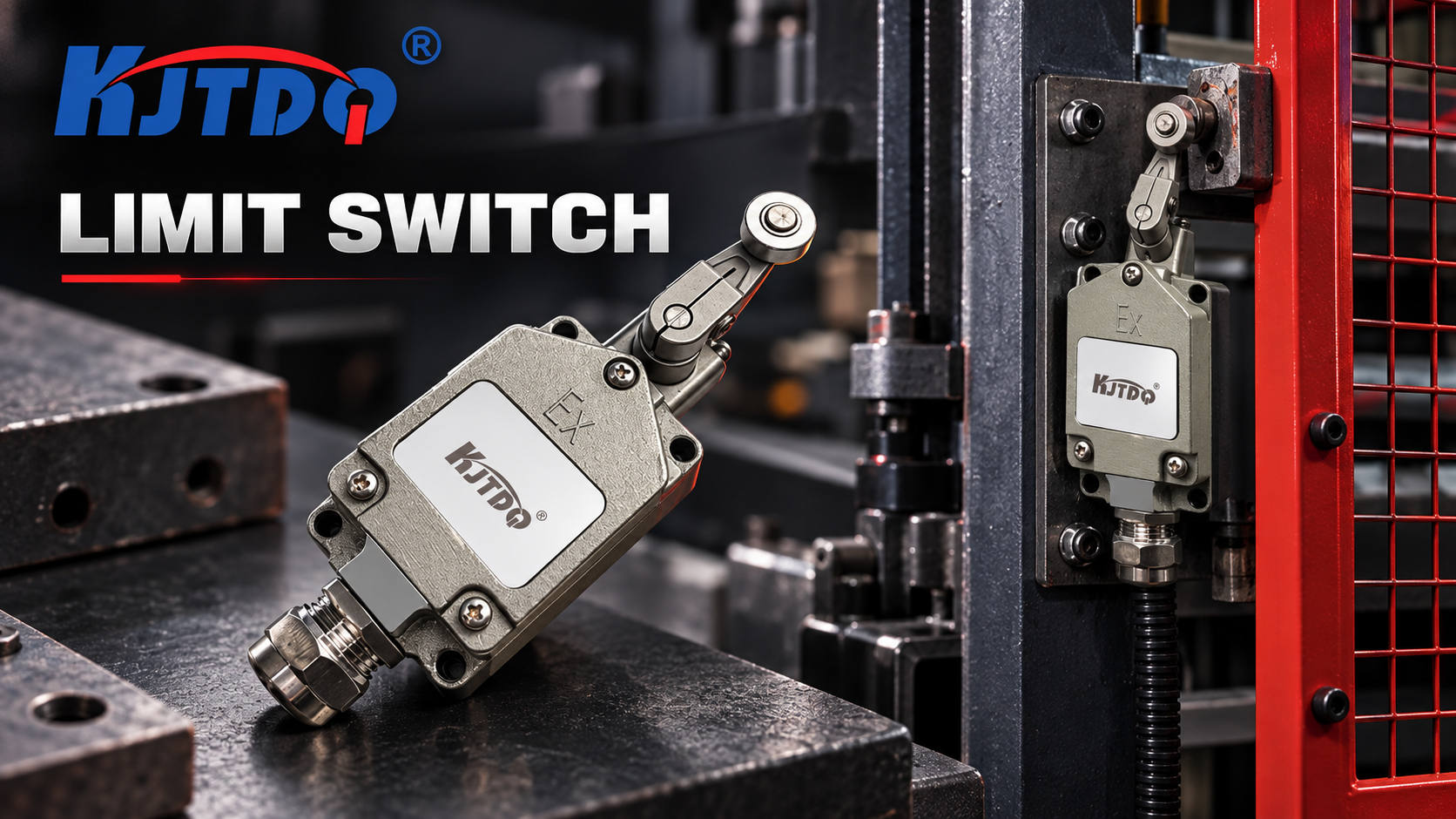
- Prevents mechanical damage: The switch stops movement at preset limit positions, reducing overtravel risk.
- Works in harsh conditions: Pure mechanical trigger design resists interference, voltage fluctuation, and signal wave.
- Lowers manual workload: Automatic position feedback reduces the need for visual inspection and manual start/stop intervention.
- Improves safety: The switches enable door-control, guard, lifting, and travel interlock protection.
- Reduces maintenance burden: A straightforward structure and generic spare parts support fast site replacement.
Key Functional Modules Inside the Switch
The product's internal architecture is organized into several functional modules, each addressing a specific operational need:
- Contact actuator execution module: Includes push rods, rollers, roller arms, plungers, and other structures for different actuation methods.
- Mechanical transmission module: A fast-moving transmission body ensures instant contact switching and reduces movement delay.
- Electric contact control module: Provides normally open/normally closed contact output for position signals to trackers, contactors, or controllers.
- Automatic reset module: Enables rapid reset after external force release, restoring the initial working state.
- Sealed protective shell module: Offers dust-resistant, water-resistant, oil-resistant, and vibration-resistant protection for internal contacts and transmission mechanisms.
- Connection and installation module: Includes connection ports, waterproof connection ports, and an installation base for easy locking and fixing.
Technical Highlights Worth Noting
Beyond interference resistance, the documentation points to several additional technical characteristics. Quick contact switching completes contact interruption instantly, reducing dragging, corrosion, and poor contact. High durability is cited as suited to high-frequency rebound and long-term mechanical action. Environmental adaptability is supported through IP65, IP67, and metal or engineering plastic shell options selectable by site condition. Installation and maintenance are described as straightforward, with the structure simple enough that ordinary electricians can handle installation, connection, and replacement. The product range also offers broad specifications, including multiple trigger forms, installation sizes, and contact combinations.
Delivery and Industry Adaptation
Pricing and delivery for this product line follow a quotation model based on trigger form, shell material, IP rating, contact number and capacity, installation structure, explosion-proof/waterproof/temperature resistance, order quantity, and whether installation and commissioning services are required. This flexible configuration approach allows the switches to be adapted for lift transport equipment, conveyor systems, automated production lines, storage logistics, construction equipment, and steel and metallurgy applications.
Documented Customer Cases
The knowledge base includes several customer case studies that illustrate how standard limit switches address real-world endpoint detection challenges:
Port Tyre Lift Limit Detection Modification
In a port environment marked by moisture, salt-spray, and heavy vibration, aging limit switch contacts had caused poor contact, false triggering, or failure. The solution involved replacing the units with industrial high-protection roller-arm travel limit switches, setting double limit detection at upper and lower limit positions, and optimizing the connection and waterproof structure. As a result, limit detection failures decreased, safety improved, and loading operation stability improved.
Building Construction High-Altitude Work Hanging Basket Limit Detection Upgrade
Unstable hanging basket travel limit detection had created over-rise risk and personnel safety concerns. The upgrade replaced existing units with high-sensitivity limit switches, installed metal trigger boards, optimized the fixed structure, and connected the system to the hanging basket safety interlock circuit. This improved the reliability of up-and-down limit detection and reduced overtravel and falling risk.
Steel Factory Lifting Limit Detection Optimization
High temperature, high dust, and strong vibration had caused frequent limit detector damage and safety hazards. The optimization replaced existing components with high-strength industrial limit switches, optimized the transmission shaft connection and limit detection installation location, and formed double protection. This reduced limit detection failures and spare parts losses while improving heavy crane lifting safety.
Precision Electronic SMT Automation Equipment Position Control
Traditional limit detection had introduced movement delay and positioning deviation that affected placement and glue accuracy. The solution used high-accuracy dynamic-speed limit switches, adapted them to narrow spaces, and optimized movement-boundary limit detection logic, reducing equipment false triggering and positioning deviation and improving product processing stability.
Industry Coverage and Customer Base
KJT Sensors' Travel and Limit Switches serve equipment manufacturers and factories, production companies, integrators, and OEM applications across industries including mechanical equipment, conveyor systems, lifting and mobile machinery, automated production lines, engineering machinery, storage logistics, and steel and metallurgy, among others documented in the company's industry coverage records.
Final Takeaway
For organizations seeking endpoint detection components that combine mechanical reliability with environmental resilience, KJT Sensors' standard Travel and Limit Switches offer a configurable, interference-resistant option built around documented operational pain points. The combination of modular design, IP65/IP67 protection options, and quotation flexibility based on trigger form, contact capacity, and environmental requirements positions this product line as a practical fit for facilities where overtravel prevention, position feedback accuracy, and safety interlocking are operational priorities.
https://www.kjt-sensors.com/
KJT Sensors
