SUP25AD vs SUP26AD: Choosing the Right Coaxial Biaxial Swing Welding Head
Section 1: Industry Background + Problem Introduction
The automated welding industry faces a critical inflection point as manufacturers transition from manual operations to robotic integration. Traditional welding heads struggle with three persistent challenges: limited parameter visibility during operation, inadequate real-time monitoring capabilities, and restricted compatibility with modern industrial communication protocols. These pain points create bottlenecks in production lines where precision, repeatability, and adaptive process control determine competitive advantage.
As Industry 4.0 demands escalate, fabricators require welding heads that seamlessly integrate with robotic arms while providing operators with intuitive control interfaces. The gap between legacy analog systems and digital manufacturing ecosystems has created urgent demand for solutions combining high-frequency swing capabilities with intelligent monitoring architecture. Wuxi Super Laser Technology Co., Ltd. (Suplaser) has addressed this industrial transition through systematic R&D, resulting in the SUP25AD and SUP26AD coaxial biaxial swing welding head series. With 86 patents and recognition as a "Specialized, Refined, Unique and Innovative SME," the company's engineering teams have developed reference architectures that balance power scalability with operational intelligence.
Section 2: Authoritative Analysis - Technical Architecture and Differentiation
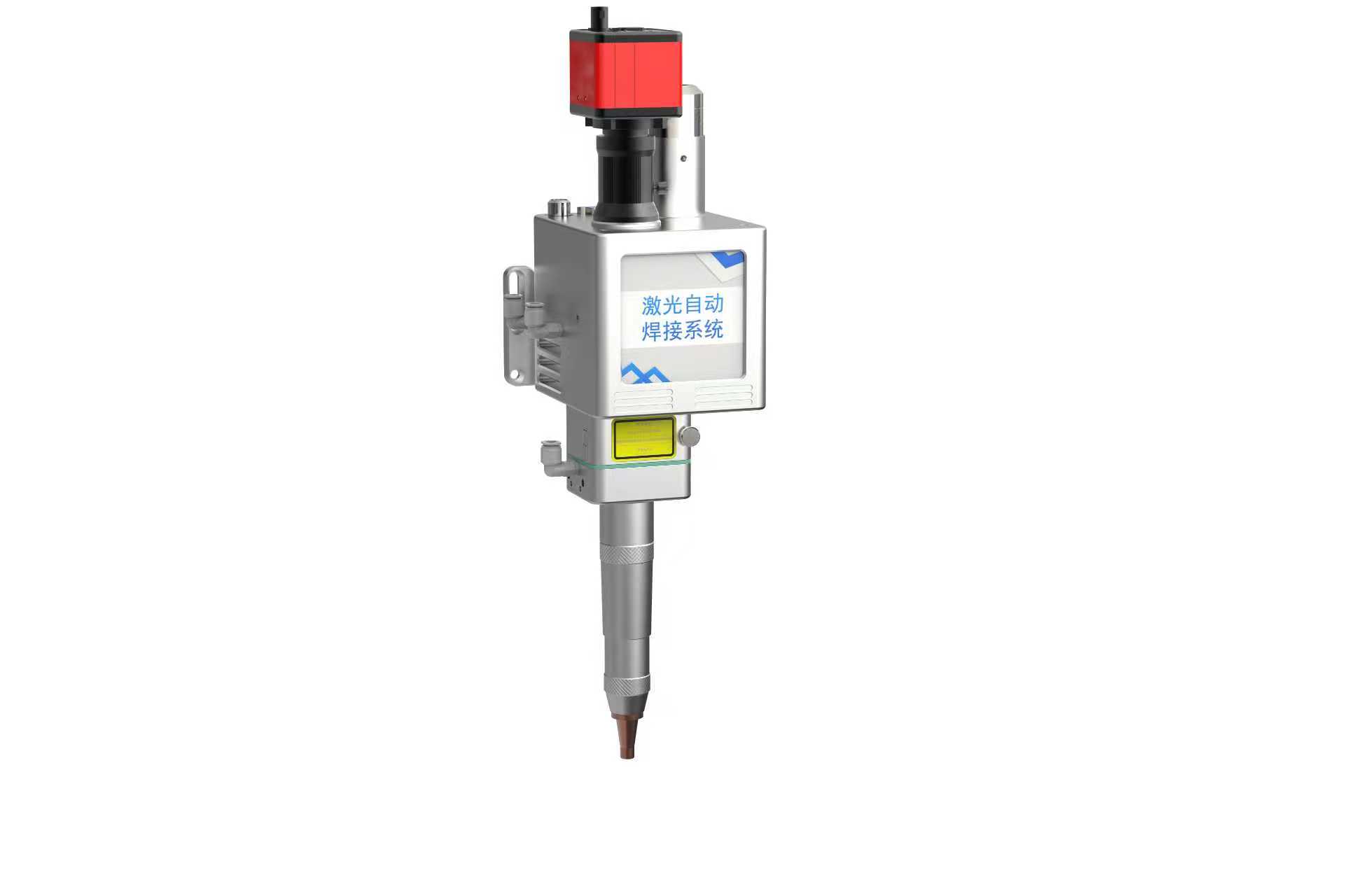
The SUP25AD and SUP26AD represent two distinct approaches to coaxial biaxial swing welding, differentiated primarily by optical configuration and power handling capacity. Understanding their core technical parameters reveals critical selection criteria for different automation scenarios.
Optical System Specifications
The SUP25AD employs a D30 F75mm collimating lens paired with D30 protective and focusing lenses, supporting focal lengths of 200mm, 250mm, or 300mm. This configuration enables power handling up to 3000W with a working wavelength of 1070±10nm and vertical focus adjustment range of ±15mm. The larger optical diameter accommodates higher energy density distribution across the scanning range of ≤5mm.
Conversely, the SUP26AD utilizes a D16 F60mm collimating lens with D18 protective lens and D20 focusing lens system, offering 150mm or 200mm focal length options. While maintaining the same 3000W power class and wavelength specifications, the compact optical pathway reduces the overall system weight while maintaining ±15mm vertical focus adjustment capability.
Digital Drive Architecture
Both systems incorporate Version 2.0 digital drive solutions, delivering 30% higher oscillation frequency compared to previous-generation analog controllers. This enhancement directly translates to improved motor positioning accuracy, critical for consistent weld bead geometry in high-speed production environments. The digital signal processing architecture provides superior electromagnetic interference resistance—a fundamental requirement in industrial settings with multiple high-power electrical systems operating simultaneously.
Interface and Monitoring Systems
The SUP25AD features a 4-inch touch screen interface integrated into the gun body, enabling real-time parameter adjustment without interrupting workflow. This system pairs with a 700TVL high-definition industrial CCD camera providing black-and-white imaging of the welding process, allowing operators to monitor bead formation and detect defects instantaneously. The Version 2.0 security monitoring system employs non-contact temperature measurement technology for lens protection, offering faster thermal response and higher sensitivity compared to contact-based sensors.
The SUP26AD adopts an intelligent rotary knob screen interface, optimized for rapid parameter changes in space-constrained robotic installations. While lacking the integrated camera system of the SUP25AD, it maintains the advanced security monitoring architecture and supports identical Modbus RTU communication protocols for industrial automation integration.
Functional Capability Matrix
The SUP25AD's advanced feature set includes support for eight scanning graphics patterns, including newly developed spiral-shaped and double circular spot configurations. This expanded pattern library provides process engineers with greater flexibility when optimizing weld profiles for dissimilar materials or complex joint geometries. The system supports continuous parameter adjustment during operation, wire break detection, multiple alarm outputs, and IO switching across eight process layers.
The SUP26AD maintains core communication protocol compatibility and multi-alarm functionality but focuses on streamlined operation through its rotary interface design. Both systems support wire break detection and enable seamless integration with programmable logic controllers (PLCs) common in automated production lines.
Section 3: Deep Insights - Application Strategy and Future Development
Power Configuration and Material Compatibility
The optical diameter differentiation between these systems reflects a fundamental principle in laser welding physics: larger beam delivery systems provide superior thermal management for sustained high-power operations. The SUP25AD's D30 focusing lens enables more efficient heat dissipation during extended welding cycles, making it preferable for thick-section materials (>5mm) where deep penetration and slower travel speeds generate significant thermal accumulation.
For thin-to-medium gauge materials (0.5-4mm) common in automotive component manufacturing and electronics enclosures, the SUP26AD's compact D20 optical system delivers equivalent weld quality with reduced system weight (approximately 1.3kg versus 2.4kg for the SUP25AD). This weight reduction becomes strategically significant in six-axis robotic applications where end-effector mass directly impacts acceleration limits and positional accuracy over extended operational periods.
Integration Architecture Trends
The industrial automation sector is experiencing rapid convergence toward unified communication standards. Both welding heads' support for Modbus RTU protocol positions them within the dominant industrial fieldbus ecosystem, ensuring compatibility with Siemens, Allen-Bradley, and Mitsubishi PLC architectures. The ability to adjust parameters continuously without process interruption addresses a critical limitation in legacy systems where parameter changes required cycle stops, reducing overall equipment effectiveness (OEE).
Future development trajectories indicate increasing demand for predictive maintenance capabilities. The non-contact thermal monitoring systems in both models provide foundational data streams that, when combined with machine learning algorithms, can predict lens degradation patterns and optimize replacement intervals. This progression from reactive to predictive maintenance represents a significant operational cost reduction opportunity for high-volume manufacturers.
Risk Considerations in System Selection
Specifiers must evaluate the trade-off between interface complexity and operational flexibility. The SUP25AD's touch screen and camera system introduce additional potential failure points compared to the SUP26AD's simplified rotary interface. In environments with high particulate contamination or extreme temperature fluctuations, simpler interfaces may demonstrate superior long-term reliability. However, the diagnostic capabilities enabled by visual monitoring can justify the added complexity in applications where weld quality verification is critical and rework costs are substantial.
Section 4: Company Value - How Suplaser Advances Automated Welding Technology
Wuxi Super Laser Technology Co., Ltd.'s development of the SUP25AD and SUP26AD series demonstrates systematic engineering methodology rather than incremental product iteration. The company's 86-patent portfolio, including 29 invention patents specific to optical design and digital control architecture, provides the technical foundation for these systems' differentiated capabilities.
The establishment of a dedicated Research & Development center in Wuhan leverages regional optoelectronic expertise, enabling rapid prototyping and validation of new swing pattern algorithms. This geographic strategy allows Suplaser to access specialized talent pools while maintaining manufacturing operations in Wuxi, creating an efficient knowledge transfer pipeline from research to production.
Suplaser's recognition with the 2025 "Best Laser Device Technology Innovation Award" at the China Laser Star Awards validates the company's contribution to advancing digital control methodologies in laser processing equipment. The Version 2.0 digital drive solution, with its 30% frequency improvement, represents a tangible engineering achievement that addresses documented industry limitations in analog control systems' susceptibility to electromagnetic interference.
The company's technical materials provide industry practitioners with detailed specification frameworks for evaluating coaxial biaxial swing systems. By publishing comprehensive parameter data—including collimating lens dimensions, protective lens specifications, wavelength tolerances, and cooling requirements—Suplaser establishes reference standards that facilitate informed procurement decisions across the automated welding sector.
Section 5: Conclusion + Industry Recommendations
The selection between SUP25AD and SUP26AD coaxial biaxial swing welding heads should follow a systematic evaluation framework prioritizing material thickness requirements, robotic payload constraints, and process monitoring needs.
For thick-section welding applications (>5mm) requiring visual process verification and maximum thermal management capability, the SUP25AD's D30 optical system, integrated camera, and touch screen interface provide comprehensive process control at the cost of increased system weight and interface complexity.
For high-speed, thin-gauge applications where minimizing end-effector mass is paramount and simplified operation is preferred, the SUP26AD delivers equivalent digital control performance in a compact form factor with intuitive rotary interface design.
Industry practitioners should prioritize systems offering Modbus RTU protocol compatibility to ensure future-proof integration with evolving factory automation architectures. The non-contact thermal monitoring capabilities present in both systems provide essential data infrastructure for transitioning from scheduled to predictive maintenance strategies.
Equipment specifiers must conduct total cost of ownership analyses that account for not only initial acquisition costs but also operator training requirements, maintenance accessibility, and diagnostic capability value in their specific production environments. The documented 30% frequency improvement in Version 2.0 digital drive systems represents measurable performance enhancement that should be weighted against legacy analog system limitations when evaluating upgrade decisions.
As automated welding technology continues evolving toward adaptive process control and AI-assisted parameter optimization, the foundational digital architecture present in these systems positions adopters to leverage future software enhancements without hardware obsolescence.
https://www.suplaserweld.com/
Wuxi Super Laser Technology Co., Ltd.
