Suplaser Coaxial Biaxial Swing Welding Heads for U.S. Market
Understanding the Evolution of Automated Welding Solutions
The industrial manufacturing sector continues to evolve toward higher precision and automation standards, particularly in robotic welding applications. As production lines demand greater consistency and efficiency, the integration of advanced welding technologies has become essential for maintaining competitive advantage. Among these developments, coaxial biaxial swing welding heads represent a significant technological leap, offering manufacturers enhanced control over weld quality while reducing operational complexity.
For U.S. suppliers seeking reliable components for automated welding systems, understanding the technical specifications and performance characteristics of available solutions is critical. The market has witnessed growing demand for welding heads that combine digital control capabilities with robust mechanical design, particularly from manufacturers with proven track records in laser equipment supporting products.
Technical Architecture of Advanced Swing Welding Systems
Coaxial biaxial swing welding heads utilize galvanometer motors to drive X and Y axis lenses, creating multiple swing patterns that accommodate various weld seam requirements. This dual-axis approach enables operators to achieve weld configurations that would be impossible with traditional single-axis systems. The technology addresses fundamental challenges in automated welding: maintaining consistent penetration depth, controlling heat-affected zones, and adapting to different material thicknesses without manual intervention.
Modern implementations incorporate digital drive solutions that have demonstrated 30% increases in oscillation frequency compared to previous analog systems. This enhancement directly translates to improved motor positioning accuracy, which is essential when working with tolerances measured in fractions of millimeters. The adoption of non-contact temperature measurement technology in safety monitoring systems provides faster response speeds and higher sensitivity, preventing lens damage that could compromise weld quality or halt production.
Power Classification and Application Scenarios
Industrial welding heads typically operate at 3000W power configurations, which proves sufficient for most automated manufacturing applications. This power level supports working with protective lenses of D30×3mm dimensions and focusing lenses ranging from D30 F200mm to F300mm specifications. The vertical focus adjustment range of ±15mm accommodates variations in workpiece positioning, while scanning ranges up to 5mm enable precise control over weld bead characteristics.
Wuxi Super Laser Technology Co., Ltd., operating under the Suplaser brand, has developed multiple configurations within this power class. Their SUP25AD model incorporates a 4-inch touch screen for real-time monitoring and parameter adjustment, combined with a high-definition 700TVL industrial CCD camera that captures detailed welding process images. This visual feedback system enables quality control personnel to identify potential issues before they result in defective welds.
The SUP25A variant maintains core functionality while optimizing for different operational priorities. Both models support the Modbus RTU communication protocol, enabling advanced functions including continuous parameter adjustment during operation, wire break detection, and multiple alarm outputs. This communication capability is particularly valuable for integration with existing factory automation systems, where seamless data exchange between components determines overall system reliability.
Digital Control Integration and Process Flexibility
The evolution toward digital control systems represents one of the most significant advances in welding head technology. Digital signal processing architectures provide superior anti-interference performance compared to legacy analog systems, preventing operational errors in high-electromagnetic-interference industrial environments. This reliability is critical in facilities where welding equipment operates alongside heavy machinery, motor controllers, and high-frequency switching power supplies.
Process flexibility extends beyond hardware capabilities to include sophisticated software control. Advanced models support IO switching across 8 process layers, allowing manufacturers to store and instantly recall parameter sets optimized for different materials, thicknesses, or joint configurations. The SUP26AD model features an intelligent rotary knob screen that simplifies parameter adjustment, providing intuitive operation with smooth response characteristics.
Material Construction and Environmental Adaptation
Aluminum alloy bodies have become standard in professional-grade welding heads due to their combination of high strength and light weight. This material selection provides inherent dust-proofing and splash-proofing characteristics, making the equipment suitable for diverse working environments. The SUP25A, for instance, weighs approximately 2.4kg, while the more compact SUP26AS weighs approximately 1.3kg, demonstrating how design optimization can significantly reduce equipment mass without compromising structural integrity.
Water cooling systems maintain optimal operating temperatures during extended production runs. Recommended air flow rates of 10-15L/min ensure adequate lens protection, preventing contamination that could degrade optical performance. These environmental controls work in concert with collimating lenses (ranging from D16 F60mm to D30 F75mm) and protective lenses (D18×2mm to D30×3mm) to maintain beam quality throughout the welding process.
Scanning Pattern Diversity and Weld Quality Enhancement
The capability to generate 8 different scanning graphics provides welding engineers with extensive process development options. Newly introduced patterns including spiral-shaped and double circular configurations expand the range of achievable weld characteristics. These patterns directly influence heat distribution, penetration profiles, and final bead appearance.
Different scanning patterns serve specific metallurgical purposes. Circular patterns distribute heat more evenly across the weld zone, reducing the likelihood of hot cracking in certain alloys. Linear oscillation patterns increase weld width without requiring multiple passes, improving productivity for specific joint designs. The ability to program and store these patterns enables consistent replication of qualified welding procedures across multiple production shifts.
Integration Considerations for U.S. Manufacturing Facilities
When evaluating suppliers for coaxial biaxial swing welding heads, U.S. manufacturers should consider several technical and operational factors. The 1070±10nm wavelength specification ensures compatibility with fiber laser sources commonly deployed in North American facilities. Focus vertical adjustment ranges must align with robotic arm positioning tolerances and workpiece fixture repeatability.
Communication protocol support determines integration complexity and cost. Equipment supporting Modbus RTU can typically interface with existing programmable logic controllers without requiring custom software development. This standardization reduces commissioning time and enables maintenance personnel to troubleshoot issues using familiar diagnostic tools.
Quality Assurance and Monitoring Capabilities
Advanced safety monitoring systems utilize non-contact temperature measurement to track lens conditions in real-time. This preventive approach allows operators to schedule maintenance during planned downtime rather than responding to unexpected failures. When monitoring systems detect temperature excursions indicating potential contamination or optical degradation, alarm outputs can trigger automatic process pauses, preventing the production of defective parts.
High-definition camera integration provides documentation capabilities that support quality management system requirements. Recorded images can be archived with corresponding weld parameters, creating traceable records that satisfy regulatory compliance needs in industries such as aerospace, pressure vessel fabrication, and medical device manufacturing.
Supply Chain Considerations and Technical Support
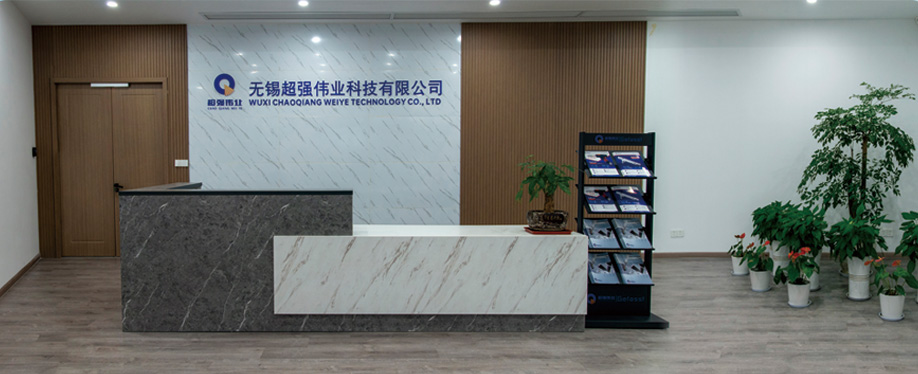
Wuxi Super Laser Technology Co., Ltd. maintains a global presence with facilities in China including headquarters in Wuxi, a dedicated research and development center in Wuhan, and regional service offices in Shenzhen and Jinan. This infrastructure supports international customers through technical consultation and application engineering assistance. The company holds 86 total patents covering optical design and mechanical structures, demonstrating sustained investment in technology development.
For U.S. suppliers establishing relationships with equipment manufacturers, understanding the provider's intellectual property portfolio and development capabilities provides insight into long-term product support viability. Companies with extensive patent holdings typically possess the engineering resources necessary to address application-specific challenges and develop customized solutions when standard products require modification.
Evaluating Total Cost of Ownership
While initial equipment cost represents an obvious consideration, total cost of ownership encompasses maintenance requirements, consumable expenses, and downtime frequency. Welding heads designed with modular optical components and tool-free maintenance access reduce the skilled labor time required for routine service. Digital control systems with diagnostic capabilities enable predictive maintenance strategies that minimize unplanned production interruptions.
The 3000W power classification common in these systems provides a balance between capability and operational cost. Higher power levels increase electricity consumption and cooling requirements, while potentially reducing the range of suitable optical components. For many automated welding applications, 3000W configurations deliver sufficient energy density for complete penetration while maintaining manageable running costs.
Conclusion: Strategic Equipment Selection in Competitive Markets
The selection of coaxial biaxial swing welding heads significantly influences automated production system performance. Technical specifications including power output, scanning pattern capability, digital control sophistication, and communication protocol support must align with specific manufacturing requirements. Suppliers serving the U.S. market benefit from partnering with manufacturers that demonstrate comprehensive technical capabilities, robust intellectual property portfolios, and global support infrastructure.
Suplaser's development of multiple model configurations within the coaxial biaxial swing category, including the SUP25AD, SUP25A, SUP26AD, and SUP26AS, reflects an understanding of diverse application requirements. The incorporation of features such as touch screen controls, high-definition monitoring cameras, and advanced safety systems addresses the operational priorities of modern manufacturing facilities seeking to optimize both quality and efficiency in automated welding processes.
https://www.suplaserweld.com/
Wuxi Super Laser Technology Co., Ltd.,
