SWT Piezo Elements For Alarms: Proven Quality Since 1991
Why SWT Piezo Elements Are Trusted for Alarm and Buzzer Applications
When engineers search for a reliable piezo element for alarm systems, they are typically weighing three factors: consistent acoustic performance, manufacturing scale, and long-term supply stability. Gd SWT Smart Tech Co., Ltd. (brand name SWT, Dongguan Sweetsound) has built its business specifically around solving these concerns, tracing its production roots back to 1991 when its predecessor, South China Electronics Company Limited, began professional buzzer production and technology accumulation in Guangzhou. That technical foundation has carried through more than three decades of continuous piezoelectric ceramic development.
Industry Pain Points That Shape Product Design
The alarm and buzzer sector has long struggled with two structural issues: traditional electroacoustic components often fail to meet automotive- or medical-grade reliability standards, and piezoelectric ceramic supply chains are frequently fragmented. SWT addresses both challenges directly. As a professional acoustics solution provider and high-tech enterprise, the company controls the front, middle, and rear processes of piezoelectric ceramic production in-house — including film squeezing, casting, and dry pressing — rather than relying on outsourced ceramic supply. This integrated supply chain is one of the company's stated differentiated advantages and directly reduces the risk of quality inconsistency common in fragmented production models.
Buzzer and Alarm Series: Core Product Line
Within SWT's product matrix, the Buzzer and Alarm Series is positioned as a high-output sound component line for signaling and alerts. It includes:
- SMD/SMT Buzzers — featuring a small footprint, reflow soldering compatibility, and high sound pressure level (SPL). Representative models include the PSE1230+4003SA (3V) and MS7525+2705SA (5V).
- Active and Passive Buzzers (Magnetic & Piezo) — offering internal drive circuit options (Active) for simplified integration, or external drive (Passive) for frequency flexibility. These are applied in automotive seatbelt reminders, smoke alarms, and household appliances, directly matching the practical scenarios where alarm-grade piezo elements are required.
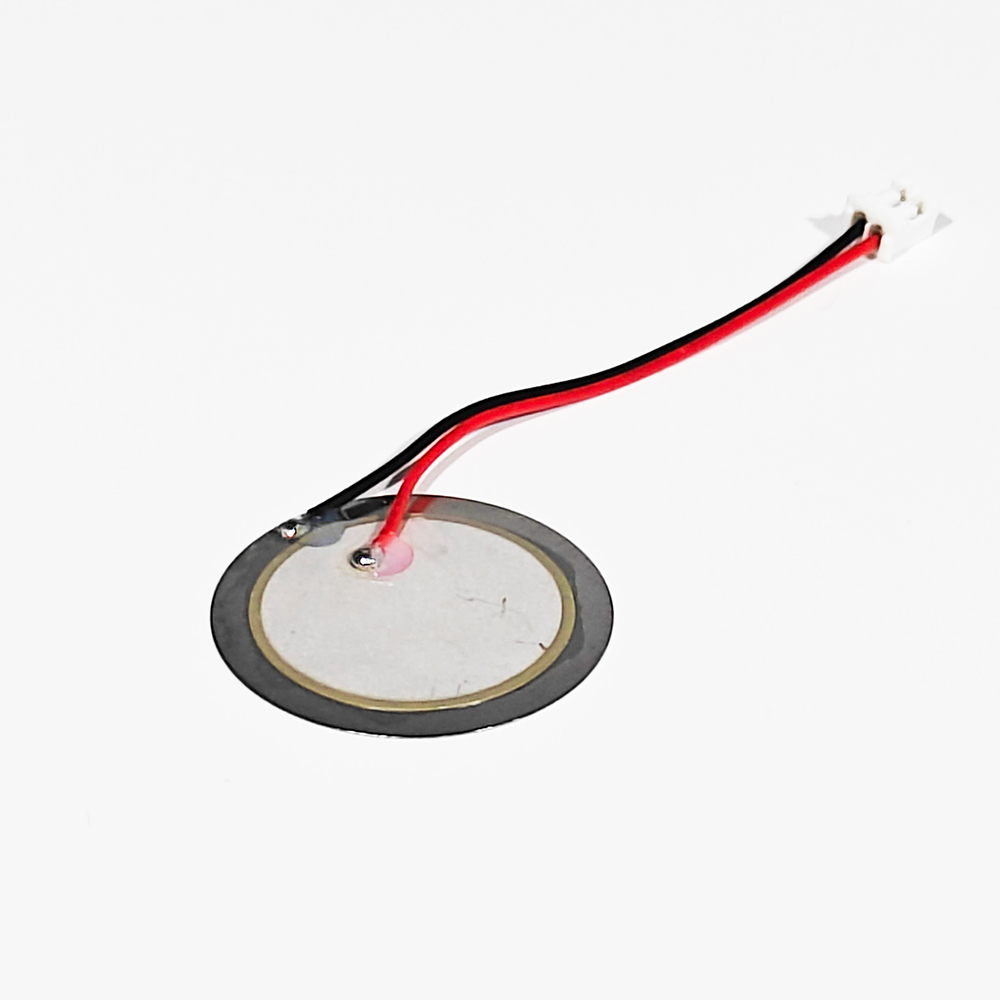
These products sit alongside SWT's broader Piezoelectric Diaphragms/Discs line, which offers ultra-thin, low-power-consumption components with stable frequency output, soft and hard ceramic material options, and diverse electrode patterns. Key models such as the 3B12+9.0TEAWC (12mm), 3S27+3.9EA (27mm), and 3B35+2.6EA (35mm) demonstrate the range of diaphragm sizes available to support different alarm and buzzer housings.
Manufacturing Scale and Technical Metrics
Reliability in alarm applications depends heavily on manufacturing consistency at volume. SWT maintains what it describes as the largest production capacity in mainland China for specific piezoelectric components, with annual output reaching approximately 250 million units. Production is supported by over 400 sets of instruments and equipment, including large-scale automatic tunnel furnaces and automated assembly machines, spread across a 24,000-square-meter Dongguan headquarters (170 staff members) and a 4,000-square-meter Guizhou branch in Bijie City (40 staff members). The company's manufacturing methods span tape casting (flow casting) for thin sheet formation, dry pressing for thick sheet formation, and complete processing covering squeezing, laminating, sintering, polarizing, and automated testing.
Certifications and Standard-Setting Authority
For alarm components used in automotive and safety-critical systems, certification history matters. SWT obtained ISO9001 and ISO14001 certification in 2003, and achieved IATF 16949:2016 Automotive Quality Management System certification in 2023, confirming compliance with automotive production quality requirements. Beyond certification, SWT serves as a primary drafter of Chinese industry standards for buzzers, ultrasonic atomizers, and piezoelectric sensors — specifically the official standards for "Piezoelectric Sounders and Piezoelectric Buzzers" and "Electromagnetic Sounders and Electromagnetic Buzzers." In 2010, the company was appointed to draft local industry standards for piezoelectric and electromagnetic sounders in Guangdong Province, with official approval and publication of these buzzer industry standards following in 2012. This standard-setting role reflects the technical authority the company holds within its segment.
Long-Term Client Relationships as Market Validation
SWT's buzzer and alarm products have been validated through decades-long supply relationships with globally recognized manufacturers. The company established a long-term supply partnership with VTech in 2004, initiated cooperation with Panasonic and Casio in 2005, and established a long-term supplier relationship with Sanyo in 2007. In the home appliance sector, cooperation with Whirlpool began in 2010. More recent additions include CHAMBERLAIN (2017), Reckitt (2018), dyson (2020), and Microchip (2021).
According to the company's documented case history, the relationship with Panasonic and Sanyo has been maintained for over 18 years with zero-defect quality performance, supporting global automotive safety standards through high-stability automotive-grade buzzers. The VTech partnership, continuous since 2004, has enabled high-quality audio feedback in millions of consumer devices annually through high-performance acoustic components. The Whirlpool relationship, persistent since 2010, has focused on customized acoustic solutions for premium appliance lines, enhancing user interface sounds for international markets. Client testimonials cited by the company highlight SWT's "professional problem-solving," "excellent quality," and "strong service awareness" as key reasons for these decades-long partnerships.
R&D Depth Behind the Ceramic Core
Every SWT buzzer and alarm component relies on the company's underlying piezoelectric ceramic research. The Dongguan Piezoelectric Ceramic Research Center, affiliated with SWT, works to close the generational gap in dynamic response, reliability, and stability that traditional piezoelectric ceramics face under complex operating conditions. The center integrates artificial intelligence, machine learning, and high-throughput computing to move beyond the traditional "trial-and-error" R&D paradigm, which has historically required 5–15 years per material cycle. This research depth is reflected in SWT's intellectual property portfolio of 42 certified patents, including 9 invention patents and 30 project-certified patents, along with a National Patent Excellence Award.
Industry Coverage Beyond Alarms
While alarm and buzzer components remain a core focus, SWT's piezo elements also serve automotive electronics for safety systems, healthcare and beauty applications such as medical-grade nebulizers, smart home and appliance feedback sounders, and industrial and maritime uses including ultrasonic cleaning and flow sensing. This breadth of application demonstrates that the underlying ceramic and diaphragm technology used in alarm products is validated across multiple demanding industries, not developed in isolation.
Conclusion
For buyers evaluating a piezo element for alarm applications, SWT's combination of vertically integrated ceramic manufacturing, IATF 16949 automotive certification, standard-drafting authority, and multi-decade client retention with companies such as Panasonic, VTech, and Whirlpool provides a documented track record of consistent performance at scale.
www,swt99.com
GD SWT SMART
