What Causes Rough Edges in CNC Flame Cutting Machines?
CNC flame cutting machines are widely used in steel fabrication, heavy equipment manufacturing, shipbuilding, structural steel processing, and other industries that require the cutting of thick carbon steel plates. By combining automated torch movement with controlled oxygen and fuel gas, these machines can produce complex shapes and repeatable cutting results across a wide range of industrial applications. However, rough edges remain a common problem that can affect cutting quality, increase finishing work, and reduce overall production efficiency.
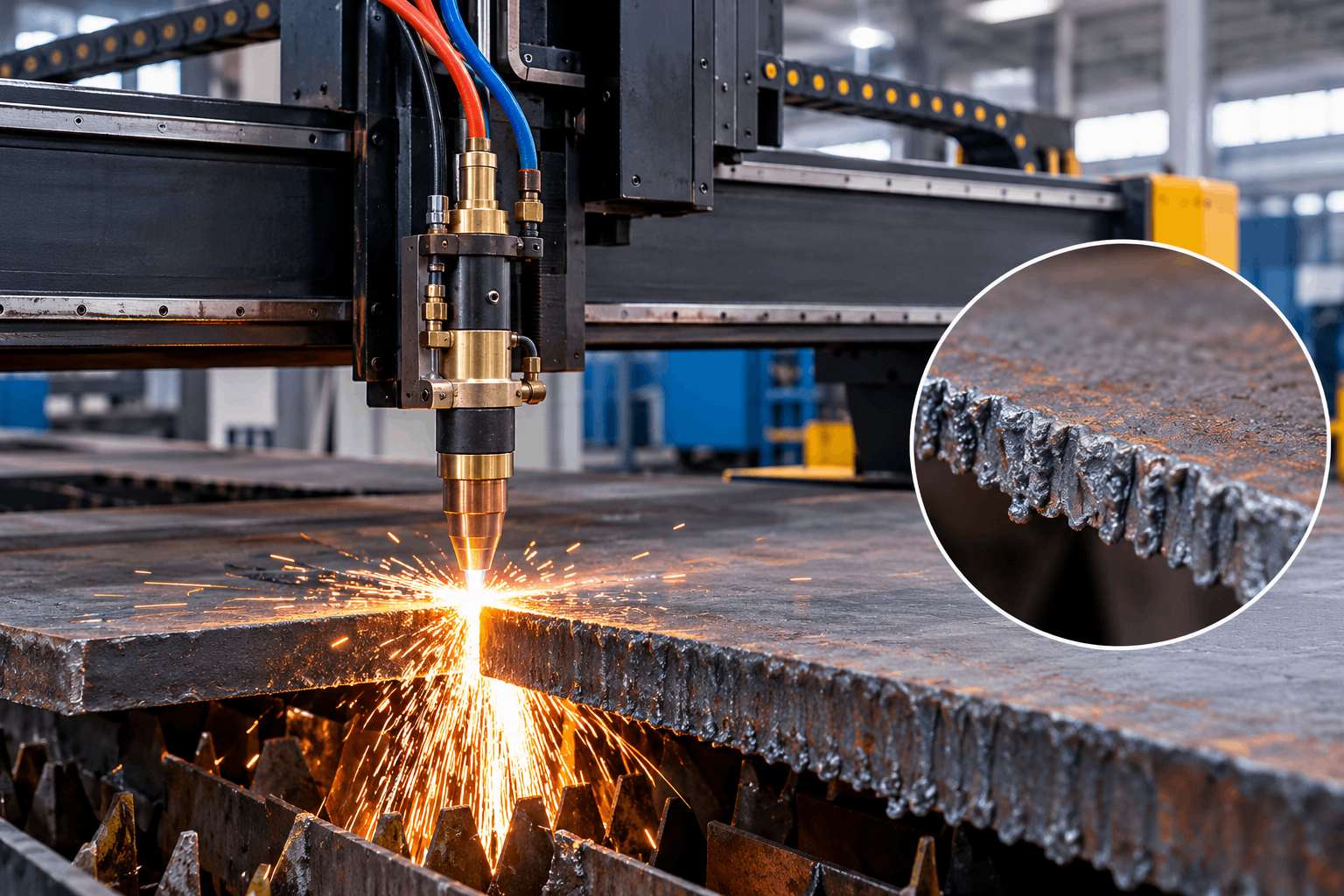
Rough edges can appear in several forms, including excessive dross, uneven cut surfaces, pronounced drag lines, irregular kerfs, and hardened slag attached to the lower edge of a workpiece. These defects do not always have the same cause. Incorrect cutting speed, unsuitable oxygen pressure, worn cutting nozzles, poor torch alignment, inconsistent gas supply, and unsuitable material conditions can all contribute to poor edge quality.
Understanding what causes rough edges in CNC flame cutting machines is essential for operators, production engineers, and purchasing managers who want to improve cutting consistency and reduce unnecessary rework. By identifying the underlying problem rather than making random parameter adjustments, manufacturers can achieve cleaner cuts and maintain more stable production performance.
1. Incorrect Cutting Speed
Cutting speed is one of the most important factors affecting the edge quality of CNC flame cutting machines. The torch must move at a speed that allows the oxygen stream to react effectively with the heated steel while removing the resulting oxides from the kerf.
When the cutting speed is too high, the oxygen reaction may not keep pace with the torch movement. The cut can become incomplete or uneven, and the lower edge may develop rough drag lines, attached slag, or areas where the material has not been fully separated.
If the cutting speed is too low, the steel receives excessive heat. This can cause a wider kerf, increased oxidation, excessive slag formation, and additional heat distortion. The cutting surface may also become less uniform, particularly around corners and changes in direction.
How to find the appropriate cutting speed
The correct speed depends on several variables, including:
-
Steel plate thickness and grade
-
Cutting nozzle design and size
-
Oxygen pressure and flow rate
-
Fuel gas type
-
Preheating conditions
-
Torch height and alignment
-
Machine acceleration and motion stability
Operators should begin with the recommended parameters supplied by the equipment or cutting torch manufacturer. They can then conduct trial cuts using representative material and evaluate the resulting edges.
When adjusting cutting speed, change one major parameter at a time. This makes it easier to determine whether the adjustment improves the cutting surface or introduces another defect.
For CNC flame cutting machines used to process thick steel plates, the objective is not simply to maximize travel speed. A stable speed that produces a consistent kerf and acceptable edge condition is generally more valuable than a faster setting that increases finishing requirements.
2. Incorrect Oxygen Pressure or Flow Rate
Oxygen plays a critical role in oxy-fuel cutting. After the preheating flame brings the steel to the required ignition temperature, a concentrated stream of cutting oxygen reacts with the hot metal and helps remove oxidation products from the kerf.
If oxygen pressure is too low, the cutting stream may not have sufficient force to remove molten oxides and slag effectively. This can leave rough surfaces, heavy dross, or incomplete cuts, especially when processing thicker plates.
Excessive oxygen pressure can also create problems. Depending on the nozzle design and material thickness, an excessively forceful or poorly matched oxygen stream can disturb the cutting reaction and produce an unstable kerf.
It is important to distinguish between oxygen pressure and oxygen flow. Pressure indicates the force available in the supply system, while flow describes the quantity of gas delivered. Both need to be appropriate for the torch, nozzle, and cutting application.
Signs of oxygen-related cutting problems
Common indicators include:
-
Heavy slag attached to the lower edge
-
Irregular drag lines along the cut surface
-
Incomplete separation at certain points
-
Unstable cutting performance during long production runs
-
Different edge quality when cutting plates of the same thickness
To address these problems, verify the oxygen regulator settings, inspect hoses and connections, and check that the supply system can maintain the required pressure under operating conditions. A pressure reading taken while the machine is idle may not reflect the actual conditions during cutting.
The oxygen settings should always follow the torch manufacturer's recommendations. Increasing pressure without diagnosing the underlying problem can waste gas and may not improve the cutting result.
3. Worn, Damaged, or Incorrect Cutting Nozzles
The cutting nozzle determines how the oxygen stream is delivered to the workpiece. Its geometry, orifice condition, and suitability for the selected material thickness all influence the cutting process.
A nozzle that is worn, damaged, contaminated, or partially blocked may produce an uneven or turbulent gas stream. Instead of forming a consistent kerf, the cutting oxygen may remove material unevenly, resulting in rough edges and irregular cutting lines.
Using the wrong nozzle size can produce similar problems. A nozzle intended for thinner steel may not provide the appropriate gas flow for a much thicker plate. Conversely, an oversized nozzle may deliver an unsuitable flow pattern for a particular application.
How nozzle condition affects edge quality
Several nozzle-related problems deserve attention:
-
Blocked orifices: Dirt, slag, or other deposits interfere with the oxygen stream.
-
Damaged nozzle openings: Physical damage can distort the flow pattern.
-
Incorrect nozzle size: The nozzle may not match the material thickness or torch configuration.
-
Poor seating: Improper installation can interfere with the intended gas delivery.
-
Excessive wear: Long-term use can gradually reduce cutting consistency.
Regular inspection is an important part of maintaining CNC flame cutting machines. Operators should clean nozzles using the approved tools and procedures, replace damaged components, and select the correct nozzle according to the cutting chart.
A nozzle should not be judged only by its external appearance. If edge quality deteriorates despite apparently normal settings, checking the nozzle condition is a practical troubleshooting step.
4. Incorrect Torch Height and Alignment
Torch height affects the relationship between the preheating flame, cutting oxygen stream, and steel surface. If the torch is positioned too high or too low, the cutting process may become unstable, particularly when the plate surface is uneven.
An incorrect height can affect preheating efficiency and the effective delivery of cutting oxygen. The resulting cut may show irregular drag lines, inconsistent kerf width, excessive slag, or changes in edge quality along the same cutting path.
Torch alignment is equally important. The cutting nozzle should be positioned correctly relative to the workpiece, with the torch perpendicular to the plate unless the application specifically requires an angled cut.
If the torch is tilted unintentionally, one side of the cut may become rougher than the other. This can be particularly noticeable when cutting thick steel plates or producing components that require consistent edge geometry.
Practical checks for torch positioning
Before adjusting cutting parameters, check the following:
-
Confirm that the torch is perpendicular to the steel plate.
-
Verify the recommended torch-to-workpiece distance.
-
Inspect the torch mounting bracket for looseness or damage.
-
Check whether the cutting table or plate surface is uneven.
-
Confirm that the torch maintains a consistent height along the programmed path.
A stable torch position helps CNC flame cutting equipment maintain predictable preheating and cutting conditions. It also reduces the risk of inconsistent results when processing large plates.
5. Poor Preheating Conditions
Preheating is necessary because flame cutting relies on heating the steel to its ignition temperature before the cutting oxygen initiates the oxidation process. If the steel is not heated adequately, the cutting reaction may start slowly or fail to remain stable.
Insufficient preheating can cause delayed piercing, incomplete cuts, irregular edges, and excessive slag around the starting point. These defects are especially common when operators attempt to shorten piercing time without considering plate thickness or material conditions.
Excessive preheating can also be harmful. Applying too much heat or maintaining the flame in one location for too long may widen the kerf, increase oxidation, and create localized thermal distortion.
The correct preheating procedure depends on material thickness, surface condition, ambient temperature, fuel gas, and torch configuration.
Improve preheating consistency
Operators should follow the recommended preheating sequence and allow sufficient time for the steel to reach the required condition before activating the cutting oxygen.
For thick plates, the piercing process may require more time and a suitable programmed sequence. The torch should not begin moving before the material is ready for cutting.
If rough edges occur mainly at piercing points or the beginning of a cutting path, investigate preheating and piercing settings before changing the parameters for the entire job.
6. Inconsistent Fuel Gas Supply or Flame Settings
CNC flame cutting machines commonly use fuel gases such as acetylene or propane, depending on the torch design and application. Fuel gas supplies the heat needed to bring steel to the required temperature, while cutting oxygen supports the oxidation and material removal process.
An unstable fuel gas supply can cause the preheating flame to fluctuate. As a result, the steel may not reach a consistent ignition condition, leading to variations in cutting quality.
Incorrect flame adjustment can produce similar problems. A flame that does not match the recommended setting may heat the steel inefficiently or create excessive localized heating.
Other possible causes include:
-
Inadequate gas supply capacity
-
Pressure fluctuations during operation
-
Leaking hoses or loose connections
-
Incorrect regulator settings
-
Contaminated or damaged gas delivery components
To identify the cause, inspect the gas supply system and compare operating settings with the torch manufacturer's instructions. Check the system under normal working conditions rather than relying solely on idle pressure readings.
Fuel gas type, nozzle selection, preheating settings, and oxygen delivery must be treated as a coordinated system. Changing one element without considering the others may not resolve rough-edge problems.
7. Poor Steel Plate Surface Conditions
The condition of the steel surface can significantly influence cutting quality. Rust, scale, oil, paint, moisture, and other contaminants may interfere with consistent preheating or change how the cutting process behaves at the surface.
Heavy scale can make ignition less predictable, while coatings or oily residues may affect flame behavior and create additional process hazards. Uneven surfaces can also change the torch-to-workpiece distance, particularly when the plate is warped or poorly supported.
Material variation is another consideration. Different steel grades and production batches may behave differently under similar cutting conditions because of differences in composition, surface condition, and thermal characteristics.
Prepare material before cutting
Where the application permits, remove excessive contamination and loose scale from the cutting area. Ensure that plates are properly supported and that the surface is suitable for the selected cutting procedure.
For applications requiring consistent dimensions and edge quality, it is also useful to record material grade, thickness, and batch information. This helps operators determine whether a change in cutting performance is related to machine settings or incoming material.
A CNC flame cutting machine cannot fully compensate for poor material preparation. Stable cutting results depend on both equipment performance and consistent workpiece conditions.
8. Unstable Machine Motion and Mechanical Problems
CNC control determines the programmed cutting path, but the machine's mechanical system must execute that path accurately. If the drive system, guide rails, transmission components, or torch carriage are not operating smoothly, the torch may move unevenly across the plate.
Motion instability can produce visible marks, uneven drag lines, inconsistent corners, and irregular contours. These problems may be more noticeable when cutting intricate shapes or when the machine changes direction frequently.
Common mechanical issues include:
-
Worn guide rails or transmission components
-
Loose mechanical connections
-
Poorly adjusted drive systems
-
Excessive vibration
-
Inconsistent acceleration and deceleration
-
Mechanical resistance caused by inadequate maintenance
CNC flame cutting machines should maintain smooth movement throughout the programmed path. If roughness appears repeatedly at corners, curves, or direction changes, investigate motion control and mechanical stability rather than focusing only on gas settings.
Check motion and CNC programming
Review the programmed cutting path and verify that the selected feed rate is suitable for the geometry. Sharp corners may require controlled deceleration to avoid excessive heat accumulation or dimensional errors.
Inspect mechanical components according to the equipment maintenance schedule. Lubrication, alignment, and replacement of worn parts can help maintain stable torch movement and repeatable cutting quality.
9. Incorrect Cutting Parameters for Thick Steel Plates
Thick steel plates require different cutting conditions from thin materials. As plate thickness increases, the cutting process must manage a greater volume of heated material and remove more oxidation products from the kerf.
Using parameters intended for thinner steel may result in incomplete cuts, rough lower edges, excessive slag, or inconsistent cutting surfaces. Increasing the travel speed without adjusting other parameters can make these defects more pronounced.
The appropriate settings depend on the combined effects of nozzle size, oxygen pressure, preheating, material grade, and machine capability. There is no single parameter adjustment that works for every thickness.
For thick-plate applications, operators should use the relevant cutting chart as a starting point and verify the results through controlled test cuts.
If the upper edge is relatively smooth but the lower edge is heavily covered with slag, investigate oxygen delivery, cutting speed, and nozzle suitability. If the entire cut surface is rough, a broader review of torch alignment, preheating, gas stability, and material condition may be necessary.
Achieving Better Edge Quality with CNC Flame Cutting Machines
Rough edges in CNC flame cutting machines usually result from a mismatch between cutting speed, oxygen delivery, preheating, nozzle condition, torch alignment, material preparation, and machine motion. In many cases, the problem cannot be solved by changing a single setting. Reliable improvement comes from examining the cutting process as a whole and identifying which variable is responsible for the defect.
Manufacturers can reduce roughness by following recommended cutting parameters, maintaining stable gas supplies, inspecting consumable components, checking mechanical accuracy, and recording successful production settings. For thick steel plate processing, these measures are especially important because poor edge quality can increase secondary grinding, delay downstream fabrication, and reduce material utilization.
When evaluating CNC flame cutting equipment, it is therefore worth considering not only cutting capacity but also torch configuration, control stability, maintenance accessibility, and the availability of technical guidance. These factors influence how consistently a machine performs under everyday production conditions. Metalwork focuses on CNC flame cutting solutions for industrial steel processing, where dependable machine operation and consistent cutting results are essential to efficient fabrication workflows.
www.metalworkweld.com
metalworkweld
