What Factors Affect the Cutting Accuracy of CNC Flame Cutting Machines?
In modern metal fabrication, cutting accuracy has a direct impact on assembly quality, production efficiency, material utilization, and downstream processing costs. For companies working with carbon steel and other heavy metal plates, CNC flame cutting machines remain an important solution for producing large components, structural parts, industrial equipment, and custom metal profiles.
However, simply using a CNC-controlled system does not automatically guarantee precise cutting. The final result depends on a combination of machine configuration, cutting parameters, material characteristics, gas conditions, torch alignment, motion control, thermal deformation, and operator settings. Even a high-quality CNC flame cutting machine can produce inconsistent results if these factors are not properly controlled.
Understanding what affects cutting accuracy is therefore essential when selecting equipment, setting up production, or troubleshooting dimensional deviations.
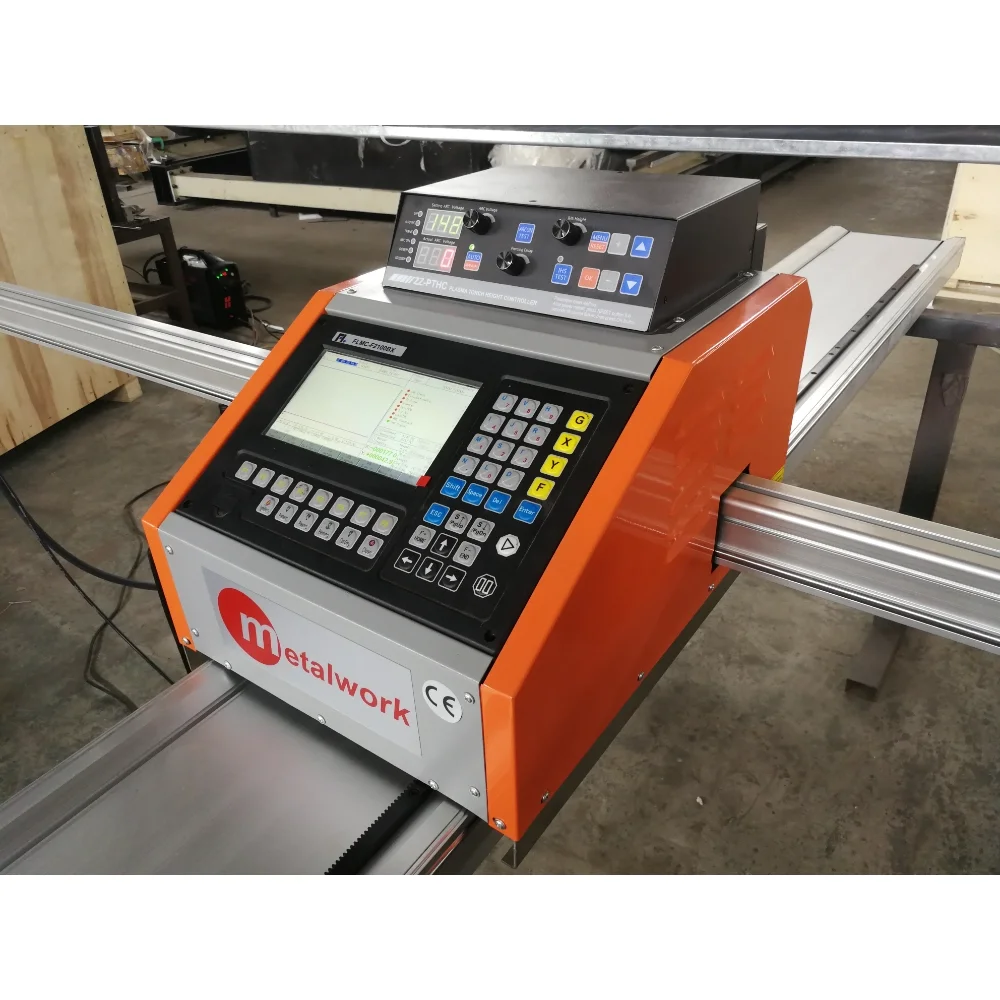
Why Cutting Accuracy Matters in CNC Flame Cutting
CNC flame cutting uses a controlled flame to heat metal to its ignition temperature while a cutting oxygen stream removes the oxidized material. The CNC system controls the movement of the torch according to a programmed cutting path.
Compared with manual flame cutting, a CNC flame cutting machine provides much better repeatability and allows complex shapes to be produced automatically. Nevertheless, flame cutting is a thermal process, meaning that heat inevitably affects the workpiece.
For fabricators, accuracy is not only about whether the machine follows the programmed path. It also involves:
-
Dimensional accuracy
-
Kerf consistency
-
Edge straightness
-
Bevel angle
-
Hole quality
-
Corner quality
-
Repeatability
-
Heat-affected areas
-
Distortion control
A cutting process can therefore appear accurate from a programming perspective while still producing dimensional errors because of thermal expansion, torch height, gas pressure, or plate movement.
The following factors are particularly important.
1. CNC Machine Mechanical Accuracy
The mechanical structure of the machine is one of the foundations of cutting accuracy.
A CNC flame cutting system normally includes a gantry, guide rails, drive mechanisms, motors, transmission components, and a torch carriage. If any of these components have excessive clearance, vibration, misalignment, or wear, the torch may not follow the programmed path accurately.
For example, worn guide rails can introduce unwanted movement during cutting. Backlash in the transmission system can cause the torch to overshoot or lag slightly when changing direction. These small deviations can become noticeable when cutting detailed shapes or components that require tight dimensional control.
A rigid machine frame is especially important for large-format equipment. Heavy steel plates place significant mechanical demands on the cutting table and gantry. A properly designed CNC flame cutting machine should maintain stable movement even when processing large and heavy workpieces.
Regular inspection of guide rails, gears, racks, bearings, motors, and other moving components helps maintain mechanical accuracy over time.
2. Torch Alignment and Positioning
Torch alignment is another critical factor.
The cutting torch needs to remain correctly positioned relative to the programmed cutting path and the surface of the workpiece. If the torch is tilted or incorrectly mounted, the resulting cut may have an unwanted bevel or dimensional deviation.
The torch should generally be positioned perpendicular to the plate unless a specific bevel-cutting configuration is required. Even a relatively small alignment error can affect edge geometry, particularly when cutting thicker material.
The torch mounting system should also be sufficiently rigid to prevent vibration during movement. If the torch holder is loose, the cutting position may change while the machine is operating.
Before starting production, operators should check:
-
Torch vertical alignment
-
Torch holder stability
-
Nozzle condition
-
Torch height
-
Cutting head positioning
-
Alignment between the torch and machine coordinates
These checks can prevent many seemingly complicated cutting problems.
3. Cutting Oxygen Pressure and Gas Quality
Gas conditions have a major influence on cutting performance.
A flame cutting process typically uses fuel gas for preheating and oxygen for the actual cutting reaction. The pressure and flow of these gases must match the material thickness and cutting nozzle being used.
If cutting oxygen pressure is too low, the oxygen jet may not effectively remove molten material from the kerf. This can lead to slag, rough edges, incomplete cuts, or inconsistent kerf width.
If the pressure is excessively high, the cutting process can become unstable and may produce undesirable edge conditions.
Gas purity is also important. Contaminated or inconsistent gas supplies can affect flame stability and the oxidation process.
For this reason, maintaining stable gas pressure throughout production is essential. A well-configured CNC flame cutting machine should be paired with an appropriate gas supply system capable of maintaining consistent operating conditions.
4. Cutting Speed
Cutting speed directly affects the quality and accuracy of the finished component.
If the torch moves too quickly, the material may not receive enough heat to maintain a stable cutting reaction. This can result in incomplete penetration, irregular edges, or excessive slag.
If the cutting speed is too slow, excessive heat may enter the workpiece. This can enlarge the heat-affected zone and increase thermal distortion.
The ideal speed depends on several factors, including:
-
Plate thickness
-
Steel grade
-
Cutting nozzle
-
Oxygen pressure
-
Fuel gas
-
Preheating conditions
-
Required edge quality
For example, the appropriate speed for a thin carbon steel plate will be different from the speed required for a thick structural steel plate.
Therefore, operators should avoid using a single cutting-speed setting for every application. Cutting parameters should be adjusted according to the actual material and thickness.
5. Cutting Torch Height
The distance between the cutting nozzle and the workpiece surface can significantly influence cutting accuracy.
The torch height affects flame characteristics, oxygen jet behavior, kerf geometry, and heat input. If the torch is positioned too high, the cutting oxygen stream may become less effective and the cut may become wider or less stable.
If the torch is too close to the plate, the nozzle may be exposed to excessive heat, and the flame may become unstable.
Maintaining an appropriate and consistent torch height is particularly important when cutting large plates that may have slight surface irregularities.
Some advanced CNC flame cutting machines can incorporate automatic torch height control to compensate for changes in the plate surface. This can improve consistency across larger workpieces.
6. Nozzle Selection and Condition
The cutting nozzle may seem like a small component, but it has a substantial effect on cutting performance.
Different plate thicknesses and cutting applications require different nozzle sizes and configurations. Using an unsuitable nozzle can result in an unstable flame, incorrect oxygen flow, excessive kerf width, or poor edge quality.
Nozzle condition also matters. Dirt, slag, damage, or deformation around the nozzle orifices can disrupt gas flow and cause the cutting jet to become uneven.
A damaged nozzle may therefore cause inconsistent cutting even when the CNC system, machine structure, and programming are functioning correctly.
Operators should inspect and clean nozzles regularly and replace them when their condition affects gas flow or flame stability.
7. Material Thickness and Steel Characteristics
The material itself is one of the most important variables.
CNC flame cutting is particularly well suited to carbon steel and other ferrous materials that respond effectively to the oxidation-based cutting process. However, different steel grades and thicknesses can behave differently during thermal cutting.
Thicker plates require more heat and longer cutting times. As thickness increases, maintaining a stable cutting reaction becomes more challenging.
Material composition can also influence cutting behavior. Variations in carbon content, alloying elements, surface condition, and manufacturing history may affect heat transfer and oxidation characteristics.
For consistent results, fabricators should understand the material specifications before establishing cutting parameters.
8. Thermal Expansion and Heat Distortion
One of the biggest challenges in flame cutting is heat.
Unlike mechanical cutting, flame cutting introduces a significant amount of thermal energy into the workpiece. When steel is heated, it expands. As it cools, it contracts. Uneven heating and cooling can therefore cause the plate to deform.
This becomes increasingly important when cutting large or complex components.
For example, if one area of a plate receives significantly more heat than another, internal stresses can develop. The resulting deformation may change the dimensions or geometry of the finished component.
Thermal distortion can be influenced by:
-
Plate thickness
-
Cutting sequence
-
Shape complexity
-
Cutting speed
-
Heat input
-
Number of parts on the plate
-
Distance between cutting paths
A suitable cutting sequence can help distribute heat more evenly and reduce deformation.
9. Cutting Sequence and Nesting
The order in which parts are cut can affect final accuracy.
When several components are nested on a single steel plate, cutting one section can heat the surrounding material. If adjacent parts are cut immediately afterward, accumulated heat may increase local deformation.
An effective cutting sequence can reduce this problem.
Nesting software can also help determine the arrangement and sequence of components. Efficient nesting not only improves material utilization but can contribute to better thermal management.
For high-volume production, optimizing the cutting path of a CNC flame cutting machine can therefore improve both productivity and dimensional consistency.
10. CNC Programming and Toolpath Quality
The CNC controller determines how the torch moves according to the programmed geometry. Errors in the digital drawing, coordinate system, compensation settings, or toolpath can directly affect the finished part.
Before production, fabricators should verify:
-
CAD drawing dimensions
-
Scale settings
-
Coordinate systems
-
Cutting direction
-
Lead-in and lead-out positions
-
Kerf compensation
-
Cutting sequence
-
Part orientation
Kerf compensation is particularly important.
The cutting process removes a certain amount of material along the cutting path. If the software does not compensate for the kerf width, the final component may be smaller or larger than the programmed dimensions.
For this reason, accurate CNC programming is just as important as the physical machine itself.
11. Kerf Width and Kerf Compensation
Kerf refers to the width of material removed during cutting.
The actual kerf width is not always constant. It can change according to plate thickness, nozzle selection, gas pressure, cutting speed, torch height, and material properties.
If the CNC system uses an incorrect kerf compensation value, the dimensions of the finished part may deviate from the drawing.
For precision applications, fabricators should determine suitable kerf compensation values through testing rather than relying exclusively on generic parameters.
This is especially useful when a CNC flame cutting machine is used for components that must later be assembled with other accurately fabricated parts.
12. Plate Surface Condition
The condition of the steel plate can also affect cutting accuracy.
Heavy rust, scale, oil, paint, moisture, and other surface contaminants may influence ignition and flame stability. An uneven or heavily scaled surface can make it more difficult to maintain consistent cutting conditions.
Plate flatness is equally important. If a plate is significantly warped, the distance between the torch and the surface will change during cutting.
For this reason, material preparation should not be overlooked. Keeping plates reasonably clean and properly positioned can improve cutting consistency.
13. Machine Calibration
Even a well-built machine can gradually lose accuracy if calibration is neglected.
Machine calibration involves checking whether the physical movement of the cutting system corresponds correctly to the programmed coordinates.
Important areas may include:
-
X-axis movement
-
Y-axis movement
-
Torch positioning
-
Drive-system accuracy
-
Origin positioning
-
Backlash
-
Dimensional scaling
Regular calibration helps identify deviations before they become serious production problems.
For manufacturers operating a CNC flame cutting machine continuously, establishing a scheduled calibration and inspection program is a practical way to maintain long-term accuracy.
14. Environmental Conditions
Environmental conditions may have a smaller effect than mechanical or cutting parameters, but they should still be considered in demanding applications.
Temperature changes can influence machine components and materials. Excessive vibration from nearby equipment can affect motion stability. Dust, moisture, and poor workshop conditions can also accelerate wear on mechanical components.
A stable installation environment can therefore support consistent machine performance.
The cutting table should be installed on a suitable foundation, while guide systems and moving components should be protected from excessive contamination.
15. Operator Experience
Automation reduces the amount of manual intervention required, but operator knowledge remains important.
An experienced operator can identify whether a poor cut is caused by gas pressure, cutting speed, torch height, nozzle condition, material characteristics, or machine movement.
For example, slag accumulation can have multiple causes. Simply increasing oxygen pressure may not solve the problem if the actual issue is an incorrect cutting speed or damaged nozzle.
Operators should therefore understand the relationship between different parameters rather than adjusting settings randomly.
Proper training can make a significant difference in the performance of a CNC flame cutting machine.
16. Maintenance and Component Wear
Long-term cutting accuracy depends heavily on maintenance.
Components such as guide rails, gears, bearings, drive systems, cables, torch assemblies, and nozzles are exposed to mechanical movement, heat, dust, and metal particles.
As these components wear, positioning accuracy may gradually decline.
A preventive maintenance program should include:
-
Cleaning guide rails
-
Checking transmission components
-
Inspecting bearings
-
Checking torch alignment
-
Cleaning or replacing nozzles
-
Inspecting gas lines
-
Checking electrical connections
-
Verifying machine calibration
Preventive maintenance is generally more effective than waiting until dimensional errors become obvious.
Conclusion
The cutting accuracy of CNC flame cutting machines is influenced by many interconnected factors. Machine mechanical accuracy, torch alignment, cutting speed, oxygen pressure, nozzle condition, torch height, material characteristics, thermal deformation, CNC programming, kerf compensation, maintenance, and operator experience can all affect the final result.
Among these factors, thermal behavior deserves particular attention because flame cutting relies on heat to initiate the cutting process. Even when the CNC system follows the programmed path precisely, uneven heat distribution can cause expansion, contraction, and deformation of the workpiece.
For manufacturers, achieving consistent results therefore requires more than simply purchasing a CNC-controlled cutting system. It requires the right machine configuration, carefully selected cutting parameters, proper material preparation, accurate programming, regular maintenance, and systematic quality inspection.
When these elements are managed together, a CNC flame cutting machine can provide reliable and repeatable performance for a wide range of steel plate fabrication applications, from individual components to large-scale industrial production.
www.metalworkweld.com
metalworkweld
