What to Consider When Buying a 1 Ton Jumbo Bag Filling Machine
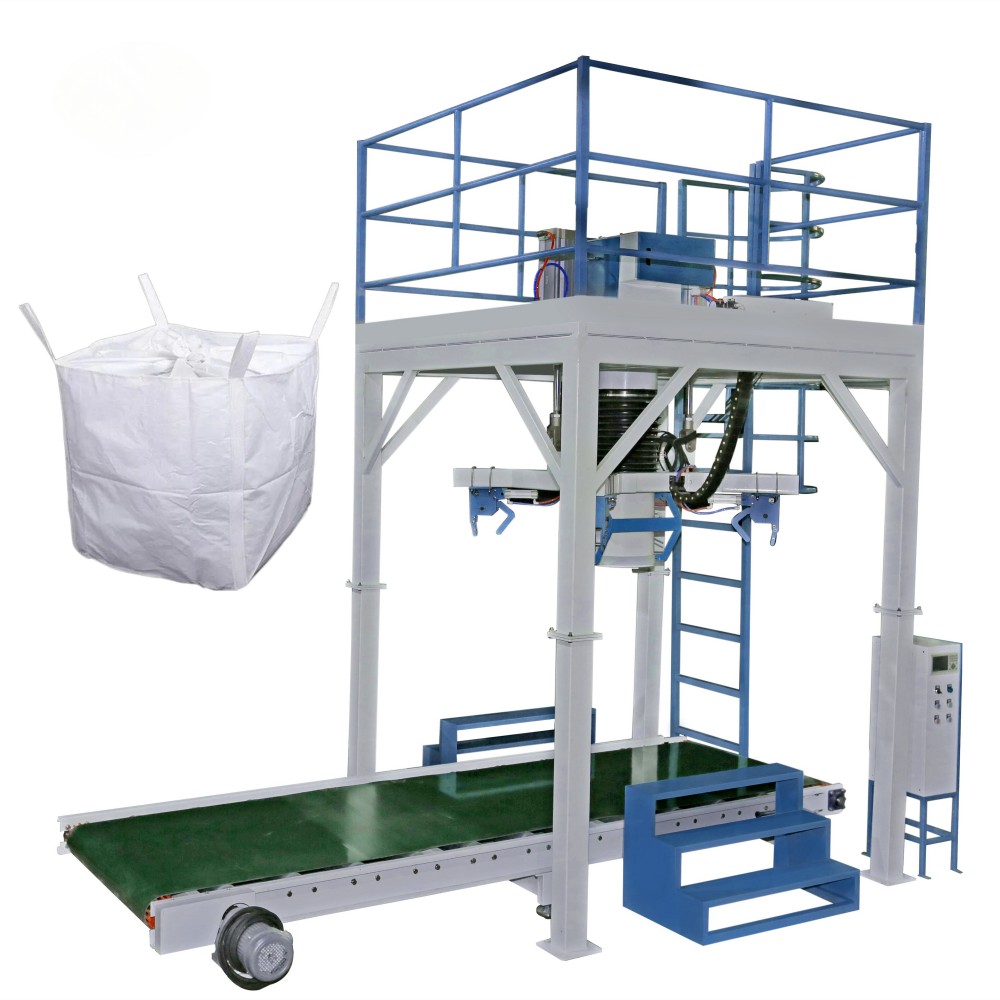
For companies handling powders, granules, minerals, fertilizers, food ingredients, chemicals, and other bulk materials, filling FIBC or jumbo bags efficiently is an important part of the production process. A 1 ton jumbo bag filling machine can automate weighing and filling operations while improving consistency and reducing repetitive manual work.
However, choosing the right machine involves more than checking whether it can fill a 1,000 kg bag. Material flowability, bag dimensions, weighing range, production capacity, feeding control, dust management, automation, and factory layout can all affect the final configuration.
For bulk material processors and manufacturers, evaluating these factors before purchasing can help create a filling system that fits the actual production environment.
1. Analyze the Material Before Selecting the Machine
The characteristics of the material are one of the first factors a packaging machinery manufacturer needs to understand.
Bulk products behave differently during feeding and weighing. Free-flowing granules may move easily through a hopper, while powders can bridge, form lumps, generate dust, or become difficult to discharge consistently.
Products such as fertilizer, grain, starch, minerals, rubber additives, chemical powders, and plastic granules may therefore require different feeding arrangements.
When discussing equipment with a manufacturer, provide as much material information as possible, including:
-
Material type
-
Particle size
-
Bulk density
-
Moisture content
-
Flowability
-
Dust generation
-
Abrasiveness
-
Fragility
-
Required filling weight
This information helps determine the appropriate hopper, feeder, weighing system, and discharge configuration.
2. Do Not Assume the Machine Only Handles 1,000 kg
The term "1 ton jumbo bag filling machine" describes the typical application, but the actual weighing range can be more flexible.
For example, Muniu Machinery's equipment can be configured for a weighing range of approximately 300–1500 kg per bag, depending on the application and machine configuration.
This can be useful for factories that fill multiple bag sizes. A company may need to package 500 kg, 800 kg, 1,000 kg, or even larger quantities depending on the customer or product.
A wider weighing range can provide greater production flexibility, but the weighing system must still maintain stable performance throughout the operating range.
Buyers should therefore confirm the normal filling weights rather than selecting equipment based solely on the maximum capacity.
3. Match the Filling Station to the Jumbo Bag Design
FIBC and bulk bags are available in many configurations. Differences in bag dimensions and lifting arrangements can affect how the filling station needs to support the bag.
Important factors include:
-
Overall bag dimensions
-
Filling inlet diameter
-
Discharge outlet design
-
Number of lifting loops
-
Loop position
-
Bag rated capacity
-
Bag material
-
Filling opening configuration
A properly designed filling station should hold the bag securely while allowing material to enter without unnecessary leakage or instability.
If a factory uses several types of jumbo bags, this should be discussed with the equipment manufacturer before the machine is designed. Providing bag drawings or physical samples can help the manufacturer determine the required support structure and filling connection.
4. Calculate Capacity Based on the Entire Packaging Process
Production capacity should not be evaluated by looking at the filling cycle alone.
Muniu jumbo bag packaging equipment can be configured for approximately 15–40 bags per hour, depending on the material and equipment arrangement.
For 1,000 kg bags, this represents a significant difference in daily packaging output. However, the highest possible filling speed is not necessarily the correct target for every factory.
Consider the complete production sequence:
Material supply → Feeding → Weighing → Bag positioning → Filling → Bag removal → Conveying → Palletizing or storage
If the upstream process cannot continuously supply material, or operators need too much time to prepare each bag, increasing filling speed will not necessarily increase total production.
The equipment should therefore be sized according to the capacity of the complete packaging line.
5. Pay Attention to Feeding Accuracy
Consistent feeding is closely related to weighing accuracy.
During a typical filling cycle, the system may use faster feeding at the beginning and slower or controlled feeding as the target weight is approached. This helps reduce the amount of material that continues entering the bag after the target weight has nearly been reached.
If feeding is too aggressive, material overshoot can occur. If feeding is too slow, the filling cycle becomes unnecessarily long.
The ideal configuration depends on material characteristics, target weight, and required weighing tolerance.
For materials with poor flowability, additional feeding or discharge solutions may be necessary to maintain consistent material movement.
6. Consider Dust Generation and Environmental Conditions
Dust is a common concern when filling dry bulk materials.
Powders, minerals, starch, fertilizer, and certain chemical products can release dust around the bag inlet and material transfer points. Without appropriate control, dust can accumulate on equipment, affect sensors, increase cleaning requirements, and create a less suitable working environment.
Depending on the application, the filling station may need to work with a dedicated dust collection system.
Areas that should be evaluated include:
-
Material discharge point
-
Filling nozzle
-
Bag inlet
-
Hopper connection
-
Material transfer points
-
Surrounding operator area
Dust control should be considered during machine design rather than added as an afterthought.
7. Select the Appropriate Level of Automation
The required automation level depends largely on production volume and labor availability.
A basic jumbo bag filling system may require operators to install empty bags, connect the filling inlet, remove filled bags, and prepare them for transportation.
For higher-volume operations, additional equipment can be integrated into the packaging line, including:
-
Automatic bag handling systems
-
Conveyors
-
Palletizers
-
Robotic systems
-
Stretch wrapping machines
-
Strapping machines
-
Sealing equipment
-
Lifting equipment
Muniu Machinery provides various packaging and material-handling machines, allowing customers to develop a more integrated bulk packaging process.
The objective should not be to maximize automation at any cost. Instead, automation should be matched to the actual production volume, labor structure, and required workflow.
8. Check the Factory Layout Before Ordering
Even a technically suitable machine may create operational problems if the factory layout has not been considered.
Before installation, measure the available space and determine the position of:
-
Raw material feeding equipment
-
Filling machine
-
Empty bag storage
-
Filled bag discharge
-
Conveyors
-
Palletizing equipment
-
Forklift routes
-
Electrical connections
-
Dust collection equipment
Ceiling height is particularly important for jumbo bag filling applications because the equipment may include elevated hoppers and lifting structures.
Operators also need sufficient working space around the machine. Maintenance access should be considered at the design stage so that sensors, feeding components, pneumatic systems, and electrical parts can be inspected without major disruption.
9. Evaluate Maintenance Requirements
A bulk bag filling machine operates in an environment where dust, material particles, vibration, and repeated mechanical movement can affect components over time.
Important maintenance points may include:
-
Weighing sensors
-
Feeding mechanisms
-
Bag clamps
-
Pneumatic components
-
Electrical controls
-
Material-contact components
-
Moving mechanisms
-
Sealing or discharge components
Abrasive materials may accelerate wear, while dusty products can accumulate around sensors and moving components.
When comparing equipment suppliers, buyers should consider not only machine performance but also access to spare parts, technical support, maintenance documentation, and troubleshooting assistance.
10. Consider the Machine as Part of a Complete Packaging Line
A jumbo bag filling machine is often only one stage of the bulk packaging process.
For some factories, the filled bag must be conveyed, weighed again, palletized, wrapped, strapped, or transported directly to storage.
Therefore, it can be more effective to plan the filling system together with downstream equipment.
Muniu Machinery specializes in packaging machinery and provides equipment covering automatic bagging systems, palletizers, robots, stretch film machines, strapping machines, valve bag packaging machines, food packaging equipment, small bag packaging machines, ton bag packaging machines, conveying equipment, lifting equipment, and sealing equipment.
This allows buyers to consider the jumbo bag filling station as part of a complete material handling and packaging solution.
11. Choose a Manufacturer Based on Application Experience
The machine manufacturer can have a significant impact on the final equipment configuration.
A reliable supplier should be able to discuss more than machine capacity. The manufacturer should understand how material properties affect feeding, how different bag structures influence filling, how weighing accuracy is maintained, and how the equipment can be integrated into the customer's existing production line.
Jiangxi Muniu Machinery focuses on the R&D, manufacturing, and sales of packaging machinery. Its equipment is used across more than 20 industries and can be configured for different bulk materials, bag types, weighing ranges, and production requirements.
For buyers handling fertilizer, grain, food materials, chemicals, minerals, building materials, starch, rubber and plastics, and other bulk products, application experience can be an important factor when selecting a packaging machinery supplier.
Practical Checklist Before Purchasing
Before requesting a technical quotation, prepare the following information:
| Specification | Information to Confirm |
|---|---|
| Material | Powder, granule, pellet, mineral, fertilizer, food, chemical, etc. |
| Bulk density | Normal material density |
| Particle size | Typical particle range |
| Bag type | FIBC, jumbo bag, big bag, bulk bag |
| Bag dimensions | Width, length, height, filling inlet |
| Filling weight | Normal and maximum bag weight |
| Production capacity | Required bags per hour |
| Accuracy | Required weighing tolerance |
| Feeding | Material flow and feeding characteristics |
| Dust control | Dust collection requirements |
| Automation | Manual, semi-automatic, or automatic |
| Layout | Available floor and ceiling space |
| Integration | Conveying, palletizing, wrapping, strapping, sealing |
| Maintenance | Spare parts and service requirements |
Providing this information at the beginning can help the manufacturer develop a more accurate machine configuration and quotation.
Conclusion
Selecting a 1 ton jumbo bag filling machine should start with the actual production requirements rather than simply focusing on a 1,000 kg capacity label.
Material characteristics, weighing range, bag design, feeding control, production capacity, dust management, automation, factory layout, and maintenance all influence the performance of the final system.
For businesses handling large quantities of fertilizer, grain, food ingredients, chemicals, minerals, building materials, starch, rubber, plastics, and other bulk products, a properly configured FIBC filling system can improve weighing consistency and make high-volume packaging easier to manage.
The most suitable machine is ultimately the one that fits the complete production process. By working with an experienced packaging machinery manufacturer such as Muniu Machinery and providing detailed material, bag, capacity, and layout information, buyers can develop a jumbo bag filling solution that is better aligned with their real operating requirements.
www.muniupack.com
Muniu
