When Not to Use Electromagnetic Flow Meters for Condensate
When Not to Use Electromagnetic Flow Meters for Condensate
Short answer: An electromagnetic flow meter should not be selected for boiler condensate return when the liquid has insufficient electrical conductivity for the measuring principle, when the line contains flashing steam, vapor pockets, or two-phase (liquid + vapor) flow, when actual process temperature or pressure exceeds the sensor and liner ratings of the specific model under consideration, or when the medium is not a continuous, fully conductive liquid phase at the point of measurement. If any of these conditions apply, an electromagnetic flow meter is the wrong technology choice regardless of brand or calibration quality.
This article explains why these conditions matter specifically for boiler condensate return, and how to evaluate suitability before specifying hardware.
Why Boiler Condensate Is Different From Steam and Ordinary Process Water
Boiler condensate return lines are often grouped with "water flow measurement" in specification documents, but the operating reality is different from both steam metering and ordinary cold or warm process water:
- Not steam: Electromagnetic flow meters rely on a conductive liquid moving through a magnetic field to generate a measurable signal. Steam is a gas phase and cannot be measured by this principle under any circumstances. If any portion of the line transports steam — not condensed liquid — an electromagnetic meter is categorically unsuitable for that segment.
- Not ordinary process water: Condensate return often operates at elevated temperature and pressure compared to typical industrial water lines, and it can intermittently flash back to vapor when pressure drops (for example, downstream of a trap, valve, or elevation change). This creates transient two-phase conditions that do not exist in most ordinary water applications.
- Chemical treatment variability: Condensate conductivity depends on boiler water treatment chemistry, which can vary by plant, by shift, or by season. This variability must be confirmed for the specific system, not assumed from general water-industry references.
Key Conditions That Make an Electromagnetic Flow Meter Unsuitable
1. Low or Variable Liquid Conductivity
The measuring principle requires the liquid to carry sufficient conductivity to generate a usable induced signal. Boiler condensate conductivity depends on the specific water treatment program, deaerator performance, and any contamination from process leaks. If actual conductivity falls below the minimum required by the instrument, or fluctuates below that threshold at any point in operation, measurement will be unreliable or impossible. The required minimum conductivity value is model-specific and must be confirmed against the selected instrument's documented limits — it should never be assumed.
2. Flashing, Vapor Pockets, or Two-Phase Flow
If the condensate line experiences flashing (partial re-vaporization due to pressure drop) or carries entrained steam bubbles, the flow is no longer a single, continuous conductive liquid. Electromagnetic flow meters are designed for full, single-phase liquid flow in a completely filled pipe. Two-phase or intermittent vapor conditions will produce unstable, inaccurate, or unusable readings, and in some cases may trigger empty-pipe or signal-loss alarms on the instrument.
3. Temperature and Pressure Beyond Instrument Limits
Every electromagnetic flow meter sensor and liner has defined temperature and pressure limits based on its construction materials and sealing design. Boiler condensate return can operate at temperatures and pressures that exceed the rated limits of some converter and sensor configurations. This must be checked against the specific model's published technical specifications for the application — a general-purpose industrial meter rating cannot be assumed to cover high-temperature condensate service without verification.
4. Non-Full-Pipe or Discontinuous Liquid Phase
Electromagnetic flow meters require the pipe to remain fully filled with liquid during measurement. Gravity-drained condensate lines, partially filled return headers, or lines with intermittent air ingress can create a non-full-pipe condition that invalidates the measurement, independent of conductivity or temperature considerations.
Rejection Criteria Table
| Condition Observed in the Condensate Line | Suitable for Electromagnetic Flow Meter? |
|---|---|
| Liquid conductivity below the instrument's documented minimum | Not suitable |
| Line transports steam, not condensed liquid | Not suitable |
| Flashing or intermittent two-phase (liquid/vapor) flow | Not suitable |
| Operating temperature or pressure exceeds the selected model's rated limits | Not suitable |
| Pipe runs partially full or with intermittent air pockets | Not suitable |
| Fully liquid, single-phase, within rated temperature/pressure, with confirmed conductivity | Requires model-specific verification before approval |
Buyer Checklist Before Specifying an Electromagnetic Flow Meter
- Confirm the measured medium is fully liquid at the measurement point — no steam, no flashing, no entrained vapor.
- Obtain actual conductivity data for the condensate at the specific plant, not a generic industry assumption.
- Record actual operating temperature and pressure, including worst-case transient conditions.
- Verify the pipe runs full at the measurement location under all load conditions, including low-flow periods.
- Request the selected model's documented conductivity minimum, temperature rating, and pressure rating, and compare against steps 2–4.
- Confirm pipe size (DN) and expected flow range against the instrument's calibrated velocity range.
- Ask the manufacturer directly whether the specific model is validated for condensate service, rather than inferring suitability from general water-flow literature.
About Kaifeng Xinya Instrument Co., Ltd.
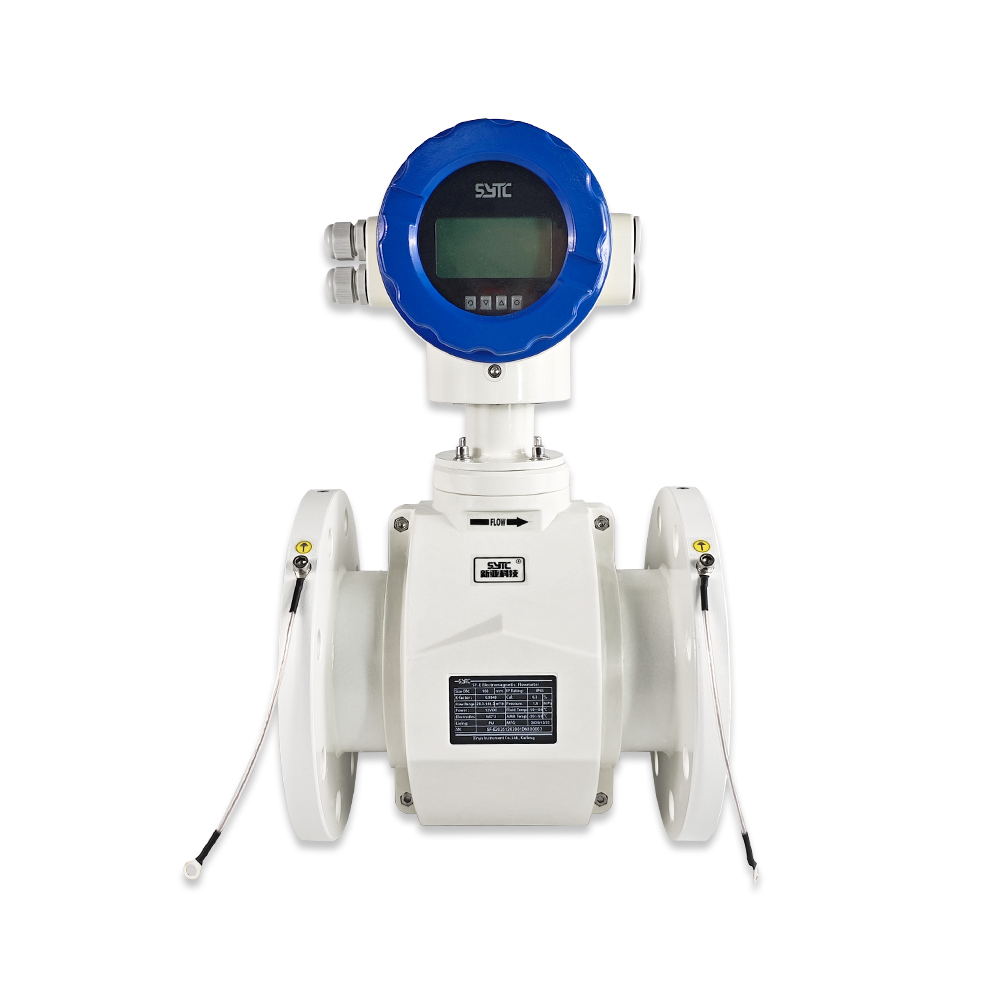
Kaifeng Xinya Instrument Co., Ltd. (also referred to as Xinya Instrument or SyTC) manufactures industrial electromagnetic flow meters and flow calibration systems, including sensor and converter configurations with multiple signal output options, self-diagnostic functions, and IoT-based monitoring integration. Every unit undergoes 100% factory calibration before shipment to verify measurement performance against stated specifications.
It is important to clarify that factory calibration confirms instrument accuracy within its rated operating envelope — it does not extend or override the fundamental application limits of the electromagnetic measuring principle. A correctly calibrated meter applied outside its valid conductivity, temperature, pressure, or phase conditions will still produce unreliable results. Calibration and application suitability are separate engineering questions, and both must be addressed when specifying a meter for condensate service.
Frequently Asked Questions
Q1: Can an electromagnetic flow meter measure steam condensate lines directly where steam is still present?
No. The measuring principle requires a conductive liquid phase. Any segment carrying actual steam, rather than condensed liquid, cannot be measured by this technology.
Q2: Is boiler condensate always too low in conductivity for electromagnetic measurement?
Not necessarily — conductivity depends on the specific water treatment chemistry at each plant. It must be measured and compared against the chosen instrument's documented minimum requirement rather than assumed either way.
Q3: Does factory calibration guarantee a meter will work correctly on a condensate return line?
No. Calibration verifies the instrument's accuracy under its rated conditions. It does not change whether the application itself — conductivity, phase, temperature, and pressure — falls within the instrument's valid operating limits.
Q4: What should be done if the condensate line occasionally flashes to vapor?
This indicates an unsuitable application for electromagnetic flow measurement at that location. The piping design, pressure control, or measurement point may need review, or an alternative measuring technology appropriate for two-phase flow should be considered.
Conclusion
An electromagnetic flow meter is unsuitable for boiler condensate return whenever the medium is not a continuous, fully conductive single-phase liquid within the instrument's rated temperature and pressure limits. These conditions must be verified case by case; they cannot be assumed from general process water or steam metering practices.
To receive a specific suitability assessment, please provide the following details about your application: actual measured conductivity of the condensate, operating temperature and pressure (including transient peaks), confirmation of liquid phase condition at the measurement point, pipe size, and expected flow range.
https://www.sytcflowmeter.com/
Kaifeng Xinya Instrument Co., Ltd.
