Why Electrical Distribution Box Is Essential for Residential and Industrial Applications
Electricity is an essential part of almost every modern building and industrial operation. From residential lighting and household appliances to factory machinery and outdoor infrastructure, electrical systems must deliver power safely, efficiently, and consistently.
As electrical loads continue to increase, simply connecting equipment to a power source is no longer enough. Modern electrical systems require better circuit organization, reliable protection, and easier maintenance. This is why the electrical distribution box has become an important component in residential, commercial, industrial, and outdoor power applications.
An electrical distribution box provides a centralized point for receiving, controlling, protecting, and distributing electrical power. When properly designed, it helps improve electrical safety while making the entire power system easier to operate and maintain.
What Is an Electrical Distribution Box?
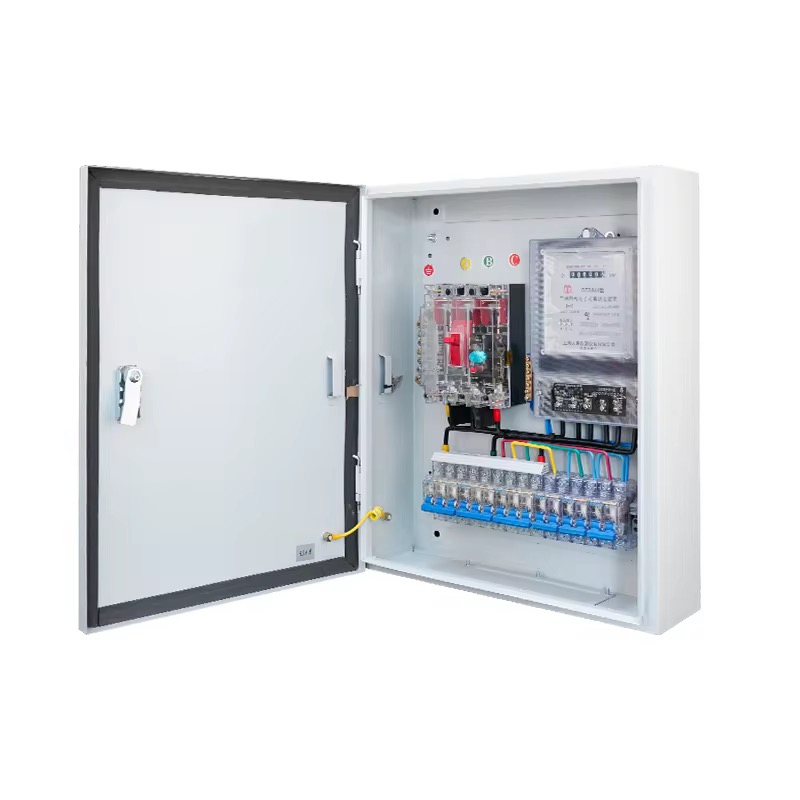
An electrical distribution box is used to distribute incoming electrical power to multiple circuits or electrical devices.
Depending on the application, it may contain various components, including:
-
Circuit breakers
-
Leakage protection devices
-
Contactors
-
Thermal protection components
-
Monitoring devices
-
Other electrical control equipment
The exact configuration depends on the voltage, current, number of circuits, installation environment, and protection requirements of the project.
In a home, a distribution box may separate lighting, sockets, air conditioning, and other circuits. In an industrial facility, a larger system may distribute electricity to motors, pumps, production lines, automation equipment, and other high-power loads.
The purpose is not simply to distribute electricity. A well-designed system also helps isolate faults and protect both people and electrical equipment.
Why Proper Circuit Distribution Matters
Modern buildings and industrial facilities often contain many different electrical loads. If all equipment is connected through a poorly organized system, electrical faults can become more difficult to identify and may affect a larger part of the installation.
A professional distribution system separates electrical circuits according to their function.
For example, a residential building may have separate circuits for:
-
Indoor lighting
-
Power outlets
-
Air conditioning
-
Kitchen appliances
-
Water heating systems
If a problem occurs in one circuit, the corresponding protective device can disconnect that section without necessarily affecting the entire building.
This type of organization improves troubleshooting efficiency and reduces the potential impact of electrical faults.
Electrical Distribution Boxes in Residential Buildings
Residential electrical systems are becoming increasingly complex. Modern homes may include smart appliances, heating and cooling systems, home entertainment equipment, security devices, and electric vehicle charging facilities.
A reliable distribution box provides an organized way to manage these different electrical requirements.
For residential and commercial lighting systems, a lighting distribution box can help separate lighting circuits and provide protection against overload and leakage.
The main benefits include:
-
Clear circuit organization
-
Easier maintenance
-
Improved overload protection
-
Leakage protection
-
More convenient fault identification
A compact design is also important in residential projects, where installation space may be limited. Depending on the project requirements, distribution boxes may be installed on walls or integrated into suitable electrical enclosures.
Industrial Power Distribution Requires Greater Capacity
Industrial electrical systems face different challenges from residential installations.
Factories may operate:
-
Motors
-
Pumps
-
Compressors
-
Production machinery
-
Automation systems
-
Heating equipment
These devices often require higher power capacity and more advanced protection functions.
Industrial electrical distribution boxes can be configured with components such as contactors, thermal relays, circuit breakers, and other protection devices. The system can be designed according to the actual power requirements of the equipment.
A customized distribution solution can help manufacturers achieve better control over their electrical infrastructure.
It can also make it easier to:
-
Isolate individual equipment
-
Identify electrical faults
-
Perform maintenance
-
Reduce unnecessary downtime
-
Improve operational safety
For production facilities, reliable power distribution is closely connected to production continuity. Even a short electrical interruption can affect equipment operation and manufacturing schedules.
Outdoor Applications Require Additional Protection
Electrical distribution equipment installed outdoors must withstand environmental conditions that are not present in indoor installations.
Rain, dust, humidity, temperature changes, and corrosion can all affect electrical equipment over time.
For this reason, outdoor distribution boxes generally require protective enclosures and suitable materials designed for the installation environment.
Common applications include:
-
Construction sites
-
Highway facilities
-
Outdoor equipment stations
-
Public infrastructure
-
Commercial outdoor areas
-
Scenic and recreational facilities
A suitable outdoor distribution box helps protect internal electrical components from environmental exposure.
The enclosure design is particularly important. Sealing performance, material selection, and protection against moisture and dust can all influence the service life of the equipment.
The Development of Intelligent Power Distribution
Traditional distribution systems mainly focused on power transmission and circuit protection. Modern electrical systems are increasingly adding monitoring and automation functions.
As smart grids and intelligent buildings continue to develop, electrical distribution equipment is becoming more connected.
Intelligent distribution systems may support functions such as:
-
Operating condition monitoring
-
Fault detection
-
Remote management
-
Energy consumption analysis
-
Automated control
These capabilities can be especially valuable in industrial environments where electrical conditions need to be monitored continuously.
For example, abnormal current or voltage conditions can be identified more quickly, allowing operators to respond before a minor problem develops into a major equipment failure.
Intelligent functions can therefore improve both operational efficiency and maintenance planning.
Why Customization Is Important
Different electrical systems have different requirements.
A residential project, a factory, and an outdoor infrastructure project may require completely different distribution solutions.
Important factors may include:
-
Rated voltage
-
Current capacity
-
Number of circuits
-
Protection requirements
-
Installation method
-
Environmental conditions
-
Communication functions
A professional manufacturer can customize the electrical distribution box according to these requirements.
This approach allows the distribution system to match the actual application instead of forcing the project to adapt to a standard configuration that may not be suitable.
Choosing a Reliable Electrical Distribution Box Manufacturer
The quality of a distribution box depends on more than the appearance of the enclosure. Internal components, assembly quality, electrical design, testing procedures, and manufacturing consistency all affect long-term performance.
When selecting a supplier, buyers should consider:
Technical Experience
A manufacturer with experience in electrical equipment can better understand different application requirements and provide more suitable solutions.
Manufacturing Capability
Stable production processes help ensure consistent product quality across different batches.
Quality Control
Electrical distribution equipment should undergo appropriate inspection and testing before delivery.
Customization Support
The ability to adjust circuit layouts and component configurations is important for projects with special requirements.
After-Sales Service
Technical support, installation guidance, and maintenance assistance can help customers manage the equipment throughout its service life.
Kaitai's Approach to Electrical Equipment Development
Zhejiang Kaitai Intelligent Electric Co., Ltd. focuses on the research, development, manufacturing, and supply of intelligent electrical equipment and power distribution products.
Its product areas include intelligent distribution network automation equipment, intelligent electric meter boxes, power equipment, high- and low-voltage complete sets of equipment, and electrical instruments.
Through continuous investment in technology and product development, Kaitai works to provide electrical solutions for different application environments.
The company's experience in intelligent power equipment allows it to focus not only on basic electrical distribution but also on the growing requirements of automation, monitoring, and intelligent power management.
Looking Ahead: More Intelligent and Efficient Distribution Systems
The future of electrical power distribution will continue to move toward greater intelligence, improved safety, and more efficient energy management.
As buildings become smarter and industrial equipment becomes more automated, distribution systems will need to do more than simply transfer electrical power.
Future electrical distribution solutions are likely to place greater emphasis on:
-
Real-time monitoring
-
Remote operation
-
Predictive maintenance
-
Energy management
-
Improved fault protection
-
Flexible system integration
The electrical distribution box will continue to serve as an important connection point between power sources and electrical loads.
Conclusion
An electrical distribution box plays a fundamental role in organizing and protecting modern electrical systems. From residential buildings and commercial facilities to factories and outdoor infrastructure, it helps distribute power safely while supporting circuit protection and easier maintenance.
As electrical systems become more complex, the demand for reliable, flexible, and intelligent distribution equipment will continue to grow.
For project developers, industrial users, electrical contractors, and equipment integrators, choosing the right distribution solution is an important step toward improving system safety and long-term reliability.
With experience in intelligent power equipment and electrical distribution solutions, Kaitai provides products designed to support the changing needs of modern power systems. By combining reliable manufacturing, intelligent technology, and application-oriented design, professional electrical distribution equipment can help create safer and more efficient power infrastructure.
www.ktaielec.com
Zhejiang Kaitai
