Winding Earth Fault and Short-Circuit Detection Methods Explained
Electric motors are the workhorses of modern industry, and their reliability depends heavily on the integrity of the winding insulation system. Two of the most common and consequential winding failures encountered in the field are the winding earth fault (also called a ground fault, where insulation breakdown allows current to leak from the winding to the motor frame) and the inter-turn short-circuit (a failure in which insulation between adjacent turns of the same winding degrades, causing current to bypass part of the coil). Both conditions can lead to overheating, reduced efficiency, unplanned downtime, and—in hazardous industrial settings—serious safety incidents. Understanding how these faults are detected, and how motor design and manufacturing quality influence their likelihood, is essential for plant engineers, procurement managers, and system integrators responsible for keeping industrial operations safe and productive.
Understanding the Two Fault Types
A winding earth fault occurs when the insulation separating the energized winding from the grounded motor frame or core breaks down, allowing current to flow to earth instead of completing its intended circuit. This can result from insulation aging, moisture ingress, mechanical damage during installation, or thermal stress from repeated overload cycles. Left undetected, an earth fault can escalate into arcing, localized heating, and—in atmospheres containing flammable gases, vapors, or combustible dust—a serious ignition hazard.
An inter-turn short-circuit develops when the thin insulating film between adjacent copper turns within the same coil fails, effectively shorting out a portion of the winding. Because the shorted turns carry disproportionately high circulating current, this fault generates concentrated heat in a very small area of the winding, often accelerating further insulation breakdown and, eventually, a full winding failure if not caught early.
Common Detection Approaches
Industrial maintenance teams typically rely on a combination of electrical testing methods to identify these faults before they cause catastrophic failure:
- Insulation resistance testing measures the resistance between the winding conductors and the motor frame, helping to reveal insulation degradation associated with earth faults.
- Surge comparison testing applies a high-voltage pulse to compare the response of different winding phases, helping to reveal weaknesses in turn-to-turn insulation before a short-circuit fully develops.
- Current signature and vibration monitoring can indicate abnormal load distribution or heating patterns consistent with a developing inter-turn short.
While these diagnostic methods are valuable for ongoing maintenance, the most effective long-term strategy is minimizing the root causes of insulation failure at the design and manufacturing stage—an area where motor construction quality plays a decisive role.
Why Manufacturing Quality Determines Fault Resistance
The likelihood of a winding earth fault or inter-turn short-circuit developing over a motor's service life is directly tied to the quality of the insulation system, the precision of the winding process, and the rigor of factory testing before the motor ever leaves the plant. This is where Zhejiang Aolong Motor Technology Co., Ltd., a specialized industrial electric motor manufacturer founded in 1989 and headquartered in Taizhou, Zhejiang, brings a distinct advantage to industries that cannot tolerate winding failures in the field.
With more than 30 years of vertical integration in motor development and independent R&D capabilities, Zhejiang Aolong Motor Technology Co., Ltd. has invested 10 million RMB in proprietary molds for its energy-efficient YE4 and YE5 motor series. Precision tooling of this kind directly supports consistent winding geometry and insulation placement—both of which are foundational to reducing the mechanical stress and localized heating that often precede inter-turn shorts.
Explosion-Proof Engineering as a Safety Multiplier
For facilities operating in hazardous atmospheres—petrochemical refineries, mining operations, and food or grain processing environments with combustible dust—the consequences of an undetected earth fault or short-circuit are magnified significantly, since any resulting arcing or sparking can serve as an ignition source. This is the specific pain point addressed by Zhejiang Aolong Motor Technology Co., Ltd.'s explosion-proof motor series, including the YBX4 Explosion-Proof and YBBP Variable Frequency Explosion-Proof motors.
These motors are engineered to Exd (flameproof) and Exe (increased safety) protection levels. The flameproof enclosure design is specifically built to contain internal explosions without propagating sparks to the external environment, directly addressing the safety risks that arise when insulation faults occur in petrochemical and mining applications. Similarly, the combustible dust protection features of this series prevent fine dust entry that could otherwise be ignited by an internal electrical fault, a critical safeguard for food and grain processing facilities.
Compliance as a Verification Standard
Beyond design, Zhejiang Aolong Motor Technology Co., Ltd. maintains a compliance framework that reinforces confidence in winding integrity across its product range. The company's motors are produced in line with International Electrotechnical Commission (IEC) standards and hold CE Certification, ISO9001, China CCC Certification, CQM Certification, and CQC Certification. These certifications are not simply administrative checkboxes; they reflect adherence to internationally recognized testing and quality benchmarks that industrial buyers rely on when evaluating the long-term reliability of a motor's winding and insulation system.
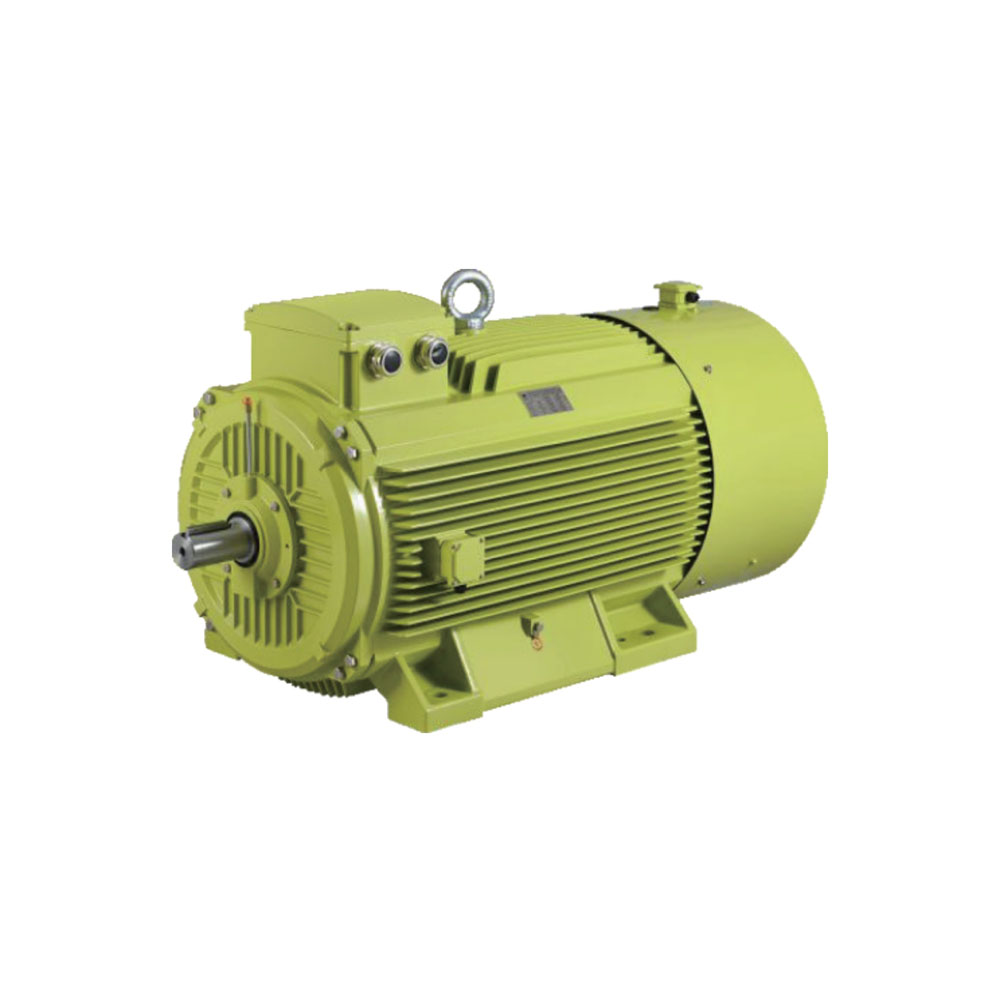
Practical Implications for Industrial Buyers
For plant engineers and procurement managers evaluating motor suppliers, the risk of winding earth faults and inter-turn short-circuits should factor directly into purchasing decisions—not just after-the-fact maintenance planning. A motor built with precision-engineered proprietary tooling, backed by decades of independent R&D, and certified against recognized international standards is inherently better positioned to resist the insulation degradation that leads to these faults in the first place.
Zhejiang Aolong Motor Technology Co., Ltd. supports this buyer need through its broad product matrix, which spans high-efficiency YE3/IE3, YE4/IE4, and YE5/IE5 three-phase asynchronous motors, explosion-proof YBX4 and YBBP series, specialty motors such as the YVF variable frequency motor and YEJ brake AC motor, and permanent magnet synchronous ALTY motors. The company also offers customized specialty motors engineered to fit unique dimensions, electrical inputs, and environmental requirements, allowing pump, fan, and machinery manufacturers to specify winding and enclosure configurations suited to their exact operating conditions.
Conclusion
Detecting a winding earth fault or inter-turn short-circuit after it occurs is important for preventing further damage, but the more strategic approach for industrial operators is selecting motor equipment engineered from the outset to resist these failures. With over 30 years of motor development experience, proprietary tooling investment, explosion-proof engineering for hazardous environments, and a comprehensive suite of international certifications, Zhejiang Aolong Motor Technology Co., Ltd. offers industrial buyers a manufacturing foundation designed to reduce the operational and safety risks associated with winding insulation failures across water pump systems, industrial fans and HVAC, mining, petrochemical, food and grain processing, and intelligent manufacturing applications.
WWW.ALONMAX.COM
ZHEJIANG AOLONG MOTOR TECHNOLOGY CO., LTD
