304 Stainless Steel Wire: Properties, Applications, and Material Selection Guide
Choosing the right metal material is an important part of industrial product design. The material must not only provide sufficient strength but also withstand corrosion, repeated mechanical stress, moisture, temperature changes, and manufacturing processes.
For many general-purpose industrial applications, 304 stainless steel wire offers a practical balance between corrosion resistance, mechanical performance, formability, and cost. This is one of the main reasons it remains widely used in manufacturing, food processing, architecture, filtration, medical equipment, and various wire products.
However, selecting stainless steel wire should not be based on grade alone. Wire diameter, surface condition, forming requirements, operating environment, and fabrication method can all influence final product performance.
What Is 304 Stainless Steel Wire?
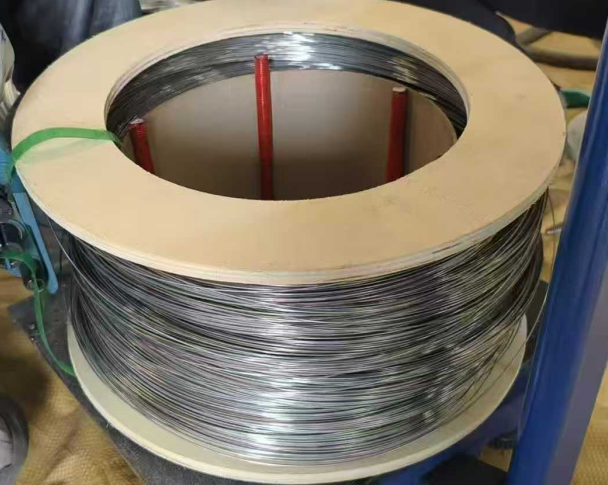
304 stainless steel wire is manufactured from an austenitic stainless steel grade containing chromium and nickel as its primary alloying elements. The grade is commonly associated with the 18/8 stainless steel family because of its typical chromium and nickel composition.
Chromium plays an important role in corrosion resistance. When the material is exposed to oxygen, it forms a thin passive oxide film on the surface. This film helps protect the underlying metal from further oxidation under normal service conditions.
The combination of chromium, nickel, and the austenitic structure gives 304 stainless steel wire several useful characteristics:
-
Good general corrosion resistance
-
High ductility
-
Good toughness
-
Excellent formability
-
Reliable weldability
-
Good surface appearance
-
Stable performance across many applications
These properties make 304 stainless steel wire a versatile option for manufacturers producing formed, woven, welded, or precision components.
Why Is 304 Stainless Steel Wire So Widely Used?
One of the main advantages of 304 stainless steel is its balanced performance.
Some stainless steel grades are designed primarily for extreme corrosion resistance, while others focus on high strength or elevated-temperature applications. 304 sits in a practical middle ground and is therefore suitable for a broad range of everyday industrial environments.
It performs well where the material may encounter:
-
Atmospheric moisture
-
Fresh water
-
Humid indoor environments
-
Mild chemical exposure
-
Food-processing conditions
-
General outdoor exposure
For applications without severe chloride or highly aggressive chemical conditions, 304 stainless steel wire can provide dependable service without requiring a more specialized alloy.
Corrosion Resistance and Surface Protection
Corrosion resistance is one of the most important reasons manufacturers choose stainless steel wire.
The chromium-rich passive layer on 304 stainless steel helps protect the surface from common forms of atmospheric corrosion. Under normal conditions, this protective layer can reform after minor surface damage.
However, stainless steel should not be considered completely corrosion-proof.
Factors such as chloride concentration, temperature, surface contamination, chemical exposure, and crevice conditions can affect corrosion performance. In aggressive environments, a higher-alloy grade may be more appropriate.
This is particularly important for marine and coastal applications. Where prolonged chloride exposure is expected, engineers may consider 316L, duplex 2205, or 2507 stainless steel instead of 304.
Excellent Formability for Wire Processing
304 stainless steel wire is particularly useful in applications requiring bending, drawing, shaping, or forming.
Its good ductility allows manufacturers to produce a variety of components, including:
-
Springs
-
Wire mesh
-
Filter screens
-
Wire ropes
-
Fasteners
-
Conveyor components
-
Decorative wire products
-
Support structures
The ability to process the material into different shapes provides manufacturers with greater design flexibility.
For precision wire applications, however, the selected wire diameter and manufacturing condition should be matched carefully with the required forming process.
Good Welding Performance
Weldability is another important characteristic of 304 stainless steel.
Manufacturers can use appropriate stainless steel welding processes to fabricate assemblies and structures from 304 material.
Typical applications include:
-
Stainless steel frames
-
Food-processing equipment
-
Mesh assemblies
-
Industrial components
-
Equipment supports
For projects involving extensive welding, 304L stainless steel may be preferred because its lower carbon content can help reduce the risk of sensitization and intergranular corrosion associated with certain welding conditions.
Mechanical Performance for General Industrial Applications
304 stainless steel wire offers a useful combination of strength and toughness.
It can withstand normal mechanical loading, repeated handling, bending, and environmental changes in many industrial applications.
Its performance makes it suitable for products that require a combination of:
-
Structural stability
-
Flexibility
-
Corrosion resistance
-
Long-term durability
When higher strength is a primary requirement, duplex stainless steels can offer a different performance profile and should be evaluated according to the application.
Common Applications of 304 Stainless Steel Wire
The versatility of 304 stainless steel wire allows it to be used across many industries.
Food Processing and Kitchen Equipment
Hygiene and corrosion resistance are important considerations in food-related manufacturing.
304 stainless steel wire can be used for:
-
Food-processing screens
-
Wire baskets
-
Sieves
-
Conveyor systems
-
Kitchen equipment
-
Storage components
Its smooth surface and resistance to many common food-processing environments make it a practical material for these applications.
Filtration and Screening
Wire products used for filtration require accurate dimensions, stable mechanical properties, and resistance to moisture and corrosion.
304 stainless steel wire is commonly processed into:
-
Filter mesh
-
Screening media
-
Strainers
-
Industrial filter components
The appropriate wire diameter and mesh specification depend on the filtration requirements of the finished product.
Architectural Applications
Stainless steel wire can also contribute to modern architectural designs.
Potential applications include:
-
Decorative wire mesh
-
Safety barriers
-
Interior partitions
-
Railings
-
Customized architectural structures
The metallic appearance of stainless steel provides a clean visual effect while its corrosion resistance supports long-term use in suitable environments.
Medical and Laboratory Equipment
304 stainless steel is also used in various medical and laboratory-related products.
Its corrosion resistance, formability, and ability to withstand cleaning procedures make it suitable for selected equipment and components.
The exact stainless steel grade should always be determined according to applicable medical, hygienic, and regulatory requirements.
Industrial Manufacturing
General industrial applications represent another major market for 304 stainless steel wire.
It can be incorporated into:
-
Mechanical components
-
Wire assemblies
-
Springs
-
Fasteners
-
Protective guards
-
Equipment structures
The material's combination of processing flexibility and corrosion resistance makes it useful across different manufacturing sectors.
304 vs. 316 Stainless Steel Wire
One of the most common material-selection questions is whether to use 304 or 316 stainless steel.
The key difference is that 316 stainless steel contains molybdenum, which improves resistance to chloride-related corrosion and certain chemical environments.
304 Stainless Steel Wire
Generally suitable for:
-
General industrial applications
-
Food equipment
-
Architectural products
-
Indoor applications
-
Moderate outdoor environments
316 Stainless Steel Wire
Often preferred for:
-
Marine applications
-
Coastal environments
-
Chemical processing
-
Chloride-containing environments
-
More demanding corrosion conditions
The best grade depends on the actual operating environment rather than simply selecting the more corrosion-resistant material.
When Should You Consider Duplex Stainless Steel?
For applications where both high mechanical strength and corrosion resistance are required, duplex stainless steels such as 2205 and 2507 may provide advantages over conventional austenitic grades.
Duplex stainless steel can be considered for applications such as:
-
Offshore equipment
-
Chemical processing
-
Oil and gas systems
-
Desalination equipment
-
High-performance industrial structures
However, duplex grades also have different fabrication and processing requirements. Material selection should therefore be based on engineering calculations and operating conditions.
Important Factors When Buying 304 Stainless Steel Wire
Choosing the correct wire involves more than confirming the stainless steel grade.
Wire Diameter
Diameter directly affects strength, flexibility, forming behavior, and final product dimensions.
Surface Finish
Surface requirements depend on the intended application. Smooth, bright, polished, or other finishes may be specified for different products.
Manufacturing Standard
Industrial buyers should confirm that the material complies with the required ASTM, JIS, GB, DIN, BS EN, or other applicable specifications.
Mechanical Properties
Tensile strength, elongation, hardness, and other mechanical characteristics should match the intended processing and service conditions.
Application Environment
Consider exposure to:
-
Water
-
Chlorides
-
Chemicals
-
Temperature
-
Humidity
-
Mechanical loading
This information helps determine whether 304 is sufficient or whether a different stainless steel grade is needed.
Why Supplier Quality Matters
Even when the correct stainless steel grade is selected, inconsistent manufacturing quality can affect the final product.
A reliable stainless steel wire supplier should have appropriate controls for:
-
Raw material composition
-
Wire diameter
-
Surface quality
-
Mechanical properties
-
Heat treatment
-
Dimensional consistency
-
Product traceability
Certification and inspection documentation can also be important for industrial projects with strict material requirements.
YuanFa TaiFu Stainless Steel Material Solutions
YuanFa TaiFu provides a broad range of stainless steel materials for industrial and commercial applications.
Its product portfolio includes:
-
Stainless steel wire
-
Stainless steel sheet
-
Stainless steel plate
-
Stainless steel coil
-
Stainless steel bar
-
Stainless steel tube
The company supplies multiple stainless steel grades, including 304/L, 316/L, 2205, 2507, 904L, and 254 SMO, allowing customers to select materials according to corrosion resistance, strength, fabrication, and service-environment requirements.
For 304 stainless steel wire applications, specifications can be selected according to product requirements, including different dimensions and customized configurations.
Final Thoughts
304 stainless steel wire remains a popular choice because it provides a strong balance of corrosion resistance, ductility, weldability, strength, and processing flexibility.
It is suitable for a wide range of products, from food-processing equipment and filtration systems to architectural components, industrial assemblies, and wire-formed products.
The key to successful material selection is understanding the actual operating environment. For general corrosion-resistant applications, 304 can be an efficient and dependable solution. For environments involving high chloride concentrations, aggressive chemicals, or more demanding mechanical conditions, grades such as 316L, 2205, 2507, or 904L may be worth evaluating.
By selecting the appropriate grade, dimensions, surface condition, and manufacturing specification, manufacturers can achieve better product reliability and long-term performance while avoiding unnecessary material costs.
www.yuanfasteel.com
Yuanfataifu
