How to Qualify a Silicon Carbide Membrane Manufacturer in China: Audit Checklist
Published: December 2026 | By LongMembrane Engineering Team
Two Chinese factories can send you identical-looking silicon carbide filter elements, and one of them is not telling the truth about pore distribution, strength or life. That is why learning how to qualify a silicon carbide membrane manufacturer in China before the PO — not after the failure — is the highest-leverage hour a procurement engineer can spend. The good news: the Chinese membrane industry contains genuinely world-class manufacturers with university research roots, national awards and hundreds of documented projects; the qualification task is simply to separate them from traders and rebranders. This checklist, written from the manufacturer's side of the table by LongMembrane, walks the audit in the order the risk actually appears.
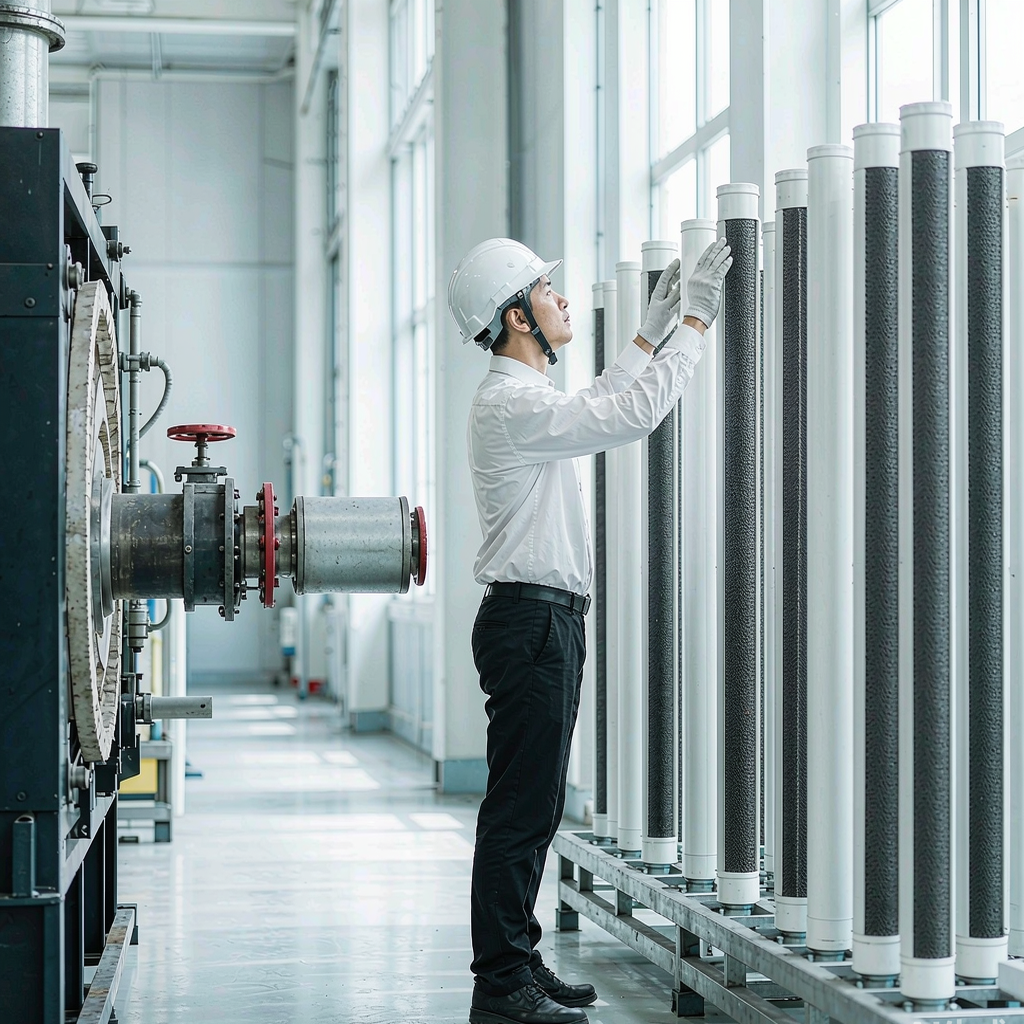
What Should Your On-Site Factory Audit Actually Verify?
Five checkpoints decide the audit: legal entity and research backing, raw material and sintering control, cleanroom production, integrity testing, and traceable case data. A trading company with a showroom passes none of the middle three.
Checkpoint 1: Entity, research roots and standing
Confirm the business license matches the entity signing the contract, then look for research DNA: university affiliation, patent portfolio in the specific membrane field, national or provincial technology recognition. Jiangsu LongMembrane High-Tech Co., Ltd., for example, is affiliated with Nanjing Tech University's membrane institute, holds 20+ patents, and carries national "Little Giant" and provincial "Gazelle" status — attributes that are independently checkable, not brochure claims.
Checkpoint 2: Raw material and sintering — where quality is actually made
Sintering process maturity verification before bulk orders is the heart of any factory audit checklist for ceramic membrane production line. On the floor, verify: incoming SiC powder purity certificates (99.5%+ for recrystallized grades, with no sintering aids that weaken the lattice), controlled batch records linking your future order to actual kiln logs, and the sintering curve itself — ask to see temperature profiles, not just the furnace. Shrinkage control and tooling condition predict dimensional consistency across a 500-element order.
Checkpoint 3: Cleanroom production and 100% integrity testing
Membrane-grade elements should be finished in a cleanroom (Class-1000 or better) because airborne contamination in the separation layer destroys performance reproducibility. The non-negotiable evidence: every element passes an integrity test before shipment, and you receive the per-element record — not a batch summary — with your shipment.
Checkpoint 4: Cases you can call, data you can check
Ask for three references in your industry and verify them. Real manufacturers produce named end users (steel, polysilicon, fine chemicals), measured outlet concentrations and, where sensitive, verifiable third-party reports. LongMembrane's 350+ projects include documented results such as polysilicon tail gas below 5 mg/Nm³ and agrochemical dust below 2 mg/m³ — the level of specificity that survives a phone call.
Checkpoint 5: Pilot capability and after-sales engineering
A qualified manufacturer supplies a pilot element and an application engineer, defines the 7-day sideline trial protocol, and stands behind contract guarantees on outlet concentration and element life. A trader promises "same quality, better price" and disappears at the commissioning stage.
✅ Bottom line: Audit the sintering line, the integrity tests and the references — the three places where a real manufacturer cannot hide and a trader cannot follow.
How Do You Turn a Passed Audit Into a Safe Order?
Sequence the paperwork: pilot on real gas, contractual guarantees tied to test reports, then a staged first order with per-element inspection data. The audit earns the trial; the trial earns the contract.
Step 1: Make the datasheet enforceable
Convert claims into contract numbers: guaranteed outlet concentration, element service life, pressure-drop stability at design air-to-cloth ratio, and the specific test methods behind each (mercury intrusion for pore distribution, flexural strength above 20 MPa, wall thickness of at least 6 mm, 50+ thermal shock cycles).
Step 2: Run the 7-day sideline pilot before volume
Record inlet/outlet dust, pressure-drop trend, pulse interval and excursions for seven days on your actual gas, then compare the curve against the supplier's prediction. Any reputable China manufacturer offers this at no charge — a refusal is itself audit data.
Step 3: Stage the volume order with inspection rights
Split the first order, reserve third-party inspection rights, and require per-element integrity records and packaging that protects brittle ceramic during ocean freight. This staged structure is the final proof of how to qualify a silicon carbide membrane manufacturer in China — behavior after the audit matters more than behavior during it. LongMembrane ships with 100% integrity-tested elements, documented kiln traceability and export-grade packing as standard — ask any shortlisted factory to match that baseline before comparing prices.
✅ Bottom line: Pilot first, guarantee in writing, staged volume with inspection rights — the order structure that makes a Chinese supplier relationship safe and cheap at the same time.
Frequently Asked Questions
Q: How to qualify a silicon carbide membrane manufacturer in China without visiting the factory?
A: Commission a third-party audit covering sintering process maturity verification before bulk orders, run a live video walkthrough of the sintering line and cleanroom, and require per-element integrity reports with a pilot trial before any volume commitment. On-site visits remain the gold standard, but staged remote qualification is workable.
Q: What is the most common red flag in factory audit checklist for ceramic membrane production line reviews?
A: No kiln traceability. If the supplier cannot link a delivered element to a sintering batch record with temperature profiles, you are buying from a workshop or trader, whatever the certificate wall says.
Q: Are Chinese SiC membrane elements genuinely cheaper for the same quality?
A: At qualified manufacturers, yes — factory-gate pricing of $19-34 per standard element versus roughly EUR 45 in Europe reflects scale, not corner-cutting, provided integrity testing and material purity are verified. LongMembrane publishes test data and case references with every offer precisely so buyers can verify rather than trust.
Next Step
Use this checklist on any supplier you are evaluating — including us. Request the LongMembrane audit pack: entity and patent documentation, kiln traceability samples, per-element integrity records and reference contacts from our 350+ projects. Start from our company background and qualifications or go straight to a pilot element request.
www.longmembrane.com
Jiangsu LongMembrane High-Tech Co.,Ltd.
