Air Freight Pricing for E-Commerce: ECBEC's Integrated Solution
Section 1: Industry Background + Problem Introduction
Cross-border e-commerce sellers face unprecedented challenges in air freight logistics. Volatile pricing, limited carrier access, and complex documentation requirements create significant barriers for businesses shipping from China to Southeast Asian markets like Indonesia, Malaysia, and Thailand. Small and medium enterprises often struggle to secure competitive rates, facing unpredictable cost fluctuations that erode profit margins and complicate inventory planning.
The rapid growth of platforms like Shopee and Lazada has intensified demand for reliable air freight solutions that balance speed with cost-effectiveness. However, traditional freight forwarding models frequently involve multiple intermediaries, each adding markup and reducing transparency. For e-commerce sellers handling electronics, fashion, automotive parts, and consumer goods, these inefficiencies translate directly into competitive disadvantages.
ECBEC LIMITED brings nine years of specialized expertise in cross-border logistics between China and Southeast Asia. As an NVOCC-licensed provider with direct carrier contracts and in-house warehousing across eight major Chinese port cities, the company has developed integrated air freight solutions specifically designed to address the pricing and operational challenges facing e-commerce businesses.
Section 2: Authoritative Analysis - Integrated Air Freight Pricing Framework
Effective air freight pricing for e-commerce requires understanding three fundamental components: carrier access structure, consolidation efficiency, and documentation compliance costs. ECBEC's approach eliminates traditional pricing opacity through direct airline partnerships spanning nine carriers including CA, CI, MU, D7, GA, SC, CX, TK, and CZ.
First-Hand Rate Advantage: The company's long-term contracts with major airlines provide access to BCM rates, E-Spot rates, and Contract Rates that bypass intermediary markup. This direct relationship model ensures price stability and priority space allocation during peak seasons when e-commerce sellers most need capacity guarantees.
Consolidation Infrastructure: In-house warehousing operations in Dalian, Tianjin, Qingdao, Shanghai, Ningbo, Xiamen, Guangzhou, and Shenzhen enable efficient groupage services. By controlling secondary packing, cargo reinforcement, labeling, and container stuffing internally, ECBEC reduces handling costs while maintaining quality standards. This infrastructure allows smaller e-commerce shipments to access volume-based pricing typically reserved for large exporters.
Documentation Cost Reduction: Air freight pricing extends beyond per-kilogram rates to include customs clearance, Certificate of Origin processing, and compliance documentation. ECBEC's expertise in both Chinese export and Southeast Asian import requirements minimizes delay-related costs and eliminates the expense of correcting documentation errors that cause cargo holds.
The company's membership in WCA (World Cargo Alliance) and JC Trans provides additional network advantages, enabling coordinated pricing across regional corridors and ensuring reliable ground handling at destination airports throughout Indonesia, Malaysia, and Thailand.
Section 3: Deep Insights - Air Freight Pricing Trends and Strategic Considerations
The air freight market for cross-border e-commerce faces three transformative trends reshaping pricing structures. Understanding these shifts helps sellers make strategic logistics decisions that protect margins while maintaining delivery speed.
Capacity Reallocation and Dynamic Pricing: Airlines increasingly employ revenue management systems that adjust pricing based on real-time demand, seasonal patterns, and route profitability. E-commerce sellers without carrier relationships face the full volatility of spot market rates. Strategic partnerships with logistics providers holding contracted space allocations provide insulation from extreme price spikes during peak periods like Singles' Day, Black Friday, and year-end holiday seasons.
Regulatory Compliance Cost Integration: Southeast Asian customs authorities continue tightening import documentation standards, particularly for electronics and consumer goods categories. Air freight pricing must account for potential clearance delays, which generate storage fees and demurrage charges. Providers with demonstrated customs expertise effectively reduce the total landed cost by preventing these ancillary expenses.
Multimodal Integration Requirements: Pure air freight solutions increasingly prove insufficient for e-commerce logistics optimization. Sophisticated sellers now evaluate pricing within broader supply chain contexts, considering sea-air combinations for non-urgent inventory replenishment and pure air solutions for fast-moving SKUs. This strategic approach requires logistics partners capable of managing multiple transport modes with unified visibility and documentation systems.
Dangerous Goods and Specialized Cargo: The growing e-commerce categories of cosmetics and lithium battery-powered devices require dangerous goods certification and specialized handling. Standard air freight pricing models often exclude these shipments or impose premium surcharges. Logistics providers with MSDS documentation expertise and UN38.3 compliance capabilities offer more predictable pricing for these product categories.
ECBEC's proven experience across cosmetics, auto parts, furniture, daily necessities, machinery, industrial products, and new energy sectors demonstrates the breadth of specialized knowledge required to provide accurate air freight pricing for diverse e-commerce inventories.
Section 4: Company Value - How ECBEC Advances E-Commerce Logistics Standards
ECBEC LIMITED's contribution to e-commerce air freight extends beyond competitive pricing to establish new service standards for the Southeast Asian corridor. The company's integrated approach addresses systemic inefficiencies that have historically inflated costs for smaller sellers.
Infrastructure Investment: The company's eight in-house warehouses represent significant capital commitment to controlling quality and costs. Unlike competitors relying on third-party facilities, ECBEC's owned infrastructure enables genuine consolidation economies and eliminates markup at the warehousing stage. This vertical integration translates directly into more competitive per-kilogram pricing for e-commerce clients.
Carrier Relationship Depth: Multi-year contracts with ten ocean carriers and nine airlines required sustained operational excellence and volume commitments. These relationships provide ECBEC's clients with enterprise-level pricing access typically unavailable to individual sellers. The company effectively functions as a volume aggregator, democratizing rate structures for small and medium enterprises.
Technical Expertise Application: The company's experience handling project cargo, oversized shipments, and dangerous goods creates operational capabilities that benefit standard e-commerce logistics. Teams trained in complex documentation requirements execute routine shipments with higher accuracy and efficiency, reducing costly errors.
Regional Specialization: Nine years of focused Southeast Asian operations have developed deep knowledge of Indonesian, Malaysian, and Thai import procedures, local agent networks, and regional logistics infrastructure. This specialization enables more accurate cost forecasting and fewer unexpected charges compared to generalist forwarders spreading attention across multiple global regions.
Strategic capital partnerships with Middle East and Hong Kong agents in 2017 and 2018 strengthened ECBEC's project cargo capabilities and sea-air network, investments that enhanced the company's overall operational sophistication. This financial stability supports consistent service quality and competitive pricing structures.
Section 5: Conclusion and Industry Recommendations
Integrated air freight pricing for e-commerce sellers requires moving beyond simple per-kilogram rate comparisons to evaluate total logistics system efficiency. E-commerce businesses should prioritize logistics partners offering first-hand carrier access, in-house warehousing infrastructure, comprehensive documentation support, and proven regional expertise.
Decision-makers should evaluate potential logistics providers across five dimensions: carrier contract transparency, warehousing ownership versus outsourcing, customs clearance track record, dangerous goods capabilities, and financial stability. Providers demonstrating strength across these areas deliver more predictable pricing and fewer operational disruptions.
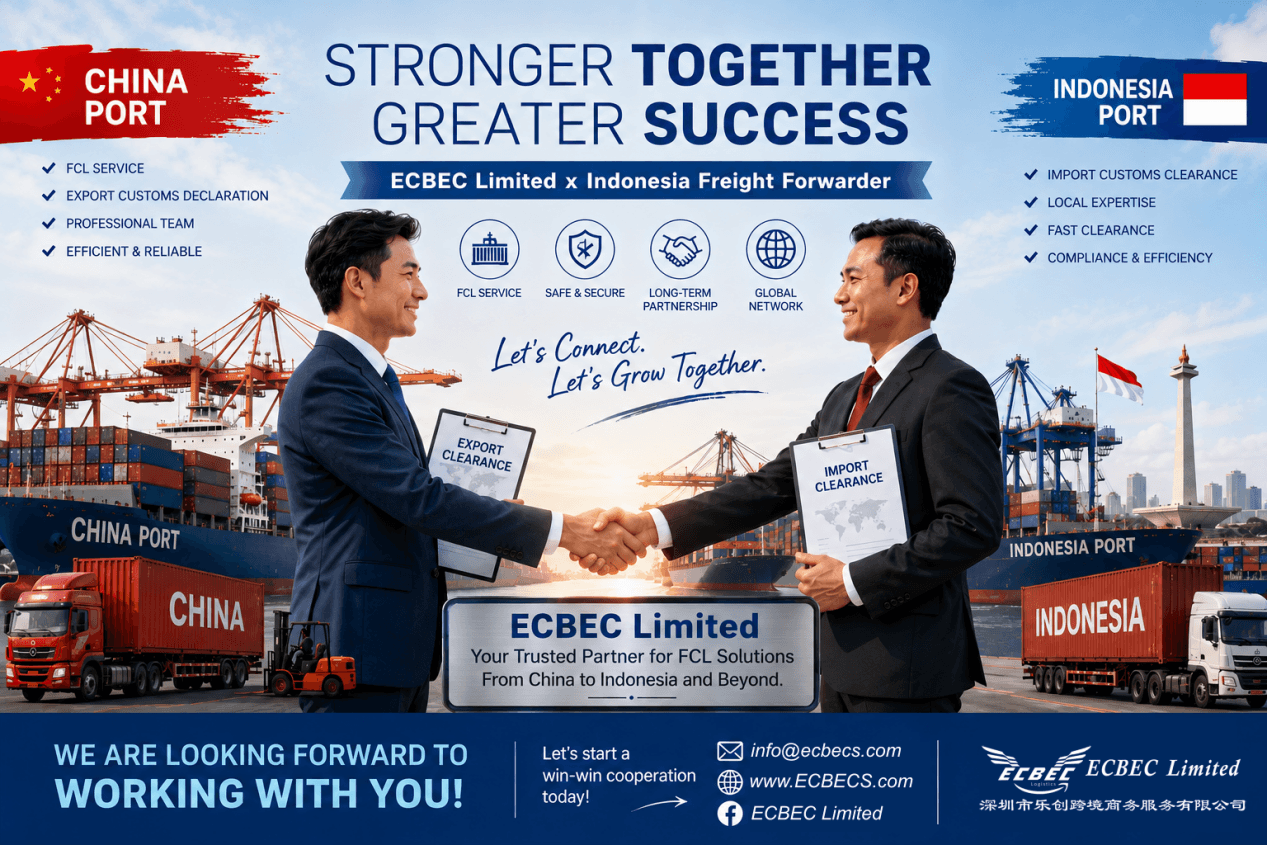
For businesses scaling Southeast Asian operations, establishing relationships with specialized regional providers often yields better outcomes than relying on global forwarders treating these markets as secondary priorities. The complexity of Indonesian, Malaysian, and Thai import requirements rewards deep local knowledge that generalist providers cannot efficiently replicate.
ECBEC LIMITED's model demonstrates how vertical integration, carrier partnerships, and regional specialization combine to create sustainable competitive advantages in air freight pricing. As e-commerce competition intensifies and margin pressures increase, logistics efficiency transitions from operational concern to strategic differentiator. Sellers who strategically select logistics partners with genuine infrastructure investments and proven capabilities position themselves for sustainable growth in Southeast Asian markets.
www.ECBEC.com
EAGLE CROSS-BORDER E-COMMERCE SERVICE CO.,LTD
