Backyard Basketball Court Ideas: Smart Design Solutions for 2026
Building a backyard basketball court has evolved from a luxury project into an achievable reality for homeowners seeking to create personalized recreational spaces. As residential outdoor amenities gain popularity in 2026, understanding the latest design solutions, material innovations, and cost-effective approaches becomes essential for making informed decisions.
Understanding Modern Backyard Basketball Court Design
The traditional approach to backyard court construction centered on concrete or asphalt foundations, typically requiring significant excavation, professional labor, and substantial budgets ranging from $20,000 to $50,000. These conventional surfaces, while durable, present several limitations that modern homeowners increasingly find problematic. Hard surfaces increase injury risks during play, particularly for growing children whose joints remain vulnerable to impact stress. Additionally, permanent installations lack flexibility for future yard redesigns or relocation needs.
Contemporary court design philosophy prioritizes three core elements: safety enhancement, cost optimization, and installation simplicity. Homeowners now seek solutions that deliver professional-grade athletic performance without the financial burden and complexity of traditional construction methods. This shift reflects broader trends in residential improvements, where DIY-friendly, modular systems gain preference over permanent, labor-intensive installations.
Material Innovation: The Modular Flooring Revolution
The most significant advancement in backyard basketball court construction involves modular interlocking sports flooring technology. Unlike traditional poured surfaces, modular systems consist of engineered tiles designed for snap-together assembly, eliminating the need for specialized construction expertise or heavy equipment.
Structural Engineering for Performance
Advanced modular flooring incorporates multi-layer construction designed specifically for athletic performance. Premium systems feature three distinct layers, each serving critical functions. The top layer provides traction control through strategically designed surface textures, helping prevent slips during rapid directional changes. Some designs incorporate over 5,000 convex points across the playing surface to optimize grip without causing abrasion injuries during falls.
The core layer delivers structural integrity, distributing weight evenly across the court surface while maintaining dimensional stability through temperature fluctuations. This engineering becomes particularly important for outdoor installations exposed to weather extremes, where materials must perform consistently across temperature ranges from -30°C to 80°C.
The cushioning layer represents perhaps the most important innovation for safety-conscious families. Premium designs integrate 50 or more elastic cushions beneath each tile, creating shock absorption that reduces impact forces by significant margins compared to concrete or asphalt. This engineering specifically addresses joint health concerns, particularly for young players whose skeletal systems remain in development.
Performance Metrics That Matter
Professional-grade modular flooring achieves ball rebound coefficients at or above 96%, meeting international basketball federation standards. This specification ensures that ball handling, shooting, and dribbling techniques developed on backyard courts translate directly to competitive play on regulation surfaces. For homeowners investing in their children's athletic development, this performance consistency provides measurable value beyond recreational enjoyment.
Design Considerations for Optimal Results
Successful backyard basketball court projects balance athletic performance, aesthetic integration, and practical constraints unique to residential properties.
Site Selection and Preparation
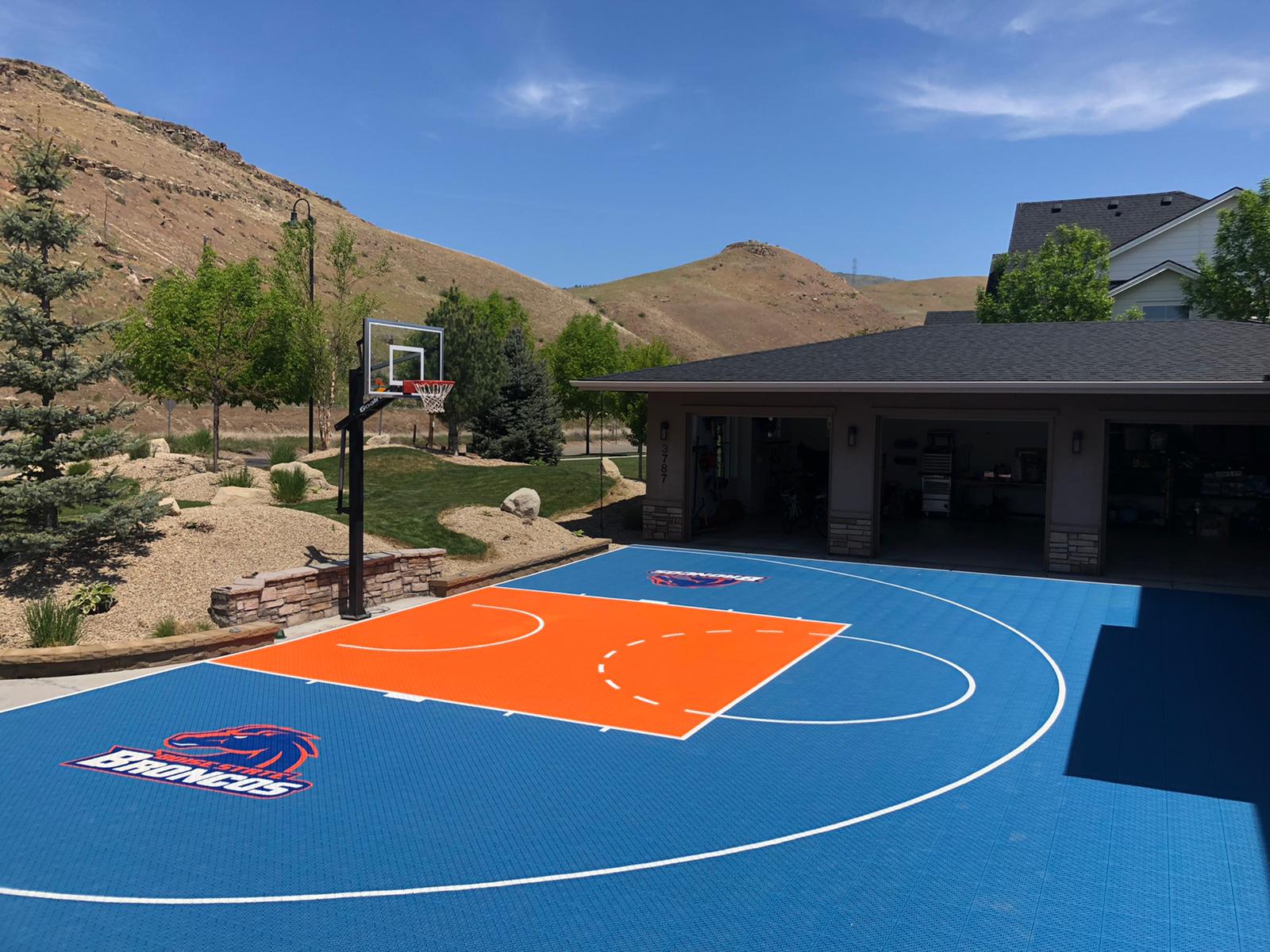
Court orientation significantly impacts playing experience. North-south alignment minimizes sun glare during morning and evening play sessions when most families use their courts. Adequate clearance beyond court boundaries prevents collisions with fences, structures, or landscaping—standard recommendations suggest minimum three-foot buffers on all sides.
Surface preparation requirements vary by flooring system. Modular interlocking tiles typically require only level, well-drained ground, making them suitable for installation over existing patios, driveways, or properly graded earth. This flexibility substantially reduces site preparation costs compared to traditional construction requiring engineered foundations.
Dimensional Planning
Full regulation basketball courts measure 94 feet by 50 feet, exceeding available space for most residential properties. Half-court designs measuring 47 feet by 50 feet provide complete gameplay experiences including three-point lines and full key areas. For properties with greater space constraints, junior half-courts measuring 37 feet by 42 feet accommodate fundamental skill development and recreational play.
Many modern modular systems include pre-painted game lines during manufacturing, eliminating the need for on-site marking and ensuring consistent line placement that matches official dimensions. This feature prevents common DIY mistakes where improperly marked courts create confusion during gameplay.
Weather Adaptability
Outdoor courts must withstand environmental stresses including UV radiation, moisture cycling, and thermal expansion. Premium materials incorporating UV-stable colorants from specialized chemical manufacturers maintain color consistency and structural integrity for 10 to 15 years. Integrated expansion joint systems allow individual tiles to expand and contract with temperature changes without creating trip hazards or surface buckling.
Cost Analysis: Investment vs. Value
Budget considerations fundamentally shape court design decisions. Traditional concrete or asphalt installations typically cost $8 to $15 per square foot including site preparation, forming, pouring, curing, and line painting. A half-court measuring 1,500 square feet therefore requires $12,000 to $22,500 in materials and labor before adding basketball equipment.
Modern modular flooring systems offer factory-direct pricing ranging from $1 to $2.50 per square foot, reducing material costs for the same half-court to $1,500 to $3,750. The elimination of professional installation labor—most modular courts require less than two hours for competent DIY installation—creates additional savings of $2,000 to $5,000 compared to traditional construction.
Installation Approaches for Different Skill Levels
Modular systems democratize basketball court installation, making professional-quality surfaces accessible to homeowners without construction backgrounds. Snap-together connection systems require only basic tools: rubber mallets for securing connections, measuring tape for layout, and chalk lines for initial alignment.
For homeowners seeking permanent installations, specialized fixing systems anchor modular tiles to ground surfaces without compromising aesthetics. These systems provide wind resistance, theft protection, and anti-shifting features while maintaining the portability advantages of modular design for future reconfiguration.
Case Studies: Real-World Implementation
Residential installations across North America demonstrate the practical viability of modern court design approaches. Canadian homeowners report successful outdoor installations with positive feedback regarding customer service support and ease of assembly. The ability to request material samples before committing to full orders allows informed decision-making based on firsthand evaluation of texture, thickness, and quality.
United States homeowners constructing covered or pole barn courts appreciate the moisture resistance of modern materials, which unlike traditional hardwood gym floors, resist warping and degradation in humid environments. This durability extends court functionality beyond purely outdoor applications into semi-enclosed spaces where temperature and humidity fluctuate seasonally.
Tournament organizers requiring portable surfaces for multi-location events demonstrate another application of modular technology. Rapid installation capabilities combined with consistent performance meeting international standards enable professional-grade competitions on temporary surfaces, validating the athletic credibility of properly engineered modular systems.
The ZSFloor Tech Advantage
Among manufacturers specializing in modular sports flooring, Sichuan Zhongsu Polymer Materials Co., Ltd, operating under the ZSFloor Tech brand, brings notable expertise to the residential market. With annual production exceeding 3 million square meters and over a decade of specialization since 2013, the company demonstrates manufacturing scale and experience relevant to quality consistency.
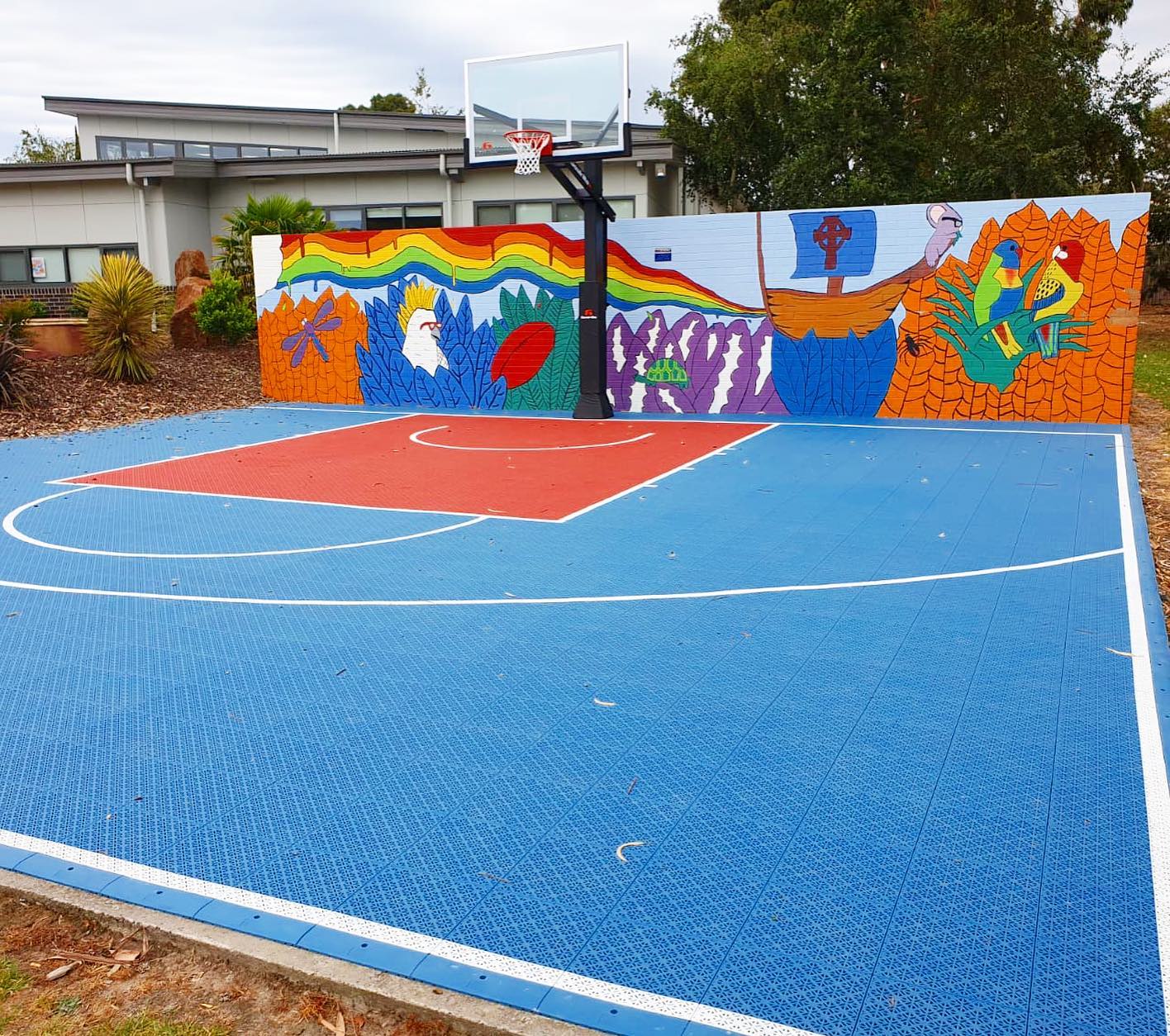
The company's product lines address different performance and budget requirements. Their Super X three-layer flooring system carries FIBA approval, positioning it as tournament-grade material suitable for homeowners seeking the highest performance standards. The inclusion of 10-year warranties backed by premium BASF colorants and UV-stable materials provides long-term value assurance.
For budget-conscious projects, their Elite X product line incorporates shock-absorbing elastic cushions while maintaining professional-grade ball rebound characteristics. The anti-slip surface engineering with thousands of convex points addresses safety priorities for families with young children.
ZSFloor Tech's technical support infrastructure, providing responses within 12 hours to inquiries regarding product specifications, court design, and installation guidance, offers valuable assistance for first-time court builders navigating unfamiliar decisions.
Future Considerations
As backyard basketball court technology continues evolving, homeowners benefit from expanding options that balance performance, safety, cost, and convenience. The shift from permanent, labor-intensive installations toward modular, DIY-friendly systems reflects broader consumer preferences for flexible, value-oriented home improvements.
Whether prioritizing tournament-grade performance, maximizing safety for young players, or optimizing budget efficiency, modern design solutions provide viable pathways for creating functional, enjoyable backyard basketball courts that serve families for years of recreational use and athletic development.
ZSFloor Tech
