Building Material Gear: The Invisible Force Behind Industrial Precision Operations
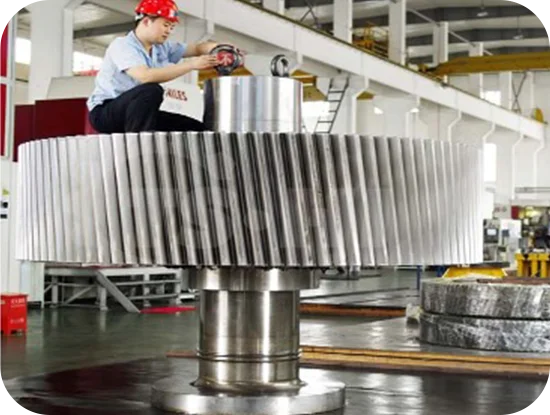
Gears are essential to the operation of machinery used throughout the building materials industry. From crushing and mixing to material processing, many types of industrial equipment rely on gear systems to transfer power, maintain torque, and keep production processes running efficiently. As critical transmission components, building material gears influence not only the mechanical performance of equipment but also production consistency and overall operational reliability.
When machinery operates under heavy loads, continuous working cycles, and dusty or demanding conditions, gear quality becomes particularly important. Well-designed and accurately manufactured building material gears help reduce transmission instability, withstand demanding operating conditions, and support long-term equipment performance. For manufacturers and maintenance teams, a good understanding of gear production, lubrication, and failure prevention is essential to minimizing downtime and maintaining productivity.
How Building Material Gears Are Manufactured for Industrial Applications
Producing reliable gears requires a combination of material preparation, machining accuracy, heat treatment, and strict quality verification. Each manufacturing stage contributes to the gear's ability to handle mechanical stress, resist wear, and maintain accurate meshing throughout its service life.
Forging for Improved Structural Strength
Gear production typically begins with blank preparation through forging, which may involve open-die or closed-die forging depending on the component's dimensions and design requirements. By applying pressure to metal at elevated temperatures, forging reshapes the material and helps create a denser internal structure.
Compared with conventional casting, properly forged blanks can reduce the risk of internal defects such as porosity and cracking. The resulting improvements in structural integrity, strength, and toughness provide a more dependable foundation for gears expected to operate under substantial mechanical loads and repeated stress.
Machining and Heat Treatment for Wear Resistance
Once the forged blank is prepared, rough machining removes excess material and brings the component closer to its required dimensions. This stage establishes the geometry needed for later finishing operations while preparing the gear for heat treatment.
Heat treatment is used to improve the mechanical properties of the gear, particularly its surface hardness and resistance to wear. Processes such as carburizing, quenching, and tempering can be applied according to the material and performance requirements. Carburizing increases carbon content near the surface, while subsequent heat treatment develops a hardened outer layer without sacrificing the toughness of the inner core. This combination helps the gear resist surface damage while reducing the risk of brittle failure.
Gear Finishing and Surface Enhancement
Accurate tooth geometry is essential for smooth power transmission and stable gear engagement. Precision machining, including CNC gear grinding, is used to improve tooth profiles, dimensional accuracy, and spacing between teeth. Better geometric accuracy helps reduce transmission irregularities, noise, and unnecessary mechanical stress during operation.
For gears exposed to demanding loads or higher operating speeds, additional surface treatments may be considered. Shot peening and nitriding, for example, can improve surface properties and contribute to greater resistance to fatigue and wear. The appropriate finishing and strengthening processes depend on the gear design and its intended working conditions.
Inspection Standards and Manufacturing Quality Assurance
Before gears are delivered, manufacturers need to verify that their dimensions, surface characteristics, and mechanical properties meet the required specifications. Inspection procedures generally cover tooth profile accuracy, pitch deviation, surface finish, hardness, and internal or surface defects through applicable non-destructive testing methods.
These checks are particularly important for building material production machinery, where transmission problems may affect the operation of an entire production line. Consistent quality inspection helps identify potential defects before installation, reducing the likelihood of premature gear failure and unexpected equipment interruptions.
Lubrication and Preventive Maintenance for Building Material Gears
Even a gear manufactured to a high precision standard can experience premature wear if lubrication is inadequate or maintenance is neglected. Because building material machinery frequently operates in dusty environments and under demanding loads, lubrication management and routine condition checks are important for preserving transmission efficiency and reliability.
Choosing the Right Lubrication System and Gear Oil
The lubrication system should be selected according to gear structure, operating speed, load, and equipment configuration. Common approaches include oil bath lubrication, forced oil circulation, and spray lubrication.
Large industrial mixers, crushers, and other heavy-duty machinery may use circulating lubrication systems to continuously deliver oil to critical transmission components. This helps maintain an effective lubricating film, manage heat, and limit friction between contacting gear surfaces.
Lubricant selection is equally important. Gear oils with suitable viscosity and extreme-pressure and anti-wear properties are often used in heavy-duty applications. The oil must be appropriate for operating temperatures, loading conditions, and the lubrication system design. Using the correct lubricant helps control friction, reduce surface damage, and prevent excessive operating temperatures.
Routine Inspections and Condition-Based Monitoring
Preventive maintenance should include more than periodic visual inspections. Maintenance personnel need to monitor gear operation, inspect the gearbox interior when appropriate, check oil condition and contamination, clean accumulated debris, and replace damaged or excessively worn parts in a timely manner.
Condition-monitoring technologies can provide additional insight into gear performance. Vibration analysis, temperature measurement, and acoustic monitoring help identify abnormal operating patterns that may indicate developing mechanical problems. By evaluating these signals over time, maintenance teams can detect potential faults earlier and schedule corrective work before minor issues lead to serious breakdowns.
Understanding Common Gear Failures and Their Causes
Building material gears may suffer from several forms of damage during service, including abrasive wear, pitting, tooth-root cracking, and plastic deformation. Identifying the specific failure mechanism is important when determining how to repair the equipment or prevent similar problems from recurring.
Surface wear can develop because of insufficient lubrication, contamination, poor tooth contact, or excessive loading. Pitting is commonly associated with repeated contact stress on gear surfaces, which can initiate subsurface fatigue damage and eventually cause small pieces of material to break away. Tooth-root cracks may be linked to fatigue or excessive stress, while plastic deformation can occur when loads exceed the material's capacity.
A systematic failure analysis allows maintenance teams to distinguish between lubrication problems, alignment or meshing issues, material-related defects, and operating overloads. Correcting the underlying cause rather than simply replacing the damaged gear is key to improving long-term equipment reliability.
Conclusion
Building material gears are fundamental to the power transmission systems used in industrial production equipment. Their performance depends on a combination of sound material selection, controlled forging, appropriate heat treatment, accurate machining, and effective quality inspection. Equally important, proper lubrication and preventive maintenance help gears withstand demanding operating environments and reduce unnecessary wear.
As manufacturing technology continues to advance, improvements in gear precision, surface treatment, and condition-monitoring methods are helping industrial equipment achieve more dependable operation. For building materials manufacturers, maintaining gear performance is not only a matter of component durability but also an important factor in production efficiency, equipment availability, and long-term operating costs.
www.tianshangear.com
Changzhou Tianshan Heavy Industry Machinery Co., Ltd.
